What early season actually demands
Four things, in this order. Get these right and you can hunt the first six weeks of the season in gear that costs less than a tank of fuel per piece.
- Moisture management. You will sweat on the walk in and then sit still. A wet cotton shirt against your skin is both uncomfortable and loud with scent, and it is the single most common early-season mistake.
- Nothing insulated. Insulation you do not need is weight, bulk and heat. It also costs the most.
- Rain you can carry. Early-season weather turns fast and warm rain is the kind that soaks you through fastest, because you are not already layered against it.
- Bug and scent control. Mosquitoes and ticks are at their worst in the first weeks, and warm air carries your scent further than cold air. Our budget scent control guide covers the part of this that is free.
The five pieces, and why each earns its place
1. A synthetic lightweight base layer — the sweat layer
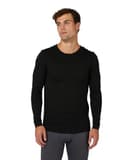
A base layer in early season is not a warmth layer. It is a wick: a form-fitting synthetic that moves moisture off your skin so it can evaporate from the outside of the fabric instead of sitting against you. The 32 Degrees Heat Lightweight Crew is the cheapest piece on this page and the one we would buy three of. It is four-way stretch, which means it does not bind at full draw — a detail that matters to bowhunters, since the early weeks are usually archery weeks.
Its honest limitation is odor: synthetic holds smell far faster than wool over a multi-day hunt. If you are hunting several days from a truck or a tent, a merino layer breathes and resists odor better, and our merino versus synthetic comparison lays out exactly where the extra money goes. For day hunts out of a house with a washing machine, synthetic is the better value.
2. Uninsulated cargo pants
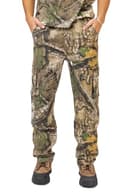
The Realtree APX pants are a six-pocket cargo pant in a slim, non-snagging cut, cheap enough to own two pairs. The listing is straightforward that they are neither insulated nor waterproof, which is precisely the specification you want in September. They also run S through 5X, which is a wider size range than most budget camo. If you are deciding between a cargo pant, bibs, rain pants and a merino bottom, our budget hunting pants page ranks the cheapest pick for each of those four jobs.
What they will not do is articulate at the knee for hard climbing, so if your hunting involves a lot of steep public land, expect them to be the restrictive part of the kit. For sitting, stalking flat ground and walking in, they are the honest budget answer.
3. An uninsulated rubber boot
Rubber in early season is not about warmth, it is about two other things: scent and wet grass. A rubber boot leaves far less scent along your entry route than a leather boot, and the first weeks of the season mean walking in through heavy dew that soaks a fabric boot by the time you reach the stand.
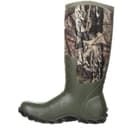
The Rocky Core Rubber is the cheap camo answer and it is explicitly uninsulated — its own listed weakness is that the Core model runs cold in a hard freeze, which is exactly why it belongs on this page and not on the cold-weather one. If you want more boot generally, our rubber boot rankings and the broader boot roundup cover the full field, and our rubber versus leather comparison explains the scent argument in detail.
4. A packable rain suit
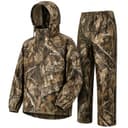
A rain suit is the piece early-season hunters skip and then regret. The Frogg Toggs Classic All-Sport is a complete camo jacket and pant for roughly what one budget rain jacket costs, every seam taped, and the maker describes the face fabric as quiet and supple — which matters more than pattern when a deer is at twelve yards.
Be clear about the trade. It is a nonwoven polypropylene suit rather than a woven shell: a sit-and-glass fabric, not a push-through-briars fabric. Frogg Toggs publishes a waterproof rating scale on its own site but does not state a rating for this suit’s fabric, and the listing publishes no weight, so you cannot judge what it costs you in the pack. Our rain gear rankings cover the alternatives, including the lighter Ultra-Lite2 if packing size matters more to you than durability.
5. A thin glove
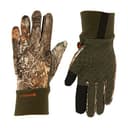
Not for warmth — for the morning in late September when it drops to the forties and your hands are the only cold part of you, and for hiding the two bright moving objects a deer notices first. The Manzella Stretch Fleece Ranger is thin and close-fitting enough that a release aid still sits where your hand expects it, which is the reason most archers end up hunting bare-handed instead.
Its limitation is in the name: thin means cold. This is a mobile glove, not a sit-still-in-November glove, and the listing publishes neither an insulation weight nor a wind rating. For the cold sits later in the year, the flip mitten in our glove rankings is the answer.
What not to buy in September
Half of a budget is what you do not spend. These are the early-season purchases we would actively defer:
- Insulated outerwear. Buy it in November, when you know what the winter is doing and the gear is discounted. Our Black Friday page exists for exactly this timing.
- A full camo suit as your first apparel purchase. A complete suit is the right buy eventually — it leads our budget hunting clothes rankings — but it is a mid and late season item, and buying it first means hunting the warm weeks in something too hot.
- Insulated boots. A gram rating you do not need is a boot that cooks your feet and makes you sweat on the walk in, which is the thing this entire page is trying to prevent.
- Expensive camo patterns. Deer are dichromats and cannot distinguish orange from red; pattern matters far less than movement and silhouette. Our guide to what colors deer can see covers the vision research, and affordable hunting gear brands covers which labels are worth paying for.
The two free things that matter most
Change at the stand. Walk in wearing less than you will hunt in, carry the outer layer in your pack, and put it on when you are settled. This one habit costs nothing and solves most of the early-season sweat problem on its own. Our layering guide covers the system; the public-land day pack checklist covers what the pack should hold while you do it.
Hunt the wind, not the thermometer.Warm air carries scent further and early-season thermals are unstable — a whitetail carries roughly 297 million olfactory receptors to a dog’s 220 million, and below about 8 to 10 mph scent eddies unpredictably rather than forming a clean cone. No clothing purchase at any price beats choosing the right stand for the day’s wind.
The verdict
Start with the 32 Degrees crew, add the Realtree pants, and put the Frogg Toggs suit in the bottom of your pack. That is a functional early-season kit for less than the price of one insulated jacket. Add the Rocky Core rubber boots if your walk in is wet or you are worried about leaving scent, and the Manzella gloves when the mornings start to bite. Everything insulated can wait until the weather earns it — and until the prices come down.