Blaze & Budget

Best Budget Hunting Pants

Camo pants, insulated bibs, rain pants and merino bottoms are four different purchases doing four different jobs. Here is the cheapest piece worth owning in each, and the order to buy them in.

By Stephen V.Last updated How we rank

If you are buying one pair of hunting pants and you hunt whitetails from the ground or a stand, buy the Realtree APX cargo pants and spend the difference on a merino base-layer bottom. That combination costs less than most single pairs of hunting-brand pants, covers early season through the first hard frosts, and does not strand you in an insulated pant on a 55-degree October afternoon.

The budget hunting-pant field is thin, and pretending otherwise is how people waste money here. Almost everything sold cheaply as “hunting pants” is one of four things: a work-style cargo pant printed in camo, the bottom half of an insulated suit, a waterproof shell pant, or a thermal base layer. Those are not competing products. They are four layers of one system, and the mistake that costs the most is buying the warmest one and wearing it in September.

So this page is organised by job rather than by brand. Each pick below is the cheapest thing we would own for one of the four jobs, with the spec its listing actually publishes and a live price. We do not own any of them and claim no field testing. Here is how we rank instead.

How this is funded: we earn a commission if you buy through our links, at no extra cost to you. It never changes which product we recommend, and we’ll tell you plainly when we’d skip one. Full disclosure.

The four jobs, and the pick for each

Ranked on price-per-performance — the specs that matter divided by what it costs. Select a row to jump to the full write-up. We have not field-tested these — here is exactly what we do instead.

#ProductTypeScorePrice
1
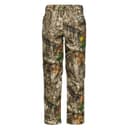
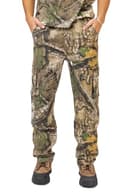
Realtree APX Camo Hunting Pants

Realtree APX Camo Hunting Pants

Best budget camo pants

Durable six-pocket cargo pants in Realtree camo for about forty dollars. The workhorse early- and mid-season pant that leaves budget for the gear that matters more.

6-pocket cargo pants
8.3/ 10
$44.99View on Amazon

Price as of October 19, 2026. #ad How we’re funded

2
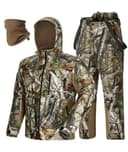
TIDEWE Silent Hunting Suit (jacket + bibs)

TIDEWE Silent Hunting Suit (jacket + bibs)

Best cold-weather bibs

A quiet-fabric jacket-and-bibs set for the price other brands charge for the jacket alone. It is the single fastest way to kit out a new stand hunter for cold weather without spending KUIU money.

Silent jacket + bibs
9.0/ 10
$169.90View on Amazon

Price as of October 19, 2026. #ad How we’re funded

3
ScentBlocker Drencher Rain Pants (1055120)

ScentBlocker Drencher Rain Pants (1055120)

Best rain pants

The other half of the Drencher system, and the right pick for the hunter who already owns a shell but still walks in wearing jeans. Rain pants are the piece people skip and the piece that decides whether you stay out, because wet legs sitting still are how a mild, drizzly morning turns into a cold one.

Pants only
8.5/ 10
$59.99View on Amazon

$99.9940% off

Price as of October 19, 2026. #ad How we’re funded

4
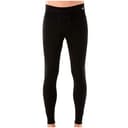
MERIWOOL 100% Merino Wool Thermal Pants

MERIWOOL 100% Merino Wool Thermal Pants

Best base-layer bottoms

The bottom half most hunters skip and then regret at 6 a.m. Full merino, no synthetic blend, and it turns a marginal pair of hunting pants into a genuinely cold-capable setup.

Merino base bottoms
8.6/ 10

The picks in full

#1Best budget camo pants8.3/ 10 value

Realtree APX Camo Hunting Pants

Durable six-pocket cargo pants in Realtree camo for about forty dollars. The workhorse early- and mid-season pant that leaves budget for the gear that matters more.

Strengths

  • Six pockets and a slim, non-snagging cut
  • Durable cargo fabric for early and mid-season
  • Cheap enough to own two pairs

Trade-offs

  • Not insulated or waterproof — a warm-weather pant
  • No knee articulation for hard climbing
TypeCargo hunting pants
InsulationNone (early / mid-season)
SizesS–5X

Specs read from the product listing, on July 22, 2026. “Not published” means the maker doesn’t state that figure. The score is our value rating, not a lab test — how we rank.

#2Best cold-weather bibs9.0/ 10 value

TIDEWE Silent Hunting Suit (jacket + bibs)

A quiet-fabric jacket-and-bibs set for the price other brands charge for the jacket alone. It is the single fastest way to kit out a new stand hunter for cold weather without spending KUIU money.

Strengths

  • Jacket and bibs together — a full outfit in one purchase
  • Silent brushed fabric that will not scrape against a stand
  • Fleece-lined and warm enough for firearm-season stand sits

Trade-offs

  • Bulky and warm — too much for early-season or active hunts
  • Sizing runs large; size down if you are between sizes
PiecesJacket + bibs
FabricSilent brushed, fleece-lined
Best seasonLate / firearm season

Specs read from the product listing, on August 10, 2026. “Not published” means the maker doesn’t state that figure. The score is our value rating, not a lab test — how we rank.

#3Best rain pants8.5/ 10 value

ScentBlocker Drencher Rain Pants (1055120)

The other half of the Drencher system, and the right pick for the hunter who already owns a shell but still walks in wearing jeans. Rain pants are the piece people skip and the piece that decides whether you stay out, because wet legs sitting still are how a mild, drizzly morning turns into a cold one.

Strengths

  • The cheapest hunting-brand piece on this page, and the half of a rain setup most hunters are actually missing
  • Same Drencher lightweight, breathable, waterproof camo construction and Realtree Edge pattern as the jacket above, so they match as a set
  • 1.39 lb listed weight — one of only two items here whose listing publishes a weight at all
  • Buying separates lets you size top and bottom independently, which a single-size suit never does

Trade-offs

  • This listing publishes far less than the jacket's: no stated seam treatment, no waist or cuff description, no waterproof rating
  • No published leg-zip length, which is exactly what decides whether you can pull them on over boots
  • Pants only — pair them with the jacket above or you are half covered
  • Buying the Drencher jacket and pants together costs more than any complete suit on this page
PiecesPants only
FabricLightweight breathable waterproof camo (Drencher)
SeamsNot published
Waterproof ratingNot published
ClosuresNot published
Camo patternRealtree Edge
Listed weight1.39 lb
Warranty termNot published

Specs read from the product listing, on September 6, 2026. “Not published” means the maker doesn’t state that figure. The score is our value rating, not a lab test — how we rank.

#4Best base-layer bottoms8.6/ 10 value

MERIWOOL 100% Merino Wool Thermal Pants

The bottom half most hunters skip and then regret at 6 a.m. Full merino, no synthetic blend, and it turns a marginal pair of hunting pants into a genuinely cold-capable setup.

Strengths

  • 100% merino with no synthetic blend — maximum odor resistance
  • Sold as bottoms alone, so you can pair it with a cheaper synthetic top
  • Turns any pair of uninsulated hunting pants into a cold-weather setup

Trade-offs

  • Bottoms only at a price where some sets include a top
  • The listing does not publish a fabric weight, so you cannot compare it directly
Fabric100% merino wool
PiecesBottoms only
Fabric weightNot published

Specs read from the product listing, on August 11, 2026. “Not published” means the maker doesn’t state that figure. The score is our value rating, not a lab test — how we rank.

Work out which of the four you are actually buying

Before any brand matters, answer two questions: what is the lowest temperature you will sit still in, and will you be walking or sitting? Those answers pick your pant.

  • Walking, 40°F and up— an uninsulated camo cargo pant over a light base layer. Insulation here is actively bad: you sweat on the walk in and then sit in wet clothes.
  • Sitting still, below about 35°F— insulated bibs over a base layer. Bibs beat insulated pants for a stand sit because they cover your lower back, which is the first place a seated hunter gets cold.
  • Rain, at any temperature— a shell pant over whatever else you are wearing. This is the piece most hunters skip and the one that ends sits early.
  • Any of the above, colder than expected— a merino bottom underneath. It is the cheapest way to extend the range of the pants you already own.

Most budget hunters need two of the four in their first season: a cargo pant and a base layer. Bibs and rain pants are the second season, bought once you know which one your weather actually demands.

Camo print is the least important thing on the label

Pattern sells pants and almost never decides a hunt. Deer are dichromatic: the National Deer Association’s summary of the research describes a deer as seeing blue wavelengths well and reds and oranges poorly, which is why a blaze vest costs you far less concealment than it feels like it should, and why movement and silhouette are what give you away. Our guide to what colors deer can see walks through it.

What does matter on a pant, in this order: whether the fabric is quiet when it brushes a branch, whether the cut lets you climb and sit without binding, whether the pockets are where your hands actually are, and whether it dries. The Realtree APX pick is a six-pocket cargo cut in a durable fabric — a plain description of a pant that works. It is not insulated and not waterproof, and the listing does not pretend to either.

Where state law overrides the pattern entirely

In most states, during a firearms deer season, what you wear is partly a legal question rather than a camouflage one. Minnesota’s rule is typical in structure: during open firearms and muzzleloader deer seasons the visible portion of a cap and of outer clothing above the waist must be blaze orange or blaze pink, with sleeves and gloves excluded, and blaze camo counting only if at least 50 percent of each square foot is blaze.

The practical consequence for pants is simple: buy the camo you like, then buy a blaze vest and hat and read your own state’s wording before opening day. Our budget blaze orange picks cover both styles of rule and the square-inch figure almost no maker publishes. The requirement is written about the garment on the outside, which is the trap — a rain shell pulled on over a blaze layer can put you out of compliance. The same problem is covered on our budget rain gear page.

Bibs versus insulated pants for a cold sit

Our cold-weather pick is a jacket-and-bibs set rather than a standalone insulated pant, for two reasons. First, the budget market barely sells insulated hunting pants as separates — the cheap insulated bottoms are nearly all half of a suit. Second, bibs are the better garment for the job: the chest and lower-back coverage is exactly where a seated hunter loses heat, and there is no waistband gap to open up when you lean forward to shoot.

The honest cost is that you are buying a jacket you may not need, and that the set is far too warm to walk in. If your hunting is mobile — saddle hunting, run-and-gun public land, anything where you cover ground — buy the cargo pant, add the merino bottom, and carry your insulation in the pack instead of wearing it. Our layering guide covers the sequence, and the cold-weather kit page covers the rest of the late-season setup.

What these listings do not publish

Three of the four picks publish no fabric weight, no insulation rating in grams and no warranty term. That is the state of the budget category, and it is why the ledger above ranks on what ispublished — construction, pieces included, fabric type, fit — and leaves the rest blank rather than filling it in. The ScentBlocker rain pants are the clearest case: the jacket in the same line publishes more than the pants do, and the pants listing states no seam treatment and no waterproof rating at all. Frogg Toggs publishes the scale those ratings are read against — roughly 5,000 mm for light conditions, 10,000 mm for mild, 20,000 mm and up for extreme — which is precisely what makes the silence on these listings worth naming. The one budget piece that does publish a number is on the rain gear roundup.

The order we would buy in

  1. Merino or synthetic base bottoms. Cheapest, and they make every other pant warmer.
  2. A camo cargo pant. The pant you will wear on most days of the season.
  3. Rain pants. Buy before your first wet sit, not after it.
  4. Insulated bibs. Only once you know you sit still in genuine cold.

That order holds for nearly every budget hunter, and it is the same logic as the full budget hunting clothes roundup, which covers the top half of the same system. If your cold is the still-air, late-December kind, read the National Weather Service’s cold-safety guidance before you decide how much insulation you need — windchill, not air temperature, is what decides how long you can sit.
Frequently asked questions

Can you hunt in jeans?

You can, and plenty of people do, but denim is the worst common choice for the job. Cotton holds moisture against your skin instead of moving it away, it stays wet for hours, and wet fabric pulls heat out of you far faster than dry fabric does. It is also loud against brush. If jeans are what you own, hunt in them - and make a base layer, not a pant, your first upgrade.

Do you need camo hunting pants for deer hunting?

No. Deer see blue wavelengths well and reds and oranges poorly, and what gives hunters away is movement and silhouette far more than color. Solid earth tones work. Camo is genuinely useful for breaking up your outline at bow range, but it is the cheapest thing on your body to compromise on.

Are insulated hunting pants or bibs better?

Bibs, for a hunter who sits still. They cover the lower back and kidneys, where a seated hunter loses heat first, and there is no waistband gap when you bend forward. Insulated pants are better if you walk a lot in the cold or if you need to wear a harness or a saddle, where bib straps get in the way.

What are the warmest hunting pants on a budget?

On a budget the warmest setup is not one garment, it is two: insulated bibs over a merino base-layer bottom. That beats any single cheap insulated pant and it is adjustable - the base layer alone in October, both in December. Buying one very warm pant locks you into one temperature range.

Do I need rain pants if my jacket is waterproof?

If you walk to your spot, yes. Rain running off a jacket lands on your thighs, and wet legs sitting still is how a 45-degree drizzle turns into a short hunt. Rain pants are also the cheaper half of a rain setup and the half most hunters skip, which is why they get their own pick here rather than a footnote.

How many pairs of hunting pants do you need?

Two pairs of the same uninsulated cargo pant will cover most of a season, because the real variable is what you wear under and over them. Add rain pants after you get caught out once, and add bibs only if you genuinely sit through cold. Four different insulated pants is how a closet fills with gear that gets worn twice.

Sources

  • The Hunter's Guide to Deer Vision — National Deer Association — Deer have two cone photopigments rather than three and no red cone; they see blues and greens well, lack a UV filter, and cannot distinguish orange from red (accessed August 12, 2026)
  • Blaze clothing requirements — Minnesota DNR — A state example of blaze rules: during open firearms and muzzleloader deer seasons the visible portion of a hunter's cap and outer clothing above the waist must be blaze orange or blaze pink, sleeves and gloves excluded, and blaze camouflage patterns must be at least 50 percent blaze within each square foot (accessed September 6, 2026)
  • Product Technology — frogg toggs — The maker's own published rating scales: waterproofing runs 5,000 mm for light conditions, 10,000 mm for mild conditions and 20,000+ mm for extreme conditions, and breathability 5,000 grams per square meter for low activity, 10,000 for moderate and 20,000+ for high intensity — with no numeric rating published for the DriPore Gen 2 fabric itself (accessed September 6, 2026)
  • Cold Weather Safety — National Weather Service — Federal cold-weather hazard overview — frostbite, hypothermia and wind chill (accessed July 22, 2026)

Keep reading