Boots
Hunting boots that keep your feet dry and warm without the $300 price tag — leather walkers, scent-free rubber and insulated late-season picks.
Cold, wet feet end more hunts early than almost anything else, and boots are the second place — after optics — where we tell budget hunters to buy carefully rather than cheaply. The good news is that “carefully” does not mean “expensively”: the difference between a $50 boot that keeps you out until dark and a $250 boot that does the same is often just insulation grams and a brand name. What actually matters is matching the boot to how and when you hunt.
The three kinds of budget hunting boot
Nearly every affordable hunting boot falls into one of three buckets, and you pick by season and terrain:
- Leather walkers— uninsulated or lightly insulated leather boots for early season and for hunts where you cover ground. They breathe, they hike, and they break in to your foot. Our top all-around pick is one of these.
- Rubber boots— the whitetail hunter’s default. Natural rubber is scent-free, which matters when a deer’s nose is the thing you’re beating, and it’s fully waterproof for wet ground, creeks and swamps. The trade-off is that rubber boots aren’t built for long miles.
- Insulated rubber— the same scent-free waterproofing with 200–800 grams of insulation for late-season stand sits when you’re not moving and the temperature drops. This is where the cheapest boots on our list genuinely shine.
What decides the price
Boot cost comes down to materials (full-grain leather and quality rubber last longer than synthetics), insulation (measured in grams; more grams, warmer and pricier), the outsole and support (a stiffer, more aggressive sole is worth it if you hike), and the brand. A $50 insulated rubber boot and a $200 one will both keep your feet warm and dry for a season or two; the premium boot mainly buys you more seasons and better ankle support on rough ground. For a hunter who mostly sits a stand on public land near home, the budget boot is the honest answer.
The mistake budget buyers make
The common error is buying one boot to do everything. An uninsulated leather boot is miserable on a 20-degree stand sit; an 800-gram rubber boot is a sweaty anchor on a warm September hike. If you can only own one pair and you mostly hunt whitetail from a stand, buy insulated rubberand accept that it’s heavy to walk in. If you cover ground, buy the leather walker and add a base-layer sock system for cold days. Two cheap boots that each do their job beat one expensive boot that half-does both.
Start with the main roundup below — or go straight to the rubber boot picks if scent control and wet ground are your problem, and the insulated picks if cold is. Then read the boot buying guideif you’re stuck on insulation, or the hunting vs hiking bootscomparison if you already own trail boots and are wondering whether you even need dedicated ones. Shopping a women’s size run? The field is thinner and the fit rules differ, so start with the best budget women’s hunting boots. If your feet are already cold in boots you own, start here before buying anything. When your feet are handled, the camo & clothing hub covers the rest of staying warm in the stand.
Everything in Boots
Best Budget Hunting Boots
Leather walkers, scent-free rubber and insulated late-season boots compared on warmth, waterproofing and price.
Our top pick
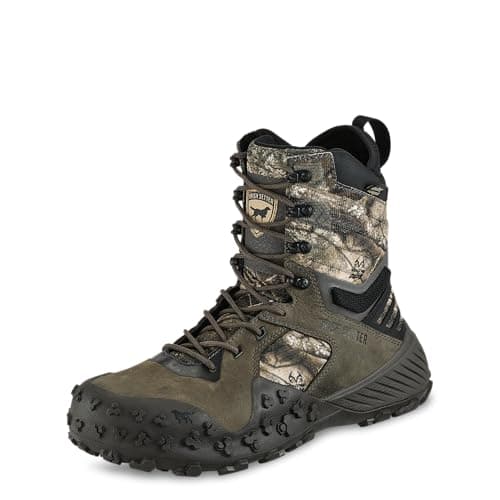
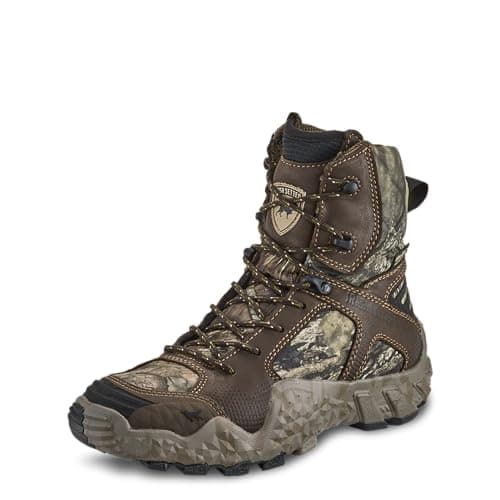
Irish Setter VaprTrek 8" Waterproof
$189.95View on AmazonPrice as of October 20, 2026. #ad How we’re funded
How to Choose Hunting Boots on a Budget
Insulation grams, rubber vs leather, and how to match the boot to your season without overspending.
Best Rubber Hunting Boots for the Money
The scent-control, wet-ground boot. Five picks compared on construction, height and whether you can actually walk in them.
Our top pick
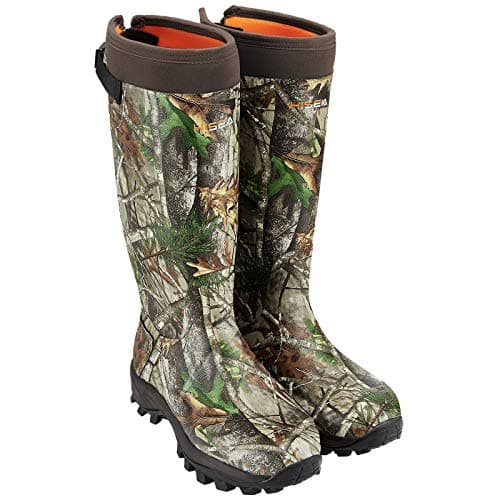
HISEA Neoprene Insulated Rubber Hunting Boot
Best Insulated Hunting Boots for the Money
Published gram ratings from 800 to 1,000, five insulated boots ranked on what their makers actually disclose — and the rule for matching the number to how much you move.
Our top pick
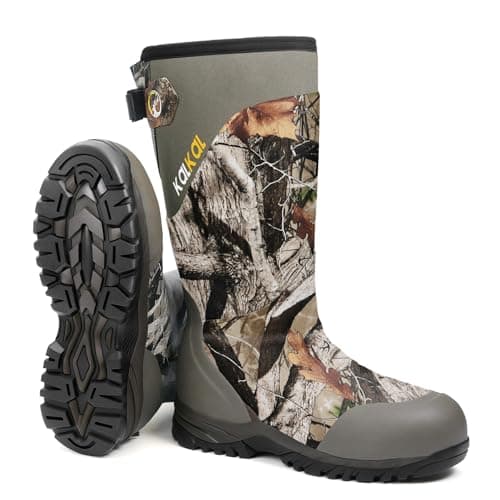
Kalkal 800g Insulated Hunting Boot
Hunting Boots vs Hiking Boots
When your hiking boots are fine for hunting, and when scent, warmth or waterproofing mean you need the real thing.
How to Keep Your Feet Warm Hunting
Cold feet are almost never an insulation problem. The real causes, in order, and the cheap fixes to try before buying warmer boots.
Rubber vs Leather Hunting Boots
One is scent-free and genuinely waterproof. The other lets you walk all day. The mileage number that decides which to buy first.
LaCrosse Grange 18" Review
The rubber boot other rubber boots get compared to. What scent-free rubber buys you, and the spec people misread.
Our top pick
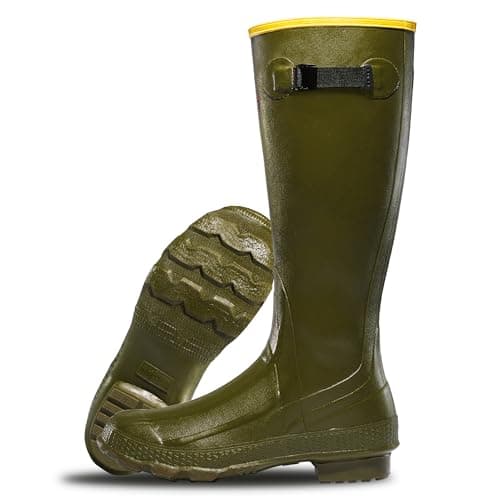
LaCrosse Grange 18" Rubber
$99.95View on AmazonPrice as of October 20, 2026. #ad How we’re funded
How to Break In Hunting Boots
A four-week schedule that costs nothing, two lacing fixes for hot spots, and the test for whether a boot is simply the wrong size.
Best Budget Hunting Socks
The cheapest upgrade in hunting, and the one most budget hunters skip. Merino weights, heights and the cost-per-season math on a lifetime sock.
Our top pick
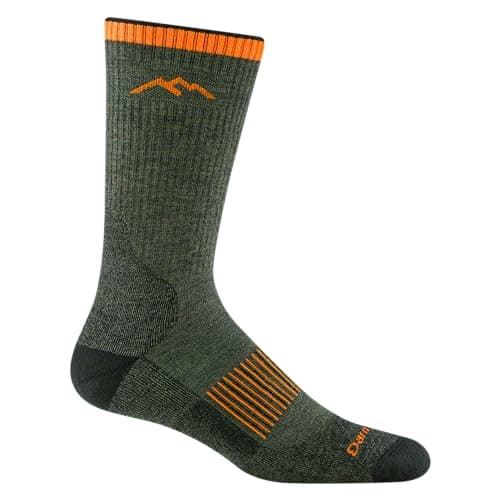
Darn Tough Boot Midweight Cushion Hunting Sock (2111)
$28.95View on AmazonPrice as of October 20, 2026. #ad How we’re funded
Irish Setter VaprTrek Review
The lightweight leather boot that turns up on every budget list. What the weight number actually buys, and the two hunters who should skip it.
Our top pick
Irish Setter VaprTrek 8" Waterproof
$189.95View on AmazonPrice as of October 20, 2026. #ad How we’re funded
How to Waterproof Hunting Boots
A leaking boot is usually a dirty boot. The re-treat routine that costs a few dollars and buys another season out of what you already own.
Best Budget Women's Hunting Boots
Five women's boots under the name-brand price, compared on insulation, height and published widths — plus why sizing down a men's boot is the wrong fix.
Our top pick
Irish Setter VaprTrek 8" Women's
$79.99View on AmazonPrice as of October 20, 2026. #ad How we’re funded
Best Budget Hunting Waders
Five neoprene chest waders ranked on published insulation, neoprene thickness and seam construction - and why 600 gram beats 800 for most seasons.
Our top pick
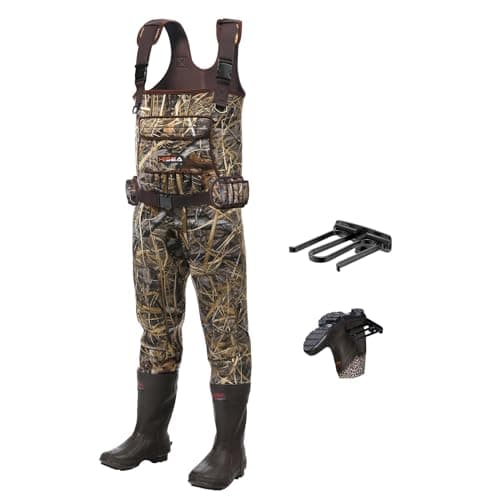
HISEA Chest Waders 600G Insulated Boot
$118.99View on AmazonPrice as of October 20, 2026. #ad How we’re funded
How to Repair Waders
Find the hole first, then fix it for a few dollars. The water test, the patches that hold on neoprene, and the leaks that mean the waders are finished.