Turkey Hunting on a Budget
The cheapest serious hunting season in America. A gun you probably own, a call that costs less than a box of shells, and public land nobody is on in April.
How this is funded: we earn a commission if you buy through our links, at no extra cost to you. It never changes which product we recommend, and we’ll tell you plainly when we’d skip one. Full disclosure.
If somebody asks us the cheapest way to genuinely start hunting, the answer is spring turkey, and it is not close. There is no stand to hang, no climbing sticks, no rangefinder, no treestand harness, no cold-weather clothing system, and no walk-in cooler problem afterwards. The season runs in April and May when the weather is mild, on public land that is nearly empty because everyone else is thinking about deer in October.
The whole kit is a shotgun you probably already own, a tag, enough camo to cover you, and one call that costs less than a box of shells.
The gun: you almost certainly have one
The turkey-gun market wants to sell you a dedicated 12 gauge with a pistol grip, a red dot and an extra-full turkey choke. You do not need one, and the National Wild Turkey Federation says so plainly: both 12 and 20 gauge do a good job at taking down a turkey.
So whatever pump or semi-auto you own for deer, clays or rabbits will work. A youth 20 gauge works. A hand-me-down pump works. If you are buying, our budget hunting shotgun guide covers what to look for, and the summary is that a used pump gun in either gauge is one of the best-value objects in hunting.
What genuinely matters is the choke and the ammunition, and both are cheap relative to a new gun. A tighter choke concentrates the pattern, which is what you want when the target is a turkey’s head and neck rather than a whole bird. Turkey loads are expensive per shell and you will fire very few of them — patterning takes maybe ten, and a season takes one or two.
Patterning: the free thing that decides your season
This is the single most important paragraph on this page. The NWTF emphasizes patterning your shotgun before the season for a specific reason, and budget hunters skip it more than anyone.
A turkey’s vital area is the head and neck. That is a small target, and whether you hit it depends entirely on where your particular combination of gun, choke and shell actually throws its pattern — which is not necessarily where the bead is pointing, and varies far more between guns than people expect.
How to do it, for the cost of about ten shells:
- Draw or print a life-size turkey head and neck on a large sheet of paper or cardboard.
- Shoot it at 20 yards from a solid rest. Count the pellet strikes in the head and neck area.
- Repeat at 30 and 40 yards.
- Note where the center of the pattern sits relative to your aiming point. Many guns shoot noticeably high or off to one side, and you need to know that now rather than with a gobbler at thirty yards.
- If you have more than one choke or more than one shell available, try the combinations. The differences are often dramatic.
The number that comes out of this is your honest maximum range. Most budget setups produce a confident, dense pattern somewhere between 30 and 40 yards. Knowing your number and refusing shots beyond it is what separates a clean kill from a wounded bird, and it costs nothing.
Camouflage: this is where turkeys differ from deer
Deer see poorly in color and largely detect movement. Turkeys have excellent eyesight, in full color, and the NWTF is direct about the consequence: wild turkeys see extremely well, so concealing your movement matters and a camo pattern suited to your terrain is essential.
Practically, the parts that get you busted are the parts that move and the parts that are pale:
- Hands.You are running a call with them, at close range, in a bird’s direct line of sight. Gloves are not optional for turkey hunting the way they are for deer hunting.
- Face and neck. A pale face against dark timber is visible from a long way. A cheap face mask or head net solves it.
- Everything else.Any drab camo works. Surplus works. Old deer camo works — and in April you want the light stuff anyway, not the insulated November set. Our camo comparison covers why pattern matters less than brightness and movement.
Total spend to be adequately concealed: a pair of gloves and a face mask, assuming you own any camo at all.
Calls: buy one, learn four sounds
Calling is where turkey hunting gets its reputation for difficulty, and the reputation is overstated at the beginner level. The NWTF points new hunters at a box callspecifically because it is the easiest to get a consistent sound from — you run a paddle across a lid, rather than manipulating a diaphragm with your tongue and airflow.
Learn four sounds, in this order:
- Yelp. The basic hen contact call, a series of notes. If you only ever learn one sound, this is it, and it kills turkeys on its own.
- Cluck. A single short note. Reassurance, and a way to get a hung-up bird to take a step.
- Purr. A soft rolling sound, contented feeding. Use it when a bird is close and you want to sound relaxed.
- Putt.The alarm. Learn it so you recognize it — when a turkey putts at you, the hunt is over and you should know that immediately.
The most common beginner error is calling too much. A real hen calls, then waits, and expects the gobbler to come to her. Calling constantly reads as wrong to a bird and stops you hearing him approach. Call, then sit absolutely still and listen for several minutes.
A slate or pot call is a good second purchase. Diaphragm calls are hands-free, which is a real advantage once a bird is inside forty yards, and they take the longest to learn — buy one for next season.
What you can genuinely skip
- Decoys. They work, and on public land there is a real argument against them. A decoy tells every other hunter on the ridge exactly where you are, and a hunter who mistakes a decoy for a bird is the most dangerous scenario in turkey hunting. Learn to call birds in without them first.
- A pop-up blind. Useful for children, for filming, and for hunting fields. Unnecessary for a hunter sitting against a tree in timber, which is how most public-land turkey hunting works.
- A turkey vest.Genuinely convenient — a built-in seat and pockets for calls. Also completely replaceable by a daypack and a foam pad, and our budget pack picks cover packs you will use for deer too.
- A dedicated turkey gun. See above. Pattern the gun you have.
- A red dot sight. Genuinely helpful for aiming precisely at a small target, and a luxury. Bead sights have killed a very large number of turkeys.
Where to hunt: public land in spring is the bargain
National forests, wildlife management areas and other public ground are open to turkey hunting across most of the country, and spring pressure is a fraction of autumn deer pressure. The birds are there, and the competition mostly is not.
How to find them without spending anything:
- Listen at dawn from a road or ridge. Gobblers sound off on the roost before fly-down. Drive or walk to high points, stop, and listen at first light for a week before the season. This is the entire scouting method and it costs fuel.
- Look for sign. Scratched leaf litter where birds have been feeding, dusting bowls in bare dirt, and tracks in soft ground.
- Get away from the parking area. The same rule as every other kind of public-land hunting. A mile of walking removes most of your competition.
- Use free public-land mapping from the managing agency to find the boundaries and the ground nobody drives past.
Safety, which is different here
Turkey hunting has a hazard that deer hunting does not: you are deliberately imitating the animal other hunters are looking for, sitting motionless in full camouflage, in timber, at close range.
The rules that follow from that are not optional:
- Never wear red, white or blue.Those are the colors of a gobbler’s head. Not a hat, not a bandana, not a t-shirt under your jacket.
- Sit against a tree wider than your shoulders. It breaks your outline and it protects your back from anything coming from behind.
- Never stalk a gobbling bird. On public land, the odds that the gobble is another hunter calling are not small. Set up and call; do not sneak.
- Identify absolutely before you shoot, and confirm the beard and the legal sex for your season. The basic firearm safety rules apply with particular force in a situation designed to create confusion.
- Announce yourself with your voice, not by moving or waving, if another hunter approaches your position.
The realistic budget
Assuming you own a shotgun and some camo, a first turkey season costs: a license and spring turkey tag, a box of turkey loads, a box call, a pair of gloves and a face mask. That is a genuinely small number, and it is less than the harness alone for a treestand deer setup.
Fees vary by state and by residency, so check your state wildlife agency’s current schedule rather than a figure from an article. Our cost-to-start guide works through the license and tag structure and where the real money goes.
The two things below are what we would spend on first if you are starting from nothing: gloves, because turkeys will catch your hands moving on a call, and a binocular, which is optional for turkeys and will pay for itself across every other season you hunt.
The two things worth buying first
Ranked on price-per-performance — the specs that matter divided by what it costs. Select a row to jump to the full write-up. We have not field-tested these — here is exactly what we do instead.
| # | Product | Warmth / type | Score | Price |
|---|---|---|---|---|
| 1 | 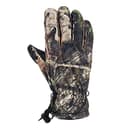 Carhartt Hunt Fleece Camo Glove Cover your hands The glove that covers three quarters of a whitetail season. Fleece is quiet, it keeps working when it gets damp, and it is thin enough that you can still feel a safety and a trigger through it. | Fleece · unlined | 8.9/ 10 | $28.90View on Amazon Price as of October 20, 2026. #ad How we’re funded |
| 2 | 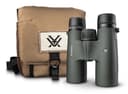 Vortex Triumph HD 10x42 Optional, and useful The cheapest way to get a Vortex VIP warranty around your neck. The Triumph is Vortex's entry line, and it exists precisely for the hunter who wants the warranty safety net at the lowest possible entry price. | 10x42 · HD | 8.8/ 10 | $99.00View on Amazon Price as of October 20, 2026. #ad How we’re funded |
Check your state’s regulations. Hunting laws vary by state and change year to year — legal calibers, minimum bow draw weights, blaze-orange rules, seasons and treestand requirements included. Confirm the rules with your state wildlife agency before you hunt. Blaze & Budget is written by an enthusiast, not a game warden, and nothing here is legal advice.
Frequently asked questions
What do you need to start turkey hunting on a budget?
A shotgun, a tag, camouflage including gloves and a face covering, and one call. That is genuinely the list. The NWTF is explicit that both 12 and 20 gauge take turkeys, so whatever you already own for deer or clays almost certainly works. Beginners usually find a box call the easiest to get a consistent sound from. Everything else — decoys, blinds, specialist vests, dedicated turkey guns — is optional, and none of it substitutes for finding birds and sitting still.
What gauge shotgun is best for turkey hunting?
The one you already own. The NWTF states that both 12 and 20 gauge do a good job of taking a turkey, and the choice matters less than what you do with it. What actually matters is patterning: shooting your specific gun with your specific choke and your specific ammunition at a life-size target to find out where the pattern goes and how dense it is at the ranges you intend to shoot. A gun that has not been patterned is an unknown quantity regardless of gauge.
Why do you need to pattern a turkey shotgun?
Because a turkey's vital target is the head and neck, which is a small area, and shotgun patterns vary enormously with the combination of choke and load. Two shells that shoot identically in one gun can shoot very differently in another. Patterning tells you where the center of your pattern actually lands relative to your bead, and how many pellets you are putting into the kill zone at 20, 30 and 40 yards. It is free apart from a few shells and it is the highest-value thing you can do before the season.
What is the best turkey call for a beginner?
A box call. The NWTF points beginners to it specifically because it is the easiest to get a consistent sound from — the technique is running a paddle across a lid rather than manipulating a diaphragm with your tongue. Learn the basic sounds first: the cluck, the purr, the putt and the yelp. A slate or pot call is the natural second purchase. Diaphragm calls are hands-free, which is a real advantage once a bird is close, and they take the longest to learn.
Do you need decoys to hunt turkeys?
No, and there is a case for skipping them entirely on public land. Decoys work by giving a gobbler a reason to commit the last forty yards, which is genuinely useful. On public ground they also announce your position to every other hunter working the same ridge, and a hunter who mistakes a decoy for a bird is the single most dangerous situation in turkey hunting. If you hunt public land and money is tight, learn to call birds in without decoys and add them later on private ground.
Is turkey hunting cheaper than deer hunting?
Substantially, and it is the best-value entry into hunting for most people. There is no treestand, no saddle, no climbing sticks, no expensive optics, no rangefinder, no cold-weather clothing system and no processing bill for a whole deer. You need a gun you likely own, a tag, camouflage, gloves, a face covering and one call. The season also runs in spring, when the weather is mild and gear that would be inadequate in November is perfectly fine.
Sources
- Turkey Hunting 101 — National Wild Turkey Federation — The conservation organization's beginner primer: both 12 and 20 gauge take turkeys, pattern your gun before the season, a box call is the easiest first call, and camo matters because turkeys see extremely well (accessed August 19, 2026)
- Hunting — US Forest Service — USFS rules for hunting on National Forest System land — state-law compliance and area restrictions (accessed July 22, 2026)
- Learn to Hunt — National Deer Association — National nonprofit beginner pathway — Deer Hunting 101, Field to Fork and mentorship (accessed July 22, 2026)
- 4 Primary Rules of Firearm Safety — NSSF — The industry-standard core firearm safety rules (accessed July 22, 2026)
Keep reading
Best Budget Ground Blind
The single piece of gear that helps a turkey hunt most, because it hides the fidgeting a spring gobbler forces on you.
See the picksHunting on a Budget: The Complete Guide
The pillar guide — where to spend, where to save, across every kind of hunting.
Read the guideBest Budget Hunting Shotgun
What to look for if you do not already own a gun that works for this.
Read the guideBest Budget Hunting Clothes
Camo that covers you properly, which matters more for turkeys than for deer.
See the picksHow Much Does It Cost to Start Hunting?
The itemized first-year budget, with turkey as the cheapest line in it.
Read the guide