How to build a budget hunting outfit
Warmth on stand comes from trapped air held in layers, not from one thick coat. Three layers beat one every time, because you can shed or add pieces as the temperature and your effort change — sweat soaked into a single heavy jacket on the walk in is what makes you cold once you stop moving. The full method is in our guide to layering hunting clothing.
Base layer first
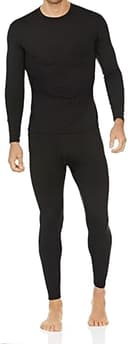
The layer against your skin does the most work for the least money, which is why the fleece-lined base set is our “buy this first” pick even though it isn’t camo. A synthetic top and bottom trap heat and wick sweat so you don’t chill once you settle in. Avoid cotton against the skin — it holds moisture, and wet cotton in the cold is a genuine hazard, not just a comfort problem.
Mid layer for warmth
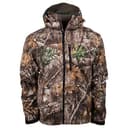
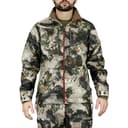
The middle layer is your insulation. A wind-blocking fleece like the King’s Camo jacket, or a sherpa-lined jacket like the Mossy Oak, traps warm air — and in the King’s case a membrane stops the breeze that makes plain fleece feel cold. On a mild sit this can be your outer layer; under a shell it’s your engine.
Outer layer for wind, rain, and quiet
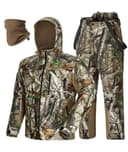
The outer layer blocks wind and weather and, for a bowhunter, has to be silent. The jacket-and-bibs suit is the cheapest way to cover the whole torso and legs at once for cold, low-movement firearm sits. None of these budget shells are truly waterproof, so on a wet day let a rubber boot and a pack rain cover do part of the work — see our budget hunting boots roundup. If rain is a regular part of your season, a dedicated shell over the top is the fix — our budget hunting rain gear picks compare five of them on taped seams and published specs.
Then pants, then the extras
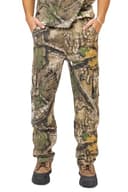
Cargo hunting pants like the Realtree pair handle early and mid-season; for late-season cold you add the base-layer bottoms underneath. The four jobs hunting pants do — camo outer, insulated bibs, rain shell and merino bottoms — and the cheapest pick for each are ranked separately in best budget hunting pants. What to actually put on for a given day and species is covered in what to wear deer hunting. Don’t forget a blaze-orange piece where the law requires it, plus a warm hat and gloves — you lose real heat from your head and hands sitting still. If the season you are buying for is the first six warm weeks rather than November, buy in a different order entirely — our early-season clothing picks cover the sweat problem instead of the cold one.