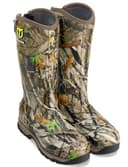
How to choose a budget hunting boot
Start with the season and the style of hunt, not the price. The boot that keeps you comfortable on a five-mile still-hunt in October is the wrong boot for a frozen December sit, and vice versa. Here are the four decisions that matter.
Leather or rubber
Leather boots breathe, flex, and support your foot over long miles; they’re the pick when you walk a lot. Rubber boots barely breathe and aren’t made for distance, but they’re waterproof to the knee and naturally hold less human scent, which is a real edge for whitetail hunters sitting close to deer. Many serious hunters own one of each and choose by the day. If you can only buy one, pick for the hunting you do most.
How much insulation
Insulation is rated in grams — the weight of insulating material per square meter. Uninsulated or 200g suits early-season walking, where too much insulation just makes you sweat. Roughly 400–800g covers most cold-weather sitting; 1,000g and up is for stationary hunts in genuine cold. More is not always better: a boot that’s too warm for the effort leaves your feet damp with sweat, and damp feet get cold fast.
Height and fit
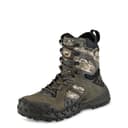
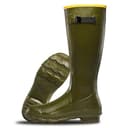
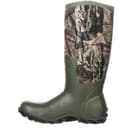
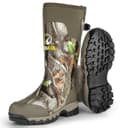
Taller rubber boots (16–18 in) cross creeks and wet ground without a second thought; 8-inch leather boots support the ankle for hiking. Fit is where budget boots earn or lose their keep: buy with room for a heavy wool sock, and read the maker’s size chart, because several budget rubber boots are known to run large. A boot that’s too tight kills circulation and makes feet colder, not warmer. The picks above are chosen from the full size run; if you need a women’s size run, the field is much thinner and the fit variables are different, so see our budget women’s hunting boot picks instead.
What to skip
Skip paying for a big name if the spec sheet matches a cheaper boot — for a rubber boot that mostly sits still, the brand on the side matters less than the neoprene thickness and the insulation number. Skip heavily insulated boots for early-season walking. And don’t skip good socks: a merino or wool-blend sock does as much for warmth as a lot of the insulation you’re paying for.