Hunting Camo vs Military Camo
Surplus BDUs cost a fraction of hunting camo and were designed by people with a serious budget. Here is what deer vision says about whether the pattern matters, and where surplus genuinely wins.
How this is funded: we earn a commission if you buy through our links, at no extra cost to you. It never changes which product we recommend, and we’ll tell you plainly when we’d skip one. Full disclosure.
Walk into any surplus store and you can leave with a full set of woodland camo — jacket, trousers, cap — for less than the price of one pair of hunting pants with a licensed pattern on them. The clothing was designed by an organization with an enormous budget and a serious interest in not being seen. The obvious question follows: why is anyone paying four times as much for a leaf print?
It is a fair question, and the answer is more interesting than either side of the usual argument. Surplus works better than the hunting industry would like you to think and worse than the surplus enthusiasts claim, and the reasons come down to who each pattern was designed to fool and what the fabric does when it gets cold and wet.
Start with the eye you are hiding from
A camouflage pattern is only meaningful relative to the visual system looking at it, and deer and humans do not share one.
A whitetail is a dichromat. According to the National Deer Association’s summary of the research, deer carry two cone photopigments rather than the three a human has, and the one they are missing is the red cone. They see blues and short wavelengths very well. Orange and red fall together for them and neither reads the way it reads to you. On top of that, a deer’s lens lacks the ultraviolet filter yours has, so it perceives UV that is simply invisible to you.
Three consequences fall straight out of that, and they reorganize the whole camo question:
- Color accuracy matters much less than hunters assume. A pattern rendered in perfect autumn-oak tones and one rendered in olive drab look considerably more similar to a deer than they do to you.
- Brightness and contrast matter much more. What a dichromat with excellent low-light vision reads best is the difference between light and dark. A pale face, a pale hand or a glossy surface is a far bigger problem than the pattern on your jacket.
- UV brighteners are a real, invisible problem.Ordinary laundry detergent contains optical brighteners designed to make fabric fluoresce under UV so whites look whiter. On a deer’s unfiltered retina, a treated garment can glow. This applies to expensive hunting camo washed in normal detergent exactly as much as it applies to surplus.
Our full breakdown of the vision research is in what colors can deer see, and it is worth reading before you spend anything on pattern.
What military patterns were actually designed to do
Military camouflage solves a different problem from hunting camouflage, and understanding the difference tells you where each one holds up.
A military pattern is designed against a human observer — a trichromat with good color discrimination — usually at longer range, often with optics, and in modern designs against near-infrared detection as well. That pushes the design toward larger macro-patterns that hold together at distance and toward careful control of the fabric’s infrared signature.
A hunting pattern is designed against a dichromat animal at short range, typically inside a hundred yards and often inside thirty. That pushes it toward high-contrast disruption: bold light-and-dark shapes that break a human outline into pieces at close range, which is why hunting patterns often look aggressive and almost cartoonish up close and dissolve completely at forty yards.
Both do the fundamental job, which is to stop your body reading as a single human-shaped block. In timber, at deer distances, a woodland military pattern breaks up your outline perfectly well. There is no vision-science reason it should not.
Where surplus genuinely wins
- Price, obviously. A complete surplus set costs less than a single piece of licensed-pattern hunting clothing. For a hunter getting started, that difference can be the whole gear budget.
- Durability. Field clothing is specified to survive abuse from people who do not own it. Heavy ripstop, reinforced knees and seats, and stitching that outlasts most consumer hunting apparel.
- Pocket layout. Cargo pockets on the thigh are where your hands naturally reach when you are seated, which is more than can be said for most hunting pants.
- Cold-weather outerwear. Surplus parkas and field jackets in the extreme-cold lines are genuinely excellent insulating garments and are frequently the cheapest serious cold-weather layer on the market.
- The stuff nobody thinks about. Wool blankets, poncho liners, sleeping mats, packs, ammo pouches, gaiters. This is where surplus is most underpriced relative to hunting-branded equivalents.
Where surplus loses, and it is not the pattern
1. Cotton
This is the serious one. A great deal of surplus field clothing is heavy cotton or a cotton-nylon blend, and cotton is the wrong fiber for cold wet weather in a way that goes beyond comfort. It absorbs a large fraction of its own weight in water before it even feels damp, holds that water against your skin, and stops insulating almost completely when wet. Most hypothermia does not happen in extreme cold; it happens in mild, wet, windy conditions in the wrong clothing.
Surplus cotton as an outer layer over a proper base is fine. Surplus cotton asyour insulation in November is a genuine hazard. Fix it with a merino or synthetic base layer underneath — the argument is in merino vs synthetic base layers, and the layering order is in how to layer hunting clothing.
2. Noise
Heavy ripstop is loud. It rasps against brush on the walk in and against itself when you shift your weight in a stand, and a bowhunter at twenty yards is close enough for that to matter. Hunting-specific fabrics — brushed cotton, fleece, soft-shell knits — are chosen substantially for quietness, and it is one of the few places where the premium is buying something real.
A partial fix costs nothing: wash surplus repeatedly to soften it, and wear a fleece layer outermost when you are sitting still.
3. Insulation options
Hunting clothing is built around sitting motionless in the cold, so the market offers insulated bibs, heavy insulated parkas and hand-warmer muffs designed for exactly that. Military clothing is built around moving, so its layering system is excellent for activity and thinner than you want for a six-hour December sit.
4. Blaze orange
Most states require a specific amount of visible blaze orange during firearm seasons, and surplus does not come in blaze. This is not a preference, it is law, and it varies by state and by season. A blaze vest and cap over surplus solves it for a few dollars — but check your own state’s requirement, because the required square inches and placement differ.
5. The DPM and MultiCam question
One honest caution: some modern military patterns are designed with near-infrared management in mind and are sold in versions that are and are not treated. This has no bearing whatsoever on deer, which do not see infrared. Ignore it entirely as a hunting consideration — it is a surplus-forum argument, not a hunting one.
The honest hierarchy of what busts you
If you take one thing from this page, take the order. Ranked by how often it is what actually ends the encounter:
- Wind and scent.Not close. A whitetail carries roughly 297 million olfactory receptors to a dog’s 220 million. Nothing you wear beats hunting the wind — see scent control on a budget.
- Movement. Deer are built to detect motion. Sitting still in surplus beats fidgeting in the newest pattern every time.
- Outline and brightness. Skylined silhouette, pale face and hands, glossy surfaces, UV brighteners in your detergent.
- Pattern. Last. It matters, and it matters least.
The budget verdict
If money is genuinely tight, build the outer layer from surplus and spend the savings on the things higher up that list: a proper base layer, a rangefinder or binocular, boots that let you walk further from the parking lot. That is a better-equipped hunter than one in head-to-toe licensed camo with cotton underneath.
Where we would spend on hunting-specific clothing is the quiet outer layer for bowhunting inside thirty yards, and insulated bibs for late season sits, because both buy something surplus does not offer. If you go that route, the picks below are the budget end of it, and the full field is in our budget hunting clothes roundup and our guide to premium-brand alternatives.
If you decide you want hunting camo instead
Ranked on price-per-performance — the specs that matter divided by what it costs. Select a row to jump to the full write-up. We have not field-tested these — here is exactly what we do instead.
| # | Product | Layer / type | Score | Price |
|---|---|---|---|---|
| 1 | 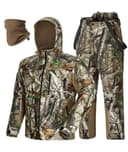 TIDEWE Silent Hunting Suit (jacket + bibs) Best complete budget camo set A quiet-fabric jacket-and-bibs set for the price other brands charge for the jacket alone. It is the single fastest way to kit out a new stand hunter for cold weather without spending KUIU money. | Silent jacket + bibs | 9.0/ 10 | $169.90View on Amazon Price as of October 20, 2026. #ad How we’re funded |
| 2 | 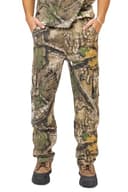 Realtree APX Camo Hunting Pants Cheapest hunting-pattern pant Durable six-pocket cargo pants in Realtree camo for about forty dollars. The workhorse early- and mid-season pant that leaves budget for the gear that matters more. | 6-pocket cargo pants | 8.3/ 10 | $44.99View on Amazon Price as of October 20, 2026. #ad How we’re funded |
Check your state’s regulations. Hunting laws vary by state and change year to year — legal calibers, minimum bow draw weights, blaze-orange rules, seasons and treestand requirements included. Confirm the rules with your state wildlife agency before you hunt. Blaze & Budget is written by an enthusiast, not a game warden, and nothing here is legal advice.
Frequently asked questions
Can you hunt in military camo?
Yes, and it works. Deer are dichromats — they have two cone photopigments rather than three and no red cone — so they see blues and greens well and cannot distinguish orange from red. What that means practically is that deer read brightness, contrast and movement far more than pattern, and a woodland military pattern breaks up your outline as effectively as a commercial hunting pattern. Check your state's blaze-orange requirement first, since firearm seasons in most states require a specific amount of visible orange over whatever you are wearing.
What is the difference between hunting camo and military camo?
They are designed against different eyes. Military patterns defeat human vision at longer ranges and, in modern designs, near-infrared detection — they lean on macro-patterns and color matching for a trichromat observer at distance. Hunting patterns are designed for a dichromat animal at close range and lean on high-contrast disruption of your outline. Both break up a human silhouette in timber, which is most of the job. The bigger practical differences are fabric noise, insulation options and whether the cut suits sitting still.
Is army surplus good for hunting?
For an outer layer, often yes, and it is the cheapest way to get durable field clothing. Surplus BDUs and field jackets are built from heavy ripstop cotton or cotton-nylon blends designed to survive abuse, and the cargo pocket layout is genuinely useful. The two things to check before you buy: cotton content, because cotton holds water against you and is dangerous in cold wet conditions, and fabric noise, because heavy ripstop is louder against brush than fleece or brushed cotton.
Do deer see blaze orange?
Not as orange. Deer lack a red cone photopigment, so orange and red fall together in their color perception and neither stands out the way it does to you. What deer do see well is blue, and they have no ultraviolet filter in the lens, so fabrics treated with the UV brighteners in ordinary laundry detergent can glow to them in a way that is invisible to you. That is why washing hunting clothes in normal detergent is a genuine problem and the pattern usually is not.
Does camo pattern actually matter for deer hunting?
Far less than hunters spend as though it does. In order of what actually gets you busted: wind and scent, then movement, then outline and brightness, then pattern. A hunter in a solid drab jacket who sits still with the wind in their face will be seen far less often than one in the newest pattern who fidgets with a crosswind. Buy something drab that breaks up your shape, then spend the saved money on the things higher in that list.
Should I wear cotton military surplus hunting in the cold?
Not against your skin, and not as your only layer in wet cold. Cotton absorbs a substantial share of its own weight in water before it feels wet, holds that water against you, and loses its insulating value entirely when damp — which is the mechanism behind most hypothermia cases in mild weather. Surplus cotton outerwear over a merino or synthetic base layer is fine. Surplus cotton as a base layer in November is a genuine hazard, not just a comfort problem.
Sources
- The Hunter's Guide to Deer Vision — National Deer Association — Deer have two cone photopigments rather than three and no red cone; they see blues and greens well, lack a UV filter, and cannot distinguish orange from red (accessed August 12, 2026)
- To Kill Mature Bucks, Reveal the Wind — National Deer Association — A whitetail carries roughly 297 million olfactory receptors to a dog's 220 million; scent forms a consistent cone above 8-10 mph and eddies unpredictably below it (accessed August 12, 2026)
- Cold Weather Safety — National Weather Service — Federal cold-weather hazard overview — frostbite, hypothermia and wind chill (accessed July 22, 2026)
- Hunting — US Forest Service — USFS rules for hunting on National Forest System land — state-law compliance and area restrictions (accessed July 22, 2026)
Keep reading
Best Budget Hunting Clothes
The purpose-built alternative, compared on warmth, noise and live price.
See the picksWhat Colors Can Deer See?
The vision science behind every camo argument, with the actual cone data.
Read the guideWhere to Buy Cheap Hunting Gear
Where surplus fits against clearance, last-gen models and the used market.
Read the guideScent Control on a Budget
The thing that busts you long before your pattern does.
Read the guide