What a base layer is actually for
Before the fabric argument, the job description — because most base-layer mistakes are job description mistakes.
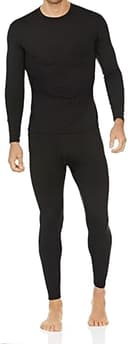
A base layer is not a warmth layer. Its function is to sit in contact with your skin and move sweat away from it, so that the insulating layers above can do their work on dry skin. Warmth comes from the mid layer. If your base layer is doing the warming, you bought the wrong garment or you are missing a fleece.
Two consequences follow. First, fit matters more than fabric: a base layer must sit against your skin, and a loose one is just a thin shirt. Second, cotton is disqualified entirely. Cotton absorbs sweat and holds it against you, which is the exact opposite of the job. That single swap — out of a cotton t-shirt, into any technical base layer — is a bigger upgrade than merino versus synthetic will ever be. Our layering guide covers where each layer fits in the system.
The four real differences
1. Odor: merino wins, and it is not close
This is the argument for wool, and for a hunter it is a better argument than it is for a hiker. Merino resists odor build-up far longer than synthetic does. A synthetic base layer worn on consecutive hunts starts to smell within a couple of days; merino can be worn repeatedly and stay comparatively neutral.
For a whitetail hunter this is not a comfort issue, it is a scent issue — and the layer against your skin is the one most saturated with you. On a multi-day trip where laundry is not an option, or on public land where you are hunting the same pressured ground repeatedly, merino is buying something a synthetic cannot. It is worth reading alongside where scent control actually pays off, because clothing sits below wind in that hierarchy.
For a day hunter who drives home and throws the shirt in the wash, this advantage is worth close to nothing. Be honest about which one you are.
2. Wet performance: merino, with a caveat
Wool retains a meaningful share of its insulating value when damp, because the fiber structure keeps trapping air even with water in it. Synthetic does not insulate as well wet, but it dries substantially faster.
Which of those matters depends on the hunt. A static stand hunter who arrives sweaty and then sits still for four hours is helped more by wool, because there is no body heat surplus available to dry anything out. A hunter who is moving — still-hunting, spot-and-stalk, hiking in and out — is often better served by synthetic’s faster drying, because movement generates the heat that does the drying.
3. Durability: synthetic wins
Merino wears through. Elbows, heels, shoulder points under a pack strap and anywhere else that sees repeated abrasion will thin out on wool considerably sooner than on a synthetic of the same weight. Wool also needs more careful washing — cool water, no fabric softener, no hot dryer — and a hot cycle will shrink a merino top once and permanently.
A synthetic base layer is close to indestructible by comparison and can be washed indifferently for years. When you are spending three times as much, the shorter service life is part of the true cost.
4. Price: synthetic wins, by a wide margin
A usable synthetic base layer starts under $20. A merino set typically runs about three times that. Merino is not three times better at any measurable thing — it is meaningfully better at one thing (odor), somewhat better at one more (damp warmth), and worse at two (durability, price).
For a hunter building a kit from nothing, that ratio matters enormously. The difference between one merino set and three synthetic sets is the difference between having a clean dry base layer every hunt and washing between hunts. Having three of a cheap thing frequently beats having one of an expensive thing.
The split system: what we would actually buy
Nothing requires you to pick one fabric for your whole body, and the best value in this category is a mixed kit built around where each fabric earns its money.
- Synthetic on top for active hunts. Cheap, fast drying, and it is the layer you sweat through on the walk in.
- Merino bottoms. Legs are the layer people skip and then regret at first light. They see far less abrasion than elbows and shoulders, so wool lasts longer down there, and you rarely need more than one pair.
- Merino on top for multi-day trips only. This is where the odor advantage is genuinely worth the money. For a drive-home day hunt it is not.
- A midweight synthetic as the bridge. Cheaper than adding a whole fleece, and it covers the awkward gap between a light base and a real mid layer.
Buy in that order, spending the least first. Our full base layer rankings cover the individual picks in more depth.
The specs to compare, and the one nobody publishes
When you do compare, compare fabric weight, given in grams per square meter. That number tells you far more about how warm a layer will be than the fiber name does.
- 150 g/m² and below: lightweight. Early season, or anyone who moves a lot.
- Around 200 g/m²: the do-everything weight for roughly October through December, and the right first purchase for most hunters.
- 250 g/m² and up: heavyweight. Late-season static sitting, and too warm for anything with a walk attached.
The catch is that plenty of listings, especially synthetic ones, do not publish a fabric weight at all. Where a maker does not state it, we mark it “not published” rather than guessing — that gap is a finding about the product, not a hole in our research. Use fit description and the maker’s own light / mid / heavy label as a rough proxy in those cases.
The short answer
If you hunt day trips and go home to a washing machine, buy synthetic and buy more than one. You will not detect the warmth difference and you will bank most of the money.
If you hunt multi-day trips, hunt hard on pressured public land, or cannot wash between hunts, buy merino for the top and treat the extra cost as scent-control spending — it is far better value in that role than any spray. And if you can only fund one upgrade this season, merino bottoms plus a cheap synthetic top is the combination that punches furthest above its price.