Blaze & Budget

LaCrosse Grange 18″ Review

The rubber boot other rubber boots get compared to. What scent-free rubber genuinely buys you, the one spec people misread, and the hunters who should skip it.

By Stephen V.Last updated How we rank

The LaCrosse Grange has been the default answer to “what rubber boot should I buy” for long enough that the recommendation now gets repeated without being examined. It is a plain, tall, uninsulated rubber boot with no camo pattern, no insulation rating to boast about, and no modern features. It has outlasted a great many boots that had all three.

That longevity is the interesting part of this review. The Grange does one job — put a scent-neutral, genuinely waterproof barrier between you and the ground for the walk to a whitetail stand — and it does not attempt anything else. Whether that is the right purchase for you depends almost entirely on how far you walk and how cold it gets, and we will be specific about both.

We do not own this boot and are not claiming to have put a season in it. This review works from the published construction specification on the listing, what the design can and cannot physically do, and comparison against the rubber boots we rank alongside it — our method is here. Where LaCrosse does not publish a figure, we say so rather than inventing one.

How this is funded:we earn a commission if you buy through our links, at no extra cost to you. It never changes which product we recommend, and we’ll tell you plainly when we’d skip one. Full disclosure.

At a glance

Ranked on price-per-performance — the specs that matter divided by what it costs. Select a row to jump to the full write-up. We have not field-tested these — here is exactly what we do instead.

#ProductType / insulationScorePrice
1
LaCrosse Grange 18" Rubber

LaCrosse Grange 18" Rubber

Best scent-free rubber boot for whitetail

The classic scent-free rubber boot whitetail hunters have trusted for decades. Naturally scent-free, waterproof to the knee, and cheap enough to be a no-brainer for anyone hunting from the ground or a stand.

18" rubber, scent-free
8.9/ 10
$99.95View on Amazon

Price as of September 5, 2026. #ad How we’re funded

The full review

#1Best scent-free rubber boot for whitetail8.9/ 10 value

LaCrosse Grange 18" Rubber

The classic scent-free rubber boot whitetail hunters have trusted for decades. Naturally scent-free, waterproof to the knee, and cheap enough to be a no-brainer for anyone hunting from the ground or a stand.

Strengths

  • All-natural ZXT rubber is naturally scent-free — a real edge for whitetail
  • 18-inch height crosses creeks and wet ground without a second thought
  • Time-proven design; the budget benchmark for rubber boots

Trade-offs

  • Uninsulated version is cold once temps drop near freezing
  • Rubber boots are not made for long miles of hiking
Height / material18 in, ZXT rubber
Scent-free rubberYes
InsulationNone (uninsulated model)

Specs read from the product listing, on July 22, 2026. “Not published” means the maker doesn’t state that figure. The score is our value rating, not a lab test — how we rank.

What LaCrosse actually publishes

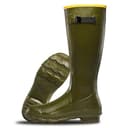
The Grange in this configuration is an 18-inch, hand-laid natural rubber boot in LaCrosse’s ZXT compound, uninsulated, in a plain dark finish. Three facts matter and everything below is an argument about what each one means in the woods: the rubber is natural rather than synthetic, the upper is 18 inches, and there is no insulation in this model.

Natural rubber, and why it is the whole point

Your boots are the only piece of gear in continuous contact with ground a deer will later put its nose on. Leather absorbs sweat and releases it along your entire entry route; a sealed rubber boot does not. Natural rubber compounds are also relatively neutral in their own right, where some cheap synthetics carry a manufacturing smell of their own for the first season.

On pressured whitetail ground — small properties, public land with a walked-in entry route, anywhere deer regularly cross the trail you use — that is a real and cheap advantage. Keep it in proportion: your boots are one scent input and the wind dominates all of them. But it is the input you can eliminate for the price of a boot you needed anyway.

Eighteen inches is a decision, not a size

The 18-inch upper is what makes this boot stop being a decision in the field. Creek crossings, flooded timber, marsh edge, standing water in a bean field after a week of rain — you walk through it rather than around it. Hunters who move to a tall rubber boot almost always say the same thing: they stopped route-planning around water.

The cost is weight and heat. A tall boot carries more rubber up your calf, and rubber does not breathe, so a warm walk in a tall boot arrives with a damper foot than a shorter one would. If you never cross water and hunt dry upland ground, a shorter rubber boot is genuinely the better buy and this is not the model to want.

Uninsulated, and this is where people get it wrong

This is the spec most often misread on this boot. The Grange in this model has no insulation. Rubber alone is not warm; it is a barrier, not a thermal layer. Once temperatures approach freezing and you sit still, an uninsulated rubber boot gets cold, and it gets cold faster than an uninsulated leather boot because there is no breathability to move the sweat out.

That does not make it a bad boot. It makes it an early-season and mild-weather boot, which is exactly what a great many hunters actually need most of the time. Sitting a 25-degree December all-day sit in these, then blaming the boot, is a fitting error rather than a product defect — and it is why we rank insulated boots separately.

Where it is genuinely beaten

An honest review names the losses. Three of them here are structural, not fixable by a newer model.

Walking distance. Like every rubber boot, the Grange is a straight-sided tube. There is no fitted heel counter, so your heel lifts with every step, and that is the mechanism that produces blisters over distance. Rubber boots with an added steel shank walk noticeably better on uneven ground, and if your access is a mile of side-hill, that feature is worth more to you than the scent advantage. Our rubber vs leather comparison is the honest version of that decision.

Warmth per dollar. Insulated rubber boots from the budget brands deliver far more warmth for the money than this boot plus heavy socks ever will. If cold sits are the bulk of your season, buy insulation directly rather than trying to layer your way to it.

Fit precision. Rubber boots are sold in whole sizes and generous shapes; you fit around them with socks rather than fitting them to your foot. If you have a narrow foot or a high instep, that is a compromise you will feel every hunt, and no break-in period changes it.

Three hunters who should buy something else

  • The hunter walking real miles. Over a mile, especially uphill, a fitted leather boot will cost you less in blisters and ankles than this saves you in scent.
  • The late-season sitter. If most of your hunting is static and below freezing, buy an insulated boot and stop trying to solve it with socks.
  • The dry-ground upland hunter. If you never cross water, you are carrying 18 inches of rubber for no return. A shorter boot or a leather boot is lighter and cooler.

Making it last

Rubber boots do not usually wear out from use; they die from storage. Heat, direct sunlight and ozone all degrade natural rubber, and the failure shows up as a crack at the ankle flex point that cannot be repaired. A pair left in the bed of a truck through a southern summer can be finished before the season opens.

Keep them somewhere cool and dark, rinse mud off rather than letting it dry on and abrade the surface, dry them out of direct sun and away from a heat source, and store them upright rather than folded over at the ankle. That is the entire maintenance routine, it costs nothing, and it roughly doubles the working life of the boot.

The verdict

Buy it if you hunt whitetail from stands or blinds inside about a mile of the truck, cross water on the way in, and your season is mostly early and mid-season rather than the deep cold. In that lane it does something no leather boot can do, at a price that has stayed reasonable for decades, and it does not ask you to compromise anywhere that matters for that hunt.

Do not buy it as your only boot if you cover distance, hunt steep ground, or sit still in freezing weather. It is a specialist that happens to be cheap, not an all-rounder — and buying it as an all-rounder is how it gets a bad reputation it does not deserve.
Frequently asked questions

Is the LaCrosse Grange insulated?

The standard Grange model reviewed here is uninsulated. Rubber by itself is a waterproof barrier, not a thermal layer, so this boot is comfortable in mild and early-season conditions and gets cold on a static sit near or below freezing. LaCrosse offers insulated boots elsewhere in its range, and other makers do insulated rubber for less money. If most of your hunting is late season, buy an insulated model rather than trying to compensate with thicker socks.

Are LaCrosse Grange boots good for walking?

For short distances to a stand, yes. Over roughly a mile they start costing you, for the same reason every rubber boot does: there is no fitted heel counter, so your heel lifts with each step and that motion creates blisters, and there is little torsional stiffness to resist a rolled ankle on uneven ground. If your access route is long or steep, a fitted leather boot or a steel-shank rubber boot is the better tool.

How should I size the LaCrosse Grange?

Rubber boots are sold in whole sizes and fitted around socks rather than fitted to the foot. Most hunters size to accommodate the sock weight they will actually hunt in — a boot that fits perfectly with a thin sock will be tight and cold with a heavy one, because compressed insulation stops insulating. Try them on in the afternoon when your feet have swollen, wearing your hunting socks, and expect a looser, more generous fit than a leather boot.

Does scent-free rubber actually help?

It removes one input. Leather absorbs sweat and releases it along your entire walk in; sealed natural rubber does not, and your boots are the only gear in constant contact with ground a deer will investigate later. On pressured ground with a walked-in entry route that is a genuine advantage for the price of a boot you needed anyway. It does not make you scentless — wind direction still dominates everything else you do.

How long do LaCrosse Grange boots last?

Several seasons of regular use, and they usually fail from storage rather than mileage. Heat, sunlight and ozone degrade natural rubber, and the result is a crack at the ankle flex point that cannot be repaired. Store them cool, dark and upright rather than folded, rinse mud off before it dries, and dry them away from direct heat. That routine costs nothing and roughly doubles the working life.

Grange or an insulated rubber boot?

Match it to when you hunt. The uninsulated Grange is the better early and mid-season boot: cooler on the walk in, lighter, and less likely to leave you sitting in a sweat-damp boot. An insulated rubber boot is the better late-season boot and delivers far more warmth per dollar than this boot plus heavy socks. Hunters with a long season often own one of each, and that is a cheaper outcome than one boot that is wrong half the year.

Sources

Keep reading