Blaze & Budget

Best Cold-Weather Hunting Gear for the Money

Late-season sits do not end because your chest got cold. They end because of your feet, then your hands. Five pieces that fix it in that order, at live prices.

By Stephen V.Last updated How we rank

If you buy one thing for the late season, buy the Kalkal 800g insulated boot. Cold sits do not end because a hunter’s torso got cold. They end because their feet went numb at 9 a.m. and the walk back to the truck started sounding reasonable. Every piece on this page is here because it fixes a specific failure point, and they are listed in the order those failure points actually bite: feet, then hands, then the layer against your skin, then the shell.

This is not a clothing outfit list — that is a different page, and our budget hunting clothes rankings cover base-to-shell apparel on its own. This page is the late-season cross-category kit: boots, socks, hands, base layer and outer shell treated as one system for the hunter who is going to sit still in genuinely cold weather for four hours and would like to still be there at last light.

It is also a safety page, quietly. Hypothermia does not require Arctic conditions — published cold-weather guidance is clear that it can set in at temperatures well above freezing when you are wet and not moving, which describes a rained-on stand hunter exactly. We do not own this gear and have not field-tested it; every spec below is read from the tracked listing, and our method is here.

How this is funded: we earn a commission if you buy through our links, at no extra cost to you. It never changes which product we recommend, and we’ll tell you plainly when we’d skip one. Full disclosure.

Quick picks

Ranked on price-per-performance — the specs that matter divided by what it costs. Select a row to jump to the full write-up. We have not field-tested these — here is exactly what we do instead.

#ProductKey specScorePrice
1
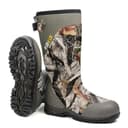
Kalkal 800g Insulated Hunting Boot

Kalkal 800g Insulated Hunting Boot

Buy this first: the cold sit boot

800 grams of insulation and a 7 mm neoprene bootie for under $100 is the best warmth-per-dollar number on this page. It is the boot that makes a late-November sit survivable without a $250 receipt.

Rubber, 800g
9.0/ 10
$93.99View on Amazon

$119.9922% off

Price as of November 22, 2026. #ad How we’re funded

2
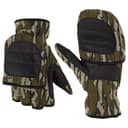
Carhartt Hunt Fleece Camo Flip Mitten

Carhartt Hunt Fleece Camo Flip Mitten

Best hands solution for a stationary sit

The right answer to the cold-hands problem, because it refuses to compromise. A mitten keeps fingers together and warm; the flip-back top gives you bare fingers for the ten seconds you need them.

Fleece · flip mitten
8.7/ 10
$28.99View on Amazon

Price as of November 22, 2026. #ad How we’re funded

3

Merino.tech Merino Wool Base Layer Set (200 g/m²)

Best base layer for multi-day cold

Merino top, bottom and neck gaiter in one box. Wool's advantage over synthetic is not warmth, it is that it does not stink after three days in the same shirt — and on a public-land hunt, scent is the whole game.

Merino base set
8.9/ 10
4
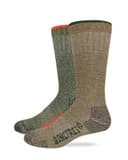
Realtree Heavyweight Merino Blend Mid-Calf (2 pair)

Realtree Heavyweight Merino Blend Mid-Calf (2 pair)

The cheapest real upgrade here

Two pairs of heavyweight full-cushion merino blend for what one premium sock costs. This is the sock most budget hunters should buy, and buying two pairs at once is the point — you rotate, one dries.

Merino blend · heavyweight
8.8/ 10
$16.49View on Amazon

Price as of November 22, 2026. #ad How we’re funded

5
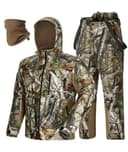
TIDEWE Silent Hunting Suit (jacket + bibs)

TIDEWE Silent Hunting Suit (jacket + bibs)

Best complete outer layer for the money

A quiet-fabric jacket-and-bibs set for the price other brands charge for the jacket alone. It is the single fastest way to kit out a new stand hunter for cold weather without spending KUIU money.

Silent jacket + bibs
9.0/ 10
$135.99View on Amazon

$209.9935% off

Price as of November 22, 2026. #ad How we’re funded

The picks in full

#1Buy this first: the cold sit boot9.0/ 10 value

Kalkal 800g Insulated Hunting Boot

800 grams of insulation and a 7 mm neoprene bootie for under $100 is the best warmth-per-dollar number on this page. It is the boot that makes a late-November sit survivable without a $250 receipt.

Strengths

  • 800 g insulation plus 7 mm neoprene — both figures published, not implied
  • Warm enough for a full cold sit that would end early in an uninsulated boot
  • Under $100 for a genuine late-season boot

Trade-offs

  • Too warm to walk far in above about 40 degrees
  • Kalkal is a newer name — long-term durability is unproven
Insulation800 g
Neoprene thickness7 mm
WaterproofYes

Specs read from the product listing, on August 11, 2026. “Not published” means the maker doesn’t state that figure. The score is our value rating, not a lab test — how we rank.

#2Best hands solution for a stationary sit8.7/ 10 value

Carhartt Hunt Fleece Camo Flip Mitten

The right answer to the cold-hands problem, because it refuses to compromise. A mitten keeps fingers together and warm; the flip-back top gives you bare fingers for the ten seconds you need them.

Strengths

  • Mitten warmth for the two hours of sitting, finger access for the one shot
  • Fleece stays quiet at the moment of the flip — no zip, no crinkle
  • Solves the problem every thin glove pretends does not exist

Trade-offs

  • Bulkier than a glove for the walk in and for climbing sticks
  • The flip-back top is one more thing that can flap at the wrong moment
MaterialFleece
StyleFlip-back mitten
Insulation weightNot published
Water resistanceNot published

Specs read from the product listing, on August 19, 2026. “Not published” means the maker doesn’t state that figure. The score is our value rating, not a lab test — how we rank.

#3Best base layer for multi-day cold8.9/ 10 value

Merino.tech Merino Wool Base Layer Set (200 g/m²)

Merino top, bottom and neck gaiter in one box. Wool's advantage over synthetic is not warmth, it is that it does not stink after three days in the same shirt — and on a public-land hunt, scent is the whole game.

Strengths

  • Top, bottom and a neck gaiter in one purchase — a complete layer
  • Merino resists odor far longer than synthetic, which matters for scent control
  • 200 g/m² is the do-everything weight for October through December

Trade-offs

  • Roughly three times the price of a synthetic set
  • Merino wears through faster than synthetic at the elbows and heels
FabricMerino wool
Weight200 g/m²
PiecesTop, bottom and neck gaiter

Specs read from the product listing, on August 11, 2026. “Not published” means the maker doesn’t state that figure. The score is our value rating, not a lab test — how we rank.

#4The cheapest real upgrade here8.8/ 10 value

Realtree Heavyweight Merino Blend Mid-Calf (2 pair)

Two pairs of heavyweight full-cushion merino blend for what one premium sock costs. This is the sock most budget hunters should buy, and buying two pairs at once is the point — you rotate, one dries.

Strengths

  • Heavyweight full cushion — the right weight for a stationary November sit
  • Two pairs per pack, so the wet one dries while you hunt in the dry one
  • Merino blend gets you the wool warm-when-damp behavior at a low price

Trade-offs

  • The listing does not publish the merino percentage — the blend is unknown
  • Heavyweight is too much sock inside an already-tight boot
Merino contentNot published
CushionFull cushion, heavyweight
HeightMid-calf
Pack2 pair

Specs read from the product listing, on August 19, 2026. “Not published” means the maker doesn’t state that figure. The score is our value rating, not a lab test — how we rank.

#5Best complete outer layer for the money9.0/ 10 value

TIDEWE Silent Hunting Suit (jacket + bibs)

A quiet-fabric jacket-and-bibs set for the price other brands charge for the jacket alone. It is the single fastest way to kit out a new stand hunter for cold weather without spending KUIU money.

Strengths

  • Jacket and bibs together — a full outfit in one purchase
  • Silent brushed fabric that will not scrape against a stand
  • Fleece-lined and warm enough for firearm-season stand sits

Trade-offs

  • Bulky and warm — too much for early-season or active hunts
  • Sizing runs large; size down if you are between sizes
PiecesJacket + bibs
FabricSilent brushed, fleece-lined
Best seasonLate / firearm season

Specs read from the product listing, on August 10, 2026. “Not published” means the maker doesn’t state that figure. The score is our value rating, not a lab test — how we rank.

Why this list is ordered the way it is

Buy in the order above and each purchase buys you more sit time than the one after it. That order is not about comfort, it is about physics: your body protects its core by reducing blood flow to the extremities, so your fingers and toes get cold first and stay cold longest, no matter how good your jacket is. A $400 parka over thin socks and a $90 boot over good ones is not a close contest.

It is also about how a stand hunt actually goes wrong. You walk in warm, sweat into your layers, then sit still and let that moisture steal heat for four hours. Nearly every late-season failure traces back to that sequence, which is why a dry base layer and a boot with real insulation beat a thicker coat so consistently.

1. Feet: 800 grams of insulation, and why the number matters

Boot insulation is sold in grams, which is a measure of insulation weight per square meter, not of temperature rating. It is the only comparable warmth number in the category, and it is the reason the Kalkal is here: 800 grams plus a published 7 mm neoprene bootie, for a price that does not reach three figures.

Roughly, 400 grams is an early-season or walking boot, 800 grams is the standard for sitting still in cold weather, and 1,000 grams and up is for genuinely bitter static sits. The trap is that insulation you are not sitting still in makes you sweat, and sweaty feet get colder than dry ones. An 800 gram boot is too warm to walk a mile in above about 40 degrees, and that is a real limitation, not a quibble.

Fit matters as much as the gram figure. A boot laced tight over a thick sock restricts circulation and will be colder than the same boot with room to move your toes. Size for the sock you will actually wear. Our insulated boot rankings compare the rest of the field on the same published figures.

2. Hands: the mitten argument

Gloves are warmer than bare hands and mittens are warmer than gloves, because fingers heat each other when they share a compartment. That is settled, and it is also why most hunters make the wrong choice: they buy gloves because gloves let them shoot, and then spend two hours with cold hands to preserve a capability they use for four seconds.

A flip-back mitten refuses that trade. Fingers stay together in a fleece mitten for the sit, and the top folds back when something walks in. The fleece matters as much as the design: at the moment you flip it, a zip or a crinkly shell is a noise you cannot afford, which is why we rate the Carhartt over cheaper insulated gloves for a stationary hunt.

It is the wrong glove for an active hunt or for climbing sticks — too bulky, and the flip-back top can flap at the wrong moment. If you still-hunt or run a mobile saddle setup, buy a thinner glove and accept colder hands, or carry both. Our glove rankingscover the thin end of that range — the three that come in under $25 are split by job, since none of them publishes a warmth figure — and the cheapest fix of all is a pack of budget hand warmers — up to ten published hours of heat for the price of a coffee, inside whatever glove you already own.

3. Skin: the layer that decides everything above it

The base layer is the cheapest garment in the kit and the one that changes the most about how a cold sit feels, because its job is to get sweat off your skin so the insulation above it works on dry skin. Damp skin loses heat many times faster than dry skin, which is the mechanism behind most of the cold-weather misery hunters blame on their coat.

Merino earns its price on multi-day hunts specifically: it resists odor far longer than synthetic, and on a public-land hunt where you cannot wash between sits, that is scent-control spending rather than comfort spending. The Merino.tech set publishes 200 g/m², which is the do-everything weight for October through December, and includes a neck gaiter — the neck is an underrated heat leak.

For a day hunter who drives home to a washing machine, a synthetic set at a third of the price does the same thermal job, and owning three of them beats owning one of anything. The full argument is on our merino vs synthetic page. The one rule with no exceptions: no cotton, anywhere in the system.

4. Socks: the cheapest real upgrade on this page

A heavyweight merino-blend sock costs a fraction of everything else here and fixes more cold than anything except the boot itself. The Realtree pack is two pairs, and that is the point rather than a bonus: you hunt in the dry pair while yesterday’s dries, and you carry a spare for the walk out after a wet morning.

The honest caveat is that the listing does not publish the merino percentage, so “merino blend” is doing unspecified work — we mark that unknown rather than guessing at a number. And a heavyweight sock inside an already-snug boot is a circulation problem, not a warmth solution. Size the boot for the sock, in that order.

5. The shell: a full suit for jacket money

The TIDEWE suit is here because it is a jacket and bibs in one purchase, and bibs are the piece budget hunters skip and then regret at first light. A jacket keeps your torso warm while cold comes up through the seat of a stand; bibs stop that, and they stop the gap at your waist that opens every time you draw or shoulder a rifle.

The fabric is brushed and quiet, which matters on a stand where any movement scrapes against metal, and it is fleece lined for firearm-season sits. It is too much suit for early season or any hunt with walking in it — the listing is aimed squarely at cold static hunting and should be bought as such. Sizing is noted to run large.

Firearm season is also when blaze-orange rules apply in most states, usually as a minimum area of visible orange above the waist. Check yours and plan the orange as part of the outer layer rather than an afterthought over it.

The two free things that beat all of it

  • Walk in slower. Arriving dry is worth more than any single item on this page. If you have to open your jacket on the walk, you are walking too fast for the temperature.
  • Carry the outer layer, wear it at the stand. Put the insulating layer on when you stop moving, not before. Sweating into it on the walk in is how a good jacket becomes a wet one.
  • Eat and drink on stand. Being cold is partly a fuel problem, and dehydration in cold weather is easy to miss because you do not feel thirsty.
  • Know when to leave. Shivering that you cannot stop, clumsy hands and slurred speech are the published early signs of hypothermia, and they come before you feel in danger. The deer will be there next week.

Cold weather is also when deer move most, which is the cruel part — the sits worth sitting are the ones hardest to sit. Kitting out properly is less about comfort than about being present during the hours that produce. Our layering guide puts the whole system in order.
Check your state’s regulations. Hunting laws vary by state and change year to year — legal calibers, minimum bow draw weights, blaze-orange rules, seasons and treestand requirements included. Confirm the rules with your state wildlife agency before you hunt. Blaze & Budget is written by an enthusiast, not a game warden, and nothing here is legal advice.

Frequently asked questions

What is the best cold-weather hunting gear to buy first on a budget?

Insulated boots, then socks, then a non-cotton base layer, then the outer layer. Cold sits end because of feet and hands, not chests — your body reduces blood flow to the extremities to protect your core, so your toes get cold first regardless of how good your jacket is. An 800 gram insulated boot over good merino-blend socks will keep you in the stand longer than any coat upgrade at the same price.

How many grams of insulation do I need in a hunting boot?

Around 800 grams is the standard for sitting still in cold weather, which is what most late-season stand hunters need. Roughly 400 grams suits early season or any hunt with real walking in it, and 1,000 grams and up is for bitter static sits only. Grams measure insulation weight, not a temperature rating, so it is a comparison number rather than a promise. More insulation than your activity level needs makes you sweat, and sweaty feet get colder than dry ones.

Are mittens really better than gloves for hunting?

Yes, thermally — fingers in a shared compartment warm each other, and gloves separate them. The reason hunters buy gloves anyway is shooting, and a flip-back mitten resolves that: fingers stay together for the two hours of sitting and the top folds back for the few seconds you need them. The trade-off is bulk, so it is the wrong choice for still-hunting or climbing sticks, where a thinner glove and colder hands is the better compromise.

Do I need merino base layers for cold-weather hunting?

Only if you hunt multiple days without laundry, or hunt pressured ground where scent is your main constraint — merino's genuine advantage is odor resistance, not warmth. At the same fabric weight, merino and synthetic are close enough that you will not call the difference in a stand. For a day hunter who drives home and washes the shirt, a synthetic set at a third of the price does the same thermal job and you can own three of them.

Why do I get cold even though I am wearing good gear?

Almost always because you walked in too fast and sweated into your layers, then sat still and let that moisture pull heat out of you for four hours. Damp skin loses heat many times faster than dry skin. The fix is free: walk slower than feels necessary, carry your insulating layer and put it on when you stop moving, and never wear cotton anywhere in the system. Gear cannot out-engineer a wet base layer.

At what temperature does hypothermia become a risk while hunting?

Well above freezing, which is what catches hunters out. Published cold-weather guidance is clear that hypothermia can develop in cool, wet, windy conditions in the 40s and 50s Fahrenheit when you are not generating heat — a rained-on stand hunter sitting still is a textbook case. Early signs are uncontrollable shivering, clumsiness with your hands and slurred or confused speech, and they arrive before you feel like you are in trouble. Leave when you see them.

Sources

  • Cold Weather Safety — National Weather Service — Federal cold-weather hazard overview — frostbite, hypothermia and wind chill (accessed July 22, 2026)
  • Cold-related Illnesses in Workers — NIOSH, Centers for Disease Control and Prevention — Federal cold-injury guidance: trench foot can occur at temperatures as high as 60 degrees Fahrenheit if the feet are constantly wet, wet feet lose heat 25 times faster than dry feet, and hypothermia presents first as shivering, fatigue, loss of coordination and confusion, then as no shivering, blue skin, dilated pupils, slowed pulse and breathing and loss of consciousness (accessed September 6, 2026)
  • Does Weather Impact Deer Movement? — National Deer Association — Research summary on weather and deer activity: an Auburn study found a slight increase in buck movement during drizzle and average movement during steady rain, while the Deer-Forest Study found bucks reduced movement by as much as half on rainy days, and both found the least movement in calm conditions with activity rising as wind speed increased (accessed September 6, 2026)
  • Blaze clothing requirements — Minnesota DNR — A state example of blaze rules: during open firearms and muzzleloader deer seasons the visible portion of a hunter's cap and outer clothing above the waist must be blaze orange or blaze pink, sleeves and gloves excluded, and blaze camouflage patterns must be at least 50 percent blaze within each square foot (accessed September 6, 2026)

Keep reading