The dates, and what is actually known
Thanksgiving 2026 is Thursday, November 26. That puts Black Friday on Friday, November 27 and Cyber Monday on Monday, November 30. Those are calendar facts. Everything else about the 2026 event — which retailers run which sales, when their windows open, what any individual product costs — is not yet published, and as of this page’s publication date the major retailers have not announced their 2026 event schedules. We will update this page rather than guess at them.
One thing the last several years have established as a pattern rather than a prediction: the event is no longer one day. Promotional windows now open in early November and run through Cyber Monday, which is why “wait for Black Friday” is less useful advice than “start watching the specific item you want in early November.”
How deeply does hunting gear actually discount?
This is the question every other Black Friday page skips, because the honest answer is less exciting than a headline. The best measured proxy we have is Adobe’s analysis of US online retail, which tracks peak discount depth by category across the season.
For the 2025 season — November 1 to December 31, 2025 — Adobe reported that discounts peaked at 20.3% off listed price for sporting goods, against 30.9% for electronics, 29.6% for toys, 25.1% for apparel, 24.3% for televisions and 23.4% for computers. Sporting goods was near the bottom of the table, ahead of only appliances (20.2%) and furniture (18.8%). The comparable sporting-goods figure the year before was 19.5%.
Two honest caveats about that number, because it is the most quoted figure on this page. First, “sporting goods” is a much broader category than hunting — it includes fitness equipment, team sports and outdoor recreation, and hunting gear is a slice of it rather than the whole. Second, a peak discount is the deepest point reached on the best day for the category, not an average you should expect on an arbitrary product. Both of those cut in the same direction: the typical discount on a given piece of hunting gear is shallower than 20.3%, not deeper.
Adobe’s pre-season forecast for that same year is also worth knowing, because it points at a different day than most people assume: it projected Thanksgiving Day as the best day to shop for sporting goods, with Black Friday the deepest day for televisions, toys and appliances and Cyber Monday the best for electronics, apparel and computers. That is one year’s forecast rather than a law of nature, but it fits what the structure of the category would predict, and it means a hunter who only shops on the Friday may be shopping on the wrong day.
What rarely discounts in hunting gear, and why
Some categories are not just unlikely to be discounted — they are structurally prevented from advertising a discount. Knowing which is the difference between waiting productively and waiting for nothing.
Optics from brands that enforce a minimum advertised price
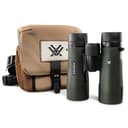
Most established optics brands run a minimum advertised price (MAP) or unilateral pricing policy, under which authorized dealers agree not to advertise the product below a floor the brand sets. Vortex states the requirement openly in its own dealer criteria: becoming an authorized dealer requires “Agreement to uphold Vortex’s MAP policy,” alongside a staffed brick-and-mortar location and minimum order commitments. The practical consequence for a buyer is simple: on a MAP-protected binocular or riflescope, the advertised price is broadly the same everywhere and broadly the same in November as in July. Waiting buys you very little, and the “deal” when it comes is usually a discontinued model, a bundle, or a rebate rather than a price cut.
Current-model bows and crossbows sold through dealers
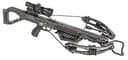
Archery’s flagship products are sold through a dealer network that sets them up, tunes them and services them, and that channel has little incentive to compete on headline price during a hunting season. Where archery prices do move is at generational turnover — the previous model year, once superseded.
Anything in peak season demand
Late November is the middle of firearms deer season across much of the country. Retailers have no reason to discount the thing everyone is walking in to buy that week. This is the single most counter-intuitive fact about hunting-gear timing, and it is why our where-to-buy-cheap-hunting-gear guide puts the real clearance window in January through March, when the shelf space is wanted for fishing and camping.
Safety equipment
Harnesses, lifelines and tethers are cheap already and rarely promoted. More importantly, this is the one category where waiting for a sale is a genuinely bad trade: if someone is hunting elevated without a harness now, the correct time to fix that is now.
What does move on price
Apparel, including hunting clothing
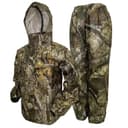
Apparel is one of the deeper-discounting categories in Adobe’s measurement — 25.1% peak in the 2025 season against 20.3% for sporting goods — and it is where inventory pressure is real, because unsold seasonal clothing is a problem for a retailer in a way that an unsold knife is not. Camo, base layers, rain gear and insulated outerwear are the classes where a November price is most likely to be genuinely better than a September one.
Electronics-adjacent gear
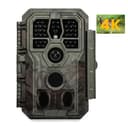
Trail cameras, rangefinders, headlamps and anything with a battery in it sit closer to the electronics end of the market in how they are priced and promoted, and electronics is consistently the deepest-discounting category Adobe tracks. That does not mean a specific trail camera will be discounted — only that this is the class where watching a price through November is most likely to be repaid.
Last year’s model, in any category
The most reliable discount in hunting is not a sale at all. It is the superseded model — the same boot on the same last, the same scope with the same glass, the same pack in last year’s pattern — cleared out when the new one lands, with the manufacturer warranty still attached. The two categories where we would not take that trade blindly are trail cameras and rangefinders, which have genuinely improved generation to generation.
Buy now or wait: class by class
- Binoculars, riflescopes, rangefinders from MAP brands — buy when you need them. Advertised prices are floored by policy. If you need glass for this season, waiting three weeks to save a few percent that may not materialize costs you the season. Our binocular picks are priced live if you want to watch anyway.
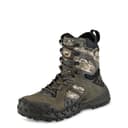
- Boots — buy before your season, not during it. Boots have to fit and have to be broken in; breaking them in takes weeks. A boot bought on November 27 is a boot you are hunting in cold and stiff, if at all. The genuine boot bargain is the post-season clearance in February, for next year.
- Camo, base layers and rain gear — worth watching. This is the class where the apparel discount pattern applies, and where an unsold-inventory cut is most plausible. Just note the sizing problem if you are buying it as a gift.
- Trail cameras, headlamps and battery gear — watch closely. The class most likely to behave like electronics. If you want a camera for next spring’s scouting rather than this week, this is the one to wait on.
- Treestands, saddles, sticks and blinds — buy off-season. Bulky seasonal inventory that retailers want gone once the season closes. November is the worst possible time to buy one of these; February is the best.
- Bows and crossbows — watch, but expect the deal to be a model year, not a price cut. The discount in archery usually arrives as last season’s flagship, not as a percentage off this season’s.
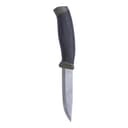
- Knives, socks, gloves and small gear — buy now. These are already at prices where a 15% saving is a couple of dollars. Waiting has an opportunity cost and no meaningful upside.
- Harnesses, lifelines, tethers — buy now, always new. Never wait on fall-arrest equipment, and never buy it used: webbing degrades invisibly under UV and a harness that has already caught a fall is finished while looking perfect.
How to tell a real discount from a manufactured one
The strikethrough price beside a deal is doing a job, and it is worth knowing what the rules around it actually are. The Federal Trade Commission’s guidance on former price comparisons is explicit: a former price is a legitimate basis for a comparison only where it is “the actual, bona fide price at which the article was offered to the public on a regular basis for a reasonably substantial period of time.” Where the former price is “not bona fide but fictitious — for example, where an artificial, inflated price was established for the purpose of enabling the subsequent offer of a large reduction” — the advertised bargain is, in the FTC’s words, a false one.
Three practical habits follow from that:
- Judge the price, not the percentage. A 40% discount off a number nobody ever paid is worse than 10% off a real one. Ask what the thing costs, then ask whether that is a good price for what it does.
- Check the price history, not the badge. Whether through a browser price-history tool or by watching a page like this one over a few weeks, the useful comparison is against what the item has actually sold for recently — not against a list price.
- Be suspicious of a brand-new listing with a deep discount. A product with no price history has no bona fide former price to compare against.
This is also why this site has no price field in its product data at all. Prices render only from a live feed, dated, and expire on their own if the refresh stops — the failure mode is a blank where a number should be, not a stale claim. Our full method is here.
The calendar that beats Black Friday
For a large part of a hunter’s kit, the best day of the year is not in November at all. Retailers clear seasonal hunting inventory once the seasons close — roughly January through March — because the shelf space is wanted for spring. That is when clothing, boots, stands, blinds and accessories reach their lowest prices, and the discipline it requires is buying a season ahead, which you can only do once a season has taught you what you actually lacked.
So the honest framing of this page is: Black Friday is a real but modest event for hunting gear, most useful for gifts, apparel and electronics-adjacent items. For the rest, the deeper discount is three months later. Our where to buy cheap hunting gear guide covers the whole calendar, plus the last-gen and used-market discounts that beat both.
What we will post here in November
When the event starts, this page becomes the live list. What goes on it:
- Only discounts we have checked against the live price on the day, with the date stamped beside them.
- Only on products we already rank — if it is not good enough to recommend at full price, a discount does not make it good enough.
- A plain note where a “deal” is a discount off a list price the item has not recently sold at, because that is the most common shape of a fake one.
What will not go on it: invented percentages, predicted prices, countdown urgency, or a pick that moved up the list because the commission was better. If nothing in a category is genuinely worth buying in November, this page will say that instead.