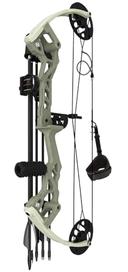
How to choose a youth compound bow
Six specs decide this purchase, and they are not the six a bow company puts on the front of the box. Work through them in this order and the field narrows to one or two bows before you ever look at a price. If the archer is an adult starting out rather than a child, the same logic applies with a higher draw-length floor — best hunting bow for beginners ranks four bows on exactly that test.
1. Draw length comes first, because it is the one you cannot cheat
Draw length is set by your child’s body, not by preference. The Archery Trade Association’s own consumer-education site gives the measurement anybody can do at home: stand relaxed with the arms out in a T, measure wingspan from the tip of one middle finger across the back to the tip of the other, and divide by 2.5. A 60-inch wingspan gives a 24-inch draw length. The same article warns that a draw length “even an inch too long or short can cause problems ranging from decreased accuracy to injury” — which is the real reason a hand-me-down adult bow is a bad first bow, not the weight.
Measure before you shop, then look only at bows whose published range contains that number with room above it. The floors on this page run from 12 inches (Royale) to 19 inches (Limitless, Dragon X6), and that gap is the single biggest sorting mechanism in the category. A small child physically cannot shoot a bow with a 19-inch floor, no matter how light you set the weight.
2. Draw weight decides whether it is a hunting bow at all
This is the part the category tiptoes around. States set a minimum peak draw weight for taking deer with a bow, and the numbers are specific. Minnesotarequires that “your bow must have a pull no less than 30 pounds at or before full draw.” Wisconsinrequires “a bow with a minimum draw weight of 30 pounds.” Pennsylvaniasets a 35-pound peak weight for deer. Those are three states, not fifty, and yours may be higher — but they establish the floor this category has to clear.
Lay the picks against it and the page sorts itself:
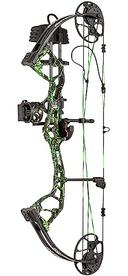
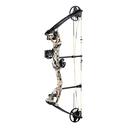
- Clears every minimum above, at any setting:Bear Limitless (25–50 lb, hunting-legal from 30 lb up), Bear Royale (5–50 lb), Sanlida Dragon X8 (0–70 lb). All three reach 50 pounds or more, which is a real whitetail draw weight, not a technicality.
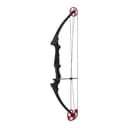
- Cannot legally hunt deer anywhere we checked: the Genesis Original tops out at 20 pounds. That is 10 pounds under the lowest rule on this page. It is not a near miss and no adjustment fixes it.
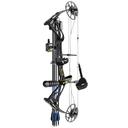
- Do not count on it:the Dragon X6 is specified at 15–30 pounds, which exactly meets Minnesota and Wisconsin at its absolute maximum and fails Pennsylvania. Worse, the listing itself states that available draw weight changes with draw length — so at a child’s shorter draw, the 30-pound number is not guaranteed. Treat it as a target bow.
Clearing the legal minimum is not the same as being ready to hunt. A kid should be able to draw, hold and settle their hunting weight comfortably for twenty seconds without shaking, several times in a row, before anyone talks about a season. Our draw weight for deer hunting guide covers the ethics side and the arrow-energy math behind it. Confirm your own state’s minimum, and its minimum hunting age and mentored-hunter rules, with your wildlife agency before you buy — those vary far more than the equipment does.
3. The growth question: how many seasons does this bow last?
The cheapest youth bow is the one you buy once. Compare the span of the adjustment range, not the starting point:
- Dragon X8 — 18 to 31 inches, 0 to 70 pounds. The widest span on the page by a long way, and the only pick that reaches a full adult hunting setup. A twelve-year-old can start on it and still be hunting with it at twenty-five.
- Royale — 12 to 27 inches, 5 to 50 pounds. The lowest floor, and the one you buy if the archer is small now. The honest cost is the 27-inch ceiling: a tall teen will draw past it. This is a bow a kid finishes, not one they keep.
- Limitless — 19 to 29 inches, 25 to 50 pounds. A middle-school-to-high-school bow, and a good one. It will not fit a small child at either end.
- Genesis — 15 to 30 inches, no adjustment needed. A genuinely different design, covered below.
All four adjust with hex keys rather than a bow press, which matters more for a growing archer than for an adult — you will be changing the setup annually, and a bow that needs a shop visit for every change does not get changed.
4. Let-off, and why the school bow feels harder
Let-off is the percentage of peak draw weight the cams take off your fingers once you reach full draw. A 50-pound bow at 75 percent let-off is about 12 or 13 pounds in the hand while you aim. The Royale publishes 75 percent, the Limitless 65 percent, and the Dragon X6 roughly 70 to 75 percent. The Genesis publishes zerolet-off, by design — the archer holds the full draw weight the entire time they are aiming.
That sounds like a flaw and is actually the reason it exists. The National Archery in the Schools Program says plainly that in 2002 “the Genesis bow was the only universal draw length bow available” and that it was adopted “to keep the program fair for all,” for students in 4th through 12th grade. Zero let-off plus the maker’s 15-to-30-inch universal draw length means one bow fits every kid in a gym class identically, with no module swap and nothing to adjust. If your child shoots in a school program, that is the bow in their hands. It is also why the Genesis builds form faster than anything else here and why it will never be a hunting bow: the discipline that makes it a great trainer is the same discipline that caps it at 20 pounds.
5. What is in the box, and the second bill
A ready-to-hunt package means sight, rest and quiver are already mounted. It does not always mean arrows. Here is the real difference between these five:
- Nothing else to buy: the Dragon X8 and Dragon X6 kits both include 12 arrows and a release aid along with the sight, rest, quiver, peep and stabilizer. The X8 adds a case, a bow stand and an arrow puller.
- Ready to hunt, but add arrows and a release:the Royale ships with a Trophy Ridge Mist sight, Whisker Biscuit, 5-Spot quiver, peep and nock loop. The Limitless ships with a Trophy Ridge sight, rest, quiver, stabilizer, wrist sling, D-loop and peep. Both still need arrows cut to the archer’s draw and a release.
- Bow only: the Genesis listing we track is the bare bow. Sight, rest, arrows and a target are all separate, which is normal for a school-program bow bought through a team but a real cost if you are buying it alone.
Arrows are not an optional line item and they are not interchangeable: they have to be cut to the archer’s draw length and spined to the draw weight, and they have to be re-done when the bow is turned up. Budget for a dozen now and a dozen in two years. Our budget hunting arrows roundup covers what to buy and how spine works.
6. Mass weight, because a kid has to hold it still
Mass weight is how heavy the bow is in the hands, and on a small frame it decides whether the pin stops moving. The spread here is large: the Dragon X6 is the lightest at 2.6 pounds, the Royale is 2.7 pounds bare and 3.3 pounds with its accessories on, the Genesis is 3.5 pounds, and the Dragon X8 is 3.8 pounds net. Bear publishes no mass weight for the Limitless at all, which is the one spec we would most want for a bow aimed at youth shooters.
Axle-to-axle length matters for the same reason, and it is not a smaller-is-better story. The hunting picks sit between 27 and 30 inches, which is compact enough for a blind or a stand. The Genesis is 35 1/2 inches — nearly a foot longer than the Royale and the most forgiving to aim with on a target range, and awkward in a treestand it will never see.
7. What almost nobody publishes
Two specs go missing across this category and we mark them “Not published” rather than filling them in. The first is arrow speed: the Genesis publishes no fps figure at all and the Dragon X6 publishes none either, so the only honest comparison runs between the three bows that do (290, 310 and 265 fps). The second is warranty, and the spread is worth reading before you buy:
- The Dragon X8 listing claims a limited lifetime warranty on main parts, which is the longest term here — conditional on registering the bow within 30 days of purchase, so do it the week it arrives.
- Genesis publishes a clean, specific term: “One (1) year warranty to the original owner. Note that any and all warranties are voided if any alterations are made to the bow, including cosmetic refinishing.” Worth knowing before anyone paints a school bow.
- Bear publishes no warranty term on either the Royale or the Limitless product page. The tracked listings show 30 days and 90 days respectively — the shortest coverage on this page, from the most established brand on it. That is not a reason to avoid them, but it is a reason to buy from a seller you can return to.
What we would skip
- A hand-me-down adult bow set light. Turning a 29-inch draw-length bow down to 30 pounds does not make it fit a 22-inch archer. The draw length is the problem, the weight is not, and shooting a bow that is too long is how young archers learn to hyperextend an elbow and lock in bad form.
- Bows sold by age range.“Ages 8–12” tells you nothing. Two ten-year-olds can be four inches apart in draw length. Measure the wingspan and buy the range.
- Buying the top of the draw-weight range on day one. A kid set at a weight they cannot hold steady will shoot worse, flinch, and quit. Start near the bottom of the range, build the back and shoulder, and turn it up a few pounds a season until it clears your state minimum with margin.
- A target bow bought in the belief it will hunt next fall.If the plan is a deer season, buy a bow whose range already covers the legal minimum. The two sub-30-pound picks here are excellent at their job and will never do that one — hunting vs target compound bow sets out the specs that separate the two categories.
- Skipping the pro-shop setup to save the fee. Draw length set properly, the peep rotated right, the D-loop tied and the arrows cut to length is the difference between a bow that groups and a bow that gets abandoned in a closet. It is the best money in this whole purchase.
Where the bow sits in a youth hunting kit
Order of operations if you are starting from nothing: bow and a proper setup first, arrows and a release second, a target third, broadheads last and only once the archer is grouping arrows at hunting range. Broadheads are the only part of the kit that touches the animal, so they are worth real attention — our budget broadheads roundup covers what matters and the fixed blade versus mechanical comparison explains why a lighter-poundage setup usually wants a fixed blade.
If the archer on your list is an adult or a large teenager, you are on the wrong page — the best budget compound bow roundup covers full-size, full-weight hunting rigs, including the Bear Cruzer G4, which adjusts from 10 to 70 pounds and 14 to 30 inches and is the bow to look at if one purchase genuinely has to serve a growing kid and a grown adult for a decade. It costs roughly twice what the best value pick here does, which is the whole trade-off.
Still deciding whether archery is even the right route for a young hunter? A crossbow is far quicker to learn and is regulated differently almost everywhere — the compound bow versus crossbow comparison lays out the real differences, including the seasons each one gets you. And if you are building a first-season kit on a budget, bow hunting on a budget prices the whole archery setup out in buying order.