How to Choose a Budget Compound Bow
Speed is the number every bow is sold on and the least useful one for deciding. Here is the order the decisions should actually be made in, and where a package deal genuinely beats a bare bow.
How this is funded: we earn a commission if you buy through our links, at no extra cost to you. It never changes which product we recommend, and we’ll tell you plainly when we’d skip one. Full disclosure.
Every compound bow is sold on a speed rating, and the speed rating is close to useless for choosing one. It is measured under a standardized test setup that almost certainly is not yours — a specific draw length, a specific draw weight and a specific arrow weight — and every modern hunting bow, including the cheapest one you would seriously consider, is fast enough to kill a whitetail cleanly inside forty yards.
The specifications that actually decide whether you shoot well are less exciting and appear further down the listing. Here they are in the order the decisions should be made, which is not the order the marketing presents them in.
1. Draw length: the one that cannot be compromised
A bow set to the wrong draw length cannot be shot accurately by anybody, and this is where most first bows go wrong.
Draw length is not a preference. It is a physical measurement determined by your arm span and where your anchor point naturally lands. Too long, and you overextend, your bow arm locks, your anchor floats and your release gets tense. Too short, and you crowd the string, lose your anchor reference entirely, and the bow feels cramped.
How to get it approximately right:stand with your arms outstretched, have someone measure your wingspan fingertip to fingertip in inches, and divide by 2.5. That gives a starting figure that is close for most people. It is a starting figure, not a final answer — a pro shop will refine it in five minutes and it is one of the few things genuinely worth a shop visit.
Why this decides the bow, not just the setting:some budget bows adjust across a wide range — often 15 to 30 inches — without a press or new modules. Others offer a handful of fixed module positions. If you are measuring yourself, buying online, and might be an inch off, a wide-adjustment bow is dramatically more forgiving of that error. It is also the right choice for a growing teenager or a bow that more than one person will shoot. For a younger archer the number that matters is the bottom of the range rather than its width — our youth compound bow roundup sorts five bows by draw-length floor, which runs from 12 inches to 19 inches and decides the purchase before any other spec does.
2. Brace height: the forgiveness dial
Brace height is the distance from the deepest part of the grip to the string at rest, and it is the single most useful specification on a budget bow.
A short brace height means the string stays in contact with the arrow for longer as it accelerates. Longer contact means more energy transferred, which means more speed — and it also means the arrow spends more time being influenced by whatever your hand, grip and release are doing. Every small error gets amplified.
A longer brace height releases the arrow sooner. Less speed, and less opportunity for your form to corrupt the shot.
For a new or budget archer this is not a close call. Seven inches or more and you have a bow that forgives an imperfect grip and a slightly punchy release, which is exactly what your first two seasons will produce. Under about 6.5 inches you have a bow that rewards excellent form and punishes everything else, and you will shoot worse groups with it despite the faster number.
Fifteen feet per second is worth nothing. Consistent arrows are worth everything.
3. Axle-to-axle length: where you hunt decides it
Axle-to-axle is the distance between the two cam axles, and it trades maneuverability against stability. It is also the clearest physical difference between a hunting rig and a target bow — see hunting vs target compound bow for what each end of that scale is built to do.
- Under 30 inches: compact, easy to swing in a ground blind or a tight treestand, and harder to shoot consistently. The string angle at full draw gets sharp, which makes your anchor position more critical and small errors more costly.
- 30–32 inches: the sweet spot for most hunting. Manageable in a stand, forgiving enough to shoot well.
- Over 33 inches: steadier and more forgiving, awkward in confined spaces, and genuinely annoying to carry through brush.
If you hunt exclusively from a small ground blind, buy short. If you hunt from open stands, saddles or the ground, take the extra couple of inches and the forgiveness that comes with them.
4. Draw weight: buy what you can draw badly
The classic budget-buyer mistake is buying maximum poundage because it feels like the serious choice, and then discovering that drawing seventy pounds is a very different proposition seated, in the cold, wearing three layers, with a deer forty feet away and your heart going.
The test that matters: can you draw the bow slowly and smoothly, from a seated position, without lifting the bow above horizontal and hauling it down? Raising a bow skyward to draw it is how you get busted by a deer at twenty yards, and it is a direct symptom of too much poundage.
Many states set a legal minimum around 35 to 40 pounds for deer — Pennsylvania, for instance, sets 35 pounds peak — and a well-placed arrow from a 50-pound bow kills whitetails reliably. Almost every budget bow adjusts across a range, so buy something that covers where you are now and where you will be after a year of shooting. The full argument is in our draw weight guide, and your own state’s minimum is the number that actually binds.
5. Let-off, and why it matters less than the number suggests
Let-off is the percentage of peak draw weight that disappears once the cams roll over at full draw. Eighty percent let-off on a seventy-pound bow means you are holding about fourteen pounds.
High let-off is genuinely useful for hunting, because you often hold at full draw waiting for a deer to clear a branch or take a step, and holding seventy pounds for thirty seconds is not happening. Most modern bows sit at 75–85% and any of them is fine.
What high let-off costs you is a slightly less defined back wall and a marginally weaker feel at full draw. That is a target-archery consideration. For hunting, take the let-off.
6. The package question: bare bow or ready-to-hunt?
A bare bow is not a hunting bow. Before it can hunt it needs an arrow rest, a sight, a quiver, a peep sight, a D-loop or string loop, usually a stabilizer, and a release aid. Bought individually and cheaply, those add up to a substantial fraction of a budget bow’s price. Bought well, they cost more than the bow.
A ready-to-hunt package includes them, and the accessories are entry-level. The rest is usually a basic containment or whisker-style rest; the sight is a simple fixed-pin. Both work. Both are the first things you will upgrade in year two.
For a first budget bow, buy the package. The arithmetic favors it clearly, and you get to find out what you actually want from a sight by using one rather than by reading about them.
What packages almost never include, and what you must budget separately:
- Arrows matched to your spine.Package arrows, where included, are often generic. Spine has to match your draw weight and length — see our arrow guide.
- Broadheads. Never included with a compound package, and not optional. Our broadhead picks cover the fixed-versus-mechanical decision.
- A target. You cannot practice without one, and a block target is a real line item.
- A release aid, if the package does not state one.
7. Cam system: simpler is better on a budget
Single cam, hybrid cam and binary cam systems all work. What matters at this price is that the cams stay in time with each other, and simpler systems drift out of time less and are easier to correct when they do.
A budget bow whose cams are out of time shoots inconsistently in a way that is very hard to diagnose as a new archer, because it looks exactly like bad form. If a pro shop is available to you at all, having the bow checked once before the season is worth more than any accessory upgrade.
The used-bow question
Used compounds are one of the genuinely underpriced things in hunting gear, because archery has a strong upgrade culture and last season’s flagship sells for budget-bow money. Two cautions before you buy one.
Strings and cables are consumables.They have a life of roughly two to three years of regular shooting and replacing them costs a meaningful share of a budget bow’s price. Assume you will need to, and price accordingly.
Inspect the limbs in good light. Look for cracks, splinters and any sign of delamination. A limb failure at full draw is a serious injury, not an inconvenience, and it is the one used-gear risk we would not take casually. If a pro shop can look it over and set your draw length at the same time, that is money well spent.
The order, summarized
- Measure your draw length. Prefer a bow with a wide adjustment range.
- Take brace height of 7 inches or more.
- Take 30–32 inches axle-to-axle unless a blind forces shorter.
- Buy draw weight you can draw slowly while seated.
- Take whatever let-off it comes with.
- Buy the ready-to-hunt package, and budget separately for arrows, broadheads and a target.
- Ignore the speed rating entirely.
Do that and you will have a bow that fits, forgives your form while you build it, and kills deer. Below are the three bows on this site that best match those criteria; the full field is in our budget compound bow roundup, and what the whole setup costs is in bow hunting on a budget.
The bows these decisions point at
Ranked on price-per-performance — the specs that matter divided by what it costs. Select a row to jump to the full write-up. We have not field-tested these — here is exactly what we do instead.
| # | Product | Draw / package | Score | Price |
|---|---|---|---|---|
| 1 | 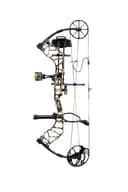 Bear Archery Species XT Ready-to-Hunt Best all-around package A real hunting bow from a legacy brand, sold ready-to-hunt with sight, rest, quiver and stabilizer. Everything you need to be shooting this weekend, at a price that leaves money for arrows and a target. | Up to 70 lb, RTH | 9.1/ 10 | |
| 2 | 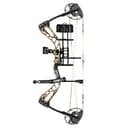 Diamond Archery Edge 320 Best adjustment range The famously adjustable bow: 7–70 lb draw weight and a 15–31" draw length range you can set with an Allen key, no bow press. One bow that grows from a new archer to a full-power hunter. | 7–70 lb · 320 fps | 8.9/ 10 | $429.99View on Amazon Price as of October 19, 2026. #ad How we’re funded |
| 3 | 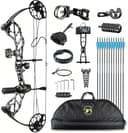 TOPOINT Trigon Compound Bow Package Cheapest complete setup A complete 19–70 lb, 320 fps package for well under half the price of a name-brand rig. It will not out-tune a Bear, but for a new archer testing whether bowhunting sticks, it is a lot of bow for the money. | 19–70 lb · 320 fps | 8.2/ 10 | $179.99View on Amazon Price as of October 19, 2026. #ad How we’re funded |
Check your state’s regulations. Hunting laws vary by state and change year to year — legal calibers, minimum bow draw weights, blaze-orange rules, seasons and treestand requirements included. Confirm the rules with your state wildlife agency before you hunt. Blaze & Budget is written by an enthusiast, not a game warden, and nothing here is legal advice.
Frequently asked questions
What should I look for in a budget compound bow?
In order: draw length adjustment range, brace height, axle-to-axle length, and whether the package includes what you actually need. Draw length comes first because a bow that does not fit you cannot be shot accurately at any price, and budget bows that adjust across a wide range are far more forgiving of a measurement you took yourself. Speed comes last — every modern bow is fast enough for whitetails, and the differences between them are smaller than the differences between shooters.
What is brace height and why does it matter?
Brace height is the distance from the deepest part of the grip to the string at rest. A shorter brace height means the string stays in contact with the arrow for longer, which produces more speed and also amplifies every small error in your release, grip and follow-through. A longer brace height is slower and much more forgiving. For a new or budget archer, 7 inches or more is the right choice, and giving up 15 feet per second for consistency is a trade worth making every time.
What axle-to-axle length is best for hunting?
For most hunting, 30 to 32 inches is the sweet spot. Shorter bows are easier to maneuver in a treestand or a ground blind and harder to shoot consistently, because the string angle at full draw becomes sharp and small anchor errors get magnified. Longer bows are steadier and more forgiving but awkward in tight quarters. If you hunt exclusively from a compact blind, shorter makes sense; if you shoot from open stands or the ground, take the extra length and the forgiveness.
Are ready-to-hunt bow packages worth it?
For a first bow on a budget, generally yes, and the arithmetic is why. A bare bow needs a rest, a sight, a quiver, a peep, a D-loop, a stabilizer and a release before it can hunt, and buying those individually costs substantially more than the package premium. The accessories in a package are entry-level and you will upgrade the sight and rest eventually, but they work. What packages almost never include is arrows matched to your setup, broadheads, or a target, so budget for those separately.
How much draw weight do I need for deer?
Less than most people assume. Many states set a legal minimum around 35 to 40 pounds for deer, and a well-placed arrow from a 50-pound bow kills whitetails reliably. The mistake budget buyers make is buying maximum poundage to feel serious, then failing to draw it smoothly in a treestand in the cold, which is when accuracy collapses. Buy the weight you can draw slowly and hold steady while seated, and let arrow choice do the rest of the work.
Should I buy a used compound bow?
It can be excellent value, with two cautions. Strings and cables are consumables with a life of roughly two to three years of regular shooting, and replacing them costs a meaningful fraction of a budget bow's price — factor that in rather than discovering it later. And check the limbs carefully for cracks, splinters or delamination in good light, because a limb failure at full draw is dangerous. If you can, have a pro shop look it over and set the draw length before you commit.
Sources
- About the Archery Trade Association — The archery and bowhunting industry trade association (established 1953) (accessed July 22, 2026)
- 58 Pa. Code § 141.43 (Deer seasons) — State regulation setting a minimum bow draw weight for deer (35 lb peak) and broadhead specs (accessed July 22, 2026)
- The Records Program — Pope and Young Club — Fair-chase records authority for bow-harvested North American big game (accessed July 22, 2026)
- Hunting — US Forest Service — USFS rules for hunting on National Forest System land — state-law compliance and area restrictions (accessed July 22, 2026)
Keep reading
Best Budget Compound Bow
The bows themselves, compared on brace height, adjustment range and live price.
See the picksWhat Draw Weight Do You Need for Deer?
Legal minimums, what deer actually require, and why more poundage is not more lethal.
Read the guideBest Budget Hunting Arrows
The purchase that follows immediately, and the spine chart that depends on your bow.
See the picksBow Hunting on a Budget
What a hunt-ready archery setup really costs, and the order to buy it in.
Read the guide