Blaze & Budget

Best Hunting Bow for Beginners

The spec that makes a bow beginner-friendly is adjustability, not speed. Four bows ranked on the draw-weight and draw-length ranges their makers publish.

By Stephen V.Last updated How we rank

Buy the Diamond Edge 320. It adjusts from 7 to 70 lb of draw weight and 15 to 31 inches of draw length with an Allen key and no bow press, which means it fits you badly today, fits you properly in a month, and still hunts at full power in three years. The budget pick is the TOPOINT Trigon package — the cheapest complete rig we track that still reaches a legal deer draw weight, at roughly 40% of the Diamond’s price.

Here is the thing almost every beginner bow guide gets wrong. A new archer’s bow is not chosen on speed, and it is barely chosen on brand. It is chosen on range of adjustment, for a simple reason: you do not yet know your draw length, you cannot yet hold the draw weight you will eventually shoot, and your form will change more in your first six months than the bow ever will. A bow with a wide published adjustment range is a bow that survives all of that. A bow set to one draw length is a bow you outgrow or never fit.

Every figure on this page comes from the maker’s or listing’s published spec, and prices come from the live price layer with the date they were read — shown in the ledger below. We own none of these bows and have shot none of them. Here is how we rank instead.

How this is funded: we earn a commission if you buy through our links, at no extra cost to you. It never changes which product we recommend, and we’ll tell you plainly when we’d skip one. Full disclosure.

Four bows ranked on how far they adjust

Ranked on price-per-performance — the specs that matter divided by what it costs. Select a row to jump to the full write-up. We have not field-tested these — here is exactly what we do instead.

#ProductDraw weight / lengthScorePrice
1
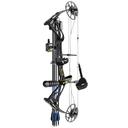
Diamond Archery Edge 320

Diamond Archery Edge 320

Best overall: the widest adjustment

The famously adjustable bow: 7–70 lb draw weight and a 15–31" draw length range you can set with an Allen key, no bow press. One bow that grows from a new archer to a full-power hunter.

7–70 lb · 320 fps
8.9/ 10
2
Bear Archery Cruzer G4 Ready-to-Hunt

Bear Archery Cruzer G4 Ready-to-Hunt

Best fit for a smaller or younger shooter

The whole-family bow: 10–70 lb and 14–30" draw so one bow fits a youth, a spouse and a full-grown hunter. Light in the hand and sold ready to hunt.

10–70 lb, RTH
8.7/ 10
$398.97View on Amazon

$479.9917% off

Price as of November 22, 2026. #ad How we’re funded

3
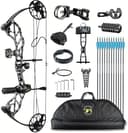
Sanlida Dragon X8 RTH

Sanlida Dragon X8 RTH

Best value, and the longest listed warranty

An 18–31 in, 0–70 lb span means this is the one bow on the page a 12-year-old and a grown adult can both shoot, and the kit already includes the arrows, release and case the others make you buy.

0–70 lb · 18–31 in
8.9/ 10
$209.99View on Amazon

Price as of November 22, 2026. #ad How we’re funded

4
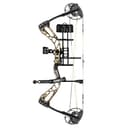
TOPOINT Trigon Compound Bow Package

TOPOINT Trigon Compound Bow Package

Cheapest complete hunting rig

A complete 19–70 lb, 320 fps package for well under half the price of a name-brand rig. It will not out-tune a Bear, but for a new archer testing whether bowhunting sticks, it is a lot of bow for the money.

19–70 lb · 320 fps
8.2/ 10
$179.99View on Amazon

Price as of November 22, 2026. #ad How we’re funded

The picks in full

#1Best overall: the widest adjustment8.9/ 10 value

Diamond Archery Edge 320

The famously adjustable bow: 7–70 lb draw weight and a 15–31" draw length range you can set with an Allen key, no bow press. One bow that grows from a new archer to a full-power hunter.

Strengths

  • Huge 7–70 lb / 15–31" adjustability with no press needed
  • 320 fps is plenty of speed for any North American hunting
  • Comes as a fully accessorized package

Trade-offs

  • Jack-of-all-trades geometry is not a target-precision bow
  • Heavier riser than a dedicated hunting flagship
Draw weight7–70 lb (adjustable)
Draw length15–31 in (no press)
SpeedUp to 320 fps

Specs read from the product listing, on September 22, 2026. “Not published” means the maker doesn’t state that figure. The score is our value rating, not a lab test — how we rank.

#2Best fit for a smaller or younger shooter8.7/ 10 value

Bear Archery Cruzer G4 Ready-to-Hunt

The whole-family bow: 10–70 lb and 14–30" draw so one bow fits a youth, a spouse and a full-grown hunter. Light in the hand and sold ready to hunt.

Strengths

  • 10–70 lb and 14–30" range fits nearly any shooter
  • Light 3.2 lb mass weight — easy for smaller archers
  • Ready-to-hunt with a Trophy Ridge accessory kit

Trade-offs

  • The wide adjustability trades away a little top-end speed
  • Best fit needs a shop tune once you settle on a draw length
Draw weight10–70 lb (adjustable)
Draw length14–30 in
Mass weight3.2 lb

Specs read from the product listing, on July 22, 2026. “Not published” means the maker doesn’t state that figure. The score is our value rating, not a lab test — how we rank.

#3Best value, and the longest listed warranty8.9/ 10 value

Sanlida Dragon X8 RTH

An 18–31 in, 0–70 lb span means this is the one bow on the page a 12-year-old and a grown adult can both shoot, and the kit already includes the arrows, release and case the others make you buy.

Strengths

  • 0–70 lb and 18–31 in covers a pre-teen through a full-grown hunter — no second bow
  • The kit includes 12 arrows, a release, a quiver, a case, a bow stand and a 5-pin sight
  • Listed limited-lifetime warranty on main parts, the longest term in this roundup
  • Published hardware detail is unusual at the price: CNC 6061-T6 cams, BCY-D97 string and cables

Trade-offs

  • 18 in minimum draw length and a 30 in axle-to-axle make it too big for a small child
  • Right-hand only — there is no left-hand version of this listing
  • The lifetime warranty requires registering within 30 days of purchase
  • Off-brand sight and rest; a pro shop will not stock spares for it the way it does for Bear
Draw weight0–70 lb (adjustable, no press)
Draw length18–31 in (0.5 in steps)
SpeedIBO 310 fps (listed)
Let-offNot published
Axle-to-axle30 in
Brace height6.6 in
Mass weight3.8 lb net (listed)
PackageBow, 5-pin sight, rest, stabilizer, quiver, peep, 12 arrows, release, case, stand
Warranty termLimited lifetime on main parts (register within 30 days)

Specs read from the product listing, on October 4, 2026. “Not published” means the maker doesn’t state that figure. The score is our value rating, not a lab test — how we rank.

#4Cheapest complete hunting rig8.2/ 10 value

TOPOINT Trigon Compound Bow Package

A complete 19–70 lb, 320 fps package for well under half the price of a name-brand rig. It will not out-tune a Bear, but for a new archer testing whether bowhunting sticks, it is a lot of bow for the money.

Strengths

  • Full 19–70 lb / 19–30" adjustability for a growing archer
  • Everything-included kit at a true-budget price
  • IBO 320 fps — real hunting speed on paper

Trade-offs

  • Off-brand components are not as refined or durable as Bear/Diamond
  • Expect to replace the string and upgrade the sight eventually
Draw weight19–70 lb (adjustable)
Draw length19–30 in
SpeedIBO 320 fps

Specs read from the product listing, on July 22, 2026. “Not published” means the maker doesn’t state that figure. The score is our value rating, not a lab test — how we rank.

Draw length is the spec that makes or breaks a first bow

Draw length is how far back the bow lets you pull before it stops. Set it too long and you over-extend, lock your bow arm and shoot with your head tilted; set it too short and you crowd the string. Either way your groups are the bow’s fault rather than yours, and a new archer cannot tell the difference — which is how people decide they are bad at archery.

The Archery Trade Association’s own guidance is the right place to start on measuring it, and the short version is that a shop will do it in two minutes for free. What matters for a purchase is this: whatever number you measure today will probably change as your form settles, so buy a bow whose published range contains both your current number and the number you will grow into.

On that test the four picks here separate cleanly:

  • Diamond Edge 320 — 15 to 31 inches, no press. The widest range here, and the “no press” part is what makes it practical: you adjust it with an Allen key at the kitchen table rather than paying a shop every time.
  • Bear Cruzer G4 — 14 to 30 inches. Starts shortest of the full-power bows, which is why it is the pick for a smaller shooter or a family sharing one bow. It is also the lightest here at 3.2 lb, which matters when a young shooter has to hold it steady on an animal.
  • Sanlida Dragon X8 — 18 to 31 inches, half-inch steps. Covers a pre-teen through a grown adult, which is remarkable at the price. The 18-inch minimum and 30-inch axle-to-axle make it too big for a genuinely small child.
  • TOPOINT Trigon — 19 to 30 inches. Narrower at the bottom end, which is fine for an adult beginner and wrong for a child.

Draw weight: start lower than you think, buy higher than you start

New archers buy too much draw weight, and it is the most common self-inflicted wound in the sport. Pulling more than you can hold steady teaches you to heave the bow back with your shoulder rather than your back, and unlearning that costs a season.

The test is not what you can pull once. It is what you can draw smoothly, hold at anchor for twenty to thirty seconds while a deer decides whether to step clear of a branch, and let down without dropping. That is a much lower number than your one-rep maximum, and our draw weight guide works it through properly.

Then check the other end: every state that regulates archery for deer sets a minimumdraw weight, and it is a legal threshold rather than a recommendation. Look up your own state before you buy. All four bows on this page clear every minimum we checked at their top ends — three reach 70 lb and the Bear Cruzer G4 reaches 70 lb as well — which is precisely why wide adjustability is the right thing to pay for. You start at 40 lb, you hunt at 60, and it is one bow.

Ready-to-hunt, and what is still missing from the box

“Ready to hunt” is a marketing phrase with a real meaning: the bow ships with a sight, a rest, a quiver and a peep fitted, so it shoots out of the box. It is almost always the right choice for a beginner, because buying components separately means a bare bow sitting in a closet while you research rests.

Read the package list carefully anyway, because “ready to hunt” rarely means ready to shoot:

  • The Sanlida Dragon X8is the most complete kit here by a wide margin — 12 arrows, a release, a quiver, a case, a bow stand, a stabilizer, a peep and a 5-pin sight. Nothing else has to be bought.
  • The Bear Cruzer G4 ships ready to hunt with a Trophy Ridge accessory kit, and you buy arrows and a release.
  • The Diamond Edge 320 comes fully accessorized, and you buy arrows and a release.
  • The TOPOINT Trigon is an everything-included kit at a true budget price, with the honest caveat its own listing carries: expect to replace the string and upgrade the sight eventually.

Arrows are not optional and not an afterthought — the wrong spine for your draw weight will not group no matter how good the bow is. Our budget hunting arrow roundup covers spine selection, and the broadhead roundup covers what goes on the front once you are hunting.

Warranty is the one place the cheap bow wins

Worth knowing before you assume the name brand is the safer buy. The Sanlida Dragon X8 lists a limited lifetime warranty on main parts — the longest published term of any bow we track — with the condition that you register within 30 days of purchase. The Bear Royale we rank on our youth bow page publishes 30 days on the tracked listing, which is the shortest.

The counterweight is support rather than paper. A pro shop that stocks Bear and Diamond will press, tune and stock spares for them; it may decline to work on an off-brand bow at all. If you do not own a bow press and do not have a shop relationship, that is worth real money that never appears on a spec sheet — and it is the single strongest argument for the two more expensive picks here.

What a beginner should ignore completely

  • IBO speed.The 320 fps figures on this page are measured under a standard set of conditions you will never replicate — a specific draw length, draw weight and arrow weight. At your actual setup, expect meaningfully less. More importantly, every bow here is fast enough: a whitetail inside 30 yards does not care about 20 fps.
  • Brace height and axle-to-axle, at first. They matter and they are real, but they are tuning preferences for an archer who already knows what they want. Two of the four listings here publish neither, which tells you how much weight the market puts on them at this price. Our hunting versus target bow comparison covers what those numbers do once you care.
  • Camo pattern. On a bow, entirely cosmetic.

Spend the attention you save on form, on a rangefinder, and on shots at unknown distances in your own back yard. If your budget is firm under two hundred dollars, read best compound bow under $200 first — it is blunt about which cheap bows cannot legally hunt deer. And if a crossbow would suit you better, compound bow versus crossbow is the honest version of that choice.
Frequently asked questions

What should a beginner look for in a hunting bow?

Range of adjustment, not speed. You do not yet know your draw length, you cannot yet hold the weight you will eventually shoot, and your form will change more in six months than the bow ever will. A bow with a wide published draw-length and draw-weight range survives all of that; a bow fixed at one draw length is one you outgrow or never fit.

What draw weight should a beginner start at?

Lower than you can pull once. The right test is what you can draw smoothly, hold at anchor for twenty to thirty seconds, and let down without dropping - because that is what a real shot at a deer asks for. Then check your state's legal minimum draw weight for archery deer hunting, which is a threshold rather than a recommendation, and buy a bow whose range covers both numbers.

Is a ready-to-hunt bow package worth it for a beginner?

Almost always, yes. A package ships with the sight, rest, quiver and peep fitted, which means it shoots the day it arrives instead of sitting in a closet while you research rests. Read the list carefully though - most ready-to-hunt packages still do not include arrows or a release, and arrow spine has to match your draw weight to group at all.

How much should a beginner spend on a hunting bow?

There is a clear value step at roughly $200 to $300: below it, several bows cannot legally hunt deer, and above it you get wide press-free adjustability and published warranty terms. Spending more than about $450 buys tuning refinement a beginner cannot yet use. The cheapest complete rig we track that reaches a legal deer draw weight costs under $200.

Does bow speed matter for a beginner?

No. IBO speed figures are measured under standard conditions you will never replicate, so your real arrow speed will be lower whatever the box says, and every bow on this page is fast enough for a whitetail inside 30 yards. Shot placement and a correctly fitted draw length decide outcomes; 20 feet per second does not.

Should I buy a brand-name bow or a cheaper one?

It depends on whether you have a pro shop. A shop that stocks Bear and Diamond will press, tune and stock spares for them and may decline to work on an off-brand bow at all - which is worth money that never appears on a spec sheet. If you own a press or are happy adjusting it yourself, the cheaper picks here publish longer warranties than the name brands do.

Sources

  • Archery Lingo: Draw Length — Archery 360 (Archery Trade Association) — The trade association's consumer-education method for fitting a bow: "Stand relaxed and raise your arms so you're standing in a 'T' position. Have your friend measure your wingspan from the tip of one middle finger, across your back, to the tip of your other middle finger. Then divide this number by 2.5." The article warns that "a draw length that's even an inch too long or short can cause problems ranging from decreased accuracy to injury" (accessed October 4, 2026)
  • 58 Pa. Code § 141.43 (Deer seasons) — State regulation setting a minimum bow draw weight for deer (35 lb peak) and broadhead specs (accessed July 22, 2026)
  • Hunting deer with a bow and arrow — Minnesota DNR — State-agency equipment rule for archery deer: "Your bow must have a pull no less than 30 pounds at or before full draw", arrowheads must have "a minimum of two metal cutting edges, be barbless and have a diameter of at least 7/8 inch", expandables are allowed if no more than 2 inches wide after impact, and "You cannot hunt with a bow drawn, held or released by a mechanical device unless you possess a hunting disability permit" (accessed October 4, 2026)
  • About the Archery Trade Association — The archery and bowhunting industry trade association (established 1953) (accessed July 22, 2026)

Keep reading