How to Pack a Hunting Backpack
Loading order is free performance. Heavy and high against your spine, noise buried, and four things reachable without taking the pack off — this is how a cheap pack starts carrying like an expensive one.
How this is funded: we earn a commission if you buy through our links, at no extra cost to you. It never changes which product we recommend, and we’ll tell you plainly when we’d skip one. Full disclosure.
Pack heavy and high against your spine, bury anything that rattles, and keep four things — headlamp, rangefinder, calls, gloves — in outside pockets you can reach with the pack still on. That is the whole method, and it is the cheapest upgrade available to a hunter who already owns a pack: it costs nothing and it makes a sixty-dollar daypack carry noticeably better than a two-hundred-dollar one that has been loaded carelessly.
If you are buying rather than repacking, the ALPS OutdoorZ Pursuit is the pack we would apply all of this to — it is the best-balanced budget hunting pack we track, and its built-in blaze orange rain cover and weapon pocket mean two of the problems below are solved for you in the design.
Why loading order matters more on a cheap pack
An expensive pack has a stiff frame sheet, a load-lifter strap system and a hip belt that genuinely transfers weight. Those features forgive bad packing. A budget pack does not have them, which means the position of the weight inside the bag is the suspension system. Get it wrong and the pack pulls away from your back, you lean forward to compensate, and by the second mile your lower back is doing work your legs should be doing.
Our budget pack rankings are explicit about which of these packs has real suspension and which does not — the Fieldline is honestly described as having thin straps and basic materials, and the TIDEWE’s own weakness is that its suspension is less refined on long hauls. Those are precisely the packs where loading order buys you the most.
The three zones
Zone 1: high and against your spine — the heavy stuff
Water first. On nearly every day hunt, water is the single heaviest item in the pack, and where it sits decides how the whole load feels. Put it in the main compartment, at the top, pressed against the back panel. Dense food, a thermos and any tool with real mass go in the same place.
The physics is simple: weight held away from your spine acts on a lever and rotates the pack backwards off your shoulders. Weight held high and close sits over your hip bones, where the belt can hand it to your legs. This is the one rule that, on its own, changes how a pack feels.
Zone 2: the bottom — light, bulky, soft
Spare insulation layers, a rain suit, a seat cushion and a game bag go in the bottom. They are nearly weightless, they fill the volume that would otherwise let heavy items sink, and they cushion the pack when you set it down on roots and rock. A packable rain suit is the ideal bottom layer for this — see our rain gear rankings for the ones that compress smallest.
Zone 3: outside pockets — the four reachables
There are exactly four categories of item that you will need at a moment when opening the main compartment is impossible:
- Your headlamp. Needed in the dark, usually while the pack is hanging from a hook eighteen feet up. Keep it in the same pocket every time. Our headlamp rankings cover the two-light rule, and the second light lives in Zone 1 where you will not accidentally use it.
- Your rangefinder. Needed with a deer in view. If it is inside the pack it may as well be in the truck. Our rangefinder rankings cover the cheap units worth carrying, at live prices.
- Calls. Same reason, and they are also the items most likely to rattle, so a dedicated soft pocket solves two problems.
- Gloves and a face covering. Needed the instant you stop moving and start cooling, which is a different moment from when you packed.
The noise audit
Everything above is about comfort. This part is about whether you see deer. Hunting packs are full of hard objects, and two hard objects touching each other is the sound that carries furthest in quiet timber.
The fix is mechanical, not magical: never let two hard things touch, and never leave empty space. Put hardware inside a glove. Put a knife in its sheath and the sheath inside a layer. Wrap loose screws, a saw or a ratchet strap in a hat. Then pick the loaded pack up and shake it hard in a quiet room. That ten-second test is the single most effective thing in this guide and almost nobody does it.
Zipper pulls deserve their own mention. Metal pulls tapping against metal zippers is the classic budget-pack sound, and the fix is a short piece of paracord through each pull. It costs nothing and takes five minutes.
Fit, in the right order
Loading is half of it; the other half is that most people wear a pack wrong. Do it in this order, every time:
- 1. Loosen everything before you put it on.
- 2. Set the hip belt on your hip bones— the bone, not your waist — and tighten it until the load sits there.
- 3. Snug the shoulder straps just enough to hold the pack against your back. They are stabilisers, not carriers.
- 4. Tighten the sternum strap last, and only lightly. Cranked tight it restricts breathing on a climb.
Worth knowing for the budget category: of the packs we track, only the ALPS Commander Lite frame publishes an adjustable torso range, at 17 to 23 inches. Nobody else publishes a torso measurement at all. If you are tall or short and a pack does not fit, that is a specification gap in the category rather than something you are doing wrong — and it is one reason the frame packs in our meat-hauling frame page carry heavy loads better.
Packing for the walk out
One thing most packing advice ignores: the pack has a second job. If you kill something, the load changes completely — heavier, wetter, irregular, and usually in the dark. Pack with that in mind:
- Game bags at the bottom, always. Light, flat, and the thing you need first if the hunt goes well.
- Keep the compression straps free. Do not permanently lash anything to the straps you will need for an irregular load.
- Know what you will dump.Decide in advance which items come out of the pack to make room — and leave nothing in the woods when you do.
- The second light matters here. Pack-outs finish after dark, and a dead headlamp on a loaded walk out is a safety problem, not an inconvenience. Our guide to red versus green light covers which one to use for blood trailing and which for the walk.
The ruthless part
At the end of every season, tip the pack out and remove everything you did not use. Not everything you mightuse — everything you did not actually use. This is how a pack stays light without buying a lighter pack, and it is free. Our public-land day pack checklist is the list we would rebuild from, with the safety items that never come out regardless of how ruthless you are being.
The packs this guide earns
Ranked on price-per-performance — the specs that matter divided by what it costs. Select a row to jump to the full write-up. We have not field-tested these — here is exactly what we do instead.
| # | Product | Capacity | Score | Price |
|---|---|---|---|---|
| 1 | 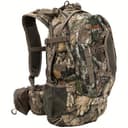 ALPS OutdoorZ Pursuit Pack Best all-around pack to apply this to The best-balanced budget hunting pack: enough room for a full-day sit and a weekend, a built-in blaze-orange rain cover, and a bow/gun carry system. The one most whitetail hunters should buy. | ~2,700 cu in | 9.0/ 10 | $119.99View on Amazon Price as of October 20, 2026. #ad How we’re funded |
| 2 | TIDEWE 5500cu Frame Pack Best if you also carry meat out A 5,500-cubic-inch internal-frame pack with a rain cover and weapon carry for the price of a name-brand daypack. The most volume-per-dollar on the list for backcountry and hauling. | 5,500 cu in + frame | 8.6/ 10 | |
| 3 | 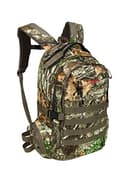 Fieldline Pro Series Ridge Tracker Daypack Cheapest pack worth organising The cheapest real hunting daypack here. For a new hunter who just needs to carry water, snacks, calls and a knife to the stand, it is all the pack you need to start. | Daypack | 8.0/ 10 | $47.07View on Amazon Price as of October 20, 2026. #ad How we’re funded |
Frequently asked questions
How should you pack a hunting backpack?
Heavy items high and tight against your spine, light bulky items at the bottom, anything that can rattle buried inside soft layers, and the four things you need mid-hunt — headlamp, rangefinder, calls, gloves — in outside pockets you can reach without removing the pack. Then strap the weapon and any long items to the outside, tighten every compression strap, and walk with the loaded pack before the hunt rather than at the trailhead.
Should heavy items go at the top or bottom of a backpack?
High and close to your spine for hunting loads. Weight low in the bag pulls the pack away from your back and makes you lean forward; weight high and against the back panel sits over your hips where your legs can carry it. The exception is a frame pack loaded with meat, where the load is lashed to the frame and the goal is to keep it centred and as close to your back as possible.
How do you keep a hunting pack quiet?
Separate hard items from each other with soft ones. Metal against metal and hard plastic against hard plastic are the two sounds that carry, so put hardware inside a glove, a hat or a dry bag, and fill empty space so nothing can move. Then pick the loaded pack up and shake it hard. If you can hear anything at all in a quiet room, a deer will hear it in quiet timber.
What should be in the outside pockets of a hunting pack?
Things you need while the pack is on your back or hanging from a hook: a headlamp, a rangefinder, calls, gloves, and a knife if your state does not restrict how it is carried. The test is whether you will need it at a moment when opening the main compartment is impossible — in the dark on the climb, or with a deer at forty yards. Everything else can live inside.
How much should a day hunting pack weigh?
Light enough that you still take it. There is no useful universal number, because water is the heaviest item and how much you carry depends on the weather and the walk. The practical rule is that each item has to earn its weight twice — once when you pack it and once at the end of the season, when anything you never used comes out permanently.
Do I adjust the hip belt or the shoulder straps first?
Hip belt first, always. Set the belt on your hip bones and tighten it so the load sits there, then pull the shoulder straps just snug enough to stabilise the pack against your back. If you tighten the shoulder straps first, the pack hangs off your shoulders and the belt does nothing, which is the most common reason a perfectly good pack feels uncomfortable.
How do you carry a bow or rifle on a hunting pack?
Use the pack's own carry system if it has one, and only for the walk in and out. The ALPS Pursuit and the TIDEWE frame pack both publish weapon carry — bow and rifle on the Pursuit, bow, rifle and pistol on the TIDEWE. Keep a firearm unloaded while it is on the pack, and never pack a weapon in a way that requires you to remove the pack to get it off if a shot opportunity appears.
Sources
- Hunting — US Forest Service — USFS rules for hunting on National Forest System land — state-law compliance and area restrictions (accessed July 22, 2026)
- Cold Weather Safety — National Weather Service — Federal cold-weather hazard overview — frostbite, hypothermia and wind chill (accessed July 22, 2026)
- Wildlife Management Areas — Minnesota DNR — A state example of public WMA hunting access: 1,500+ areas, 1.39M acres open to hunters (accessed July 22, 2026)
- Tree Stand Safety Awareness Foundation — Nonprofit safety authority — the ABCD framework and the harness-use statistics on falls (accessed July 22, 2026)
Keep reading
Best Budget Hunting Backpack
Five hunting packs compared on capacity, weapon carry and live price.
See the rankingsPublic-Land Day Pack Checklist
What goes in the pack in the first place, item by item.
Read the checklistWhat Size Hunting Pack Do I Need?
Cubic inches against the kind of hunt you actually do.
Read the guideALPS OutdoorZ Pursuit Review
The pack most whitetail hunters should own, examined in detail.
Read the review