Blaze & Budget

Best Budget Rangefinder for Hunting

The five best-value hunting rangefinders, ranked on angle compensation, realistic range and battery, not on a spec-sheet number nobody uses.

By Stephen V.Last updated How we rank

A hunting rangefinder has one job: give you a true distance fast, in the light and the moment you actually have. The number the box shouts about — 700, 1,200, 1,800 yards — is close to the least useful spec on it, because those figures are measured off a reflective target like a road sign, and a deer’s hide bounces back far less. What matters for hunting is angle (slope) compensation, which corrects the distance when you shoot down from a treestand or up a ridge, plus how quickly and consistently the unit ranges soft targets inside 300 yards. Every pick here has angle compensation, because without it a rangefinder is just an expensive way to over-hold on a steep shot.

We’re an enthusiast site that compiles published specs and runs the price-per-performance math — we don’t own these units or range animals with them across a season, and we won’t claim we do. Prices below are live, so the order tracks current value. The honest headline: a rechargeable, angle-compensating unit for well under $100 does everything a $400 rangefinder does that a whitetail or timber hunter will ever use. The step-up pick earns its price with better glass and reach, not with a feature you need — and we’ll tell you exactly where the extra money stops mattering.

How this is funded:we earn a commission if you buy through our links, at no extra cost to you. It never changes which product we recommend, and we’ll tell you plainly when we’d skip one. Full disclosure.

Quick picks

Ranked on price-per-performance — the specs that matter divided by what it costs. Select a row to jump to the full write-up. We have not field-tested these — here is exactly what we do instead.

#ProductMax rangeScorePrice
1
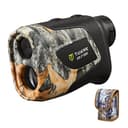
TIDEWE 700Y Hunting Rangefinder

TIDEWE 700Y Hunting Rangefinder

Best value overall

Angle compensation, 6x glass and a rechargeable battery for the price of a box of good broadheads. For bowhunting inside 60 yards and rifle work inside 300, this does everything the $400 units do that matters.

700 yd
9.1/ 10
$62.99View on Amazon

$79.9921% off

Price as of July 22, 2026. #ad How we’re funded

2
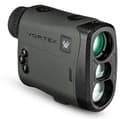
Vortex Sonora HD 1800

Vortex Sonora HD 1800

Best glass / step-up

The step-up pick: Vortex HD glass, angle compensation and 1,800 yards of reach with the VIP warranty behind it. If you also shoot longer-range rifle, this is the one budget unit worth the extra money.

1,800 yd
8.8/ 10
$184.99View on Amazon

Price as of July 22, 2026. #ad How we’re funded

3
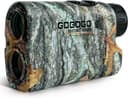
Gogogo Sport Vpro GS03

Gogogo Sport Vpro GS03

Best cheap with slope

A do-both golf-and-hunt unit with slope, 6x glass and up to 1,200 yards for pocket change. The interface is a little busy, but the ranging is quick and it undercuts everything but the TIDEWE.

1,200 yd
8.7/ 10
$60.73View on Amazon

$89.9833% off

Price as of July 22, 2026. #ad How we’re funded

4
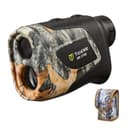
TIDEWE 1000Y Hunting Rangefinder

TIDEWE 1000Y Hunting Rangefinder

Best for more range

The 700's bigger sibling: same rechargeable, angle-compensated formula with 1,000 yards of reach for open-country rifle hunters who want margin without paying Vortex money.

1,000 yd
8.6/ 10
$80.99View on Amazon

$89.9910% off

Price as of July 22, 2026. #ad How we’re funded

5
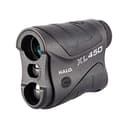
Halo Optics XL450

Halo Optics XL450

Best hunting-brand pick

A hunting-first unit from an optics brand, with angle intelligence out to 450 yards. Fine for bowhunters and timber rifle hunters; the short ceiling is the only reason to look at the others.

450 yd
8.2/ 10
$87.31View on Amazon

$99.9913% off

Price as of July 22, 2026. #ad How we’re funded

The picks in full

#1Best value overall9.1/ 10 value

TIDEWE 700Y Hunting Rangefinder

Angle compensation, 6x glass and a rechargeable battery for the price of a box of good broadheads. For bowhunting inside 60 yards and rifle work inside 300, this does everything the $400 units do that matters.

Strengths

  • Angle (ARC) compensation — the feature that matters most for treestands
  • USB-rechargeable, so no scramble for an oddball battery in the dark
  • 6x magnification and a clear camo-friendly display

Trade-offs

  • 700-yard ceiling is plenty for hunting, short for long-range target work
  • Ranging on soft targets past 400 yd gets inconsistent
Max range (reflective)700 yd
Angle compensationYes
BatteryRechargeable (USB)

Specs read from the product listing, on July 22, 2026. “Not published” means the maker doesn’t state that figure. The score is our value rating, not a lab test — how we rank.

#2Best glass / step-up8.8/ 10 value

Vortex Sonora HD 1800

The step-up pick: Vortex HD glass, angle compensation and 1,800 yards of reach with the VIP warranty behind it. If you also shoot longer-range rifle, this is the one budget unit worth the extra money.

Strengths

  • Clear Vortex HD optics — noticeably better sight picture than sub-$70 units
  • Angle-compensated readings for both archery and steep rifle shots
  • Vortex VIP lifetime warranty

Trade-offs

  • Costs three to four times the bargain rangefinders here
  • More range than a whitetail hunter will ever use
Max range (reflective)1,800 yd
Angle compensationYes
WarrantyVortex VIP (unlimited lifetime)

Specs read from the product listing, on July 22, 2026. “Not published” means the maker doesn’t state that figure. The score is our value rating, not a lab test — how we rank.

#3Best cheap with slope8.7/ 10 value

Gogogo Sport Vpro GS03

A do-both golf-and-hunt unit with slope, 6x glass and up to 1,200 yards for pocket change. The interface is a little busy, but the ranging is quick and it undercuts everything but the TIDEWE.

Strengths

  • Slope / angle mode plus a continuous scan for moving glassing
  • Up to 1,200-yard reach — more than most budget units
  • One of the lowest prices for a working hunting rangefinder

Trade-offs

  • Golf-first menus take a minute to learn for hunting use
  • Uses a CR2 battery rather than recharging
Max range (reflective)1,200 yd
Slope / angle modeYes
BatteryCR2

Specs read from the product listing, on July 22, 2026. “Not published” means the maker doesn’t state that figure. The score is our value rating, not a lab test — how we rank.

#4Best for more range8.6/ 10 value

TIDEWE 1000Y Hunting Rangefinder

The 700's bigger sibling: same rechargeable, angle-compensated formula with 1,000 yards of reach for open-country rifle hunters who want margin without paying Vortex money.

Strengths

  • 1,000-yard reach covers open-country rifle work
  • Rechargeable battery and angle compensation like the 700
  • Still well under $100

Trade-offs

  • Same soft-target inconsistency at the far end of its range
  • Display can wash out in bright midday sun
Max range (reflective)1,000 yd
Angle compensationYes
BatteryRechargeable (USB)

Specs read from the product listing, on July 22, 2026. “Not published” means the maker doesn’t state that figure. The score is our value rating, not a lab test — how we rank.

#5Best hunting-brand pick8.2/ 10 value

Halo Optics XL450

A hunting-first unit from an optics brand, with angle intelligence out to 450 yards. Fine for bowhunters and timber rifle hunters; the short ceiling is the only reason to look at the others.

Strengths

  • Angle Intelligence (slope) built in for treestand and hill shots
  • Simple, hunting-focused one-button operation
  • Reliable ranging inside its 450-yard window

Trade-offs

  • 450-yard ceiling is the shortest here — timber and bow only
  • 9V battery is bulkier than a CR2 or rechargeable
Max range (reflective)450 yd
Angle compensationYes (Angle Intelligence)
Battery9V

Specs read from the product listing, on July 22, 2026. “Not published” means the maker doesn’t state that figure. The score is our value rating, not a lab test — how we rank.

How to choose a budget rangefinder

Rangefinders are one of the few places where cheap gear has almost caught the expensive stuff for hunting use. The laser and the math are commodity parts now; what you pay up for is glass, build and warranty, not accuracy at the ranges you shoot. Here is what actually separates these five.

Angle compensation is the one must-have

When you shoot at a steep up or down angle — the reality of treestand and hill-country hunting — your arrow or bullet drops over the horizontal distance, which is shorter than the straight line to the target. Angle compensation does that math and gives you the distance to hold for. A unit without it will read too far and put your shot high. Do not buy a hunting rangefinder that lacks it, whatever else it offers.

How much range you actually need

Bowhunters rarely range past 60 yards; most public-land rifle hunting happens inside 300. A unit rated to 450–700 yards on a reflective target has ample margin for that, because animal hide reflects far less than the rating implies — expect to range deer at roughly half the advertised number. More range only earns its keep if you truly shoot open country at distance.

Battery: rechargeable, CR2 or 9V

A USB-rechargeable unit means no scramble for an oddball cell in the dark, as long as you remember to charge it. A CR2 runs a long time and you can pocket a spare, but the batteries cost more and are harder to find. A 9V works but is bulky. None of this changes how the unit shoots; it changes how annoyed you are at 5 a.m.

What to skip

Skip Bluetooth and app pairing, ballistic solvers you will never program, and any rangefinder that buries slope mode three menus deep. Skip the temptation to buy 1,800 yards of reach you will use twice. A clear display, one-button ranging, angle compensation and a battery you can live with is the whole list for a hunter.
Frequently asked questions

Do I really need angle compensation on a rangefinder?

If you hunt from a treestand, saddle or any hillside, yes. When you shoot at a steep up or down angle, the vertical drop your arrow or bullet fights is set by the horizontal distance, which is shorter than the straight-line distance to the target. Angle compensation (sometimes called slope or ARC) does that math for you and gives the distance you should hold for. Every pick on this list includes it.

How far does a hunting rangefinder need to reach?

Less than the marketing suggests. Bowhunters rarely range past 60 yards, and most rifle hunting on public land happens inside 300. A unit rated to 700 yards on a reflective target has plenty of margin for that. Buy more range only if you genuinely shoot open country at long distance.

Why is the rated range higher than what I can range on a deer?

Rated range is measured against a highly reflective target, like a building or a road sign, under ideal conditions. A deer's body is soft, matte and irregular, so it bounces back much less of the laser. Expect to reliably range animals at roughly half the advertised number or less, which is still well beyond normal shooting distance for most hunters.

Are cheap rangefinders accurate enough for hunting?

For hunting distances, yes. Budget units are typically accurate to within a yard or two inside a few hundred yards, which is more than precise enough to pick the right pin or holdover. Where cheap units struggle is ranging small or soft targets at the far edge of their rating, and reading the display in bright sun. Neither is a problem at realistic hunting ranges.

Should I get a rechargeable or replaceable battery?

A USB-rechargeable unit means no scramble for an oddball battery in the dark, but you have to remember to charge it. A CR2 or 9V unit runs for a long time and you can carry a spare, but the batteries are less common and cost more. For most hunters a rechargeable unit topped off the night before is the simplest option.

Sources

Keep reading