Red vs Green Light for Hunting
Deer see blue and green far better than they see red. That single fact decides which color you walk in with, which you blood trail with, and when white light is the honest answer.
How this is funded: we earn a commission if you buy through our links, at no extra cost to you. It never changes which product we recommend, and we’ll tell you plainly when we’d skip one. Full disclosure.
Use red when you do not want to be noticed, green when you need to see, and white only when the hunt is already over. That is the whole decision, and it falls out of one fact about deer eyes: they lack the color cone that humans use for the red end of the spectrum. Red light is the least visible thing you can point into the dark around a deer. Green is far more visible to them, but it is also the color your own eye handles best at low output, and it is the one that makes blood stand out on the ground.
If you want one lamp that covers all three jobs, the BORUIT HP360 below is the honest pick, and it is the cheapest route to white, green and red in one housing with a real IP67 waterproof rating. If you would rather buy one excellent light and add a cheap second one, the Black Diamond and the Fenix are the lamps for that, and there is a case for doing it that way.
What deer actually see
Human eyes are trichromatic: three types of color cone, one of which handles long wavelengths — the red end. Deer are dichromats. They have two cone types, and the long-wavelength one is the one they do not have. Published deer-vision research describes the practical result clearly: deer see blue and the short end of the spectrum very well, and reds and oranges poorly.
That is the same finding that makes blaze orange legal hunting clothing. An orange vest that screams at a human reads to a deer as a drab, low-contrast grey-brown. The vision research that explains your vest is the research that explains your headlamp, which is why our guide to what colors deer can see is worth reading alongside this page.
Two things follow for a light. First, red is the least alarming color you can use, because there is very little in it for a deer’s remaining cones to work with. Second, white light is the worst, not because it is bright, but because white light contains a large blue component and blue is exactly what deer are best at detecting. A white headlamp is the most visible option in the woods from a deer’s point of view, and it is the one most hunters default to.
Where green earns its place
Green is more visible to deer than red, so it is a worse choice for sneaking. It wins two specific jobs anyway.
1. Your own eyes see green best at low output
Human vision is most sensitive in the green part of the spectrum, which means that at the low output levels you should be using in the woods, a green beam shows you more usable terrain than a red beam of the same power. If you are picking your way through a boulder field or across a creek crossing in the dark, green shows you the ground.
2. Blood goes black under green
This is the real argument and it is a straightforward consequence of how color works. Blood is red. Under a green light there is almost no red wavelength for it to reflect, so blood reads as a dark, almost black patch against lighter leaf litter — high contrast, easy to follow. Under a red light the opposite happens and red blood on brown leaves vanishes into the background.
If you carry only one colored mode for trailing, carry green. It is the single clearest practical difference between the two colors and it arrives at the moment you least want to be fumbling.
When white light is the right answer
There is an unhelpful orthodoxy that a serious hunter never uses white light. Ignore it. White light renders color accurately, and some jobs need that.
- Field dressing. You are working with a knife in a body cavity and need to see what you are cutting. This is not the moment for atmosphere. Our field dressing guide assumes you can see.
- Getting out safely. A long walk out of unfamiliar ground, a creek crossing, or any point where a fall is the real risk is a white-light situation. The hunt is over; stop optimizing for deer.
- Being seen on purpose. Near a parking area in firearm season, being visible to other hunters is more important than being invisible to deer. A white light pointed at the ground near your feet is a signal that you are a person.
- Reading a map, a tag or a regulation booklet. Red light makes red ink on a map disappear, which is a genuinely irritating discovery to make at 5 a.m.
The specification that matters more than color
Dimming. A lamp that goes properly low is worth more than any color filter, because the least light that does the job is always the least alarming light and the best for your own night vision. Your eyes take twenty minutes or more to adapt to darkness and about a second of full-power white to undo it.
That is why the Black Diamond Spot 400 is on this page despite being a white-only lamp. A dimmable white light run at its lowest setting is less disruptive than a colored light run at full blast, and its AAA power source means a flat battery is a thirty-second fix rather than the end of the hunt. That matters more at four in the morning than a spec sheet suggests.
The Fenix is the opposite argument: a compact, high-quality lamp with a 700 lumen figure stated against a real standard rather than the four-digit fiction common in this category. It fits in a bino harness pocket, which is the only place a light you will actually reach for lives. The full field is in our headlamp rankings.
How to actually use a light on a hunt
- Point it at your feet, not at the woods. You need to see the next three steps. Sweeping a beam across a field is how you educate every animal in it.
- Use the lowest setting that works. Start lower than feels comfortable; your eyes catch up within a minute.
- Turn it off before you are close. The last hundred yards to a stand are better done slowly in the dark than quickly under a beam.
- Carry two light sources. This is not a preference. A dead headlamp at eighteen feet in the dark is a genuine safety problem, and the second light can be a cheap one. Treat it the way you treat a harness: non-negotiable kit, not a convenience.
- Clip the lamp where you can reach it one-handed. Attached to the climb, with both hands busy, is exactly when you will want it and exactly when it will be in the pack.
Where the law comes in
Carrying a light to walk in and out is normal and legal essentially everywhere. Using a light to locate, spot or take game is a different activity in the eyes of the law, and it is restricted or prohibited in most states, with exemptions that vary by species and by method — raccoon and predator hunting frequently have their own rules, and some states regulate the color, the power, or whether a light may be attached to a vehicle or a firearm.
Recovering a legally taken animal after dark usually has its own provision, and it is worth knowing what yours says before you need it. Legal shooting hours themselves are defined relative to sunrise and sunset and are published by your state agency; the light in your hand has no bearing on when you may shoot.
The short version
Walk in on red, at the lowest setting that keeps you upright. Trail blood on green. Field dress and walk out on white. Carry two lights, and buy dimming before you buy lumens. The three lamps below are the ones we would buy against that, at today’s live prices.
The headlamps this guide earns
Ranked on price-per-performance — the specs that matter divided by what it costs. Select a row to jump to the full write-up. We have not field-tested these — here is exactly what we do instead.
| # | Product | Power | Score | Price |
|---|---|---|---|---|
| 1 | 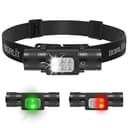 BORUIT HP360 White/Green/Red The lamp that gives you all three colors The blood-trailing lamp. Green and red modes are the reason to buy this over a brighter white-only light — colored light both preserves your night vision walking in and makes blood stand out on leaf litter. | USB · W/G/R | 8.7/ 10 | |
| 2 | 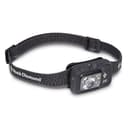 Black Diamond Spot 400 Best if dimming matters more than color The headlamp that mountaineers trust, at a price a hunter can justify. Dimmable output matters more than peak brightness in the woods — you want the least light that gets the job done. | AAA · dimmable | 8.9/ 10 | |
| 3 | 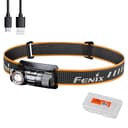 Fenix HM50R v2.0 Best buy-once compact lamp The buy-once lamp. Fenix publishes a real 700-lumen figure against a measurable standard rather than an invented number, and the ultra-compact body means it disappears into a bino harness pocket. | 700 lm · compact | 8.5/ 10 | $59.95View on Amazon Price as of November 22, 2026. #ad How we’re funded |
Check your state’s regulations. Hunting laws vary by state and change year to year — legal calibers, minimum bow draw weights, blaze-orange rules, seasons and treestand requirements included. Confirm the rules with your state wildlife agency before you hunt. Blaze & Budget is written by an enthusiast, not a game warden, and nothing here is legal advice.
Frequently asked questions
Is red or green light better for hunting?
Red for not being seen, green for seeing. Deer are dichromats: they lack the cone that humans use for the red end of the spectrum, so red light is the least visible color to them — which makes it the right choice for walking to a stand and for anything you do while hunting. Green reads as brighter to the human eye at low output and makes blood stand out dark against leaf litter, which makes it the better blood-trailing light. Neither is invisible to a deer, and both beat white.
Can deer see red light?
They can detect it, but poorly. Deer have two types of color cone rather than the three humans have, and the one humans use for long wavelengths is the one deer lack. Published deer-vision research describes them as seeing blue and short wavelengths very well and the red and orange end of the spectrum poorly — which is the same finding behind blaze orange being legal hunting clothing. Red light is the least alarming option, not an invisible one. A bright red beam swept across a field still gets noticed.
Why does blood look black under a green light?
Because blood is red, and a red object under green light has almost no red wavelength to reflect back, so it reads as a dark patch against lighter ground. That contrast is what makes a green beam useful on a blood trail across pale leaf litter. Under red light, the opposite happens — red blood on brown leaves disappears into the background. If you only carry one colored light for trailing, green is the one that helps.
Should I use white light while hunting?
Only when the job needs color accuracy and the hunt is effectively over. Field dressing, fixing gear, reading a map and getting safely out of a drainage all justify white light. It is also the right light to make yourself visible to other hunters near a parking area in firearm season. What white light is wrong for is walking in before daylight, because it is the most visible color to deer and it destroys your own dark adaptation for twenty minutes or more.
How bright should a hunting headlamp be?
Far dimmer than the box numbers suggest, most of the time. The useful specification is not maximum output, it is whether the lamp dims low and holds there — the least light that lets you walk safely is the light that preserves your night vision and alarms the fewest animals. A lamp that only runs at full brightness is worse in the woods than a dimmer lamp with a good low mode, regardless of lumens. Save the high setting for a blood trail or an emergency.
Is it legal to use a light while hunting at night?
Carrying a light to walk in and out is normal and legal nearly everywhere. Using a light to locate, spot or take game is a different thing entirely and is restricted or prohibited in most states, with specific exemptions that vary — raccoon and coyote hunting often have their own rules, and some states regulate the light's color, the wattage or whether it can be attached to a vehicle or a firearm. Recovering a legally taken animal after dark usually has its own provision. Check your state wildlife agency before you hunt after legal shooting hours.
Do I need a headlamp with red, green and white modes?
It is the convenient answer rather than the necessary one. The three jobs — walking in unnoticed, blood trailing, and field dressing — are genuinely different, and a single lamp that does all three means one thing in the pack and one set of batteries. The alternative that works just as well is a good dimmable white lamp plus a cheap second light, which also satisfies the rule that you should never be in the woods after dark with only one light source.
Sources
- The Hunter's Guide to Deer Vision — National Deer Association — Deer have two cone photopigments rather than three and no red cone; they see blues and greens well, lack a UV filter, and cannot distinguish orange from red (accessed August 12, 2026)
- Wis. Admin. Code NR 10.06 — Shooting hours — A state example of legal light: in Wisconsin, 'Shooting hours for bear, bow deer, deer with firearms, elk and small game are 30 minutes before sunrise through 20 minutes after sunset' (accessed September 18, 2026)
- Tree Stand Safety Awareness Foundation — Nonprofit safety authority — the ABCD framework and the harness-use statistics on falls (accessed July 22, 2026)
- Hunting — US Forest Service — USFS rules for hunting on National Forest System land — state-law compliance and area restrictions (accessed July 22, 2026)
Keep reading
Best Budget Headlamp
Five hunting headlamps compared on power source, output and what the listing publishes.
See the rankingsHow to Field Dress a Deer
The job you need white light for, step by step.
Read the guidePublic-Land Day Pack Checklist
Why two light sources is the rule, and what else earns a place in the pack.
Read the checklistWhat Colors Can Deer See?
The vision science behind this page, applied to your clothing as well as your light.
Read the guide