Blaze & Budget

Best Budget Headlamp for Hunting

You use it twice on every hunt, in the dark, when getting it wrong ruins the sit. Five headlamps compared on the specs that matter to a hunter rather than a camper.

By Stephen V.Last updated How we rank

A headlamp is the piece of gear you use at both ends of every single hunt, and it is the one most hunters buy without thinking. That is a mistake, because a hunting headlamp needs almost the opposite of what a camping headlamp is sold on. Camping headlamps compete on peak brightness. For a hunter, the most useful setting is the dimmest one.

A 1,000-lumen flood aimed down a trail at 5 a.m. destroys your own dark adaptation, lights up every deer within 200 yards, and announces exactly where you are walking. What you actually want is enough light to see your boots and the next tree, and the ability to turn it down or switch to a color that does not carry.

The three specs that matter for hunting are: a genuinely low low setting, a red or green mode, and the power source. Everything else, including the headline lumen figure, is secondary. Below are five lamps from about $17 to $60 covering both the battery and rechargeable answers.

Prices are pulled live. We compile published specifications rather than testing units, and where a maker does not publish a figure we mark it “not published” rather than inventing one — which happens more often on headlamps than on almost any other category, because the lumen claims on cheap lamps are frequently marketing rather than measurement. Here is our full method.

How this is funded:we earn a commission if you buy through our links, at no extra cost to you. It never changes which product we recommend, and we’ll tell you plainly when we’d skip one. Full disclosure.

Quick picks

Ranked on price-per-performance — the specs that matter divided by what it costs. Select a row to jump to the full write-up. We have not field-tested these — here is exactly what we do instead.

#ProductPowerScorePrice
1
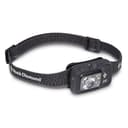
Black Diamond Spot 400

Black Diamond Spot 400

Best overall

The headlamp that mountaineers trust, at a price a hunter can justify. Dimmable output matters more than peak brightness in the woods — you want the least light that gets the job done.

AAA · dimmable
8.9/ 10
$59.88View on Amazon

Price as of September 5, 2026. #ad How we’re funded

2
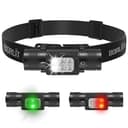
BORUIT HP360 White/Green/Red

BORUIT HP360 White/Green/Red

Best for blood trailing

The blood-trailing lamp. Green and red modes are the reason to buy this over a brighter white-only light — colored light both preserves your night vision walking in and makes blood stand out on leaf litter.

USB · W/G/R
8.7/ 10
$32.48View on Amazon

$34.195% off

Price as of September 5, 2026. #ad How we’re funded

3
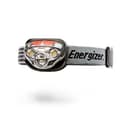
Energizer Vision HD+ LED Headlamp

Energizer Vision HD+ LED Headlamp

Best under $30

The grocery-store headlamp that is quietly good. Batteries in the box, a focusing beam, and a price where losing one in the leaves is annoying rather than expensive.

Batteries incl.
8.6/ 10
$26.98View on Amazon

Price as of September 5, 2026. #ad How we’re funded

4
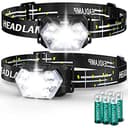
Eirnvop 9 LED Headlamp (2-pack)

Eirnvop 9 LED Headlamp (2-pack)

Cheapest that works

Two lamps, batteries included, for less than one name-brand light. It is the right answer when you need a spare for a buddy, a truck lamp, and a backup in the pack — quantity genuinely beats quality here.

AAA · 2-pack
8.4/ 10
$16.99View on Amazon

Price as of September 5, 2026. #ad How we’re funded

5
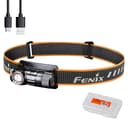
Fenix HM50R v2.0

Fenix HM50R v2.0

Best buy-once

The buy-once lamp. Fenix publishes a real 700-lumen figure against a measurable standard rather than an invented number, and the ultra-compact body means it disappears into a bino harness pocket.

700 lm · compact
8.5/ 10
$59.95View on Amazon

Price as of September 5, 2026. #ad How we’re funded

The picks in full

#1Best overall8.9/ 10 value

Black Diamond Spot 400

The headlamp that mountaineers trust, at a price a hunter can justify. Dimmable output matters more than peak brightness in the woods — you want the least light that gets the job done.

Strengths

  • Dimmable, so you can run a low glow that does not blow out your night vision
  • AAA batteries — you can carry spares and never worry about a dead charge
  • Black Diamond's Spot line has a long, hard-use track record

Trade-offs

  • One of the more expensive lamps here for a non-rechargeable design
  • The listing does not publish a waterproof rating for this color
Power sourceAAA batteries
DimmableYes
Waterproof ratingNot published

Specs read from the product listing, on August 11, 2026. “Not published” means the maker doesn’t state that figure. The score is our value rating, not a lab test — how we rank.

#2Best for blood trailing8.7/ 10 value

BORUIT HP360 White/Green/Red

The blood-trailing lamp. Green and red modes are the reason to buy this over a brighter white-only light — colored light both preserves your night vision walking in and makes blood stand out on leaf litter.

Strengths

  • White, green and red in one lamp — the three modes a hunter actually uses
  • IP67 rating is a real waterproof spec, not water-resistant marketing
  • Rechargeable, so no battery hunt at 4 a.m.

Trade-offs

  • Rechargeable means a dead battery in the field is a dead lamp
  • BORUIT is an online-only brand with limited support
Light colorsWhite, green and red
Power sourceRechargeable
Water ratingIP67

Specs read from the product listing, on August 11, 2026. “Not published” means the maker doesn’t state that figure. The score is our value rating, not a lab test — how we rank.

#3Best under $308.6/ 10 value

Energizer Vision HD+ LED Headlamp

The grocery-store headlamp that is quietly good. Batteries in the box, a focusing beam, and a price where losing one in the leaves is annoying rather than expensive.

Strengths

  • Batteries included — usable the night you buy it
  • Digital focus tightens the beam for picking a trail out of thick cover
  • Cheap enough to keep one in the truck, the pack and the blind

Trade-offs

  • Water resistant only, with no published IP rating for hard rain
  • No red light mode, which is the mode a hunter wants most in the dark
Power sourceBatteries included
BeamDigital focus
Water ratingNot published

Specs read from the product listing, on August 11, 2026. “Not published” means the maker doesn’t state that figure. The score is our value rating, not a lab test — how we rank.

#4Cheapest that works8.4/ 10 value

Eirnvop 9 LED Headlamp (2-pack)

Two lamps, batteries included, for less than one name-brand light. It is the right answer when you need a spare for a buddy, a truck lamp, and a backup in the pack — quantity genuinely beats quality here.

Strengths

  • Two headlamps plus six AAA batteries for under $20
  • IPX5 water rating published, which many budget lamps will not state
  • Six modes including a low setting for close work at the truck

Trade-offs

  • The 2,000 lumen claim is a marketing figure, not a measured standard
  • No-name brand — expect a season or two, not a decade
Power sourceAAA (6 included)
Water ratingIPX5
Included2 headlamps

Specs read from the product listing, on August 11, 2026. “Not published” means the maker doesn’t state that figure. The score is our value rating, not a lab test — how we rank.

#5Best buy-once8.5/ 10 value

Fenix HM50R v2.0

The buy-once lamp. Fenix publishes a real 700-lumen figure against a measurable standard rather than an invented number, and the ultra-compact body means it disappears into a bino harness pocket.

Strengths

  • 700 lumens stated against a real standard, unlike the four-digit claims
  • Ultra-compact — it fits a harness pocket instead of a pack pocket
  • Fenix build quality is a genuine step above every other lamp here

Trade-offs

  • The most expensive headlamp on this page
  • The listing does not state the power source or runtime figures
Maximum output700 lumens
Form factorUltra compact
Power sourceNot published

Specs read from the product listing, on August 11, 2026. “Not published” means the maker doesn’t state that figure. The score is our value rating, not a lab test — how we rank.

What actually matters in a hunting headlamp

1. A genuinely low low setting

This is the spec nobody advertises and every hunter needs. Walking to a stand in the dark, you want just enough light to place your feet — a few lumens, not a few hundred. A lamp whose lowest setting is still 50 lumens is nearly useless for this, because it wrecks your night vision and floods the woods.

Dimmable lamps solve this properly, letting you dial exactly the output you need. Multi-mode lamps with a low setting solve it well enough. A lamp with high and off only is a work light, not a hunting light.

2. Red and green modes

Colored light does two useful things. First, red preserves your dark adaptation far better than white, so you can use it in the stand or at your pack without resetting your eyes. Second — and this is the one hunters underrate — colored light dramatically changes how blood reads on the ground.

Blood on brown leaf litter under white light is genuinely hard to see. Under green light the contrast changes and blood stands out noticeably better. If you have ever spent an hour on your knees failing to find the next drop, a lamp with a green mode is worth more to you than an extra 300 lumens.

3. Batteries or rechargeable

This is a genuine trade-off rather than a right answer.

AAA-powered lamps let you carry spares. A dead lamp is a 30-second fix in the field, and lithium AAAs hold up in the cold where rechargeable cells lose capacity fast. For late-season hunting and multi-day trips, this is the safer choice.

Rechargeable lamps cost nothing to run, are usually brighter for their size, and never need a battery hunt at 4 a.m. provided you actually charged them. In the cold, expect noticeably reduced runtime. If you hunt out of a truck or camp with power, this is the more convenient choice.

The budget hunter’s answer is often both: a rechargeable as the primary and a cheap battery-powered lamp as the backup in the pack, which is exactly why one of our picks is a two-pack.

4. Water rating

IPX4 means splash resistant. IPX5 means it survives a jet of water. IPX7 means it survives brief submersion. For hunting, IPX4 is the realistic minimum — you will be out in rain — and IPX7 is genuinely useful if you cross water or hunt waterfowl. A lamp that publishes no rating at all has told you something.

The lumen number, and why we do not rank on it

Lumen claims on budget headlamps are frequently unmeasured. There is a testing standard for flashlight output, and established brands publish figures against it. No-name brands routinely quote a number that is either the theoretical maximum of the LED chip or simply invented, and a “2,000 lumen” $17 headlamp is not producing 2,000 lumens.

This is not a reason to avoid cheap lamps, which can be perfectly good. It is a reason not to compare them on that number. Where a claim is a marketing figure rather than a measured one, we say so on the product card.

For context on what you actually need: 100 to 200 lumens is plenty for walking a trail, 20 to 50 is right for working at your pack or field dressing, and under 10 is what you want moving the last hundred yards to a stand.

Headlamp discipline in the woods

The lamp matters less than how you use it. Four rules:

  • Use the lowest setting that works. Almost always far dimmer than you instinctively reach for.
  • Point it down. Light your feet and the ground ten feet ahead, not the canopy. A beam swinging through the timber is visible for hundreds of yards.
  • Turn it off before the last stretch. Let your eyes adjust and walk the final approach in the dark if the ground allows it. You will be astonished how much you can see.
  • Red in the stand. Checking a phone or a pack with white light at 6 a.m. undoes twenty minutes of dark adaptation.

Blood trailing after dark

This is the job that justifies buying a better headlamp than you think you need. Tracking a deer at night, on leaf litter, hours after the shot, is where a lamp earns its price.

What helps: a green mode for contrast, a tight spot beam so you can examine a small area without washing it out, and enough runtime that the lamp does not die three hours into a slow track. What does not help: raw brightness, which flattens the surface and makes small dark spots harder to pick out, not easier.

Carry a spare lamp or spare batteries in your pack. A tracking job that starts at eight o’clock and ends at one in the morning is a normal outcome, and running out of light halfway through it is how a deer gets lost.

Where a headlamp fits in the budget

A headlamp is a sub-$60 purchase that affects every hunt, which puts it in the same value bracket as a knife and a good pair of socks — cheap gear where the difference between adequate and good is small money. Our day pack checklist covers what else belongs in the pack, and the full public-land gear list puts it in the context of the whole kit.

Frequently asked questions

What should I look for in a hunting headlamp?

Three things, in order: a genuinely low low setting so you can walk without destroying your night vision, a red or green mode for use in the stand and for blood trailing, and a power source that suits your hunting. Peak brightness matters far less than hunters expect, because the most useful setting on a hunting headlamp is usually the dimmest one. A published water rating of at least IPX4 is the realistic minimum.

Is red or green light better for hunting?

Red preserves your dark adaptation best and is the better choice for reading a phone or working at your pack in the stand. Green is generally better for following a blood trail, because the contrast between blood and brown leaf litter reads more clearly under green light than under white. A lamp with both modes covers the two jobs, which is why colored-light models are worth the small premium for hunters.

How many lumens do I need for a hunting headlamp?

Far fewer than the marketing suggests. Around 100 to 200 lumens is plenty for walking a trail, 20 to 50 is right for working at your pack or field dressing, and under 10 lumens is ideal for the last hundred yards to a stand. Lumen claims on budget headlamps are often unmeasured marketing figures rather than tested output, so treat a four-digit number on a cheap lamp with skepticism and buy on modes and low-end control instead.

Should I buy a rechargeable or battery-powered headlamp?

Battery-powered lamps let you carry spares, and lithium AAA cells hold their capacity in the cold where rechargeable cells lose runtime fast, which makes them safer for late-season and multi-day hunts. Rechargeable lamps cost nothing to run and are usually brighter for their size. Many hunters carry both: a rechargeable as the primary and a cheap battery lamp as a backup in the pack.

What headlamp do I need for blood trailing at night?

One with a green mode, a reasonably tight spot beam and enough runtime for a long night. Green improves the contrast between blood and leaf litter noticeably, and a tight beam lets you examine a small patch of ground without washing it out. Raw brightness works against you, because a very bright flood flattens the surface and makes small dark spots harder to pick out. Always carry a spare lamp or spare batteries.

Will a headlamp spook deer walking to my stand?

It can, and how you use it matters more than which lamp you own. Use the lowest setting that lets you place your feet, point the beam down at the ground ten feet ahead rather than swinging it through the timber, and turn it off for the final approach if the ground allows. A beam sweeping across a field edge is visible for hundreds of yards and will move deer off the area you are about to hunt.

Sources

Keep reading