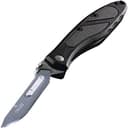
How to choose a budget hunting knife
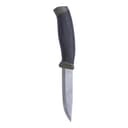
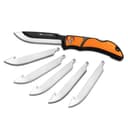
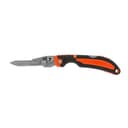
Pick your type first. A fixed bladeis the strongest and simplest — no moving parts to fail, easy to clean, and it handles heavy joints and pelvic bone. A replaceable-blade knife stays surgically sharp forever because you snap in a fresh blade instead of sharpening; the trade is thinner blades and an ongoing cost for refills. A folder packs smallest and rides in a pocket, at the cost of some rigidity. Most of the value question is really a fit-and-habit question.
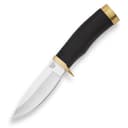
Blade length and shape.For deer, a 3 to 4.5-inch drop-point blade is the sweet spot — long enough to skin, short enough to control inside the body cavity. Skip the giant “survival” knives; a huge blade is harder to control on precise cuts and no better at the actual work.
Steel and sharpening.Budget stainless like 420HC (as in the Buck) holds a good working edge and resharpens easily — ideal if you do not mind touching it up. If you never want to sharpen, a replaceable-blade knife sidesteps the issue entirely. Neither approach is wrong; it is about whether you would rather own a stone or buy refill blades.
Skip the replaceable blade if…you regularly split the pelvis or work through heavy bone — those thin blades can flex or snap, and a stout fixed blade is safer and faster. And skip the dedicated caping knife unless you actually cape for mounts or do a lot of fine detail work; for straight field dressing it is more blade-swapping than you need. Buy for your real tasks, not the ones you imagine.
Safety and the law.A sharp knife is a safe knife — dull blades slip. Cut away from your body and keep a glove handy for wet, cold hands. Blade-length and carry rules vary by state and locale, so confirm your local knife laws the same way you would check any hunting regulation.
Then match the knife to the method.If you drag deer to a truck and hang them, a longer fixed blade that handles joints and pelvic bone earns its keep — see how to field dress a deer. If you hunt a long way in and carry the meat out on your back, you never cut bone at all, and a single four-inch blade plus a stone is the whole kit — that is the gutless quartering method.