Blaze & Budget

Fixed Blade vs Replaceable Blade Hunting Knife

One holds an edge you have to maintain. The other never dulls and snaps if you pry with it. Here is which to buy first, and why most hunters end up with both.

By Stephen V.Last updated How we rank

This is the first real decision in hunting knives, and it splits the category cleanly. A fixed blade is one piece of steel you sharpen and re-sharpen for years. A replaceable-blade knife holds a scalpel-sharp surgical blade that you swap out when it dulls, so it is always perfectly sharp and never needs sharpening.

The honest answer is that they are good at different parts of the same job. A replaceable blade is faster and cleaner through hide and connective tissue. A fixed blade is what you want the moment you hit bone, need to pry a joint, or have to do anything the designer did not anticipate.

Below is a representative example of each with live prices, followed by the comparison in detail. If you only buy one, the recommendation at the bottom is unambiguous. We compile published specifications rather than testing units — our method is here.

How this is funded:we earn a commission if you buy through our links, at no extra cost to you. It never changes which product we recommend, and we’ll tell you plainly when we’d skip one. Full disclosure.

Quick picks

Ranked on price-per-performance — the specs that matter divided by what it costs. Select a row to jump to the full write-up. We have not field-tested these — here is exactly what we do instead.

#ProductBladeScorePrice
1
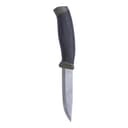
Morakniv Companion Fixed Blade

Morakniv Companion Fixed Blade

The fixed-blade case

The most knife anyone has ever gotten for twenty dollars. A grippy, tough Swedish fixed blade that field-dresses a deer as well as knives costing ten times more. Buy two.

4.1" fixed
9.3/ 10
$19.99View on Amazon

Price as of September 5, 2026. #ad How we’re funded

2
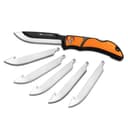
Outdoor Edge RazorLite (replaceable blade)

Outdoor Edge RazorLite (replaceable blade)

The replaceable-blade case

Never sharpen a knife again. Snap in a fresh surgical blade when the old one dulls mid-field-dressing. For hunters who hate sharpening, this is the pick — and it locks solid, unlike a bare scalpel.

3.5" replaceable
8.8/ 10
$34.94View on Amazon

Price as of September 5, 2026. #ad How we’re funded

The picks in full

#1The fixed-blade case9.3/ 10 value

Morakniv Companion Fixed Blade

The most knife anyone has ever gotten for twenty dollars. A grippy, tough Swedish fixed blade that field-dresses a deer as well as knives costing ten times more. Buy two.

Strengths

  • Genuinely excellent steel and edge for around $20
  • Comfortable, grippy handle even with wet or cold hands
  • Tough enough to abuse; cheap enough to not baby

Trade-offs

  • Not a dedicated skinner — the drop point is a generalist
  • Plastic sheath is basic (it works fine)
Blade4.1 in fixed, stainless
HandleGrippy rubberized
SheathIncluded

Specs read from the product listing, on July 22, 2026. “Not published” means the maker doesn’t state that figure. The score is our value rating, not a lab test — how we rank.

#2The replaceable-blade case8.8/ 10 value

Outdoor Edge RazorLite (replaceable blade)

Never sharpen a knife again. Snap in a fresh surgical blade when the old one dulls mid-field-dressing. For hunters who hate sharpening, this is the pick — and it locks solid, unlike a bare scalpel.

Strengths

  • Always-sharp replaceable blades — no sharpening, ever
  • Locks rigid like a real knife, unlike bare scalpel handles
  • Comes with spare blades to start

Trade-offs

  • You keep buying replacement blades over time
  • Replaceable blades are thinner and can flex on heavy joints
Blade3.5 in replaceable
LockRigid blade lock
IncludedSpare blades + clip

Specs read from the product listing, on July 22, 2026. “Not published” means the maker doesn’t state that figure. The score is our value rating, not a lab test — how we rank.

What each one is genuinely better at

Replaceable blade: the skinning and caping specialist

A fresh surgical blade is sharper than any fixed blade you own, including one you just stropped. That matters enormously for the tasks that are mostly slicing: opening hide, separating the hide from the carcass, working around a cape for a mount, and trimming.

It also removes the failure mode that ruins a lot of field dressing jobs, which is a knife going dull halfway through. A hunter with a dull knife starts sawing, and sawing is how you cut through the paunch. On a big animal or two animals in a day, being able to click in a fresh blade in ten seconds is a real advantage.

Fixed blade: everything else

A fixed blade takes lateral force. It does not care if you twist it in a joint, lever a hip apart, split a rib cage, or hit a bone you did not see. It also does everything a knife does in camp: cutting cord, making kindling, opening packaging, food prep.

The trade-off is that its edge is a resource you have to manage. It arrives sharp, it dulls, and you have to sharpen it. That is a skill, it takes a stone and some practice, and a hunter who never learns it ends up with a dull knife every season.

The safety difference nobody mentions

The two knives fail in opposite directions, and both matter.

A replaceable blade is brittle. Surgical steel is hard and thin, and it snaps under lateral load rather than bending. When it snaps, you have a razor-sharp fragment in a carcass or on the ground, which is a genuine cut hazard. Blade changes themselves are the other risk, and they happen with cold, bloody, slippery hands. Buy a design with a mechanical blade-change system rather than one where you handle the blade directly.

A fixed blade is safest when sharp and most dangerous when dull. A dull knife requires force, and force plus a slip is how people cut themselves badly. The knife that hurts you is almost never the sharp one.

Both benefit from a blade-cut-resistant glove on your off hand, which costs very little and prevents the most common field-dressing injury.

Cost over a season

Sticker price is only part of it.

A fixed bladecosts what it costs once. Add a sharpening stone or a guided system — roughly $15 to $40 — and the running cost after that is zero forever. A good budget fixed blade genuinely is a decades-long purchase.

A replaceable blade costs less up front and has an ongoing blade cost. Replacement packs are cheap per blade, and a hunter taking one or two deer a year uses very few. But it is not zero, and it is a supply you can run out of at the wrong moment. Keep spares in the pack, not in the garage.

Over ten seasons, a fixed blade is almost certainly cheaper. Over one season, the replaceable is cheaper to start with. Neither difference is large enough to decide the question on its own.

Cold weather, which changes things

Late-season field dressing happens with numb hands. That affects the two designs differently and it is worth thinking about before you buy.

Changing a small blade with cold, wet, gloved hands is genuinely fiddly, and it is the moment a replaceable-blade knife is most likely to cut you. A fixed blade has nothing to manipulate at all.

Against that, a fixed blade that has gone dull in the cold is harder to use safely than a fresh replaceable blade, so the argument is not one-sided. The practical fix for both is to start the job with a genuinely sharp edge and to carry a glove.

What most experienced hunters actually carry

Both. And not because they cannot decide — because the two knives do different work:

  • A fixed blade on the belt for the heavy work: opening the animal, joints, ribs, and every camp task.
  • A replaceable-blade knife in the pack for skinning, caping and trimming, where a perfect edge does the job faster and cleaner.

Between them that is a modest amount of money for two tools that cover everything a hunter does with a knife. If you are building a kit over a couple of seasons, that is the destination.

The recommendation if you only buy one

Buy the fixed blade first. It is the more versatile tool, it cannot fail in a way that leaves you without a knife, and it handles the tasks a replaceable blade physically cannot. A hunter with only a replaceable-blade knife who hits a pelvis has a problem. A hunter with only a fixed blade has, at worst, a slower afternoon.

Then learn to sharpen it. It is a genuinely useful skill, it takes an afternoon to learn adequately, and a stone costs less than a pack of replacement blades. Add the replaceable-blade knife next season when you know exactly what you want it for.

Both categories are covered in full, with five picks and live prices, in our budget hunting knife roundup.
Frequently asked questions

Should I buy a fixed blade or a replaceable blade hunting knife?

Buy a fixed blade first if you only buy one. It is the more versatile tool, it takes lateral force so it can pry joints and handle bone, it does every camp task as well as field dressing, and it cannot fail in a way that leaves you with no knife. Add a replaceable-blade knife later for skinning and caping, where a perfectly sharp surgical blade genuinely works faster and cleaner than any fixed blade.

Are replaceable blade knives good for field dressing?

They are excellent for the slicing parts of the job: opening hide, separating hide from carcass, caping and trimming. A fresh surgical blade is sharper than any fixed blade you own, and you can swap in a new one in seconds rather than working with an edge that dulls halfway through. Where they fall short is anything requiring lateral force, because the thin hard blades snap rather than bend when you pry or twist.

Do replaceable blades break easily?

They can, and it is the main safety consideration with the design. Surgical blades are hard and thin, so under a twisting or prying load they snap rather than flex, leaving a razor-sharp fragment in the carcass or on the ground. Use them for slicing only, switch to a fixed blade for joints and bone, and choose a knife with a mechanical blade-change system so you never handle a loose blade with cold bloody hands.

How much does it cost to run a replaceable blade knife?

Replacement blades are cheap per blade and a hunter taking one or two deer a year uses very few, so the running cost is small but not zero. The real risk is not cost but supply: running out of blades mid-season or mid-animal. Keep a spare pack in your hunting pack rather than in the garage. Over ten seasons a fixed blade plus a sharpening stone will still work out cheaper overall.

Do I need to learn to sharpen a hunting knife?

If you carry a fixed blade, yes, and it is worth the afternoon it takes to learn adequately. A stone or a guided sharpening system costs roughly $15 to $40 and then lasts forever. The alternative is hunting with a progressively duller knife each season, which is both slower and genuinely more dangerous, because a dull knife requires force and force plus a slip is how most field-dressing injuries happen.

What knife size is best for field dressing a deer?

A blade of roughly three to four and a half inches handles a whitetail well. Longer blades are harder to control inside a body cavity and offer no advantage, and very short blades make opening the hide slower. A drop point or clip point shape is more useful than a heavily curved skinner for a hunter doing the whole job with one knife. Handle grip in wet conditions matters more than blade steel at budget prices.

Sources

Keep reading