How to Quarter a Deer in the Field
The gutless method: take the meat off the carcass without ever opening the body cavity. Five pieces a side, no gut smell, and a load you can carry out on your back.
How this is funded: we earn a commission if you buy through our links, at no extra cost to you. It never changes which product we recommend, and we’ll tell you plainly when we’d skip one. Full disclosure.
You do not have to gut a deer to get the meat out of the woods. The gutless method takes five pieces off one side — front shoulder, backstrap, hindquarter, neck and trim — then you roll the animal and repeat, and finish by reaching in through the flank for the two tenderloins. No body cavity is opened, nothing is punctured, and what you end up with is a set of pack-sized pieces instead of a hundred-pound carcass to drag.
If you are buying one knife to do this with, buy the Morakniv Companion below. A 4.1 inch fixed stainless blade with a grippy handle is the whole specification, it costs less than a tank of fuel, and it does this job as well as knives costing ten times more. If the thought of sharpening halfway through a deer bothers you, buy the replaceable-blade RazorLite instead and carry spare blades.
When gutless is the right choice — and when it is not
Both methods are correct; they answer different questions.
- Use the gutless methodwhen you are far from a vehicle, when the ground is too steep or thick to drag, when it is warm and you need the meat cooling in pieces rather than inside a carcass, or when you are hunting alone and cannot move the whole animal. It is the default for public-land hunters who walk in, and it is the reason a frame pack exists — see our meat-hauling frame page for what carries the result.
- Use traditional field dressing when you can get a truck, a cart or a sled close, when you want to hang the carcass whole to age it, or when you plan to take the whole deer to a processor. Our field dressing guide covers that route properly.
The real advantage of gutless beyond portability is cleanliness. The single worst outcome in field dressing is nicking the paunch, and the gutless method removes that risk entirely because you never go near it.
Before you cut: three things
1. Check your tag and your state’s rules.This is the only part of this page that can cost you a citation. Many states require the tag to be attached before the animal is moved or butchered, and several require evidence of sex or species to remain naturally attached to a portion of the meat — which changes how you make the first cuts. Rules vary by state and sometimes by unit, so read them before the season.
2. Pick your spot. Move the deer, if you can, to the highest, driest, most level ground within reach. Working on a deer lying in a wet depression with its legs uphill is the most common self-inflicted difficulty in this job.
3. Get your bags out first. Have the game bags open and laid out before the first piece of meat comes off. Fumbling for a bag with bloody hands is how meat ends up on the dirt.
The sequence, one side at a time
Skin only the side facing up
Roll the deer onto its side. Cut the hide along the spine from the base of the neck to the tail, then peel it down over the ribs toward the belly. Leave it attached at the belly. The hide now lies flat on the ground as the clean work surface you will set meat on, which is worth doing even if you are carrying a tarp.
Front shoulder
The easiest piece on the animal and a good one to start with. Lift the leg away from the body and cut between the shoulder blade and the rib cage. There is no joint to break— the front leg is held to the skeleton by muscle alone. Follow the seam and the whole leg comes free in one piece. Into a bag.
Backstrap
The best meat on the deer. Make one cut along the top of the spine from hip to neck, pressing against the bone, then a second parallel cut down the ribs a few inches out, and lift the long loin out as one piece. Take your time here: this is the cut most easily ruined by hurrying, and it is the one you will actually be excited to cook.
Hindquarter
The heaviest piece and the only one with a real joint. Cut around the ball-and-socket hip joint, keeping the blade tight to the bone, then lever the leg outward to pop the socket and cut through the remaining connective tissue. Working close to the bone rather than through the meat is what separates a clean quarter from a bag of scraps.
Neck and trim
Neck meat and rib or flank meat are grind cuts. They are genuinely worth taking when you are close to the vehicle and have bag space, and they are the first thing to leave behind when you are three miles in and already looking at two trips. That is a judgment call and not a moral one.
Roll and repeat
Roll the deer onto the stripped side and do the whole sequence again. Keep every finished piece on the hide or in a bag, never on bare dirt.
The tenderloins, last
The two tenderloins lie inside the cavity, tucked against the spine behind the last rib. Reach in through the flank from the outside and cut them free. They are small, they are the most tender meat on the animal, and they are the piece most often left in the woods by hunters doing this for the first time — so go looking for them deliberately.
The knife, honestly
You need one blade in the three to four inch range and a way to keep it sharp. You do not need a saw, a cleaver, a gut hook or a set of three knives, because this method never cuts bone.
What you will discover on your first deer is that a knife goes dull faster than you expect — hair, hide and the odd brush of bone take an edge down quickly. There are two honest responses, and they are the two kinds of knife on this page:
- Sharpen it. A fixed blade plus a cheap stone is the cheapest and most durable setup, and the skill takes an evening to learn. Morakniv publishes its own guidance that hunting and outdoor knives are ground to roughly a 23 to 35 degree total edge angle, and our sharpening guide walks through it.
- Swap the edge. A replaceable-blade knife lets you click in a fresh scalpel-sharp blade mid-animal. It is the right answer for anyone who will not realistically sharpen, and the trade is that you are buying blades forever and that a thin replaceable blade is easier to snap. Our fixed versus replaceable comparison lays out the full argument, and the knife rankings cover the field.
Cooling the meat is the part that matters
You can do everything above perfectly and still ruin the meat by bagging it tight and stacking it. Heat is the enemy, and the mechanism is trapped moisture. On a warm opener this is the whole job — see how to cool a deer in warm weather for the sequence from the shot to the ice chest.
- Breathable bags, never plastic.Plastic traps heat and moisture against the meat. Cotton or synthetic game bags let it breathe — our game bag rankings cover which published sizes fit a deer quarter and how many bags one animal actually needs.
- Spread the bags out. Do not pile them. Lay them in shade, on cool ground, with air able to reach each one while you make the first trip.
- Hang them if you can. Off the ground is better than on it, for temperature and for keeping scavengers honest.
- Get the hide off and keep it off. The hide is an insulator; it is doing the opposite of what you want once the meat is off the bone.
Getting it out
A quartered whitetail is usually one or two loads for a fit adult, depending on how much you bone out and how far you are going. Plan for two. Mark the carcass site on your phone and with something physical — flagging tape you then retrieve — before you walk away with the first load, because the woods look different in the dark and everything looks the same on the way back in.
Carry the heavy load against your spine and high, which is the same rule that applies to any pack — our guide to packing a hunting backpack covers it — and carry two light sources, because this part always finishes after dark.
The short version
Skin one side. Shoulder, backstrap, hindquarter, trim. Roll. Repeat. Reach in for the tenderloins. Bag everything breathable, spread it out to cool, and mark the site before you leave with the first load. One sharp four-inch knife does all of it, and the whole method exists so that a deer killed a long way from a road is still a deer you get home.
The knives this guide earns
Ranked on price-per-performance — the specs that matter divided by what it costs. Select a row to jump to the full write-up. We have not field-tested these — here is exactly what we do instead.
| # | Product | Blade | Score | Price |
|---|---|---|---|---|
| 1 | 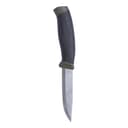 Morakniv Companion Fixed Blade Best value knife for this job The most knife anyone has ever gotten for twenty dollars. A grippy, tough Swedish fixed blade that field-dresses a deer as well as knives costing ten times more. Buy two. | 4.1" fixed | 9.3/ 10 | |
| 2 | 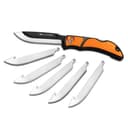 Outdoor Edge RazorLite (replaceable blade) Best if you never sharpen Never sharpen a knife again. Snap in a fresh surgical blade when the old one dulls mid-field-dressing. For hunters who hate sharpening, this is the pick — and it locks solid, unlike a bare scalpel. | 3.5" replaceable | 8.8/ 10 | $34.89View on Amazon Price as of October 20, 2026. #ad How we’re funded |
| 3 | 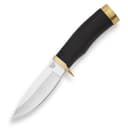 Buck 692 Vanguard Best buy-once fixed blade A made-in-USA, full-tang fixed blade with Buck's forever warranty — a knife you buy once and hand down. The classic pick if you want one real hunting knife that lasts a lifetime. | 4.25" fixed, 420HC | 8.7/ 10 | $96.99View on Amazon Price as of October 20, 2026. #ad How we’re funded |
| 4 | 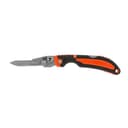 Gerber Vital Pocket Knife Best lightweight backup blade A folding, pocket-clip take on the replaceable-blade idea — the RazorLite's more packable cousin. Great as a lightweight backup or the primary for hunters who want a folder that stays scary-sharp. | 2.8" replaceable | 8.4/ 10 |
Check your state’s regulations. Hunting laws vary by state and change year to year — legal calibers, minimum bow draw weights, blaze-orange rules, seasons and treestand requirements included. Confirm the rules with your state wildlife agency before you hunt. Blaze & Budget is written by an enthusiast, not a game warden, and nothing here is legal advice.
Frequently asked questions
What is the gutless method?
A way of removing the usable meat from a deer without ever opening the body cavity. You skin one side, take the front shoulder, the backstrap and the hindquarter off that side, roll the animal over and repeat, then reach in through the flank to recover the two tenderloins. Nothing is gutted, so there is no paunch to puncture, far less smell and mess, and the meat comes out in pieces sized for a pack.
Do you have to gut a deer before quartering it?
No. Gutting and quartering are two different approaches to the same problem. Gutting is the right answer when you can get the whole carcass to a vehicle quickly and want to hang it; the gutless method is the right answer when you are a long way from a road and have to carry the meat out. Many hunters who learned to gut first never go back once they have quartered one gutless.
How long does it take to quarter a deer?
A first attempt usually takes an hour or more. With practice it drops to around thirty minutes for a whitetail. The things that slow it down most are a dull knife and poor positioning — a knife that needs resharpening halfway through, or a carcass lying downhill in a wet depression, costs more time than any amount of technique.
What knife do you need to quarter a deer?
One four-inch fixed blade is enough, plus a way to restore the edge. A Morakniv Companion has a 4.1 inch stainless blade and a grippy handle that still works with wet hands, which is the entire specification this job needs. A replaceable-blade knife like the Outdoor Edge RazorLite is the alternative if you would rather swap in a fresh edge than sharpen one. You do not need a saw for the gutless method, because there are no bones to cut through.
How many bags do you need for a quartered deer?
Four to six breathable game bags for a whitetail: one per quarter and one or two for the loins, neck and trim. Bags are the cheapest item in this whole process and the one that most affects whether the meat is good, because meat lashed straight to a pack frame picks up dirt, bark and hair. Buy more than you think you need and keep them in the bottom of your pack permanently.
Can you quarter a deer on public land?
Generally yes, and on much public land it is the only practical way to get an animal out. The rules that matter are tagging and transport requirements rather than butchering itself: many states require the tag to be attached before the animal is moved or butchered, and some require evidence of sex or species to remain naturally attached to a portion of the meat. Check your state wildlife agency's current big-game regulations before the season, not at the carcass.
What do you do with the gut pile and carcass?
Leave the carcass where you processed it unless your state or the land manager says otherwise — it is food for scavengers and part of the system. Move it away from trails, water sources and campsites if you can, take all your own rubbish including bag packaging and tape, and do not leave the carcass somewhere it will cause a conflict with other users. Some jurisdictions have carcass-disposal rules tied to disease management, which is worth checking.
Sources
- How to Sharpen a Knife — Morakniv — Maker guidance on knife sharpening: honing realigns an edge without removing steel, stones restore it, and hunting and outdoor knives are ground to roughly a 23-35 degree total edge angle (accessed August 19, 2026)
- Hunting — US Forest Service — USFS rules for hunting on National Forest System land — state-law compliance and area restrictions (accessed July 22, 2026)
- Wildlife Management Areas — Minnesota DNR — A state example of public WMA hunting access: 1,500+ areas, 1.39M acres open to hunters (accessed July 22, 2026)
- Learn to Hunt — National Deer Association — National nonprofit beginner pathway — Deer Hunting 101, Field to Fork and mentorship (accessed July 22, 2026)
Keep reading
How to Field Dress a Deer
The traditional route — opening the cavity, when that is the better choice.
Read the guideBest Budget Hunting Knife
Five knives compared on blade, steel and live price.
See the rankingsBest Budget Pack Frame for Hauling Meat
What carries the quarters out once they are off the bone.
See the picksHow to Sharpen a Hunting Knife
The edge angle that makes any of this easier, and the stone that gets you there.
Read the guide