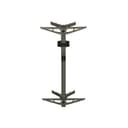
How many sticks do you actually need?
This is the question that decides your total cost, and the answer is arithmetic rather than opinion.
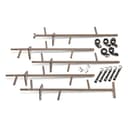
Your climbing height is roughly the number of sticks multiplied by the usable rise per stick, minus overlap where each stick is strapped below the top of the one under it. A 32-to-34-inch stick gives you roughly two and a half feet of usable rise once mounted. So:
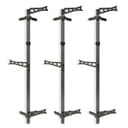
- Three long sticks— roughly 12 to 14 feet. Enough for a lot of whitetail hunting, particularly in thick cover or with a saddle where you can lean out around the tree.
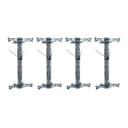
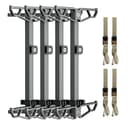
- Four long sticks— roughly 17 to 20 feet. The standard answer for most hunters.
- Five sticks— over 20 feet, and now you are carrying real weight for a marginal advantage.
Height helps less than most hunters believe. Above about 20 feet the downward shot angle gets steep enough to reduce your vital-area target, and the wind advantage flattens out. Most experienced saddle hunters have settled between 15 and 20 feet, which three long sticks or four short ones will reach. Note that several sets on this page ship as three-packs, so read the count before you assume.
Aluminum vs steel
Aluminum sticks weigh roughly half what steel ones do at comparable strength. On a set of four, that difference is several pounds on your back for the entire walk in, and it is the single biggest factor in whether a mobile setup actually gets used.
Steel sets are cheaper and completely adequate if you are hanging sticks and leaving them for the season, or if your walk-in is a few hundred yards. If you are genuinely hunting mobile — walking a mile, hanging, hunting, pulling everything down and moving tomorrow — aluminum is worth the premium and it is not close. We put that trade under a microscope in Hawk Helium vs Guide Gear climbing sticks, which is the clearest version of the choice on this page.
Single step vs double step
A single-step stick has one peg per level, so you climb up one side of the tree with your body turned. A double-step stick has a peg on each side, so you climb square to the trunk with a foot on each side.
Double steps feel noticeably more secure, particularly on a wide or leaning trunk, and they make the transition onto a platform easier because you can stand balanced while you work. They also add width, which snags more on a thick pack-in and adds a little weight.
If you have ever felt unbalanced 18 feet up on single steps, double steps are the fix and worth the money. If single steps have never bothered you, the extra cost buys nothing.
Attachment: straps, cams and versa buttons
Nearly all budget sticks use a strap with a cam buckle or a rope-and-toggle system. Straps are the right answer for public land because they handle crooked, leaning and irregular trunks, which is most of what public-land timber offers. Rigid mounting hardware fails on exactly the trees you find in the real world.
What to check: whether the strap system can be operated one-handed while you are standing on the stick below, and whether it holds under load without creeping. If the sticks come with a strap that requires two hands and full attention, you will be doing that while attached to a tree in the dark.
Aiders: the cheapest way to buy height
An aider is a short webbing ladder with one to three steps that hangs off the bottom of a climbing stick, letting you take a much bigger step up. A single-step aider on each stick effectively adds a foot or more of climb per stick, which can turn a three-stick set into a four-stick climb.
They cost a fraction of an extra stick and weigh almost nothing. They also demand more balance and more deliberate movement, so practice with them at knee height on the ground before you use them 15 feet up. For a budget mobile hunter, aiders are the highest-value accessory on this page.
That interacts directly with how many sticks you buy, because stick count is really a question of total stick length plus reach. We work the arithmetic — and make the case against one-sticking as a beginner setup — in how many climbing sticks do you need. The four-pack most hunters start with is covered in detail in our Guide Gear climbing sticks review.
Safety, which is not optional
The great majority of treestand fall victims were not attached to the tree when they fell, and most were not wearing a harness at all. Climbing sticks put you on a tree with less of a platform under you than any other method, so this matters more here, not less.
Wear a full-body harness. Use a lineman’s rope so you are connected to the trunk from the moment your feet leave the ground and while you hang each stick. Use a tether once you are at height. And do the whole sequence at ground level in daylight several times before you ever do it in the dark. The equipment to do this correctly costs less than one set of sticks and is the most important thing you will buy.
One more thing specific to public land: many national forest ranger districts allow only portable stands and set time limits on how long equipment can be left. That is another argument for a light, packable stick set that comes down with you, and a reason to read your local rules before you leave anything overnight.
What sticks pair with
Sticks are half a system. They get you up the tree; something has to hold you there. That is either a saddle and platform or a hang-on stand. If you have not decided which, saddle hunting vs treestand works through weight, comfort and cost, and sticks vs a climbing stand covers the other way up a tree entirely.