Blaze & Budget

Climbing Sticks vs Climbing Stand

One works on almost any tree and needs a second purchase. The other is self-contained and refuses most of the timber you hunt. Here is how to pick.

By Stephen V.Last updated How we rank

There are two ways to get up a tree without a ladder, and the choice between them is decided almost entirely by one thing: what your trees look like. Everything else — weight, cost, setup time, noise — matters, but it matters second.

A climbing stand is self-contained. Two pieces, a seat and a platform, and you inchworm up the trunk with them. No sticks, no ladder, nothing else to buy. It only works on a straight trunk with no branches for the entire climb and a consistent taper.

Climbing sticksare separate steps you strap up the trunk one at a time. They work on crooked trees, leaning trees, branchy trees, and trunks that change diameter — which is most of what public-land timber actually offers. They need something to hold you at the top, either a hang-on stand or a saddle, which is a second purchase.

Below is a representative example of each with live prices, then the honest breakdown of where each one wins. We do not own these units and never claim to — our method is here. Both approaches require a full-body harness and a lineman’s rope, used from the ground up.

How this is funded:we earn a commission if you buy through our links, at no extra cost to you. It never changes which product we recommend, and we’ll tell you plainly when we’d skip one. Full disclosure.

Quick picks

Ranked on price-per-performance — the specs that matter divided by what it costs. Select a row to jump to the full write-up. We have not field-tested these — here is exactly what we do instead.

#ProductPieceScorePrice
1
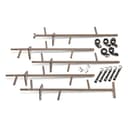
Guide Gear 20' Rapid Climbing Sticks (4-pack)

Guide Gear 20' Rapid Climbing Sticks (4-pack)

The sticks approach

Four five-foot sticks that get you 20 feet up for the price other brands charge for one premium stick. Heavy, but the cheapest reliable way to climb — the budget saddle hunter's default.

Climbing sticks (20')
8.5/ 10
$74.99View on Amazon

$79.996% off

Price as of September 5, 2026. #ad How we’re funded

2
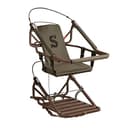
Summit Viper Steel Climbing Treestand

Summit Viper Steel Climbing Treestand

The climbing stand approach

The climber on this page. A climbing stand is the only design that goes up a straight tree with nothing but itself — no sticks, no ladder — which makes it the single most self-contained mobile option here.

Climbing · steel
8.3/ 10
$239.99View on Amazon

Price as of September 5, 2026. #ad How we’re funded

The picks in full

#1The sticks approach8.5/ 10 value

Guide Gear 20' Rapid Climbing Sticks (4-pack)

Four five-foot sticks that get you 20 feet up for the price other brands charge for one premium stick. Heavy, but the cheapest reliable way to climb — the budget saddle hunter's default.

Strengths

  • 20 feet of climbing for a bargain price
  • Standoff brackets keep the sticks off the tree for easy climbing
  • Compatible with rope or strap (cam-buckle) attachment

Trade-offs

  • Steel sticks are heavy to pack in on foot
  • Not as quiet or compact as aluminum sticks
PieceClimbing sticks (4-pack, 20 ft)
MaterialSteel
AttachmentRope / strap

Specs read from the product listing, on July 22, 2026. “Not published” means the maker doesn’t state that figure. The score is our value rating, not a lab test — how we rank.

#2The climbing stand approach8.3/ 10 value

Summit Viper Steel Climbing Treestand

The climber on this page. A climbing stand is the only design that goes up a straight tree with nothing but itself — no sticks, no ladder — which makes it the single most self-contained mobile option here.

Strengths

  • Climbs a straight tree with no sticks, ladder or extra gear
  • Summit's Viper is the reference design in the climbing-stand category
  • Steel version costs far less than the aluminum SD models

Trade-offs

  • Only works on straight, limb-free trunks — useless in most hardwood timber
  • Steel is heavy on your back and the most expensive stand on this page
TypeClimbing stand
FrameSteel
Weight ratingNot published

Specs read from the product listing, on August 11, 2026. “Not published” means the maker doesn’t state that figure. The score is our value rating, not a lab test — how we rank.

Tree choice: the factor that decides it

Walk your hunting ground and count. A climbing stand needs a trunk that is straight, free of branches for the entire height you want to climb, and tapers gradually and predictably. In planted pine, that is most of the stand. In mature mixed hardwoods — which is a large share of public whitetail ground — it is often a small minority of trees, and rarely the ones in the right place.

The bitter version of this problem is that the tree you want to hunt is almost never the tree a climber will take. You find the pinch point, the funnel, the rub line, and the only trunk covering it is a leaning oak with a limb at nine feet. Sticks do not care. A climber sends you home.

Honest test: if fewer than half the trees you would want to hunt would take a climber, buy sticks.

Weight and packability

A budget steel climbing stand is a single heavy object that you wear on your back like a shell. It is awkward through thick brush, it catches on everything, and it is genuinely uncomfortable over distance.

A set of four climbing sticks plus a hang-on stand usually weighs similar or a little more in total, but it distributes and packs differently — sticks strap flat to a pack frame and the stand rides against your back. Sticks plus a saddle, though, is dramatically lighter than either, and that combination is why saddle hunting has taken over mobile public-land hunting.

Verdict: for pure weight, sticks plus saddle wins clearly. Sticks plus hang-on and a climber are roughly comparable, with the climber being more awkward and the sticks being bulkier.

Setup speed and noise

A climbing stand goes up faster once you find a tree that takes it. Strap the two halves, sit, stand, repeat, and you are at height in three or four minutes. There is no fiddling with straps at height and nothing to drop.

Sticks are slower — each one has to be positioned and strapped, usually while you are standing on the one below. Twelve to fifteen minutes is a realistic first-year time; experienced hunters get it under eight.

On noise the comparison flips. A climber makes a distinctive metallic scraping sound as it bites the bark, repeated for every foot of the climb, and it is audible a long way in still morning air. Sticks are quieter overall, though the cam buckles click. Both benefit from felt or inner-tube wrapping on metal contact points.

Total cost, honestly compared

A climbing stand is one purchase and you are done. That is a genuine advantage and it is why the sticker prices mislead.

Sticks are only half a system. A realistic budget setup is a set of sticks plus either a hang-on stand or a saddle and platform, and the second half frequently costs as much as the first. Compare the complete setups rather than the sticks against the climber, or you will underestimate the sticks route by roughly half.

Add to both a full-body harness, a lineman’s rope and ideally a lifeline. None of it is included with anything, and all of it is mandatory.

Comfort at height

A climbing stand has the best seat of the three options by a wide margin. It is a real seat with a padded back, designed for long sits, and for an all-day rut sit in the cold that matters enormously.

A budget hang-on has a smaller, harder seat. A saddle is the least conventionally comfortable of the three for a long static sit, although it allows you to shift position constantly, which some hunters find better over many hours and others do not.

If your hunting is dominated by all-day sits from a fixed spot in country with straight timber, the climber’s comfort advantage is real and worth weighting heavily.

Safety differences

Both are safe when used correctly and dangerous when not. The specific risks differ.

A climbing stand’s characteristic failure is separating the platform from the seat section during the climb — which is why you must tether the two halves together with a rope so the platform cannot drop away from your feet. A climber also requires the tree taper to stay within range; if the trunk narrows too fast the stand can slip.

The sticks failure mode is a fall between steps, or a strap that creeps under load. The mitigation is a lineman’s rope keeping you connected to the trunk continuously while you hang and climb.

The research is unambiguous on the common factor: the great majority of treestand fall victims were not attached to the tree when they fell. Whichever route you choose, staying connected from the ground up is what actually keeps you alive.

The recommendation

Buy a climbing stand if you hunt planted pine or straight, limbless timber; you sit all day and value comfort; you hunt the same few trees; and you want one purchase with nothing else to buy.

Buy climbing sticks if you hunt public land or mixed hardwoods; you move often and want to hunt the tree the sign points at rather than the tree your gear allows; you might move to a saddle later; or you want a system you can build up over two or three seasons rather than in one purchase.

For most budget public-land whitetail hunters, sticks are the more flexible purchase and the one that grows with you. Start with a budget stick set and a cheap hang-on, and if mobility becomes the thing you care about, the same sticks carry straight over to a saddle setup.
Frequently asked questions

Are climbing sticks or a climbing stand better for public land?

Climbing sticks, for most public-land hunters. A climbing stand only works on a straight trunk with no branches for the whole climb and a consistent taper, which rules out a large share of mature hardwood timber and, more painfully, usually rules out the specific tree the sign points at. Sticks work on crooked, leaning and branchy trees, so you hunt the tree you want rather than the tree your gear permits.

Is a climbing stand faster to set up than climbing sticks?

Yes, once you have found a tree that takes it. A climber goes up in three or four minutes with nothing to strap at height and nothing to drop. Sticks take twelve to fifteen minutes for a beginner and under eight for someone practiced, because each stick has to be positioned and strapped while you stand on the one below. The climber's time advantage disappears if you spend twenty minutes finding a suitable trunk.

Which is quieter, a climbing stand or climbing sticks?

Climbing sticks, generally. A climbing stand makes a distinctive metallic scraping sound as it bites into the bark, repeated for every foot of the climb, which carries a long way in still morning air. Sticks are quieter overall, though cam buckles click and metal contact points can clank. Both benefit from wrapping contact points in adhesive-backed felt or strips of old bicycle inner tube.

Do climbing sticks cost less than a climbing stand?

Only if you compare the sticks alone, which is misleading. Climbing sticks are half a system: you also need either a hang-on stand or a saddle and platform to hold you at the top, and that second half frequently costs as much as the sticks. A climbing stand is one complete purchase. Compare the full setups, not the sticker prices, or you will underestimate the sticks route by roughly half.

Can I use climbing sticks with a saddle instead of a stand?

Yes, and it is the most popular mobile setup on public land for good reason. Sticks plus a saddle and a small platform is dramatically lighter and more packable than either sticks plus a hang-on or a climbing stand, and it works on trees no climber could use. The trade-off is a real learning curve and less conventional comfort on very long sits, so practice the whole system at ground level before you hunt from it.

What safety gear do I need for either method?

A full-body harness and a lineman's rope at minimum, plus a lifeline for the climb if you hunt the same tree repeatedly. With a climbing stand you must also tether the platform to the seat section so the platform cannot drop away from your feet during the climb. The great majority of treestand fall victims were not attached to the tree when they fell, so staying connected from the ground up is the single thing that matters most.

Sources

Keep reading