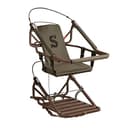
Which style of treestand do you need?
Ladder stands
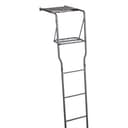
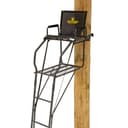
A ladder stand is a fixed structure: a ladder section that straps to the trunk with a seat and platform on top. It is the most comfortable and, for most hunters, the safest style to get into and out of in the dark, because you are climbing an actual ladder rather than a series of separate steps.
Buy one if you hunt private ground or a lease, have a spot you will sit repeatedly, and can leave a stand up for the season. Do not buy one ifyou hunt public land where you cannot leave equipment, or if you hunt alone — putting up a ladder stand safely genuinely wants two people and a ratchet strap.
Hang-on stands
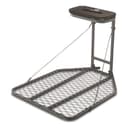
A hang-on is a platform and seat that straps to the trunk, with no way to reach it: you supply that with climbing sticks. That two-part nature is the whole point — it means the stand works on any tree of a suitable size, straight or crooked, and it can be carried in and out.
Buy one if you hunt public land, move stands during the season, or hunt trees that a climber cannot use. Remember that the sticks are a separate purchase and frequently cost as much as the stand, so budget the pair together.
Climbing stands
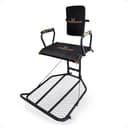
A climbing stand is two pieces — a seat section and a platform — that you inchworm up the trunk using your arms and legs. It needs no sticks and no ladder, which makes it the most self-contained option on this page.
The catch is the tree. A climber needs a reasonably straight trunk with no branches for the whole climb, and consistent taper. In mature hardwood timber, planted pines aside, a lot of the best-looking trees simply cannot be climbed. Scout your ground honestly before you commit to this style.
The specs that matter, and the ones makers hide
Platform size
This is the spec that determines whether you can stand, shift your weight and turn for a shot, and it is the one that separates a stand you can sit in for five hours from one you climb out of at eleven. Roughly 24 by 30 inches is a genuinely usable platform. Anything much smaller becomes a footrest rather than a floor, which is particularly punishing for bowhunters who need to stand and rotate.
Weight rating
Published weight ratings include you andyour gear — pack, bow or rifle, clothing, harness. A 300 lb rating is not a 300 lb hunter allowance. Some budget stands do not publish a rating at all, which is a genuine gap in the information rather than a small one, and we flag it on the cards where it applies.
Stand weight
Steel stands are cheap and heavy; aluminum is light and expensive. For a ladder stand you carry once, steel is fine. For a hang-on you carry a mile in the dark alongside four sticks, every pound counts, and this is the main reason premium hang-ons cost what they do.
Noise
Metal-on-metal contact is what deer hear. Cheap stands squeak, especially in cold. The universal budget fix is to wrap contact points in adhesive-backed felt or a strip of an old bike inner tube, and to hang and settle the stand well before the season rather than the morning of a hunt.
Setup rules that keep you alive
- Wear a full-body harness, every time, from the ground up. Not once you are settled. Not on the way down. The whole time.
- Install a lifeline. A lifeline is a rope running from the base of the tree to above your stand that you clip a prusik to, so you are attached during the climb, which is when most falls happen.
- Never carry your bow or rifle up. Climb with both hands, then haul your gear up on a rope with the firearm unloaded and the muzzle pointed down.
- Inspect straps every year. Nylon degrades in UV and weather. A strap that spent a season in the sun is not the strap you bought.
- Tell someone where you are. A location and a return time, every hunt.
- Hang it in daylight. Set the stand up in the off-season, not at 5 a.m. on opening morning.
Public land rules
On National Forest System land, ranger districts commonly permit only portable stands and blinds and set their own limits on how long equipment can be left in place. State wildlife areas frequently impose removal deadlines, ban screw-in steps, or require your name and contact details on the stand.
Check the rules for the specific tract you hunt before you buy. A ladder stand you cannot legally leave is a ladder stand you will carry out in the dark, which is a mistake you make exactly once. For most public-land hunting, a hang-on plus sticks, or a saddle, is the practical answer.
Treestand or saddle?
A saddle is the third way to hunt from a tree and has taken over much of the mobile public-land market for good reasons: it is lighter than any stand, it packs smaller, and it works on trees no climber could use. It is also less comfortable for long sits and has a real learning curve.
We compare the two properly in saddle hunting vs treestand, and if you are leaning that way, the budget saddle kit roundup prices out a complete system.