Blaze & Budget

Hang-On vs Ladder Stand

One is mobile, cheap and incomplete without sticks. The other is comfortable, stable and effectively permanent. Which one belongs on your ground, and what each really costs.

By Stephen V.Last updated How we rank

Most hunters buy their first treestand on price and discover the actual difference in October. Hang-on and ladder stands are not cheap and expensive versions of the same product — they solve different problems and they impose different costs, and the sticker price is one of the least reliable ways to compare them.

The distinction that matters: a hang-on is a seat and a platform with no way to get to it, so it is incomplete until you buy climbing sticks, and it is mobile enough to move as the deer move. A ladder stand arrives with its access attached, is far more comfortable and stable, and in practical terms goes up once and stays there.

Below is the split with real trade-offs, four picks covering both camps with live pricing, and a plain recommendation for a budget hunter. We do not own these stands and are not claiming to have hung them; we compile the published platform sizes, heights and weight ratings, note plainly where a maker does not publish one, and run price-per-performance math — our method is here.

How this is funded:we earn a commission if you buy through our links, at no extra cost to you. It never changes which product we recommend, and we’ll tell you plainly when we’d skip one. Full disclosure.

Quick picks

Ranked on price-per-performance — the specs that matter divided by what it costs. Select a row to jump to the full write-up. We have not field-tested these — here is exactly what we do instead.

#ProductTypeScorePrice
1
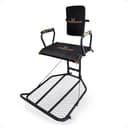
Big Game Captain XC Hang-On

Big Game Captain XC Hang-On

Best hang-on

The hang-on with published numbers. A 300 lb rating and a 24 by 30 inch platform are both stated by the maker, which is more than most budget stands will commit to in writing.

Hang-on · 300 lb
8.6/ 10
$107.99View on Amazon

$119.9910% off

Price as of September 5, 2026. #ad How we’re funded

2
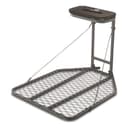
Guide Gear Hang-On Tree Stand

Guide Gear Hang-On Tree Stand

Cheapest hang-on setup

The cheapest way to get off the ground with a real platform under you. Pair it with the budget climbing sticks and you have a complete hang-and-hunt setup for less than one premium stand.

Hang-on
8.7/ 10
$79.99View on Amazon

$99.9920% off

Price as of September 5, 2026. #ad How we’re funded

3
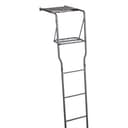
Guide Gear 15.5' Ladder Tree Stand

Guide Gear 15.5' Ladder Tree Stand

Best ladder stand

The cheapest ladder stand worth owning. Ladder stands are the safest and most comfortable way to hunt a spot you will sit repeatedly — and 15.5 feet is enough height for most whitetail cover.

Ladder · 15.5'
8.8/ 10
4
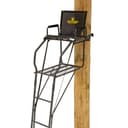
Rivers Edge Bowman LS 1-Man Ladder Stand

Rivers Edge Bowman LS 1-Man Ladder Stand

Best ladder for bowhunters

A ladder stand designed around a bow rather than a rifle. The 27-inch-deep platform and no shooting rail are exactly what a bowhunter needs and exactly what most cheap ladder stands get wrong.

Ladder · 19'5"
8.4/ 10
$244.94View on Amazon

$279.9913% off

Price as of September 5, 2026. #ad How we’re funded

The picks in full

#1Best hang-on8.6/ 10 value

Big Game Captain XC Hang-On

The hang-on with published numbers. A 300 lb rating and a 24 by 30 inch platform are both stated by the maker, which is more than most budget stands will commit to in writing.

Strengths

  • 300 lb weight rating published outright — you can plan around it
  • 24 x 30 in platform gives room to stand and turn for a shot
  • Flip-back seat clears the platform when you need to stand

Trade-offs

  • Steel construction is heavier than aluminum stands twice the price
  • Costs about 50% more than the Guide Gear for a similar platform
TypeHang-on
Platform24 x 30 in
Weight rating300 lb

Specs read from the product listing, on August 11, 2026. “Not published” means the maker doesn’t state that figure. The score is our value rating, not a lab test — how we rank.

#2Cheapest hang-on setup8.7/ 10 value

Guide Gear Hang-On Tree Stand

The cheapest way to get off the ground with a real platform under you. Pair it with the budget climbing sticks and you have a complete hang-and-hunt setup for less than one premium stand.

Strengths

  • 24 x 29.5 in platform is genuinely usable, not a token footrest
  • The lowest-cost route into hang-and-hunt when paired with cheap sticks
  • Simple steel build with very little to go wrong

Trade-offs

  • Steel is heavy — this is a hang-it-and-leave-it stand, not a mile pack-in
  • The listing does not publish a weight rating
TypeHang-on
Platform24 x 29.5 in
Weight ratingNot published

Specs read from the product listing, on August 11, 2026. “Not published” means the maker doesn’t state that figure. The score is our value rating, not a lab test — how we rank.

#3Best ladder stand8.8/ 10 value

Guide Gear 15.5' Ladder Tree Stand

The cheapest ladder stand worth owning. Ladder stands are the safest and most comfortable way to hunt a spot you will sit repeatedly — and 15.5 feet is enough height for most whitetail cover.

Strengths

  • 15.5 ft of height with a real ladder — no climbing sticks needed
  • Mesh seat is more comfortable for an all-day sit than any hang-on
  • The safest style of stand to get into and out of in the dark

Trade-offs

  • It is not mobile — this stays where you put it for the season
  • Needs two people and a ratchet strap to put up safely
TypeLadder stand
Height15.5 ft
Weight ratingNot published

Specs read from the product listing, on August 11, 2026. “Not published” means the maker doesn’t state that figure. The score is our value rating, not a lab test — how we rank.

#4Best ladder for bowhunters8.4/ 10 value

Rivers Edge Bowman LS 1-Man Ladder Stand

A ladder stand designed around a bow rather than a rifle. The 27-inch-deep platform and no shooting rail are exactly what a bowhunter needs and exactly what most cheap ladder stands get wrong.

Strengths

  • 27 in deep platform gives room to stand and rotate for a bow shot
  • 19 ft 5 in of height gets you above a whitetail's normal scan line
  • No shooting rail to fight — built for archers on purpose

Trade-offs

  • Costs more than double the Guide Gear ladder stand
  • Nearly 20 feet of ladder is a serious two-person job to erect
TypeLadder stand (1-man)
Height19 ft 5 in
Platform depth27 in

Specs read from the product listing, on August 11, 2026. “Not published” means the maker doesn’t state that figure. The score is our value rating, not a lab test — how we rank.

Safety comes before the comparison

Falls are the leading cause of serious hunting injuries, and they happen overwhelmingly during climbing and during the transition on and off the platform — not while sitting. Whichever stand you buy, wear a full-body harness and stay connected from the moment your feet leave the ground until they are back on it, using a lifeline on the tree.

That is not a disclaimer paragraph; it changes the buying decision. A hang-on has a far longer and more exposed transition than a ladder stand, which is a genuine reason for a first-time elevated hunter to start with a ladder. We cover the whole procedure in the treestand safety guide, and it is worth reading before you spend anything.

What each one actually is

Hang-on

A platform and seat that straps or chains to the trunk. It is light, packable, and can be hung in most trees with a usable trunk — crooked, leaning, branchy, or an unfriendly species. It has no access of its own.

That last point is the one that catches people out. A hang-on advertised as an inexpensive stand is not a complete purchase. Add three or four climbing sticks and the true cost is often close to double the shelf price, and can exceed a basic ladder stand.

Ladder stand

A seat and platform on the top of a fixed ladder section, typically 15 to 20 feet, that leans against and straps to the trunk. It arrives complete. It is heavier — frequently 60 to 90 pounds — and requires two people and clear ground to raise safely.

The seats are larger and better padded, there is usually a shooting rail, and the platform is wide enough to shift your feet on during a long sit. For all-day November sits, that comfort is not a luxury; it is what allows you to still be there at 3 p.m. when the deer moves.

The seven differences that decide it

1. Mobility

Hang-on, decisively. You can carry one on your back with a set of sticks and hunt a fresh sign, a new wind, or a rut funnel you found yesterday. A ladder stand is a two-person job to move and in practice gets relocated once a year at most.

On public land this is not a preference, it is close to a requirement. Deer patterns shift with pressure, mast and the rut, and a stand you cannot move is a stand that is wrong for most of the season.

2. True cost

Compare complete setups, not shelf prices. A hang-on plus four climbing sticks plus a harness and lifeline usually lands near or above a budget ladder stand, which includes its own access. Ladder stands look expensive and often are not.

3. Comfort on a long sit

Ladder, and it is not close. Bigger platform, padded seat, backrest, armrests and shooting rail. A hang-on platform is small and rigid, and by hour four you are aware of every inch of it. Comfort converts directly into hunting hours, which convert into opportunities.

4. Setup risk and effort

Hang-ons are hung by one person, climbing as you go, which is the highest-risk activity in treestand hunting. Ladders are raised by two people from the ground — a different risk, mostly of dropping something heavy, and one that ends once the stand is up and strapped.

If you hunt alone and have never hung a stand, that asymmetry matters. So does the fact that a ladder can only be raised where there is room to raise it.

5. Tree requirements

Hang-on, easily. It will work on leaning trunks, crooked timber and trees a ladder cannot lean cleanly against. A ladder stand wants a reasonably straight trunk with clear ground in front of it. On public land, the best-positioned tree is rarely the most convenient one.

6. Concealment

Hang-on. It is smaller, can be tucked tighter into cover, and does not create the vertical line that a ladder does. A ladder stand standing in open timber is visible from a long way off — to deer and to other hunters.

7. Theft and permanence on public land

Very few public-land hunters leave ladder stands out, and many states and federal units do not allow stands to be left overnight at all. Between regulation and theft, a ladder stand is generally a private-ground product. Read the rules for treestands on public land before you assume otherwise — they vary by agency and by individual unit.

What about a saddle?

It belongs in this comparison because for a public-land hunter it is frequently the better answer than either. A saddle plus a platform plus sticks weighs a fraction of a hang-on setup, packs smaller, works on almost any tree, and costs about the same as a decent hang-on with sticks.

What you trade is comfort during long static sits and a much steeper learning curve — you have to practice the setup on the ground before you take it hunting. Our saddle versus treestand comparison covers that decision in full, and the beginner guide covers what a kit actually contains.

The recommendation

Buy a ladder stand if you hunt private ground or a lease you can leave gear on, if you sit all day, if you hunt with a child or an older relative, or if you have never hunted from height and want the safest possible introduction. Hang it in your best spot, leave it, and hunt it on the winds it plays.

Buy a hang-onif you hunt public land, if you need to follow deer as pressure and food shift, if your best trees are imperfect, or if you already own sticks. Budget for the sticks from the start — a hang-on without them is furniture.

Buy both eventually, which is what most hunters with a few seasons behind them actually do: a ladder on the property they know well, and a hang-on or saddle for everywhere else. If you can only fund one this year, let the ownership of the ground decide it. Everything else follows from that.
Check your state’s regulations. Hunting laws vary by state and change year to year — legal calibers, minimum bow draw weights, blaze-orange rules, seasons and treestand requirements included. Confirm the rules with your state wildlife agency before you hunt. Blaze & Budget is written by an enthusiast, not a game warden, and nothing here is legal advice.

Frequently asked questions

Is a hang-on or ladder stand cheaper?

Compare complete setups rather than shelf prices. A hang-on stand is cheaper on the shelf but it has no way to reach it, so you must add three or four climbing sticks — and that total frequently equals or exceeds a budget ladder stand, which includes its own access. A ladder stand's price is the whole price. Add a harness and lifeline to either, because that is not optional equipment.

Which treestand is safer for a beginner?

A ladder stand, for a specific reason: falls happen overwhelmingly during climbing and during the transition on and off the platform, and a ladder stand's transition is short, stable and at the top of a fixed ladder. Hanging a hang-on stand alone, from sticks, while climbing, is the highest-risk routine activity in treestand hunting. Either way, wear a full-body harness and stay connected to a lifeline from the ground up and back down again.

Can I use a ladder stand on public land?

Often not, and you must check your specific agency and unit rather than assuming. Many public land areas prohibit leaving stands overnight, some ban screw-in steps or anything that penetrates a tree, and some require stands to be removed at the end of each day or each season. Combined with the practical reality of theft and the two-person effort to raise one, ladder stands are generally a private-ground product.

How high should I hang a treestand?

Most hunters settle in the 15 to 20-foot range, which is enough to get above a deer's normal line of sight without making the shot angle so steep that it reduces your margin for error. Higher is not automatically better: steep downward angles shrink the vital area you are shooting into and raise the consequence of a fall. Cover and background matter far more than the number — a stand at 15 feet with timber behind it beats one at 25 feet skylined.

How many climbing sticks do I need for a hang-on stand?

Usually three or four to reach a normal hunting height, depending on the length of each stick and how much you overlap them. Sticks are sold in packs and in different lengths, so compare the total climbable height rather than the number of sticks — three long sticks can reach further than four short ones. Buy the sticks at the same time as the stand and treat them as part of its price, not as a later accessory.

Do I need a harness with a ladder stand?

Yes. Ladder stands feel stable enough that hunters routinely skip the harness, and that complacency is exactly why falls from them still happen — a moment of imbalance while turning to shoot, a slip on a frosted platform, or falling asleep on a long sit. Wear a full-body harness, attach to a lifeline that runs the length of the ladder, and stay connected from the ground to the platform and back.

Sources

Keep reading