How Many Climbing Sticks Do You Need?
Stick count is really a length question. Here is the arithmetic that decides how many you carry, why four short sticks and three long ones reach the same height, and the honest case against one-sticking.
How this is funded: we earn a commission if you buy through our links, at no extra cost to you. It never changes which product we recommend, and we’ll tell you plainly when we’d skip one. Full disclosure.
Most budget saddle hunters should buy four sticks, and most of them should buy the cheap steel four-pack first. Four five-foot sticks reach about 20 feet, which is more height than most whitetail hunting needs, and it is the configuration with the shortest learning curve. The question people actually mean when they ask how many sticks they need is a different one: “how few can I get away with carrying?” The answer to that is governed by arithmetic, not preference, and the arithmetic is the whole content of this page.
If you are walking a long way in and weight is the thing stopping you, the right move is not fewer sticks — it is longer sticks in a lighter metal. Three 34-inch aluminum sticks weigh less than four steel ones and cover a comparable climb. If weight is not your problem, four cheap sticks is the correct answer and you can stop reading after the next section.
The arithmetic nobody writes down
Your climbing height is not the number of sticks. It is (stick length × number of sticks) + your reach above the top step, minus whatever you lose to spacing gaps where sticks do not stack perfectly end to end. That last term is why real-world height always comes out below the clean multiplication.
Work it with the two sets we track and the pattern is obvious:
- Four sticks at five feet each— the budget steel four-pack — is marketed as a 20-foot climb, and that is the configuration the number comes from.
- Three sticks at 34 inches eachis about 8.5 feet of stacked stick. Add the height you can reach to stand and step, and you are realistically looking at mid-teens, not 20 feet. XOP’s own listing is honest about it: three sticks alone will not get most hunters to 20 feet.
- Four sticks at 34 inches each is roughly 11.3 feet of stick, which is the common mobile-hunter answer and the reason four-packs of long sticks exist.
So “how many sticks” is the wrong question and “how many feet of stick am I carrying” is the right one. A hunter with three long sticks and a hunter with five short ones are carrying similar vertical distance; the first is carrying fewer attachment points and fewer moves, the second is carrying a bulkier stack and more stops.
Decide the height before you decide the sticks
The number of sticks follows from the height you actually hunt, and most hunters over-estimate that. Height does three things for you — it lifts your scent cone, widens what you can see, and gets your outline out of a deer’s normal scan. All three are subject to diminishing returns, and all three are available at 15 feet in the right tree.
What climbing higher costs you is concrete: a steeper shot angle that shrinks the vital area you are aiming at, more time exposed on the climb, more noise, and a worse outcome if something goes wrong. The Tree Stand Safety Awareness Foundation’s whole message is that falls are the dominant hunting injury and that a harness worn from the ground up is the mitigation. None of that gets better with altitude.
Practical guidance that costs nothing: pick the tree for its cover, not its height. A hunter at 14 feet behind a cluster of limbs is harder to spot than one at 22 feet against open sky, and that is a free upgrade over buying a fifth stick. Our saddle hunting primer covers tree selection, and the treestand safety guide covers the harness discipline that makes any of this acceptable.
Three, four or five: what each setup is actually for
Four short sticks — the default
The steel four-pack is where almost every budget saddle hunter should start, and not only because of price. Four sticks means close spacing, which means the climb is forgiving: you are never reaching far for the next step, which matters enormously at 5 a.m. in the rain when you are new to this. The standoff brackets keep the sticks off the tree so your boot has somewhere to go, and the rope-or-strap attachment works on the crooked public-land trees that defeat rigid mounts.
The cost is weight. Steel sticks are heavy to pack in on foot and less quiet than aluminum. If your hunt is a quarter-mile walk from a parking area, that is a non-issue and you should buy these. If it is two miles, it is the whole issue.
Three long sticks — the mobile answer
Longer sticks are the elegant solution to the weight problem because they attack it twice: fewer pieces of hardware, and fewer attachment moves on the way up and down. Three 34-inch aluminum sticks is a genuinely packable stack, and XOP is a saddle-native brand rather than a treestand company adapting a product.
Two honest caveats. First, as above, three sticks will not get most hunters to 20 feet — buy them knowing you are choosing a mid-height setup, or plan to add a fourth. Second, long sticks demand bigger steps between attachment points, which is a confidence and flexibility question as much as a gear one. Practice the spacing at knee height before you trust it at eighteen feet.
Double-step sticks — fewer, but wider
The other way to buy back comfort is a double-step design, where each step has a foot placement on both sides of the tree. That lets you stand square to the trunk instead of edging up one side, and it is the single biggest comfort upgrade available in a mobile setup — especially on wide or leaning trunks where a single-step stick feels like a balance exercise.
It is also the most expensive option we track, and the extra width snags more on a thick pack-in. This is the choice for a hunter who has climbed enough to know that balance, not height, is what makes them uneasy.
The case against one-sticking
One-sticking — climbing with a single stick that you reposition above yourself over and over — is the lightest possible setup and it is genuinely impressive to watch. It is also the configuration most often recommended to beginners by people who have been doing it for years, and that is a mistake.
- It is not cheaper. One stick plus aiders, plus the ropes and hardware to make each move safe, plus the practice time, costs more than buying a second stick. Anyone telling you one-sticking is the budget route is counting only the stick.
- It multiplies the number of transitions. Every stick move is a moment where your weight shifts and your tether is doing the work. Four sticks and one climb is fewer such moments than one stick and six moves.
- It is slow and loud for a beginner. The speed people demonstrate comes from hundreds of reps. Your first dark-morning attempt will take four times as long and make four times as much noise, directly under the tree you are trying to hunt.
- It demands flawless tether discipline. With sticks you have redundancy; with one stick, your rope is everything, every time. That is an acceptable trade for an experienced climber and a bad one for a new one.
Learn to climb on four sticks. If after a season the weight is still the thing limiting where you hunt, drop to three long ones. Consider one-sticking only after you have done a full season of dark climbs and can rig your setup without thinking about it.
The rules that apply at every stick count
- Harness on at the truck, tether attached before you leave the ground, connected at all times. State agencies and the Tree Stand Safety Awareness Foundation say the same thing, and the climb is when falls happen.
- Strap attachment, not screw-in. Beyond being illegal on a great deal of public land, anything that penetrates the tree damages it and marks your spot for everyone else.
- Take everything with you. Many public-land units require portable equipment to be removed daily, and sticks left overnight are sticks that may be gone or that may make you the subject of a citation. Our public-land treestand rules page covers the variation.
- Hang them the same way every time. Consistent spacing means your feet know where the next step is in the dark, which is worth more than any piece of gear on this page.
The short version
Buy four cheap sticks if you hunt near a road; that is the default and it is correct for most people. Buy three long aluminum sticks if pack weight is genuinely stopping you from hunting the ground you want, and accept a mid-teens climb rather than 20 feet. Buy double-step sticks if balance is your limiting factor. Do not start with one stick. Then spend your next dollars on the harness, which is the one category where we say plainly never to buy cheap or used.
The stick sets this guide earns
Ranked on price-per-performance — the specs that matter divided by what it costs. Select a row to jump to the full write-up. We have not field-tested these — here is exactly what we do instead.
| # | Product | Piece | Score | Price |
|---|---|---|---|---|
| 1 | 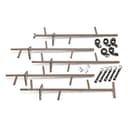 Guide Gear 20' Rapid Climbing Sticks (4-pack) The four-stick answer, and the cheapest Four five-foot sticks that get you 20 feet up for the price other brands charge for one premium stick. Heavy, but the cheapest reliable way to climb — the budget saddle hunter's default. | Climbing sticks (20') | 8.5/ 10 | |
| 2 | 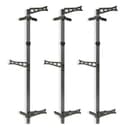 XOP Aluminum Climbing Sticks (3-pack, 34") The three-stick answer: most height per stick Thirty-four inches per stick is the number to notice: longer sticks mean fewer sticks for the same height, which is less weight on your back and fewer moves in the dark. | Climbing sticks (3 x 34 in) | 8.7/ 10 | $123.60View on Amazon Price as of October 19, 2026. #ad How we’re funded |
| 3 | 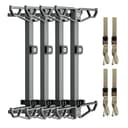 RiteAim Aluminum Climbing Sticks The cheapest aluminum, if weight is the problem Aluminum sticks at a steel-stick price. Aluminum is the spec that matters for a mobile hunter — it is the difference between sticks you carry a mile and sticks you leave in the truck. | Climbing sticks (aluminum) | 8.5/ 10 | $93.99View on Amazon Price as of October 19, 2026. #ad How we’re funded |
Check your state’s regulations. Hunting laws vary by state and change year to year — legal calibers, minimum bow draw weights, blaze-orange rules, seasons and treestand requirements included. Confirm the rules with your state wildlife agency before you hunt. Blaze & Budget is written by an enthusiast, not a game warden, and nothing here is legal advice.
Frequently asked questions
How many climbing sticks do you need to get 20 feet up?
It depends entirely on stick length, not stick count. Four five-foot sticks reach roughly 20 feet, which is why the common budget set is a four-pack of 20-foot-rated sticks. Three 34-inch sticks give you about 8.5 feet of stacked stick, so three alone will not get most hunters to 20 feet — their own listing says so. If you want 20 feet with three sticks, you need long sticks and a tall reach, or you need to accept a lower height.
How high should you climb when saddle hunting?
Only as high as the cover and the shot angle require, which is usually a lot lower than hunters assume. Many successful saddle hunters sit between 12 and 18 feet. Height buys you a better scent cone and a wider field of view; it costs you a steeper shot angle, a smaller vital area to aim at, more climbing in the dark, and a longer fall. The ground, the cover and the wind should set the height, not a number you read.
Is one-sticking worth it?
It is worth it if your limiting factor is pack weight and you have practiced it on the ground until it is boring. One-sticking means climbing with a single stick, repositioning it above you repeatedly, and relying entirely on your tether and an aider to make each move. It is the lightest possible setup and the slowest, loudest and least forgiving one. It is not a beginner technique, and it is not a way to save money — the aiders, ropes and practice time cost more than a second stick.
Do longer climbing sticks mean you carry fewer?
Yes, and it is the most useful trade in the category. A 34-inch stick covers roughly twice the vertical distance of a short three-step stick, so three long sticks can replace four or five short ones for the same height, with fewer attachment moves in the dark. The cost is bulk — long sticks are more awkward on a pack and harder to stack quietly — and price, since the longer sets are generally aluminum.
Can you use climbing sticks on public land?
Usually yes, if they are strap-attached and removed when you leave. Public-land rules on elevated hunting vary by agency and by state: many prohibit anything that penetrates the tree, including screw-in steps and nails, and many require that portable equipment be removed daily or be marked with your name and contact details. Check the specific rules for the unit you are hunting before you go, because the penalty for getting this wrong is losing the gear.
Are aluminum climbing sticks worth the extra money?
If you walk in more than a few hundred yards, yes. Steel sticks work exactly as well mechanically and cost less, but they are heavy enough to change what you are willing to carry — and the sticks you leave in the truck have a hunting success rate of zero. If you hunt from a short walk or out of a fixed spot, steel is the better value and the money is better spent elsewhere.
Do I need a platform as well as sticks?
For saddle hunting, yes in practice. The sticks get you to height; the platform is what you stand on for hours and what lets you shoot around the tree. You can hunt a saddle standing on the top stick, and plenty of people have, but it is uncomfortable enough that most hunters add a platform within a season. Budget for it from the start rather than discovering it halfway up.
Sources
- Tree Stand Safety Awareness Foundation — Nonprofit safety authority — the ABCD framework and the harness-use statistics on falls (accessed July 22, 2026)
- Tree Stand Safety — Wisconsin DNR — State-agency guidance emphasizing full-body harness use on every elevated hunt (accessed July 22, 2026)
- Hunting — US Forest Service — USFS rules for hunting on National Forest System land — state-law compliance and area restrictions (accessed July 22, 2026)
- Wildlife Management Areas — Minnesota DNR — A state example of public WMA hunting access: 1,500+ areas, 1.39M acres open to hunters (accessed July 22, 2026)
Keep reading
Best Budget Climbing Sticks
The full field, ranked on material, attachment and live price.
See the rankingsHow to Hang Climbing Sticks
The sequence, the spacing and the tether discipline that makes any stick count safe.
Read the guideGuide Gear Climbing Sticks Review
The four-pack most budget saddle hunters start with, examined in detail.
Read the reviewBest Budget Saddle Kit
The saddle, bridge and platform the sticks are getting you up to.
See the rankings