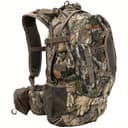
2,700 cubic inches: what that actually holds
Capacity numbers mean nothing until you translate them into objects, so here is the translation for a public-land whitetail hunter.
At roughly 2,700 cubic inches (about 44 liters), the Pursuit comfortably carries: an insulated jacket and bibs for the sit, a heavyweight layer, gloves and a hat, food and water for a full day, a headlamp and spare batteries, a knife and gutting kit, a saw or pruners, rope, a safety harness, binoculars in a chest harness rather than the pack, and a rangefinder. Plus a rolled seat pad on the outside.
That is a full day-hunt load with room left over, which is the correct size for the overwhelming majority of whitetail hunting. It also stretches to a light overnight if you are careful, which is where it starts to be genuinely versatile for a budget hunter who does not want two packs.
What it is not is a Western hunting pack. It will not carry a boned-out elk quarter, a spike camp, and five days of food. Nothing at this price will, and the packs that do are a different category with a different price tag.
The counter-argument worth stating honestly: a bigger pack gets filled. A hunter carrying 2,700 cubic inches into the woods carries more than a hunter carrying 1,500, because the space exists. If you are disciplined and hunt short sits close to the truck, a smaller pack is the better and cheaper answer — our day pack checklist covers what genuinely needs to be in there.
The blaze-orange rain cover is the underrated feature
ALPS builds a blaze-orange rain cover into the pack, and it does two jobs that would otherwise be two separate purchases.
It keeps your dry layers dry. This is not a comfort issue, it is the core of cold-weather safety. Your insulating layer is the thing standing between you and hypothermia on a wet, windy November sit, and a soaked down or synthetic jacket at the bottom of a wet pack is no longer insulation. Rain covers are cheap and almost nobody buys one separately, which is precisely why building it in matters.
It is your blaze orange.Most states require a specific amount of visible blaze orange during firearm seasons, and a hunter walking in wearing camo with an orange pack cover deployed is considerably more visible to other hunters than one relying on a vest under a jacket. Requirements vary by state, so confirm what counts where you hunt — but a large orange surface on your back, at the height it sits, is doing real work on public land during gun season.
Weapon carry, and what to expect from it
The Pursuit includes a bow and rifle carry system, and it is worth being realistic about what these systems do.
A pack weapon carry is for the walk in and the walk out, and its purpose is having both hands free. That matters more than it sounds: climbing sticks, crossing a fence, working through blowdown, or getting up a bank in the dark are all considerably safer with two hands. Carrying a rifle slung on one shoulder while climbing is how people fall.
What it is not is a fast-access system. Getting a bow out of a pack carry takes real seconds and real movement, and a deer that appears while you are walking is a deer you were not going to shoot anyway. Do not evaluate the feature on how quickly you can draw from it.
One safety note that applies to every pack carry: a rifle in a pack carry must be unloaded and the action open, and you should be able to confirm that by touch. This is basic firearm safety and it is the sort of thing that gets skipped in the dark when you are in a hurry.
No frame: the real limitation
This is the honest weakness and the reason we rank it as a day pack rather than a do-everything pack.
An external or internal frame transfers load from your shoulders to your hips through a rigid structure. A frameless pack, however well padded, ultimately hangs the weight from your shoulders. Up to twenty-five or thirty pounds that difference is minor and the padding handles it. Past forty pounds it becomes the whole experience.
Practically: the Pursuit carries a day-hunt load comfortably and a heavy meat load badly. If you shoot a deer a mile from the truck, the correct plan with this pack is to quarter the animal and make more than one trip, or to use a game cart or a drag. Loading a frameless pack with sixty pounds of boned-out venison and walking a mile is a bad afternoon and a genuine injury risk.
If pack-out is a routine part of your hunting — Western elk, or deep public-land whitetail where a drag is impossible — buy a freighter frame pack instead and accept the extra weight and cost. That is a different tool for a different job — we set the two against each other in ALPS Pursuit vs Commander, including the part where the frame arrives with no bag.
Suspension and fit, on a budget pack
ALPS puts a genuinely comfortable suspension on this pack for the price, and there are two things to do with it that most buyers skip.
Load it and adjust it before the season. A pack adjusted empty in a living room is not adjusted. Put the actual load in it, walk with it, and set the shoulder straps, the load lifters and the hip belt under weight. Ten minutes at home saves a mile of discomfort.
Use the hip belt properly.The hip belt should sit on your iliac crest — the top of your hip bones — not around your waist, and it should be tight enough that it is taking weight. Budget-pack hip belts get worn loose as a decoration, and a hip belt carrying nothing is a hip belt that is just adding bulk.
Noise, and the fix
Most budget hunting packs use a fairly stiff shell fabric, which is durable and audibly rasps against brush. For a rifle hunter walking to a stand this is irrelevant. For a bowhunter sitting still and reaching into the pack for a call or a hand warmer at twenty yards from a deer, it is not.
Two free fixes: tape or tie down the zipper pulls so they do not click, and pack a fleece or soft layer on the outside face so the fabric that touches brush is quiet. Neither costs anything and both help more than an expensive quiet pack would suggest.
Who should buy something else
- The short-sit hunter close to the truck. If your hunting is a two-hour sit two hundred yards from the parking lot, a smaller and cheaper pack is genuinely better, because the space you do not have is space you do not fill.
- The Western hunter who packs meat. Buy a frame pack. This is not the tool.
- The saddle hunter carrying a full mobile kit.A saddle, platform, sticks, harness and a full day’s gear is a lot of load on a frameless pack, and the stick-carry problem in particular is better handled by a pack designed for it.
- The bowhunter who prizes silence above all. Quieter fabrics exist, they cost more, and if you hunt inside twenty yards routinely it is a defensible upgrade.
The verdict
The Pursuit is the pack most whitetail hunters should own, and the reason is that it is correctly sized for the day it will actually be used for rather than the trip its owner imagines taking. The blaze rain cover solves two problems that would otherwise be two purchases, the weapon carry keeps your hands free where that matters, and the suspension is better than the price suggests.
The frameless design is a real ceiling and it is the thing to plan around: quarter your deer, make two trips, or buy a cart. Do that and this pack will do a decade of day hunts without complaint, which is a better outcome than a bigger pack you carry half-empty.
Two things make a frameless pack carry better than its spec sheet suggests. The first is loading order — heavy and high against your spine, noise buried, four items reachable — which we set out in how to pack a hunting backpack. The second is taking the animal apart where it fell rather than trying to move it whole, which is the gutless quartering method.