What Size Hunting Pack Do I Need?
Most hunters buy too much pack and then carry it half empty, which is heavier and noisier than carrying the right one full. The four size bands, and how to find yours.
How this is funded: we earn a commission if you buy through our links, at no extra cost to you. It never changes which product we recommend, and we’ll tell you plainly when we’d skip one. Full disclosure.
For most hunters the answer is 2,000 to 3,000 cubic inches, and the ALPS OutdoorZ Pursuit at roughly 2,700 is the specific pack we would buy. That size holds a full day of gear without encouraging you to carry a half-day of nonsense, and it is where the best value in the budget market sits. If you hunt a morning at a time within sight of the truck, you need far less. If you pack meat out on foot, volume is not your problem at all — a frame is.
The reason this question is hard is that packs are sold on a number that tells you almost nothing about whether the pack suits your hunting. Cubic inches describe a volume, not a job. Below is how to translate the number into your own hunt, the four bands that actually exist, and the specification that matters more than any of them once the pack is loaded.
First: what the numbers mean
Hunting packs are usually sold in cubic inches; hiking packs are sold in liters. To convert, divide cubic inches by about 61. A 2,700 cubic inch hunting pack is roughly 44 liters. A 5,500 cubic inch frame pack is roughly 90 liters, which is a serious expedition-sized bag.
That conversion is worth doing if you already own a hiking daypack, because you know how your gear fits in it. “About the same as my old 40 liter pack” is a far more useful mental model than a four-digit number you have no reference for.
The four size bands
Band 1: around 1,000 cubic inches — the short sit
A morning or an evening, a short walk, and a truck you can get back to easily. You are carrying water, a snack, a knife, a license, a call and maybe a light extra layer. A small daypack does this and anything bigger is dead weight.
This band is also where a first-time hunter should start. It costs little, it forces you to learn what you actually use, and if you outgrow it, the small pack still has a life as a scouting bag or a truck kit.
Band 2: 1,800 to 3,000 cubic inches — the full day
This is where most hunters belong and where most of the good budget packs live. It holds water, food, a spare insulating layer, a packable rain shell, a kill kit, calls, a rangefinder, a headlamp and a second light, your tags, and the jacket you take off on the walk in.
The features that matter in this band are weapon carry and a rain cover. A bow or rifle on your back with both hands free is not a luxury if you climb sticks — it is the difference between climbing safely and climbing badly. A rain cover keeps your spare layers dry, which is the layer that stops a wet day becoming a short one.
Band 3: 3,000 to 5,500 cubic inches — overnight and hauling
Multi-day hunts, deep public land, or a hunter who wants one pack that can also bring an animal out. At this size you need a frame, internal or external, because a bag this large will be carrying loads a frameless pack cannot transfer to your hips.
The honest warning about this band is that it is too much pack for a morning sit, and most hunters who buy here end up carrying a big half-empty bag most of the season. Buy it because you specifically need it, not as insurance.
Band 4: a frame, with volume as an afterthought
If your problem is carrying eighty pounds of boned-out meat two miles, volume is not the specification you are shopping for. You want a frame that transfers load to your hips, lashing points, and a torso adjustment that matches you. Some of these barely have a bag at all, which catches buyers out. We cover that specific trap in our Pursuit vs Commander comparison.
How to actually size yours in ten minutes
Do not shop by number. Do this instead, and you will know your answer with more confidence than any product page can give you.
- Lay out everything you carried last season. All of it, on a table or a bed. Include the things you carried and never used, because you will carry them again.
- Remove what you genuinely did not need. Be honest. Most hunters find two or three items that have ridden along for years untouched.
- Add what you should have had. A second light, a rain shell, more water than you took. Our day pack checklist is built for exactly this step.
- Put the pile in a box or a bin bag and look at it. That volume plus about a quarter for shed layers is your pack size.
New hunters who have no last season to draw on should start at the bottom of Band 2 and expect to be right. The failure mode of a slightly small pack is that you strap a jacket to the outside. The failure mode of a much too large pack is that you carry it, half full and rattling, every day for five years.
The spec that beats volume: torso length
Once there is real weight in a pack, fit decides comfort and volume decides almost nothing. A pack’s suspension is designed to put the load on your hips, and that only happens if the distance between the shoulder straps and the hip belt matches the distance between your shoulders and your hips.
Measure it: find the bony bump at the base of your neck when you tip your head forward, then measure straight down your spine to the level of the top of your hip bones. That is your torso length, and it has nothing to do with your height — two hunters the same height can differ by three inches.
Many day packs do not publish a torso range at all, which is tolerable under fifteen pounds and a real problem under fifty. If a pack is going to carry meat, treat a published, adjustable torso range as a requirement rather than a feature.
Three things that matter more than another 500 cubic inches
- Quiet fabric. A pack that scrapes against brush or crinkles when you reach into it undoes a careful approach. Run your fingernail across the material before you buy.
- Pockets you can reach wearing the pack. Water, a rangefinder, a light and your tag should be reachable without taking it off. If they are not, you will stop using them.
- Compression straps. These are what make a part-filled pack behave like a full one. A pack with good compression is far more forgiving of being slightly too big than one without.
A note on public land specifically
Public-land hunting pushes you further from the truck than private does, because the ground near the parking area is where everyone else is. That changes pack sizing in two ways: you carry more water and more layers because getting back is not a five-minute option, and the consequences of forgetting something are larger.
It also changes what you carry out. If your access is a long walk, work out your meat plan before the season, not while standing over a deer in the dark. That is usually the moment hunters discover their pack was the wrong tool, and it is entirely avoidable. Our public-land gear list works through the whole kit in buying order.
The short version
Around 1,000 cubic inches for short sits, 1,800 to 3,000 for full days — which is most hunters — 3,000 to 5,500 for overnights and hauling, and a frame rather than a number if the job is meat. Pack the gear first and size to the pile. Match the torso length before you admire the volume. The four packs below cover each band at today’s live prices. If your band is the last one, the three frames worth buying on a budget are in our meat-hauling frame picks.
The packs this guide earns
Ranked on price-per-performance — the specs that matter divided by what it costs. Select a row to jump to the full write-up. We have not field-tested these — here is exactly what we do instead.
| # | Product | Capacity | Score | Price |
|---|---|---|---|---|
| 1 | 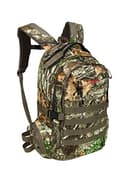 Fieldline Pro Series Ridge Tracker Daypack Half-day sits, close to the truck The cheapest real hunting daypack here. For a new hunter who just needs to carry water, snacks, calls and a knife to the stand, it is all the pack you need to start. | Daypack | 8.0/ 10 | $47.78View on Amazon Price as of November 22, 2026. #ad How we’re funded |
| 2 | 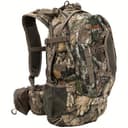 ALPS OutdoorZ Pursuit Pack The all-day pack most hunters need The best-balanced budget hunting pack: enough room for a full-day sit and a weekend, a built-in blaze-orange rain cover, and a bow/gun carry system. The one most whitetail hunters should buy. | ~2,700 cu in | 9.0/ 10 | $119.99View on Amazon Price as of November 22, 2026. #ad How we’re funded |
| 3 | TIDEWE 5500cu Frame Pack Volume and a frame in one purchase A 5,500-cubic-inch internal-frame pack with a rain cover and weapon carry for the price of a name-brand daypack. The most volume-per-dollar on the list for backcountry and hauling. | 5,500 cu in + frame | 8.6/ 10 | |
| 4 | 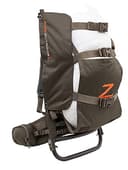 ALPS OutdoorZ Commander Lite Frame When the job is meat, not gear A meat-hauling frame at a fraction of a premium pack-out rig, and the honest way to buy one: you are buying the frame and the lashing system, not a bag. If you hunt public-land elk or deep-woods deer and have to pack quarters out, this carries them for the price of a decent daypack. | Frame only (bag separate) | 8.6/ 10 |
Frequently asked questions
What size hunting pack do I need for day hunting?
Roughly 1,800 to 3,000 cubic inches covers a full day for nearly everyone. That holds water, food, extra layers, a rain shell, a kill kit, calls, a rangefinder and your license and tags, with room to stuff a jacket you shed on the walk in. A half-day sit close to the truck needs far less — around 1,000 cubic inches is plenty. Anything above 3,000 is a multi-day or meat-hauling pack and will be carried half-empty on a day hunt.
How many liters is a hunting pack measured in cubic inches?
Divide cubic inches by about 61 to get liters. So a 2,700 cubic inch pack is roughly 44 liters, and a 5,500 cubic inch pack is roughly 90 liters. Hunting packs are usually sold in cubic inches while hiking packs are sold in liters, which makes cross-shopping confusing. If you already own a hiking daypack and know how it fits your gear, converting is the fastest way to understand what a hunting pack's number means.
Is a bigger hunting pack always better?
No, and this is the most common buying mistake in the category. An oversized pack carried half empty lets gear shift and rattle, hangs lower on your back than it should, weighs more empty than the right pack weighs loaded, and tempts you to fill the space with things you do not need. A pack that is full and compressed is quieter, more stable and more comfortable than a bigger one with air in it.
Does torso length matter more than pack volume?
Once you are carrying real weight, yes. Pack suspension transfers load to your hips, and that only works if the pack's torso length matches yours — too long or too short and the weight sits on your shoulders instead. Measure from the bony bump at the base of your neck down to the level of the top of your hip bones. Many day packs do not publish a torso range at all, which is tolerable under light loads and a genuine problem on a frame pack meant for meat.
Do I need a frame pack for deer hunting?
Usually not. If you can drag a deer to a truck or a cart, a frame buys you nothing and costs you comfort on the walk in. A frame starts to matter when distance and terrain make dragging impractical — a mile in on public land, a steep drainage, or any hunt where the normal end is quartering the animal and carrying it out in loads. Most whitetail hunters never need one. Elk hunters need one on day one.
How should I pack a hunting backpack?
Heavy items close to your spine and at roughly shoulder-blade height, so the load sits over your hips rather than pulling you backward. Safety and navigation gear goes in an outside pocket you can reach without taking the pack off. Anything that rattles gets wrapped or wedged. Then cinch every compression strap — a loaded pack that moves when you move is noisier and more tiring than the same weight held still.
Should I buy the pack first or the gear first?
The gear, every time. Lay out everything you actually carry on a hunt, pile it on a table, and size the pack to that pile plus about a quarter for layers you shed. Buying the pack first means guessing at a number and then either leaving things in the truck or carrying air. A written checklist is a far better sizing tool than any cubic-inch figure on a product page.
Sources
- Hunting — US Forest Service — USFS rules for hunting on National Forest System land — state-law compliance and area restrictions (accessed July 22, 2026)
- Wildlife Management Areas — Minnesota DNR — A state example of public WMA hunting access: 1,500+ areas, 1.39M acres open to hunters (accessed July 22, 2026)
- Start hunting — Minnesota DNR — State-agency 'how to start hunting' guide — safety certificate, gear, license and public land (accessed July 22, 2026)
- Cold Weather Safety — National Weather Service — Federal cold-weather hazard overview — frostbite, hypothermia and wind chill (accessed July 22, 2026)
Keep reading
Best Budget Hunting Backpack
Five packs across all four size bands, compared on capacity and features per dollar.
See the rankingsPublic-Land Day Pack Checklist
What goes inside, grouped and explained. Pack this list before you buy anything.
Read the checklistALPS Pursuit vs Commander
A day pack against a bare meat frame, and why they are not alternatives.
Read the comparisonPublic-Land Hunting Gear List
The whole kit in buying order, so you know what the pack has to hold.
Read the guide