Blaze & Budget

Best Hunting Boots Under $100

A hard ceiling, checked against live prices. Four boots that come in under a hundred dollars, and a straight answer about the one thing the ceiling takes away from you.

By Stephen V.Last updated How we rank

Under a hundred dollars, the Kalkal 800g Insulated is the boot to buy: it is the only pick here that publishes an insulation weight, and 800 grams over a 7 mm neoprene bootie is a genuine late-November sit rather than a boot that merely looks warm. If you want the cheapest thing on this page that still does the job, buy the HISEA — a rubber shell over a neoprene lining, which is the construction premium brands charge triple for.

Here is the honest part. Under a hundred dollars you are buying a rubber or neoprene boot, full stop. Every leather hunting boot we track — the Irish Setter VaprTrek, the Rocky Sport Pro, the Northside Renegade — sits above this ceiling, and no amount of shopping changes that. That is less of a compromise than it sounds: rubber holds almost no scent, it is waterproof by construction rather than by coating, and for a hunter who drives to a property and walks half a mile to a stand it is arguably the better boot. It is a worse boot if you intend to cover ground.

Every boot here was under $100 on the live price layer when this page was published. We do not freeze prices into the copy: the ledger below shows today’s number with the date it was read, so if a pick drifts over the line you will see it rather than read a stale claim. We own none of these boots and have walked in none of them. Here is how we rank instead.

How this is funded: we earn a commission if you buy through our links, at no extra cost to you. It never changes which product we recommend, and we’ll tell you plainly when we’d skip one. Full disclosure.

The four that clear the ceiling

Ranked on price-per-performance — the specs that matter divided by what it costs. Select a row to jump to the full write-up. We have not field-tested these — here is exactly what we do instead.

#ProductType / insulationScorePrice
1
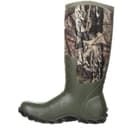
Kalkal 800g Insulated Hunting Boot

Kalkal 800g Insulated Hunting Boot

Best under $100 overall

800 grams of insulation and a 7 mm neoprene bootie for under $100 is the best warmth-per-dollar number on this page. It is the boot that makes a late-November sit survivable without a $250 receipt.

Rubber, 800g
9.0/ 10
$93.99View on Amazon

$119.9922% off

Price as of November 22, 2026. #ad How we’re funded

2
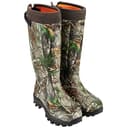
TIDEWE Steel Shank Rubber Boot

TIDEWE Steel Shank Rubber Boot

Best if you walk in

The rubber boot for hunters who actually walk in. A steel shank is the single spec that separates a boot you can hike a mile in from a boot that folds under your arch on the second ridge.

Rubber, steel shank
8.6/ 10
$56.52View on Amazon

$69.9919% off

Price as of November 22, 2026. #ad How we’re funded

3
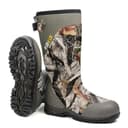
Rocky Core Rubber Waterproof

Rocky Core Rubber Waterproof

Best from a legacy boot brand

A comfortable, camo rubber boot that undercuts the LaCrosse on price. The neoprene-and-rubber build is warmer against the ankle and easy to pull on; the tradeoff is a slightly less durable upper.

Rubber, uninsulated
8.6/ 10
$89.99View on Amazon

Price as of November 22, 2026. #ad How we’re funded

4
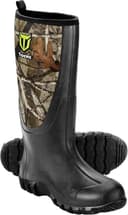
HISEA Neoprene Insulated Rubber Hunting Boot

HISEA Neoprene Insulated Rubber Hunting Boot

Cheapest that works

The best-balanced cheap rubber boot on this page: a neoprene bootie inside a rubber shell, which is the same construction premium brands charge triple for. It is warm enough for most of the season without being a swamp in October.

Rubber, neoprene-lined
8.8/ 10
$75.99View on Amazon

Price as of November 22, 2026. #ad How we’re funded

The picks in full

#1Best under $100 overall9.0/ 10 value

Kalkal 800g Insulated Hunting Boot

800 grams of insulation and a 7 mm neoprene bootie for under $100 is the best warmth-per-dollar number on this page. It is the boot that makes a late-November sit survivable without a $250 receipt.

Strengths

  • 800 g insulation plus 7 mm neoprene — both figures published, not implied
  • Warm enough for a full cold sit that would end early in an uninsulated boot
  • Under $100 for a genuine late-season boot

Trade-offs

  • Too warm to walk far in above about 40 degrees
  • Kalkal is a newer name — long-term durability is unproven
Insulation800 g
Neoprene thickness7 mm
WaterproofYes

Specs read from the product listing, on August 11, 2026. “Not published” means the maker doesn’t state that figure. The score is our value rating, not a lab test — how we rank.

#2Best if you walk in8.6/ 10 value

TIDEWE Steel Shank Rubber Boot

The rubber boot for hunters who actually walk in. A steel shank is the single spec that separates a boot you can hike a mile in from a boot that folds under your arch on the second ridge.

Strengths

  • Built-in steel shank gives the underfoot support that most cheap rubber boots simply lack
  • Camo pattern doubles as a turkey and waterfowl boot
  • 6 mm neoprene upper inside a natural rubber shell — stated 100% waterproof, and rubber holds far less scent than leather

Trade-offs

  • The maker publishes a -4°F to 68°F comfort range but no insulation gram rating, so there is no number to compare against an insulated boot
  • The shank adds weight you feel on a long walk out
Construction6 mm neoprene upper, natural rubber shell, steel shank
WaterproofYes — stated 100% waterproof
Comfort range-4°F to 68°F (stated)
Insulation ratingNot published

Specs read from the product listing, on September 22, 2026. “Not published” means the maker doesn’t state that figure. The score is our value rating, not a lab test — how we rank.

#3Best from a legacy boot brand8.6/ 10 value

Rocky Core Rubber Waterproof

A comfortable, camo rubber boot that undercuts the LaCrosse on price. The neoprene-and-rubber build is warmer against the ankle and easy to pull on; the tradeoff is a slightly less durable upper.

Strengths

  • Rubber-over-neoprene is waterproof and warmer than bare rubber
  • Comfortable pull-on fit with a cushioned footbed
  • Full camo dip for ground and blind hunting

Trade-offs

  • Upper is less rugged than the LaCrosse over years of use
  • Uninsulated core model runs cold in hard freezes
MaterialRubber over neoprene
WaterproofYes
InsulationNone (Core model)

Specs read from the product listing, on July 22, 2026. “Not published” means the maker doesn’t state that figure. The score is our value rating, not a lab test — how we rank.

#4Cheapest that works8.8/ 10 value

HISEA Neoprene Insulated Rubber Hunting Boot

The best-balanced cheap rubber boot on this page: a neoprene bootie inside a rubber shell, which is the same construction premium brands charge triple for. It is warm enough for most of the season without being a swamp in October.

Strengths

  • Neoprene lining inside a rubber shell — the construction that actually works
  • Rubber upper holds almost no scent compared with leather
  • Priced where a second pair for the truck is a realistic idea

Trade-offs

  • The maker does not publish an insulation gram rating, so late-season warmth is a guess
  • Rubber boots walk poorly — this is a sit-and-wait boot, not a mile-hike boot
ConstructionRubber shell over neoprene lining
WaterproofYes
Insulation ratingNot published

Specs read from the product listing, on September 22, 2026. “Not published” means the maker doesn’t state that figure. The score is our value rating, not a lab test — how we rank.

The two specs that decide a sub-$100 boot

Tread pattern and camo print are what the listing photographs. These two are what you feel at hour six.

  • Published insulation weight.Grams of insulation is the only comparable warmth figure in footwear, and most cheap boots do not publish one. Of the four picks here, exactly one does — the Kalkal at 800 g over 7 mm of neoprene. The TIDEWE publishes a comfort range instead (−4°F to 68°F) but no gram figure, and the Rocky and HISEA publish neither. Those nulls are findings, not gaps in our research: a boot that will not state a number is a boot you are buying on construction.
  • Underfoot support. The reason cheap rubber boots get a bad name is that most of them have nothing structural between your arch and the ground, so the boot folds under you on the second ridge. The TIDEWE Steel Shank is the only pick here with a shank through the sole, and that single spec is the difference between a boot you can hike a mile in and a boot that is only good for sitting. The Kalkal answers the same problem with a steel plate through the center of the sole over an EVA midsole.

Height sits below both. All four of these clear a creek. Where height starts to matter is calf fit, and two of the four (the Kalkal and the TIDEWE) have an adjustable back gusset or harness buckle — a genuine fit adjustment that rubber boots at this price usually skip.

What the hundred-dollar ceiling actually costs you

Four things, in the order you will notice them.

  • Walking comfort over distance. A rubber boot has no lacing, so it cannot be tightened around your instep, which means your heel lifts. Over a mile that is a blister. Thick socks and a shank mitigate it; they do not solve it.
  • Published cold ratings. Three of these four will not tell you how warm they are. If you need a number to plan a sit around, the boot that gives you one is the TIDEWE 800g in our insulated boot roundup, and it sits just over this ceiling.
  • Last shape and sizing confidence.Both Kalkal listings warn that sizing runs large, and TIDEWE tells wide-footed buyers to size up — which tells you the last is narrow. Read the chart, and expect one exchange.
  • Service life. Expect two to four seasons from the off-brand picks rather than ten. At these prices that is a defensible trade; at $200 it would not be.

None of those is a reason to spend more on your first pair. They are reasons to spend your second hundred dollars on a leather boot for the days you cover ground, and keep the rubber pair for the stand.

The boot that sits right on the line

The LaCrosse Grange was $99.95 on the price layer when this page was written — five cents under the ceiling, which is close enough that it may be over it by the time you read this. It belongs in the conversation anyway, because its all-natural ZXT rubber is the scent-free benchmark of this category and whitetail hunters have trusted the design for decades. The catch is that the model we track is uninsulated, so it is a boot for October rather than December. It leads our Muck boot alternatives page for exactly that reason.

Spend the saving on socks, not on boots

This is the most useful thing on the page. A cheap boot with good socks beats an expensive boot with cotton socks, every time, because cotton holds sweat against your skin and wet feet lose heat far faster than cold dry feet do. The National Weather Service’s cold-safety guidance is blunt about the mechanism: wet clothing accelerates heat loss, and the extremities are where you feel it first.

A merino or merino-blend boot sock costs a fraction of the gap between these boots and a $200 pair, and it buys more warmth than the gap does. Our budget hunting sock roundup ranks four of them, and the feet-warm guide covers the vapour-barrier trick that makes a cheap rubber boot survive a hard sit. If the premium pair in that roundup is more than you want to spend on socks, the three cheaper merino blends are ranked in our Darn Tough alternatives comparison, including which one is the right height for a tall rubber boot.

Rubber or leather, if you are only buying one pair

Answer the honest question: how far do you walk? If the answer is under a mile on flat ground to a stand or a blind, buy rubber and spend nothing more. Scent control, waterproofing and price all land in your favour, and you will not collect on a leather boot’s advantages.

If you walk ridges, cover public ground you do not know, or hunt anything that moves you around — turkey, upland birds, elk — a leather or leather-and-textile boot is worth going over this ceiling for, and you should read rubber versus leather hunting boots before you spend. One more point for the leather side that nobody mentions: a leather boot needs re-waterproofing, and Danner’s own care guidance puts reapplication anywhere from daily under heavy use to as-needed under light use. A rubber boot needs nothing.
Frequently asked questions

Are hunting boots under $100 any good?

For sitting and short walk-ins, genuinely yes - a rubber shell over a neoprene lining is the same construction premium brands sell, and it is waterproof by design rather than by coating. What the ceiling costs you is walking comfort over distance, a published cold rating on most models, and service life. Budget two to four seasons rather than ten.

Can you get insulated hunting boots for under $100?

Yes, and one of the picks on this page publishes the number: 800 grams of insulation over a 7 mm neoprene bootie. That is the only insulation weight published by any boot under this ceiling that we track. The others say they are insulated without stating a figure, which means you are buying on construction rather than on a rating.

Why are all the boots under $100 rubber?

Because leather costs more to source, cut and stitch, and a leather boot has to be made waterproof with a membrane and a treatment rather than being waterproof by construction. Every leather hunting boot in our registry sits above $100. That is not a shopping failure, it is where the category line falls.

Do I need a steel shank in a hunting boot?

If you walk more than a few hundred yards, it is the single most valuable spec on a cheap rubber boot. A shank is a stiffener between your arch and the sole; without one, the boot flexes where your foot does not want it to and your arch does the work. If you drive to a ladder stand and sit, you will not miss it.

What size should I order in cheap rubber boots?

Read the maker's chart rather than assuming your street size. Both Kalkal listings we track state that sizing runs large, and TIDEWE tells wide-footed buyers to size up - which also tells you the last is narrow. Rubber boots cannot be laced tighter to fix a loose fit, so getting the size right matters more here than in a leather boot.

Is it better to buy one $200 boot or two $100 boots?

Two, for most budget hunters, and for a specific reason: the two pairs do different jobs. A cheap insulated rubber boot for cold sits and a cheap uninsulated rubber boot for early season covers more of your season than one excellent mid-weight boot does. The exception is the hunter who walks miles, where one good leather boot genuinely beats two cheap rubber ones.

Sources

  • Cold Weather Safety — National Weather Service — Federal cold-weather hazard overview — frostbite, hypothermia and wind chill (accessed July 22, 2026)
  • Waterproofing — Danner Care — Boot-maker care guidance: spray suits mixed leather and textile boots, gel is for full-grain leather only, and reapplication runs from daily under heavy use to as-needed under light use (accessed August 19, 2026)
  • Hunting — US Forest Service — USFS rules for hunting on National Forest System land — state-law compliance and area restrictions (accessed July 22, 2026)

Keep reading