Blaze & Budget

Best Hunting Binoculars Under $200

A hard price ceiling, five 10x42 binoculars that live under it, and an honest read on what the last twenty dollars actually buys you.

By Stephen V.Last updated How we rank

Two hundred dollars is not an arbitrary line. It is roughly where the budget optics market stops improving quickly and starts improving slowly. Under $200 you can buy HD glass, a genuinely waterproof body and, in two cases here, a no-fault lifetime warranty. Above it, the next real jump in what your eye sees costs two to three times as much again. That makes this bracket the best value in hunting optics and the right place for almost every budget hunter to stop.

Every pick is a 10×42 — ten-power magnification on a 42 mm objective lens. That pairing is the default for public-land whitetail and open-country glassing because it reaches far enough to judge antlers while still gathering usable light at dawn and dusk. If you hunt tight timber or cannot hold ten power steady offhand, most of these are also sold in 8×42, and we flag where that swap is the smarter buy.

Prices below are pulled live, and the $200 ceiling is checked against those live prices rather than a number we typed once. If a pick has crept over the line since publication, the price shown will say so plainly — we would rather you see that than trust a stale claim. We do not own these binoculars and do not claim to have field-tested them; we compile published specs, weigh the warranty, and run the price-per-performance math. Here is exactly how.

How this is funded:we earn a commission if you buy through our links, at no extra cost to you. It never changes which product we recommend, and we’ll tell you plainly when we’d skip one. Full disclosure.

Quick picks

Ranked on price-per-performance — the specs that matter divided by what it costs. Select a row to jump to the full write-up. We have not field-tested these — here is exactly what we do instead.

#ProductGlass / magScorePrice
1
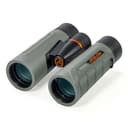
Athlon Optics Talos G2 HD 10x42

Athlon Optics Talos G2 HD 10x42

Best overall under $200

The most binocular per dollar under $150 right now. HD glass and long eye relief in a waterproof body — Athlon is the brand that keeps showing up when hunters compare glass blind rather than by badge.

10x42 · HD
9.0/ 10
$139.99View on Amazon

Price as of September 5, 2026. #ad How we’re funded

2
Vortex Crossfire HD 10x42

Vortex Crossfire HD 10x42

Best warranty

The same VIP warranty as the Diamondback for less money. You give up a little edge sharpness and low-light snap; for most whitetail woods and a starting hunter, you will not miss it.

10x42 · HD
9.0/ 10
$149.00View on Amazon

Price as of September 5, 2026. #ad How we’re funded

3
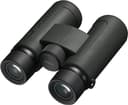
Nikon PROSTAFF P3 10x42

Nikon PROSTAFF P3 10x42

Best for glasses-wearers

Nikon's fully multi-coated glass is the brightest image in this price bracket, with long eye relief that glasses-wearers will feel immediately. The warranty is the only reason it isn't our top pick.

10x42 · FMC
8.9/ 10
$149.95View on Amazon

$169.9512% off

Price as of September 5, 2026. #ad How we’re funded

4
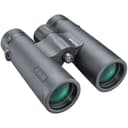
Bushnell Engage X 10x42

Bushnell Engage X 10x42

Best lightweight carry

The lightest full-size 42 mm here, with a published IPX7 rating rather than a vague waterproof claim. If you hang glass on your chest for ten hours, weight is a spec that matters more than the brochure admits.

10x42 · IPX7
8.7/ 10
$136.90View on Amazon

$149.959% off

Price as of September 5, 2026. #ad How we’re funded

5
Vortex Triumph HD 10x42

Vortex Triumph HD 10x42

Best under $100

The cheapest way to get a Vortex VIP warranty around your neck. The Triumph is Vortex's entry line, and it exists precisely for the hunter who wants the warranty safety net at the lowest possible entry price.

10x42 · HD
8.8/ 10
$99.00View on Amazon

Price as of September 5, 2026. #ad How we’re funded

The picks in full

#1Best overall under $2009.0/ 10 value

Athlon Optics Talos G2 HD 10x42

The most binocular per dollar under $150 right now. HD glass and long eye relief in a waterproof body — Athlon is the brand that keeps showing up when hunters compare glass blind rather than by badge.

Strengths

  • HD glass at a price where most rivals ship plain multi-coated
  • Generous eye relief — comfortable if you wear glasses in the stand
  • Waterproof body, so an all-day rain is not a crisis

Trade-offs

  • Athlon's dealer network is thinner than Vortex's or Bushnell's
  • Focus wheel is stiffer than the Vortex pair out of the box
Magnification / objective10x / 42 mm
GlassHD
WaterproofYes

Specs read from the product listing, on August 11, 2026. “Not published” means the maker doesn’t state that figure. The score is our value rating, not a lab test — how we rank.

#2Best warranty9.0/ 10 value

Vortex Crossfire HD 10x42

The same VIP warranty as the Diamondback for less money. You give up a little edge sharpness and low-light snap; for most whitetail woods and a starting hunter, you will not miss it.

Strengths

  • Carries the full Vortex VIP lifetime warranty at a sub-$150 price
  • HD optical system is a real step up from bargain-bin glass
  • Waterproof, fogproof, rubber-armored — built for weather

Trade-offs

  • Edge sharpness and low-light performance trail the Diamondback
  • Field of view is a touch narrow for fast timber glassing
Magnification / objective10x / 42 mm
Waterproof / fogproofYes
WarrantyVortex VIP (unlimited lifetime)

Specs read from the product listing, on July 22, 2026. “Not published” means the maker doesn’t state that figure. The score is our value rating, not a lab test — how we rank.

#3Best for glasses-wearers8.9/ 10 value

Nikon PROSTAFF P3 10x42

Nikon's fully multi-coated glass is the brightest image in this price bracket, with long eye relief that glasses-wearers will feel immediately. The warranty is the only reason it isn't our top pick.

Strengths

  • Fully multi-coated lenses give a bright, high-contrast image
  • Long eye relief and a wide field of view — easy on the eyes
  • Waterproof, fogproof, and light for a full-size 42 mm

Trade-offs

  • Limited lifetime warranty is good, not Vortex-VIP good
  • Focus wheel is smooth but a little quick to overshoot
Magnification / objective10x / 42 mm
Lens coatingFully multi-coated
WarrantyNikon limited lifetime

Specs read from the product listing, on July 22, 2026. “Not published” means the maker doesn’t state that figure. The score is our value rating, not a lab test — how we rank.

#4Best lightweight carry8.7/ 10 value

Bushnell Engage X 10x42

The lightest full-size 42 mm here, with a published IPX7 rating rather than a vague waterproof claim. If you hang glass on your chest for ten hours, weight is a spec that matters more than the brochure admits.

Strengths

  • Light for a full-size 10x42 — you notice it by hour eight
  • IPX7 is a real, tested waterproof rating, not marketing language
  • Bushnell has made hunting glass for over half a century

Trade-offs

  • Not an HD or ED glass — it gives up snap in the last ten minutes of light
  • Bushnell's warranty is good but not a no-fault lifetime replacement
Magnification / objective10x / 42 mm
Waterproof ratingIPX7
Glass typeNot published

Specs read from the product listing, on August 11, 2026. “Not published” means the maker doesn’t state that figure. The score is our value rating, not a lab test — how we rank.

#5Best under $1008.8/ 10 value

Vortex Triumph HD 10x42

The cheapest way to get a Vortex VIP warranty around your neck. The Triumph is Vortex's entry line, and it exists precisely for the hunter who wants the warranty safety net at the lowest possible entry price.

Strengths

  • VIP unlimited lifetime warranty at the lowest price Vortex offers it
  • HD designation and a full-size 42 mm objective for around $100
  • The right pair to hand a kid or a first-year hunting buddy

Trade-offs

  • Entry-level glass — the Diamondback out-resolves it visibly at dusk
  • Build is lighter-duty than the Crossfire or Diamondback bodies
Magnification / objective10x / 42 mm
GlassHD
WarrantyVortex VIP (unlimited lifetime)

Specs read from the product listing, on August 11, 2026. “Not published” means the maker doesn’t state that figure. The score is our value rating, not a lab test — how we rank.

What $200 actually buys in a hunting binocular

Below the $200 line, four things separate a good binocular from a bad one. None of them is magnification, which is the number budget buyers fixate on and the number that matters least once you have settled on 10×42.

Glass and coatings

An “HD” or “ED” designation means the maker has used low-dispersion glass elements to cut color fringing and hold contrast when the light gets thin. That is not marketing: the difference shows up precisely in the last ten minutes of legal light when deer move. Fully multi-coated lenses — every air-to-glass surface treated — pass more light than merely coated ones. Under $200 you can and should insist on both. Three of the five picks here carry an HD designation; the two that do not compete on weight and price instead, and we say so on their cards.

Waterproofing, and the word that hides a gap

“Water resistant” is not “waterproof.” A waterproof binocular is sealed and nitrogen or argon purged, which means it survives rain and, more importantly, will not fog internally when you carry it from a cold truck into a warm blind. An IPX7 rating — a published, tested figure — is the strongest form of that claim. A binocular that only says water resistant has, in practice, told you it is not sealed. At this price there is no reason to accept that.

Warranty, which is worth real money

A binocular lives in a truck door, gets rained on, and eventually hits the ground. Vortex’s VIP warranty repairs or replaces it with no receipt and no argument about whose fault it was. Over a hunting lifetime that is worth more than a marginal glass upgrade, and it is the reason two Vortex pairs are on a five-item list. A limited lifetime warranty covers manufacturing defects but not the day you sit on them, which is a fair trade for a lower price provided you know that going in.

Weight, the spec nobody compares

Full-size 42 mm binoculars run from roughly 21 to 28 ounces, and that spread is the difference between glass that rides comfortably on your chest all day and glass you find reasons to leave in the pack. A binocular in your pack finds no deer. If you hunt on the move — spot-and-stalk, big public tracts, mountain country — treat weight as a first-tier spec rather than a footnote.

What you can skip below $200

Skip 50 mm objectives. They gather more light on paper but add real bulk and weight for a dusk gain most hunters cannot see. Skip built-in rangefinders at this price: a separate budget rangefinderis cheaper and far more capable than the ranging module in a cheap rangefinding binocular. Skip 12× and 15×, which at this price bracket give you a dim, shaky image that is harder to judge an animal with, not easier.

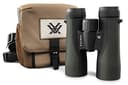
The one thing you should not skip is a chest harness. A $25 bino harness moves the weight off your neck and onto your shoulders, keeps the glass out of your way at full draw, and is the single cheapest upgrade to how much you actually use your binoculars. Buy one with whichever pair you choose.

Where the $200 ceiling stops making sense

There are two hunters who should ignore this page and spend more. The first hunts open country where the animal is a mile away and the entire decision to move is made through glass; there, edge sharpness and low-light contrast genuinely change outcomes. The second glasses for hours at a stretch, where eye strain from a mediocre optic is a physical cost. If neither describes you, everything above $200 is a preference purchase, and the money is better spent on boots or tags.
Frequently asked questions

Are binoculars under $200 good enough for hunting?

Yes. Under $200 you can buy waterproof, fogproof, fully multi-coated 10x42 binoculars from established optics brands, and several of them carry HD glass. That combination will find, judge and follow game at every practical hunting distance. What you give up compared with a $600 pair is edge-of-field sharpness, a little contrast in the last minutes of light, and some weight. For public-land whitetail and general hunting, none of those gaps will cost you an animal.

What is the best magnification for hunting binoculars under $200?

10x42 for most hunting. Ten power lets you judge antlers and pick apart distant cover, and a 42 mm objective gathers enough light for the first and last half hour of legal shooting light. Choose 8x42 instead if you hunt thick timber, wear glasses, glass for long stretches, or cannot hold ten power steady without a rest. The 8x gives a wider, calmer image and a larger exit pupil at the cost of reach.

Do I need HD glass in a binocular under $200?

It is a real upgrade, not a marketing word, but it is not mandatory. HD or ED glass reduces color fringing and holds contrast better in dim light, which matters exactly when deer move. A well-coated standard glass at a lower price will still show you the animal, you just lose some snap when the light goes bad. If two picks are otherwise close on price and warranty, take the HD one.

Is a lifetime warranty worth paying extra for?

On a binocular you will own for a decade, usually yes. A no-fault lifetime warranty such as Vortex's VIP repairs or replaces the pair regardless of how it broke and without a receipt, which turns a $150 purchase into a buy-once item. A limited lifetime warranty covers manufacturing defects only, so a drop or a crushed barrel is your cost. If you hunt hard, rough country, weight the no-fault warranty heavily.

Should I buy binoculars or a rangefinder first?

Binoculars first, without much argument. You use glass every minute of every hunt to find and evaluate animals, and you use a rangefinder for a few seconds before a shot. A hunter with good binoculars and no rangefinder still finds game; a hunter with a rangefinder and no binoculars struggles to find anything to range. Buy the binocular, then add a rangefinder before you take a shot at unknown distance.

What accessories should I budget for on top of the binocular?

One: a chest harness, at roughly $20 to $30. It moves the weight from your neck to your shoulders, keeps the binocular from swinging into your bow or rifle, and makes the glass fast to reach, which means you actually use it. A lens cloth and the included objective covers handle the rest. Everything else marketed as a binocular accessory is optional.

Sources

Keep reading