Strap or case: the only decision that really matters
Everything else on this page is detail. This is the fork in the road, and hunters who buy the wrong side of it are the ones who end up with a harness in a drawer.
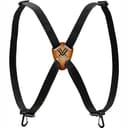
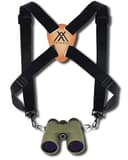
A strap harness is elastic webbing in an X or H across your back, clipped to the binocular’s own strap lugs. It weighs two to four ounces, costs the least, and does exactly one thing: it moves the weight from your neck to your shoulders and holds the glass against your chest so it does not swing. The binocular is still fully exposed — to rain, to snow, to brush, and to the rock you land on when you slip coming down a creek bank.
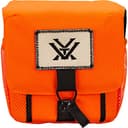
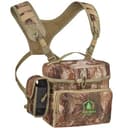
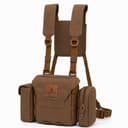
A case harness, usually sold as a bino chest pack, is a padded box on the same shoulder straps. It weighs half a pound to a pound, costs more, and protects the glass completely when the lid is shut. Most add a rangefinder pouch, pockets for calls and a wind checker, and a stowed rain cover. What you pay for that is weight on your chest and one extra motion — opening the lid — before you can look at anything.
The honest split, based on how you hunt rather than what you can afford:
- Buy a strap if you hunt from a stand or blind, if your binocular is inexpensive enough that protecting it is not the point, if you already carry a pack with a rain layer in it, or if you are weight-obsessed about what rides on your body.
- Buy a case if you glass in open country in real weather, if you also carry a rangefinder and are tired of digging for it, if your binocular represents a serious share of your gear budget, or if you hunt through brush where a swinging optic collects scratches.
One more nudge toward the case, specific to budget hunters: lens caps. The rubber objective covers that ship with cheap binoculars flap, snag and get lost within a season. A closed case makes them irrelevant, which is a small thing that quietly stops mattering the day it is solved.
What we ranked on
1. Published fit, not brand loyalty
The single most common harness complaint is that the binocular does not fit the case — too fat, too tall, too tight with the eyecups up. A 10×42 is the standard hunting binocular and most cases are built around it, but 50 mm and 56 mm objectives are a different shape entirely. Vortex’s GlassPak is the only pick here that publishes an actual model-by-model compatibility list, which includes the Diamondback HD 8×42 and 10×42, every Crossfire HD and the Triumph HD — three of which are picks on our binocular roundup. If you own one of those, the fit question is already answered. Everywhere else, check the published internal dimensions against your own glass before you buy, and treat “fits most binoculars” as the non-answer it is.
2. Weight, measured rather than felt
Every weight in the ledger above comes from the listing’s own published figure, converted from pounds where that is how it was published. The spread is larger than most buyers expect: the lightest strap here is listed at about two ounces and the heaviest case at about a pound. That is not a rounding difference. A pound of chest pack is a pound you carry every step of a mountain hunt, and it is also a pound of padding between your binocular and the ground. Neither answer is wrong; pretending the difference is trivial is.
3. Noise, which is a hunting spec and nothing else
Zippers are loud. That is why case harnesses in this category are moving to magnetic lids and buckle closures — a magnet opens with a dull tap, a zipper broadcasts. Two of the three cases here close without a zipper at all on the binocular compartment. If you hunt whitetails from the ground at close range, that is worth more than any amount of fabric specification. If you glass mule deer at eight hundred yards, it is worth very little.
4. Tethers, and the drop you only make once
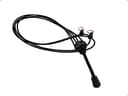
A tether is a short strap from the harness to the binocular’s own lugs, so that when the lid is open and you lean over a pack frame, the glass does not go down the hill without you. The GlassPak ships two. The Wild Cedar case has two built in. If a harness has none, you can add a pair of cheap strap keepers, and you should — a binocular that falls onto rock is a warranty claim at best and a dead optic at worst.
5. Rangefinder provision
If you carry a budget rangefinder, a case with a dedicated pouch removes an entire pocket-digging ritual from the moment a shot presents itself. Both cheap cases here include one; the straps obviously do not. This is the clearest single reason a bowhunter ends up in a case rather than on a strap, because a bowhunter uses the rangefinder more often and under more time pressure than a rifle hunter does.
6. What almost nobody publishes
Two specs are missing across most of this category, and we mark them “Not published” rather than guessing. The first is fabric: only one pick here states a real material (500D Cordura), and everyone else describes their harness as durable without a number behind it. The second is a warranty term: four of these six state none at all. That is not a reason to avoid them at this price, but it does explain why our top pick is the one that carries an unlimited, unconditional lifetime warranty — Vortex’s own VIP terms extend to “a riflescope, red dot, rangefinder, apparel, or accessory,” which is unusual coverage on a thirty-dollar item.
The blaze-orange question
Our top pick is priced here in a blaze-orange colorway, and whether that matters depends entirely on what you hunt with. During open firearms seasons, most states require blaze orange or blaze pink on your outer clothing above the waist — Minnesota, as one example, requires the visible portion of a cap and outer clothing above the waist to be blaze orange or blaze pink, sleeves and gloves excluded. A bright chest pack in that context is at worst neutral and at best helps another hunter see you.
In archery season the calculation flips. Deer are effectively colorblind to orange in the way humans see it — our what colors can deer see guide covers the biology — but blaze fabric is often brighter in the blue-UV range that deer see well, and at bow range a large bright block on your chest is a movement magnet. If you hunt archery only and it bothers you, buy the same harness in a muted colorway when one is in stock, or take a camo case instead. It is a preference, not a performance claim, and we are not going to pretend otherwise.
What we would skip
- Anything over about $100 on a budget setup. The premium harness market is real and the products are genuinely nicer, but a hundred-dollar harness on a hundred-and-fifty-dollar binocular is the wrong order of operations. Spend it on better glass first.
- Harnesses that only fit one brand’s binocular. Proprietary attachment systems lock you into replacing the harness when you upgrade the glass.
- Neck-strap “upgrades.” A wider, more padded neck strap treats the symptom. The weight is still on your neck and the binocular still swings.
- Cases sized for 50 mm and 56 mm glass if you shoot a 42 mm. A binocular that rattles inside an oversized case is noisier and slower to grab than one on a plain strap.
Where a harness sits in a budget optics setup
Order of operations, if you are building from nothing: binocular first, harness second, rangefinder third, tripod fourth if you glass open country. The harness comes second not because it is important in itself but because it is what makes the first purchase pay off — it converts a binocular you own into a binocular you use. Most budget hunters skip straight from glass to rangefinder and wonder why the binocular still lives in the pack.
Once it is on your chest, the next gain is free: technique. Glassing is a skill and the difference between sweeping a hillside and gridding it is larger than the difference between two price brackets of glass. That is the argument in how to glass for deer, and it is the cheapest upgrade left after the harness.
If you are still choosing the binocular itself, start with how to choose hunting binoculars — 8× versus 10×, what the 42 means, and which specs actually matter when it is your own money. Then come back and add the harness to the same order, because the two arrive together or the second one never gets bought.