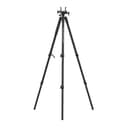
How we picked
Four gates, applied in this order. The order is the point — it is deliberately the opposite of how tripods get sold, which is on material and brand.
- The maker publishes a rated load. This is the number that decides whether a tripod is a tool or a prop, and it is the first one a cheap listing omits. If nobody will state what the tripod is rated to hold, we do not know what it holds. Every pick here publishes one, and the spread is enormous — from 6.6 pounds to 40.
- It reaches a usable height for a standing hunter. Every glassing tripod on this page goes past 56 inches. A tripod that tops out at chest height turns every glassing session into a stooped back, which is how a tripod ends up left in the truck.
- It is light enough to carry, or honest about not being. Four of these weigh between 2.7 and 3.9 pounds. One weighs 8.5, and we say so in its write-up in the first line rather than burying it.
- It is a current listing, in stock, from a brand you can chase. Generic tripods churn through model names every season, which makes a spec sheet worthless six months later. Every pick here has a brand and a model number on it.
What did not get a gate: carbon fiber, camo finish, and the word “tactical.” Carbon fiber saves roughly half a pound over aluminum and doubles the price, which is the wrong side of the trade for this buyer. Camo on a tripod does nothing that sitting still does not do better.
First decide which tripod you are buying, because there are two
“Hunting tripod” describes two products that share a name and almost nothing else, and buying the wrong one is the most expensive mistake in this category.
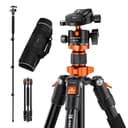
A glassing tripod holds an optic — binoculars or a spotting scope — steady while you look at a hillside for an hour. It wants to be light, tall, and topped with a head that pans smoothly and levelly. Four of our five picks are this. So, for that matter, is every camera tripod ever made, which is why three of those four are camera tripods.
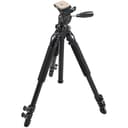
A shooting tripod holds the gun. It wants to be heavy, because mass is stability, and it wants a head that either cradles or clamps a rifle rather than screws to a quarter-inch stud. The BOG DeathGrip on this page is that tool, and it is the only one here we would call a hunting product rather than an outdoor product.
You can force either one to do the other job and neither does it well. A clamp head is an awkward place to hang binoculars. A three-pound aluminum camera tripod does not settle a rifle. If you genuinely need both, buy the glassing tripod first: you will use it on far more days than you will shoot, and a shooting rest has cheaper substitutes — a pack, a tree, a set of sticks — than a steady optic does.
The three numbers that actually decide it
Ignore the marketing copy on a tripod listing entirely. Three published figures tell you what you are buying.
Rated load, in pounds. A full-size 10x42 binocular weighs somewhere around a pound and a half; a budget spotting scope runs three to four. So a 22-pound rating is not four times better than an 11-pound rating in any way you will feel — both are far past what you will ask. Where the number matters is at the bottom of the range and at the top. Under about 6 pounds you are into phone-tripod territory and a spotting scope on a long lever arm is genuinely too much. Over about 25 pounds you are looking at a shooting tripod, and you are paying for mass you have to carry. Vortex’s own tripod buying guide splits its line exactly this way: 22-pound loads for optics work, 44 to 55 pounds for rifle work.
Maximum height, in inches. Measure from the ground to your eye standing up; for most adults that is 58 to 66 inches. A tripod that reaches 60 to 63 puts the optic near enough that you glass with a straight back. Below that you are buying a sitting tripod, which is fine if you glass sitting — and honestly you should, because you last longer and you see more. Note also the minimum height, which nobody advertises and which matters more than it sounds: a tripod that drops to 9 inches lets you glass prone off the back side of a ridge without putting your silhouette on the skyline.
Carry weight and folded length. These are the two figures that decide whether the tripod ever leaves the vehicle. Under about 3.5 pounds and under about 20 inches folded, a tripod straps to a day pack and you stop thinking about it. Past that, it becomes a decision you make each morning, and on cold mornings you will decide no.
Why three of our five picks are camera tripods
Because for glassing, a camera tripod is the same machine with a smaller markup. The physics of holding two pounds of glass still do not care whether the legs came from an optics brand. Our top pick is rated for the same 22-pound load as the purpose-built hunting tripod below it, stands six inches taller, and costs a fraction as much.
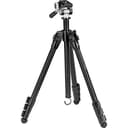
What the hunting-brand tripod genuinely adds, and what you are deciding whether to pay for, is a short list: a two-way pan-and-tilt head designed for panning an optic level rather than a ball head designed for framing a photo; a low minimum height for glassing prone; leg locks and pivots meant to be worked with cold or gloved hands; and in Vortex’s case an unlimited, unconditional lifetime warranty that covers the tripod the same way it covers the binoculars. If you glass most days of the season, those are worth real money. If you glass a handful of mornings a year, they are not.
The honest failure mode of a cheap camera tripod is not that it breaks — it is flex. Four thin leg sections at full extension in a steady wind put a slow shimmer in the image that undoes the entire point of the tripod. The fix costs nothing: run the legs at three sections instead of four, leave the center column down, spread the legs wide, and hang your pack off the center hook if there is one. A $30 tripod set up low and loaded is steadier than a $150 tripod extended to its limit.
The part nobody mentions: you also need an adapter
Binoculars do not screw onto a tripod. Almost every full-size hunting binocular has a threaded socket hidden under a cap on the front of the hinge, and you need a binocular tripod adapter — an L-shaped bracket that threads into that socket at one end and onto the tripod’s quarter-inch stud at the other. It is the cheapest item in this entire article by a wide margin, well under the price of the cheapest tripod here, and it is the single most common reason a first tripod purchase sits unused in a garage.
Two things to check before you buy one. First, confirm your binocular actually has the socket — compact and cheaper roof-prism models often do not, and no adapter fixes that. Second, match the mount standard. Most adapters and most budget tripods speak plain 1/4‑20 threads. Our Vortex pick uses an Arca‑Swiss quick release instead, which is a better system and a genuinely faster one in the field, but it means the adapter and the plate have to agree. Sort that out at the checkout page, not on the mountain.
What we would skip
- Any tripod that will not publish a rated load. It is the one number that describes what the product does. A listing that lists a Bluetooth remote and a phone holder but no load rating is selling a selfie stick with three legs.
- Carbon fiber, at this budget. It saves roughly half a pound and costs two to three times as much. Spend that difference on the binoculars going on top, where it changes what you see.
- Tabletop and “compact” tripods for glassing. They are excellent from a truck window or a blind rail and useless on a hillside, which is where the glassing that finds animals happens.
- A shooting tripod as your only tripod, unless you genuinely shoot more than you look. Eight and a half pounds is a real load on public land, and it buys you stability in the two minutes of a hunt when a pack or a tree would also have worked.
- Buying the tripod before the adapter. Order both in the same cart. A tripod with nothing to attach your binoculars to is a tripod you will not carry twice.
Where this fits in a budget optics setup
The order we would spend in is binoculars, then tripod, then everything else. A tripod amplifies whatever glass you put on it, so it pays off on any of the budget binoculars we rank — but it does not fix a genuinely poor optic, and it will not add low-light performance that the glass does not have. If you are still choosing the binocular, the sub-$200 bracket is where the money-to-performance curve bends hardest.
Then learn the technique, which is free and worth more than either purchase. Our guide to glassing for deer covers the grid method a tripod makes possible: sit down, work the country in horizontal bands, stop every few seconds, and look for parts of an animal rather than a whole one. That routine is exhausting handheld and comfortable on a tripod, which is the real reason a tripod finds more game — not because the image is sharper, but because you will keep doing it for an hour instead of five minutes. It is also the centerpiece of a budget Western hunt, where covering country with your eyes instead of your legs is the whole strategy.