Blaze & Budget

Best Hunting Knife Under $50

A hard ceiling, checked against live prices. Three knives that clear it - and in this one category, the ceiling costs you almost nothing worth having.

By Stephen V.Last updated How we rank

Under fifty dollars, buy the Morakniv Companion. It is the most knife anyone gets for twenty dollars — a grippy Swedish fixed blade that field-dresses a deer as well as knives costing ten times more — and it is also the budget pick on this page, because nothing cheaper is worth owning. Buy the Outdoor Edge RazorLite instead if you hate sharpening: it takes replaceable surgical blades, so a dull edge is a ten-second swap rather than a job for the kitchen table.

This is the one category on the whole site where a price ceiling costs you almost nothing. Fifty dollars is not the bottom of the knife market — it is most of the useful part of it. The two knives we track above this line buy you a lifetime fixed blade with a brand behind it and a dedicated caping blade, and neither of those is a capability a first deer requires. A sharp $20 knife quarters an animal exactly as well as a sharp $150 one; the difference is how long it stays sharp and how it feels doing it.

Every knife here was under $50 on the live price layer when this page was published. The Gerber sits close to the line, so check the ledger below — it shows today’s number with the date it was read, rather than a claim frozen into the copy. Here is how we rank.

How this is funded: we earn a commission if you buy through our links, at no extra cost to you. It never changes which product we recommend, and we’ll tell you plainly when we’d skip one. Full disclosure.

The three that clear the ceiling

Ranked on price-per-performance — the specs that matter divided by what it costs. Select a row to jump to the full write-up. We have not field-tested these — here is exactly what we do instead.

#ProductBladeScorePrice
1
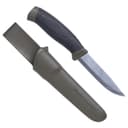
Morakniv Companion Fixed Blade

Morakniv Companion Fixed Blade

Best under $50, and the cheapest worth owning

The most knife anyone has ever gotten for twenty dollars. A grippy, tough Swedish fixed blade that field-dresses a deer as well as knives costing ten times more. Buy two.

4.1" fixed
9.3/ 10
$19.99View on Amazon

Price as of November 22, 2026. #ad How we’re funded

2
Outdoor Edge RazorLite (replaceable blade)

Outdoor Edge RazorLite (replaceable blade)

Best if you never want to sharpen

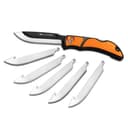
Never sharpen a knife again. Snap in a fresh surgical blade when the old one dulls mid-field-dressing. For hunters who hate sharpening, this is the pick — and it locks solid, unlike a bare scalpel.

3.5" replaceable
8.8/ 10
$29.99View on Amazon

$34.9914% off

Price as of November 22, 2026. #ad How we’re funded

3
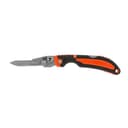
Gerber Vital Pocket Knife

Gerber Vital Pocket Knife

Lightest, and the best backup

A folding, pocket-clip take on the replaceable-blade idea — the RazorLite's more packable cousin. Great as a lightweight backup or the primary for hunters who want a folder that stays scary-sharp.

2.8" replaceable
8.4/ 10
$37.00View on Amazon

$49.9926% off

Price as of November 22, 2026. #ad How we’re funded

The picks in full

#1Best under $50, and the cheapest worth owning9.3/ 10 value

Morakniv Companion Fixed Blade

The most knife anyone has ever gotten for twenty dollars. A grippy, tough Swedish fixed blade that field-dresses a deer as well as knives costing ten times more. Buy two.

Strengths

  • Genuinely excellent steel and edge for around $20
  • Comfortable, grippy handle even with wet or cold hands
  • Tough enough to abuse; cheap enough to not baby

Trade-offs

  • Not a dedicated skinner — the drop point is a generalist
  • Plastic sheath is basic (it works fine)
Blade4.1 in fixed, stainless
HandleGrippy rubberized
SheathIncluded

Specs read from the product listing, on July 22, 2026. “Not published” means the maker doesn’t state that figure. The score is our value rating, not a lab test — how we rank.

#2Best if you never want to sharpen8.8/ 10 value

Outdoor Edge RazorLite (replaceable blade)

Never sharpen a knife again. Snap in a fresh surgical blade when the old one dulls mid-field-dressing. For hunters who hate sharpening, this is the pick — and it locks solid, unlike a bare scalpel.

Strengths

  • Always-sharp replaceable blades — no sharpening, ever
  • Locks rigid like a real knife, unlike bare scalpel handles
  • Comes with spare blades to start

Trade-offs

  • You keep buying replacement blades over time
  • Replaceable blades are thinner and can flex on heavy joints
Blade3.5 in replaceable
LockRigid blade lock
IncludedSpare blades + clip

Specs read from the product listing, on July 22, 2026. “Not published” means the maker doesn’t state that figure. The score is our value rating, not a lab test — how we rank.

#3Lightest, and the best backup8.4/ 10 value

Gerber Vital Pocket Knife

A folding, pocket-clip take on the replaceable-blade idea — the RazorLite's more packable cousin. Great as a lightweight backup or the primary for hunters who want a folder that stays scary-sharp.

Strengths

  • Exchange-a-Blade system keeps it surgically sharp
  • Folding with a pocket clip — packs smaller than a fixed blade
  • Light and cheap enough for a glovebox backup

Trade-offs

  • Folder is less rigid than a fixed blade on tough joints
  • Thin replaceable blades are not for prying
Blade2.8 in replaceable, folding
CarryPocket clip
SystemExchange-a-Blade

Specs read from the product listing, on July 22, 2026. “Not published” means the maker doesn’t state that figure. The score is our value rating, not a lab test — how we rank.

The real decision is sharpening, not steel

Forget steel alloys for a moment. The question that actually divides these three knives is what happens when the edge dulls halfway through a deer, which it will.

  • A fixed blade you sharpen. The Morakniv. One piece of steel, a grippy rubberized handle that works with wet or cold hands, and an edge you maintain yourself. Sharpening is a five-minute skill and a cheap stone; once you have it, a fixed blade is the simplest and toughest option and it never runs out of consumables.
  • A knife that swaps blades. The RazorLite and the Gerber. Snap in a fresh surgical blade and you are back to scalpel-sharp, mid-animal, with no skill required. The ongoing cost is blades, and the structural cost is that replaceable blades are thinner and can flex on a heavy joint.

Neither is wrong. What is wrong is buying a knife you will not maintain. If you know you will never learn to sharpen, a replaceable-blade knife is not a cop-out, it is the correct purchase — a dull premium blade is worse than a sharp cheap one every single time. Our fixed blade versus replaceable blade comparison works the choice through in full, and how to sharpen a hunting knife covers the angle and the stone if you want to learn.

Blade length: shorter than you think

New hunters buy knives that are too big. The three picks here run 4.1 inches, 3.5 inches and 2.8 inches, and the shortest of them will field-dress a whitetail without complaint.

The reason is what the job actually involves. Field dressing is careful work close to a gut cavity you do not want to open, done mostly with the first inch or two of edge. A long blade adds reach you do not need and makes it easier to puncture something you did not mean to. Length starts to matter only when you are quartering a large animal and working through a hip joint, and even then a saw or a bone-capable blade does more for you than extra inches of knife.

That is the specific limitation of the replaceable-blade picks and it is worth repeating: thin blades are not for prying. Work the joint rather than levering it, and the problem disappears. Our quartering guide walks the sequence that keeps a thin blade out of trouble.

What the fifty-dollar ceiling costs you

Honestly, less than on any other page on this site. Three things.

  • A buy-once fixed blade with a real brand warranty. The Buck 692 Vanguard we track sits above this line and it is the knife you hand to a child in twenty years. The Morakniv is tough rather than heirloom, and its sheath is basic plastic. Neither fact affects the first deer.
  • A dedicated caping blade. If you intend to cape a head for a mount, the narrow-blade knife above this ceiling is worth owning and none of these three replaces it. For meat, it is irrelevant.
  • Handle refinement. You can feel the difference between a $20 handle and an $80 one after forty minutes of wet work. You cannot feel it in the first ten.

What the ceiling does notcost you is the thing people assume: edge quality out of the box. The Morakniv’s steel and factory edge are genuinely excellent for the money, and Morakniv’s own sharpening guidance is specific about the angle to maintain, which is more support documentation than most premium makers publish.

Buy two knives, not one better knife

This is the strategy the price makes possible and almost nobody uses. At these prices you can own a fixed blade and a replaceable-blade folder for less than one mid-range knife, and the two cover different failures.

The practical version: the Morakniv rides in your pack as the knife that does the heavy work and cannot break, and the Gerber Vital clips in a pocket as the always-with-you backup that stays scary-sharp without maintenance. If you drop one in the leaves in the dark — which happens, and happens most often while field dressing — you are not driving home. Tie a length of blaze cord to both handles and you will drop them less.

That redundancy argument is the same one behind our public land gear list, and the knife section of our full budget knife roundup explains which of the five knives we track is worth stretching over this ceiling for.

One thing to buy alongside it

Game bags. A knife gets the animal apart; bags keep it clean on the walk out, and they cost less than the knife. Meat dragged on bare ground through leaves and grit is the single most avoidable way to lose the value of a deer you worked for.

Our game bag roundup ranks five sets, the cheapest of which costs about two-thirds of the Morakniv, and how to field dress a deer covers the sequence a first-timer should follow with any of these three knives in hand.
Frequently asked questions

Is a hunting knife under $50 good enough to field dress a deer?

Comfortably, and this is the one category where the ceiling barely costs you anything. A sharp $20 fixed blade field-dresses and quarters a whitetail exactly as well as a sharp $150 one. What more money buys is how long the edge holds, how the handle feels after forty minutes of wet work, and a warranty - not the ability to do the job.

Fixed blade or replaceable blade for hunting?

Decide by whether you will sharpen. A fixed blade is tougher, has no consumables and handles heavy joints, but it needs maintaining. A replaceable-blade knife is scalpel-sharp forever with no skill required, at the cost of buying blades and a thinner edge that can flex on a joint. A dull premium blade is worse than a sharp cheap one, so buy the one you will actually keep sharp.

What blade length do you need for a hunting knife?

Less than most people buy. Three to four inches is plenty, and the 2.8-inch folder on this page will field-dress a whitetail. Field dressing is careful work done with the first inch or two of edge close to a gut cavity you do not want to open; a long blade adds reach you do not need and makes a mistake easier.

Can you quarter a deer with a cheap replaceable-blade knife?

Yes, if you work the joints rather than levering through them. The structural limit of a replaceable blade is thickness - it is not for prying, and forcing it through a hip socket is how you break one. Separate the joint with the edge and the thinness stops mattering.

How many hunting knives do you need?

Two, and at these prices that is cheaper than one mid-range knife. A fixed blade in the pack for the heavy work that cannot break, and a light replaceable-blade folder clipped in a pocket as the always-with-you backup. Dropping a knife in the leaves in the dark is common, and it happens most often while field dressing.

What else should I buy with my first hunting knife?

Game bags, which cost less than the knife and protect more value. Meat dragged on bare ground through leaves and grit is the most avoidable way to spoil a deer you worked for. A cheap sharpening stone is the other one, if you bought a fixed blade.

Sources

  • How to Sharpen a Knife — Morakniv — Maker guidance on knife sharpening: honing realigns an edge without removing steel, stones restore it, and hunting and outdoor knives are ground to roughly a 23-35 degree total edge angle (accessed August 19, 2026)
  • Learn to Hunt — National Deer Association — National nonprofit beginner pathway — Deer Hunting 101, Field to Fork and mentorship (accessed July 22, 2026)
  • Field Care of Game — Texas Parks and Wildlife Department — The state agency's hunter-education guidance on meat care: "The three factors that can spoil meat through the spread of bacteria are: heat, moisture and dirt"; field dressing should happen soon after the harvest because "This first step begins the cooling down of the meat"; and while water helps clean off excess blood, "moisture is one of the factors which contribute to bacteria growth, so dry the animal off well". No temperature figures are published on the page (accessed October 11, 2026)

Keep reading