Blaze & Budget

Best Budget Game Cart

Every listing in this category markets its load rating, and the load rating is the least useful number on the page. Five carts ranked on wheel diameter, cart weight and folded size instead - and one federal rule to check before you buy.

By Stephen V.Last updated How we rank

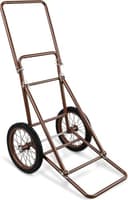
Buy the Guide Gear Deluxe. 16-inch solid-rubber wheels, three lashing straps in the box, and the only listing on this page that explains its own design - the frame centers the load over the axle, which is what makes a loaded cart feel light. It is also at the cheap end of the real-brand shelf.

A game cart is the rare piece of hunting gear that pays for itself in one afternoon. Dragging a field-dressed whitetail a half mile uphill is the single most miserable hour in deer hunting, it is how hunters hurt their backs, and it is slow enough in warm weather to put the meat at risk. A cart turns that hour into twenty minutes and costs less than two boxes of premium ammunition.

So we ranked on what the listings actually publish. Four of the five publish a wheel diameter, all five publish a cart weight, four publish an assembled or folded footprint, and exactly one publishes a warranty term. The number every listing shouts - 300 lb, 500 lb, 550 lb - turned out to be the one we use least, for the simple reason that all five carry more than any deer you will put on them. We own none of these and claim no field testing. Here is how we rank instead.

How this is funded: we earn a commission if you buy through our links, at no extra cost to you. It never changes which product we recommend, and we’ll tell you plainly when we’d skip one. Full disclosure.

The picks, and what each one is for

Ranked on price-per-performance — the specs that matter divided by what it costs. Select a row to jump to the full write-up. We have not field-tested these — here is exactly what we do instead.

#ProductCapacity / key specScorePrice
1
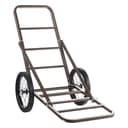
Guide Gear Deluxe Deer Cart (3A-HT103)

Guide Gear Deluxe Deer Cart (3A-HT103)

Best value overall

The only cart here that publishes the three numbers a buyer needs and then explains the one design decision that matters: the listing says the frame "centers the weight over the axle for easier movement". That is the difference between pushing a deer and fighting one. 16-inch solid-rubber spoked wheels, a 300 lb rating, three lashing straps in the box and a folding frame, at the cheapest end of the real-brand shelf.

300 lb · 16 in wheels
9.2/ 10
$79.99View on Amazon

$99.9920% off

Price as of November 22, 2026. #ad How we’re funded

2
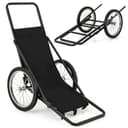
VINGLI Folding Deer Cart, 500 lb (Deercart-0733)

VINGLI Folding Deer Cart, 500 lb (Deercart-0733)

Most capacity per dollar

The best capacity-per-dollar figure on the page and, at 25.4 lb, the lightest cart here - an unusual pair. 17-inch solid wheels with a published 1.5 in tread thickness, a 500 lb steel frame and a 70 x 18 in bed that will take a whole deer rather than a folded one. The handle is the selling point the listing leads with: longer, so you are not stooping for a half mile.

500 lb · 17 in wheels
8.9/ 10
$89.99View on Amazon

Price as of November 22, 2026. #ad How we’re funded

3
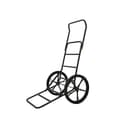
VEVOR Deer Cart Game Hauler, 300 lb (YL1501)

VEVOR Deer Cart Game Hauler, 300 lb (YL1501)

Cheapest that still publishes specs

The cheapest cart on this page that still publishes a tube thickness - 0.98 in alloy steel - and a tire type. 15-inch solid rubber tires, a ring-lock hitch pin the listing argues is more secure than a straight hook, and a published assembled footprint. It is the entry fee for getting out of the drag-rope business, and for most whitetail hunters the 300 lb rating is never the limit.

300 lb · 15 in wheels
8.8/ 10
$89.90View on Amazon

Price as of November 22, 2026. #ad How we’re funded

4
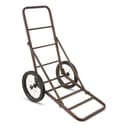
Goplus Folding Deer Cart with Liner, 550 lb (SU-10092-HT)

Goplus Folding Deer Cart with Liner, 550 lb (SU-10092-HT)

Best for rough ground

Buy this one if the ground you hunt is rough rather than flat. 20-inch rubber tires are the largest here by three inches, and wheel diameter is the spec that decides whether a cart rolls over a rut or stops dead in it. It is also the only cart on the page with a removable polyester liner and a published strap count, which turns it into a gear hauler on the days nothing dies.

550 lb · 20 in wheels
8.5/ 10
5
Rivers Edge Tri-Fold Game Cart (RE790)

Rivers Edge Tri-Fold Game Cart (RE790)

Only published warranty

The only cart on this page that publishes a warranty term - one year limited - and the only one that folds in three rather than two, which is why it stows smaller than its 56 in length suggests. It is also the most expensive and the lowest rated at 300 lb. You are paying for a real hunting brand standing behind a tool the rest of this shelf sells anonymously.

300 lb · 1-yr limited
8.3/ 10
$149.99View on Amazon

Price as of November 22, 2026. #ad How we’re funded

The picks in full

#1Best value overall9.2/ 10 value

Guide Gear Deluxe Deer Cart (3A-HT103)

The only cart here that publishes the three numbers a buyer needs and then explains the one design decision that matters: the listing says the frame "centers the weight over the axle for easier movement". That is the difference between pushing a deer and fighting one. 16-inch solid-rubber spoked wheels, a 300 lb rating, three lashing straps in the box and a folding frame, at the cheapest end of the real-brand shelf.

Strengths

  • Publishes 16 in solid-rubber spoked wheels - the second-largest here, and puncture-proof, which matters in cut-over and blackberry
  • Listing states the frame centers the load over the axle, the single design choice that decides how heavy a cart feels
  • Three lashing straps included, so you are not improvising with rope on a wet animal
  • Stainless steel frame per the listing, which is the right answer for a tool that gets put away bloody and wet
  • Folds flat and publishes a folded footprint of 36.5 x 21.25 x 5.5 in, so it genuinely fits behind a truck seat

Trade-offs

  • 300 lb rating is the lowest here, tied with the Rivers Edge - fine for whitetail, thin for a boned-out elk plus gear
  • No warranty term published; the listing states only "30-day returns"
  • No liner, so small gear rides loose between the rails unless you bag it
  • Two wheels means it still needs a flat-ish line through timber - no cart steers around a deadfall
  • 28.2 lb is mid-pack weight, and it is 28 lb you carry IN before you have anything to carry out
Published capacity300 lb (listing)
Wheel diameter16 in solid rubber, spoked (listing)
Cart weight28.2 lb (listing)
Frame materialStainless steel (listing)
Folded size36.5 x 21.25 x 5.5 in (listing)
Straps included3 lashing straps (listing)
LinerNot published
Warranty termNot published

Specs read from the product listing, on November 1, 2026. “Not published” means the maker doesn’t state that figure. The score is our value rating, not a lab test — how we rank.

#2Most capacity per dollar8.9/ 10 value

VINGLI Folding Deer Cart, 500 lb (Deercart-0733)

The best capacity-per-dollar figure on the page and, at 25.4 lb, the lightest cart here - an unusual pair. 17-inch solid wheels with a published 1.5 in tread thickness, a 500 lb steel frame and a 70 x 18 in bed that will take a whole deer rather than a folded one. The handle is the selling point the listing leads with: longer, so you are not stooping for a half mile.

Strengths

  • 500 lb published capacity at a price close to the 300 lb carts - the best capacity-per-dollar ratio here
  • Lightest cart on the page at 25.4 lb, which is the figure you feel on the walk in
  • 17 in solid wheels with a published 1.5 in tread thickness - the only listing here that publishes tread width
  • 70 x 18 in bed, long enough to take a whole field-dressed deer instead of a jackknifed one
  • Longer handle, which the listing frames as a back-saver and which also keeps your heels clear of the frame

Trade-offs

  • No warranty term published
  • No published assembled height, so there is no way to check handle height against your own before buying
  • Steel construction is stated but the finish is not, and a cheap powder coat is where these carts start rusting
  • No liner and no published strap count
  • The 500 lb rating is a frame claim, not a wheel-bearing claim, and the listing publishes no bearing or axle spec
Published capacity500 lb (listing)
Wheel diameter17 in solid, 1.5 in thick (listing)
Cart weight25.4 lb (listing)
Frame materialSteel (listing)
Bed size70 x 18 in overall (listing)
Straps includedNot published
LinerNot published
Warranty termNot published

Specs read from the product listing, on November 1, 2026. “Not published” means the maker doesn’t state that figure. The score is our value rating, not a lab test — how we rank.

#3Cheapest that still publishes specs8.8/ 10 value

VEVOR Deer Cart Game Hauler, 300 lb (YL1501)

The cheapest cart on this page that still publishes a tube thickness - 0.98 in alloy steel - and a tire type. 15-inch solid rubber tires, a ring-lock hitch pin the listing argues is more secure than a straight hook, and a published assembled footprint. It is the entry fee for getting out of the drag-rope business, and for most whitetail hunters the 300 lb rating is never the limit.

Strengths

  • Lowest price here and still publishes a pipe diameter (0.98 in) and a tire size (15 in solid rubber)
  • Solid rubber tires, so nothing to pump up at 4 am or puncture on a locust thorn
  • Ring-lock hitch pin rather than a straight hook, which the listing says resists the wheel working loose
  • Publishes a full assembled size, 44.09 x 26.18 x 41.34 in, so you can measure your trunk before you buy
  • 27.23 lb - the second-lightest cart on this page

Trade-offs

  • No warranty term published at all, not even a return window
  • 15 in wheels are the smallest here; wheel diameter is the spec that decides how a cart crosses a rut
  • 300 lb rating, and a generic model code (YL1501) with no maker spec page to check it against
  • No liner and the listing publishes no strap count - plan on buying your own ratchet straps
  • The feature text is marketing-heavy and never states the frame finish, so corrosion resistance is unknown
Published capacity300 lb (listing)
Wheel diameter15 in solid rubber (listing)
Cart weight27.23 lb (listing)
Frame materialAlloy steel, 0.98 in tube (listing)
Assembled size44.09 x 26.18 x 41.34 in (listing)
Straps includedNot published
LinerNot published
Warranty termNot published

Specs read from the product listing, on November 1, 2026. “Not published” means the maker doesn’t state that figure. The score is our value rating, not a lab test — how we rank.

#4Best for rough ground8.5/ 10 value

Goplus Folding Deer Cart with Liner, 550 lb (SU-10092-HT)

Buy this one if the ground you hunt is rough rather than flat. 20-inch rubber tires are the largest here by three inches, and wheel diameter is the spec that decides whether a cart rolls over a rut or stops dead in it. It is also the only cart on the page with a removable polyester liner and a published strap count, which turns it into a gear hauler on the days nothing dies.

Strengths

  • 20 in rubber tires, the largest here - the single most useful spec for crossing ruts, roots and rip-rap
  • Highest published capacity on the page at 550 lb
  • Removable wear-resistant polyester liner, so small gear and boned-out meat bags do not fall through the frame
  • Publishes its restraint hardware: adjustable buckles, 2 binding straps and hook-and-loop fasteners
  • Publishes a full assembled size, 29 x 48 x 47 in

Trade-offs

  • Heaviest cart here at 37.5 lb - 12 lb more than the VINGLI, carried in on your back before anything comes out
  • No warranty term published
  • 20 in wheels make the folded package bulkier; this is a truck-bed cart, not a trunk cart
  • Liner is fabric, which means it is the part that will eventually tear and the listing publishes no replacement part
  • Tires are described only as "rubber", with no statement of whether they are solid or pneumatic
Published capacity550 lb (listing)
Wheel diameter20 in rubber (listing)
Cart weight37.5 lb (listing)
Frame materialThickened metal pipe (listing)
Assembled size29 x 48 x 47 in (listing)
Straps included2 binding straps + buckles (listing)
LinerRemovable polyester (listing)
Warranty termNot published

Specs read from the product listing, on November 1, 2026. “Not published” means the maker doesn’t state that figure. The score is our value rating, not a lab test — how we rank.

#5Only published warranty8.3/ 10 value

Rivers Edge Tri-Fold Game Cart (RE790)

The only cart on this page that publishes a warranty term - one year limited - and the only one that folds in three rather than two, which is why it stows smaller than its 56 in length suggests. It is also the most expensive and the lowest rated at 300 lb. You are paying for a real hunting brand standing behind a tool the rest of this shelf sells anonymously.

Strengths

  • The only cart here with a published warranty term: 1-year limited
  • Tri-fold frame that the listing says needs no tools, so it collapses smaller than a two-fold cart of the same length
  • Steel wheels with solid rubber tires - the listing states outright they "won't go flat"
  • Publishes a full assembled size, 56 x 27 x 32 in, which is the longest bed here
  • A named model number (RE790) from Ardisam, so there is a manufacturer to call when something breaks

Trade-offs

  • Most expensive cart on this page, and the only one above the sub-$100 band
  • 300 lb published capacity ties for the lowest here despite the price
  • The listing publishes no wheel diameter at all, which is the one spec we most wanted from the best-documented cart
  • 29 lb, mid-pack, with no weight advantage to show for the extra money
  • No liner and no published strap count
Published capacity300 lb (listing)
Wheel diameterNot published
Wheel typeSteel wheel, solid rubber tire (listing)
Cart weight29 lb (listing)
Assembled size56 x 27 x 32 in (listing)
FoldTri-fold, no tools (listing)
LinerNot published
Warranty term1-year limited (listing)

Specs read from the product listing, on November 1, 2026. “Not published” means the maker doesn’t state that figure. The score is our value rating, not a lab test — how we rank.

Read this before you buy: your cart may be illegal where you hunt

This is the single most expensive mistake available in this category, and almost nobody mentions it. A wheeled game cart is prohibited in designated Wilderness on federal land, and the prohibition is written down.

The George Washington and Jefferson National Forests publish a standing order listing, among the acts prohibited in their designated wilderness areas, “Possessing or using a wagon, cart, or other vehicle,” cited to 36 CFR 261.57(h). The Ochoco National Forest spells out the same thing without leaving it to interpretation, listing as prohibited “Motorized equipment and equipment used for mechanical transport including: chainsaws, bicycles, motorcycles, snowmobiles, hang gliders, aircraft, motorboats, wagons, game carts, baby strollers, wheelbarrows and other non-primitive tools and wheeled vehicles (wheelchairs excluded).” Neither forest publishes an exception for game retrieval.

Note what this does and does not mean. Hunting in Wilderness is fine - the orders prohibit the cart, not the hunt. National Forest land that is not designated Wilderness is generally not covered by these particular orders, and neither are most state wildlife areas, Corps of Engineers ground or private land. But if the public land you hunt is inside a Wilderness boundary, a cart is dead weight you cannot legally use, and the answer is a pack frame instead. Our budget pack-frame roundup covers that route, and how to find public land to hunt covers how to look up which category your ground falls into. Check your specific unit before you spend anything. Local orders differ and they change.

The four criteria, and why load rating is not one of them

Every listing in this category leads with a capacity figure, which is marketing rather than information. The lowest rating on this page is 300 lb. A big northern whitetail buck field-dressed is well under that, and a boned-out elk is carried in bags over several trips regardless of what a cart claims. The rating only starts to matter if you are hauling a whole animal plus a treestand plus gear, which is a rare load. These four decide the purchase instead.

  • Wheel diameter. The most useful published number in the category, and the one that decides whether a cart rolls over a rut, a root or a plow furrow or stops dead against it. A bigger wheel has a shallower approach angle into an obstacle, which is a physics problem, not a brand problem. These five span 15 to 20 inches - a third more wheel at the top end. The Rivers Edge, frustratingly, publishes no wheel diameter at all.
  • Cart weight. The number nobody thinks about until the walk in. Every pound of cart is a pound you carry or wheel to your stand empty, in the dark, before anything is on it. The spread here is 25.4 lb to 37.5 lb - a 12 lb difference, which is more than a loaded daypack. If you park within sight of your stand this is irrelevant. If you walk a mile in, it is the spec that decides whether the cart stays in the truck all season.
  • Folded or assembled size. A cart that does not fit where you keep it is a cart you leave behind. Four of five publish a footprint. The Guide Gear publishes a genuinely small folded size - 36.5 by 21.25 by 5.5 inches - and the Rivers Edge folds in three rather than two, which stows shorter than its 56 inch length suggests. The Goplus, with the biggest wheels, is the bulkiest package here: a truck-bed cart, not a trunk cart.
  • Restraint and liner. How the animal stays on the cart. Two of the five publish what is in the box: the Guide Gear includes three lashing straps, the Goplus publishes two binding straps plus adjustable buckles, hook-and-loop fasteners and a removable polyester liner. The other three publish nothing, which means budget for ratchet straps on top of the cart price.

Tires are worth one more sentence. Four of five state “solid” rubber - no air, nothing to pump, nothing to puncture on a locust thorn or a corn stubble. That is the right answer for a tool that gets used twice a season and stored in a shed. The Goplus describes its 20-inch tires only as “rubber” without saying whether they are solid or pneumatic, which is the one documentation gap on an otherwise well-specified cart.

Where the whole category falls down: warranty

One of these five publishes a warranty term. The Rivers Edge RE790 is listed with a one-year limited warranty and a real model number from Ardisam, which means there is a manufacturer to contact when a weld cracks. The Guide Gear publishes only “30-day returns.” The VEVOR, VINGLI and Goplus publish nothing at all - not a term, not a return window.

That is worth real money in a category built from welded steel tube and bolt-on wheels, because a cart fails at a weld or an axle, not gradually. It is also the honest argument for the most expensive cart on this page: at the top of this page’s price range, the Rivers Edge buys you documentation and a company, and nothing else. It has the lowest rating here, no published wheel size, and no weight advantage. If that trade appeals, buy it. We would rather put the difference toward game bags and a decent knife, because those affect whether the meat is any good.

Two wheels, one wheel, or a sled? What a cart will not fix

Every cart here is a two-wheel design, and two wheels have a known failure mode: they need a line through the timber roughly as wide as the cart. No wheeled cart steers around a tight deadfall, and dragging a loaded cart sideways over a blowdown is harder than dragging the deer was. Before you buy, picture the actual route from where you hunt to where you park.

  • An old logging road, field edge, ATV trail or gated two-track. Buy a cart. This is what they are for and the difference is dramatic.
  • Open hardwoods with mild terrain. A cart still wins, and wheel diameter is what you should be shopping on.
  • Thick brush, cut-over, steep sidehill, swamp, or inside a Wilderness boundary. Skip the cart. A pack frame moves boned-out quarters anywhere you can walk and is legal everywhere you can hunt.
  • Snow. A plastic sled beats every cart on this page and costs a third as much. If your season is a northern late season, buy the sled first.

The part that actually protects the meat

A cart is a meat-care tool before it is a labor-saving one, and that is the strongest argument for owning one. Texas Parks and Wildlife hunter education puts the problem in one line: “The three factors that can spoil meat through the spread of bacteria are: heat, moisture and dirt.” Dragging an animal across the ground delivers all three - it packs dirt into the body cavity, works the hide open, and takes long enough in warm weather to matter. Where a cart cannot go, a drag sled is the next-best answer to the same problem: we rank those alongside the harnesses in best budget deer drag.

Getting the animal off the dirt and out of the woods faster is exactly what a cart does. The agency also notes that field dressing soon after the harvest matters because “This first step begins the cooling down of the meat,” and that while water rinses excess blood, “moisture is one of the factors which contribute to bacteria growth, so dry the animal off well.” Our guides on field dressing a deer and cooling a deer in warm weather cover the rest of that sequence, and quartering a deer in the field covers the alternative when no cart is going to reach you.

What we would actually buy

  1. Guide Gear Deluxe Deer Cart. 16-inch solid wheels, 28.2 lb, straps included, folds to 5.5 inches thick, and the only listing that explains how it carries the load. The default pick for a whitetail hunter with a two-track to the truck.
  2. VINGLI 500 lb if you want the longest bed and the lightest cart here - 25.4 lb with a 70-inch deck is a genuinely unusual combination, and the 17-inch wheels with a published 1.5 inch tread are only an inch down on the Guide Gear.
  3. Goplus 550 lb if your ground is rough. 20-inch wheels are a third more wheel than the cheapest cart here, and the removable liner means it hauls decoys, blinds and firewood on the days nothing dies. You pay for it in bulk and 37.5 lb.
  4. A set of ratchet straps with any cart that does not publish its own. Two for the body, one across the legs.

The combination we would not buy is the most expensive cart on this page for a hunter who walks a long way in - the Rivers Edge is the best-documented product here and still weighs 29 lb with an unpublished wheel size and the lowest rating. And no cart at all for a Wilderness hunt. Check the boundary first; buy the cart second.
Check your state’s regulations. Hunting laws vary by state and change year to year — legal calibers, minimum bow draw weights, blaze-orange rules, seasons and treestand requirements included. Confirm the rules with your state wildlife agency before you hunt. Blaze & Budget is written by an enthusiast, not a game warden, and nothing here is legal advice.

Frequently asked questions

What capacity game cart do I need for a deer?

Less than any cart on this page offers. The lowest published rating here is 300 lb, and a field-dressed whitetail - even a heavy northern buck - comes in well under that. The rating only becomes the limiting factor if you load an entire animal plus a treestand plus gear in one trip, which is unusual. Shop on wheel diameter, cart weight and folded size instead. The capacity number is the one spec every listing publishes loudly and the one that will almost never decide your hunt.

Are game carts allowed on public land?

On most public land, yes - but NOT in designated Wilderness on federal land, and that exception catches hunters out. The George Washington and Jefferson National Forests publish an order prohibiting "Possessing or using a wagon, cart, or other vehicle" in their designated wilderness areas, cited to 36 CFR 261.57(h). The Ochoco National Forest names the item directly, listing "wagons, game carts, baby strollers, wheelbarrows and other non-primitive tools and wheeled vehicles (wheelchairs excluded)" among prohibited mechanical transport. Hunting itself is legal in Wilderness; the cart is not. Non-Wilderness National Forest, most state wildlife areas and private ground are a different matter. Look up the specific unit you hunt before you buy, because local orders differ and change.

What size wheels should a game cart have?

As big as you can carry and store. Wheel diameter is the single most useful published spec in this category because a larger wheel meets a rut, root or furrow at a shallower angle and rolls over it instead of stopping against it. The five carts here span 15 to 20 inches. Fifteen inches is fine on a two-track or field edge; 20 inches is what you want for genuinely rough ground, and you pay for it in a bulkier folded package and a heavier cart. Solid rubber beats pneumatic for a tool used twice a season, because there is nothing to pump and nothing to puncture.

Is a game cart better than a pack frame?

They solve different problems and the route decides it. A cart wins by a wide margin on old logging roads, field edges, ATV trails and gated two-tracks, where you can move a whole animal in one trip without butchering it in the dark. A pack frame wins in thick brush, cut-over, steep sidehill, swamp - and in designated Wilderness, where a cart is prohibited outright. The honest answer for a budget public-land hunter is that a pack frame is the more versatile purchase and a cart is the bigger labor saving where it fits. If you only buy one and your access is a trail, buy the cart.

Do game carts come with straps?

Some do and most listings do not say. Of the five here, the Guide Gear Deluxe publishes three lashing straps included and the Goplus publishes two binding straps plus adjustable buckles and hook-and-loop fasteners, along with a removable polyester liner. The VEVOR, VINGLI and Rivers Edge listings publish no strap count at all. Assume you need your own unless the listing says otherwise, and budget for two ratchet straps across the body and one across the legs. Securing the load matters more than it sounds - a deer that shifts on a two-wheel cart on a sidehill will put the whole thing over.

Do cheap game carts come with a warranty?

Almost none of them. Exactly one of these five publishes a warranty term: the Rivers Edge RE790 is listed with a one-year limited warranty from Ardisam. The Guide Gear publishes "30-day returns" and nothing further. The VEVOR, VINGLI and Goplus listings publish no warranty and no return window. That is a real gap in a category made of welded steel tube and bolt-on axles, because these fail at a weld rather than wearing out gradually. It is the clearest argument for paying more for the Rivers Edge - and the reason we still rank the better-specified, cheaper carts above it.

Will a game cart fit in a car trunk?

The small ones will. The Guide Gear publishes a folded size of 36.5 by 21.25 by 5.5 inches, which genuinely fits behind a seat or flat in a trunk. The Rivers Edge folds in three rather than two, which stows shorter than its 56-inch assembled length suggests. The Goplus, with 20-inch wheels and a 37.5 lb frame, is a truck-bed or SUV cart - the wheels alone make the folded package bulky. The VEVOR and VINGLI publish assembled rather than folded dimensions, so measure before you commit if trunk space is your constraint.

Sources

  • Special regulations apply when visiting Wilderness areas — George Washington and Jefferson National Forests, US Forest Service — A standing Forest Service order that is the reason a game cart can be the wrong purchase for a public-land hunter. The forests list, among the acts prohibited in their designated wilderness areas, "Possessing or using a wagon, cart, or other vehicle", cited to 36 CFR 261.57(h). The same order prohibits entering or being in the wilderness in a group of more than ten people (261.57(a)), storing equipment, personal property or supplies (261.57(f)), leaving debris, garbage or other waste (261.57(g)), short-cutting a trail switchback (261.55(e)), riding an electric bicycle (36 CFR 4.30(i)(4)) and "Operating a bicycle or other machine-powered conveyance" (36 CFR 293.6(a)). Hunting itself is not prohibited by the order; the cart is (accessed November 1, 2026)
  • Wilderness — Ochoco National Forest, US Forest Service — A second Forest Service page that names the item explicitly rather than leaving it inside the phrase "mechanical transport". The forest lists as prohibited "Motorized equipment and equipment used for mechanical transport including: chainsaws, bicycles, motorcycles, snowmobiles, hang gliders, aircraft, motorboats, wagons, game carts, baby strollers, wheelbarrows and other non-primitive tools and wheeled vehicles (wheelchairs excluded)", and points to 36 CFR part 261 for the regulations that also apply. It publishes no exception for game retrieval (accessed November 1, 2026)
  • Field Care of Game — Texas Parks and Wildlife Department — The state agency's hunter-education guidance on meat care: "The three factors that can spoil meat through the spread of bacteria are: heat, moisture and dirt"; field dressing should happen soon after the harvest because "This first step begins the cooling down of the meat"; and while water helps clean off excess blood, "moisture is one of the factors which contribute to bacteria growth, so dry the animal off well". No temperature figures are published on the page (accessed October 11, 2026)
  • Hunting — US Forest Service — USFS rules for hunting on National Forest System land — state-law compliance and area restrictions (accessed July 22, 2026)

Keep reading