What Grain Broadhead for Deer?
100 grain is the right answer for nearly every deer hunter, and the reason has very little to do with penetration. Here is what head weight actually changes.
How this is funded: we earn a commission if you buy through our links, at no extra cost to you. It never changes which product we recommend, and we’ll tell you plainly when we’d skip one. Full disclosure.
Use a 100 grain broadhead. If you are reading this because you are trying to choose, that is your answer, and the Muzzy MX-3 is the specific head we would buy to go with it. One hundred grain is the weight the entire category is built around, it matches the field points you almost certainly already practice with, and it is what modern compound bows and crossbows are set up to shoot. Every deer head in our registry is 100 grain, and that is not an accident of selection — it is what makers build, because it is what bows are tuned for.
The interesting part of this question is not the answer, it is why the question keeps getting asked. Broadhead weight is argued about online far out of proportion to what it changes, usually in terms borrowed from heavy-arrow traditional archery and applied to equipment it does not describe. Below is what grain weight genuinely does, what it genuinely costs, and the three specifications that matter far more.
What a grain is, and why 100 of them became standard
A grain is a unit of mass: there are 7,000 grains in a pound, so a 100 grain broadhead weighs about a quarter of an ounce. Arrow components have been measured in grains for as long as anyone has been measuring them, and the whole system — shafts, inserts, nocks, points — is specified that way.
One hundred grains became the default because it sits at the point where modern compound bow speeds, common arrow spines and standard insert weights all work together. Practice field points are sold in 100 grain as the overwhelming default. Insert and shaft combinations are designed around it. When a bow shop sets up a bow for you, they assume it unless you tell them otherwise. Choosing something else means choosing to be the exception in a system built around one number.
What changing head weight actually does
Going from 100 to 125 grains adds 25 grains at the very front of the arrow. That has three real effects, and it is worth being precise about each because they are usually overstated.
- It moves the balance point forward. More weight up front generally means a more stable arrow in flight, the same way a dart flies better than a stick. This is the legitimate argument for heavier heads.
- It slows the arrow and drops the trajectory. A heavier arrow leaves slower and falls faster over distance, so your sight marks move. This is not a problem if you re-sight. It is a serious problem if you change heads the week before season and do not.
- It changes how the shaft behaves.Arrow spine — how stiff the shaft is — is chosen for a given draw weight, draw length and point weight. Adding 25 grains at the tip makes a shaft behave as though it were weaker. If your spine was already at the edge of its range, the arrow will not fly as cleanly, and with a fixed-blade head you will see it.
Notice what is not on that list: killing power. At deer-hunting distances a well-placed, sharp, straight-flying arrow of either weight passes through a whitetail. Our budget hunting arrow rankings cover spine selection, which is the part of this that actually decides arrow flight.
The three specs that matter more than grain weight
1. Matching your field points
Your sight is zeroed for a total arrow weight. Practise all season with 100 grain field points, screw on 125 grain broadheads in October, and your arrows will not land where your pins say — from both the weight change and the aerodynamic difference between a point and a bladed head.
The discipline that fixes this is simple and almost nobody does it: shoot the actual broadheads you will hunt with, into a broadhead-rated target, from the ranges you expect to shoot, before the season opens. If they group with your field points, you are ready. If they do not, you have found a tuning problem while there is still time to fix it.
2. Sharpness
A broadhead kills by cutting blood vessels, and a dull edge tears instead of cutting — which makes a worse wound and a harder blood trail. Factory sharpness varies even within a pack. Check every head on your forearm or against a piece of paper, and never hunt a head that has been shot into a target without re-sharpening or re-blading it.
This is where head construction starts to matter more than weight. A replaceable-blade head like the Thunderhead is re-bladed from a packet; a one-piece head like the Montec is re-sharpened with a file, which takes practice but costs nothing per season. Either approach is fine. Neither works if you skip it.
3. Fixed versus mechanical
This is the broadhead decision that genuinely changes outcomes, and it depends on your bow rather than your preference. A fixed blade is a small wing on the front of your arrow and it magnifies every tuning flaw you have; a mechanical hides them by staying closed in flight, at the cost of energy spent deploying on impact. The full argument, and how to tell which camp your setup is in, is on our fixed vs mechanical page.
When a heavier head is actually the right call
There are real cases. They are narrower than the internet suggests.
- A low draw weight setup.A hunter shooting near a state minimum — 30 pounds in Minnesota and Wisconsin, 35 at peak in Pennsylvania — has limited energy to work with, and shifting the balance toward a heavier, forward-weighted arrow can improve penetration on a marginal setup. Check your own state, and see our draw weight guide first, because draw weight is the bigger lever.
- A bow you have already tuned for it. If your arrows were spined for 125 grain points and you practice with 125 grain field points, stay there. Consistency beats theory.
- Larger game than whitetail. Elk and moose are a different penetration problem, and heavier total arrow weight is a reasonable response to it. That is an argument about the whole arrow, not just the head.
What is not a reason: reading that heavy arrows are better. Heavy arrows are better at some things and worse at others, and on a budget setup the gains are smaller than the disruption of changing a system that already works.
Crossbows are a separate case
If you shoot a crossbow, stay at 100 grain and change what you look for instead. Crossbow bolts leave the rail at speeds that stress broadheads, and the failure mode is specific: blades held in a ferrule can shift or shed, in flight or on impact. That is why a one-piece machined head rated by the maker for crossbow use is the safe default, and why it is the crossbow pick below.
Check your bolt manufacturer’s guidance as well, since some specify a point weight range for their bolts. And confirm the total weight you are shooting against your crossbow’s own minimum bolt weight — shooting under it is how limbs get damaged. Our budget crossbow rankings cover the packages these heads go on.
Check your state before you buy
Broadhead legality is one of the more variable corners of hunting regulation. Depending on where you hunt, the rules may set a minimum cutting diameter, a minimum number of blades, a requirement that blades sit in a fixed plane, a minimum deployed width for mechanicals, or a minimum total arrow weight. Barbed heads are widely prohibited. None of this appears on a product listing, and a head that is legal in one state can be illegal in the next one over.
The short version
Buy 100 grain. Buy the same weight as your field points. Shoot your actual broadheads at your actual ranges before opening day. Keep them shaving sharp. Those four sentences cover more ground than any argument about grain weight ever will, and the three heads below are the ones we would buy against them, at today’s live prices. The one thing that outranks all four is where you put the arrow — our guide to where to shoot a deer with a bow covers the aiming point on each angle and the shots worth passing on.
The heads this guide earns
Ranked on price-per-performance — the specs that matter divided by what it costs. Select a row to jump to the full write-up. We have not field-tested these — here is exactly what we do instead.
| # | Product | Type / weight | Score | Price |
|---|---|---|---|---|
| 1 | 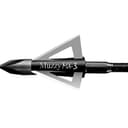 Muzzy MX-3 100 gr (3-pack) The 100 grain fixed head we would buy The cheapest fixed head here from a name that has been killing deer since the eighties. Muzzy's whole reputation is built on heads that fly straight and do not fold on a shoulder — this is the budget version of that promise. | Fixed · 100 gr | 9.0/ 10 | |
| 2 | 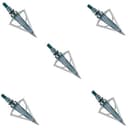 New Archery Products Thunderhead 100 (5-pack) Most heads per dollar, and re-bladeable Five heads in a box and replaceable blades means one purchase can last several seasons. The Thunderhead has been in production for decades because the design refuses to become obsolete. | Replaceable · 100 gr | 8.9/ 10 | |
| 3 | 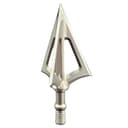 G5 Outdoors Montec Crossbow 100 gr (3-pack) The pick if you shoot a crossbow One-piece machined steel with nothing to come apart — the Montec is what you reach for when the shot might hit bone at crossbow speed. It also sharpens back to hunting-ready with a file instead of a new blade pack. | One-piece · 100 gr | 8.7/ 10 | $44.95View on Amazon Price as of November 22, 2026. #ad How we’re funded |
Check your state’s regulations. Hunting laws vary by state and change year to year — legal calibers, minimum bow draw weights, blaze-orange rules, seasons and treestand requirements included. Confirm the rules with your state wildlife agency before you hunt. Blaze & Budget is written by an enthusiast, not a game warden, and nothing here is legal advice.
Frequently asked questions
What grain broadhead should I use for deer?
100 grain, for nearly every deer hunter. It is the standard weight the whole category is built around, it matches the 100 grain field points you almost certainly practice with, and it is what the great majority of modern compound and crossbow setups are tuned for. Every head we track for deer is 100 grain, and that is not a coincidence — it is what makers build because it is what bows are set up to shoot. Move to 125 grain only if you have a specific, measured reason.
Is a 125 grain broadhead better than 100 grain for deer?
Not for most hunters, and not in the way it is usually argued. A heavier head moves weight forward on the arrow, which can improve stability in flight and shifts a little energy toward momentum rather than speed. But it also drops your arrow's trajectory, so your sight marks change, and if your arrow's spine was chosen for a 100 grain point, adding 25 grains up front can push the shaft outside the stiffness range it flies well in. The gain is small and the disruption is real.
Do broadheads need to be the same weight as my field points?
Yes, and this is the most important sentence on the page. Your sight is zeroed for the total arrow weight you practiced with. Swapping a 100 grain field point for a 125 grain broadhead the week before season changes both the weight and the aerodynamics, and your arrows will not land where your pins say. Practise with the exact broadheads you will hunt with, from the ranges you expect to shoot, and re-check your zero after you fit them.
Does a heavier broadhead penetrate better?
Head weight alone is a small factor. Penetration on a deer is driven by total arrow weight, how straight the arrow is flying when it arrives, how sharp the head is, and the angle it hits at — roughly in that order. A perfectly tuned arrow with a sharp 100 grain head out-penetrates a poorly tuned arrow with a heavy dull one every time. If you want more penetration, fix your tune and sharpen your heads before you change grain weight.
What broadhead weight should I use with a crossbow?
100 grain, and choose the head for construction rather than weight. Crossbow bolts leave at speeds that punish broadheads with blades held in a ferrule — blades can shift or shed on impact or even in flight. That is why one-piece machined heads rated by the maker for crossbow use are the safe default. Check the bolt manufacturer's own guidance too, since some specify a point weight range for the bolts you are using.
Are there legal rules on broadheads for deer hunting?
Yes, and they vary by state. Common requirements include a minimum cutting diameter, a minimum number of blades, a ban on barbed or poisoned heads, and in some places a rule that blades must be in a fixed plane or that mechanicals must meet a minimum deployed width. Some states also set a minimum arrow or total projectile weight. Check your state wildlife agency's current regulations before you buy — the listing will not tell you.
How sharp does a broadhead need to be?
Sharp enough to shave hair off your forearm, and most hunters never check. A broadhead kills by cutting blood vessels, and a dull edge tears rather than cuts, which closes wounds instead of opening them and makes blood trails harder to follow. Out-of-the-box sharpness varies even between heads in the same pack. Inspect every head before it goes in the quiver, re-sharpen or re-blade anything you have shot into a target, and never hunt with a head that has hit anything hard.
Sources
- 58 Pa. Code § 141.43 (Deer seasons) — State regulation setting a minimum bow draw weight for deer (35 lb peak) and broadhead specs (accessed July 22, 2026)
- Hunting deer with a bow and arrow — Minnesota DNR — State-agency equipment rule for archery deer: "Your bow must have a pull no less than 30 pounds at or before full draw", arrowheads must have "a minimum of two metal cutting edges, be barbless and have a diameter of at least 7/8 inch", expandables are allowed if no more than 2 inches wide after impact, and "You cannot hunt with a bow drawn, held or released by a mechanical device unless you possess a hunting disability permit" (accessed October 4, 2026)
- Wis. Admin. Code NR 10.09 — Weapon restrictions — A second state's archery minimum, for comparison: Wisconsin requires "A bow with a minimum draw weight of 30 pounds" and "A crossbow with a minimum draw weight of 100 pounds", shooting "An arrow or bolt with a sharpened broad-head blade" (accessed October 4, 2026)
- About the Archery Trade Association — The archery and bowhunting industry trade association (established 1953) (accessed July 22, 2026)
- The Records Program — Pope and Young Club — Fair-chase records authority for bow-harvested North American big game (accessed July 22, 2026)
Keep reading
Best Budget Broadheads
Five heads compared on type, pack size and what the listing actually publishes.
See the rankingsFixed Blade vs Mechanical Broadheads
The other half of the broadhead decision, and the one that depends on your bow's tune.
Read the comparisonBest Budget Hunting Arrows
The shaft the head screws into, which decides more about penetration than the head does.
See the picksWhat Draw Weight Do You Need for Deer?
State minimums and what actually passes through a deer, before you shop heads.
Read the guide