What Power Scope Do You Need for Deer Hunting?
A 3-9x40 is the right answer for most deer hunters, and not because it is the default. Here is what magnification buys, what it costs you, and the two cases where more is genuinely better.
How this is funded: we earn a commission if you buy through our links, at no extra cost to you. It never changes which product we recommend, and we’ll tell you plainly when we’d skip one. Full disclosure.
For the large majority of deer hunters, the answer is a 3-9x40, and the Vortex Crossfire II is the version of it we would buy. Not because it is the default — because the range matches what deer hunting actually asks of a scope. Three power is wide enough to find an animal at twenty yards in cover; nine power is enough to place a shot carefully at three hundred, which is further than most deer are ever shot. Anything beyond that is solving a problem you probably do not have.
The pressure to buy more magnification is relentless and almost entirely commercial. Scopes are easy to sell on a big number, the way rangefinders are sold on maximum range and crossbows on feet per second. It is worth understanding exactly what that number does before you pay for it, because on a budget the money spent reaching 24x is money not spent on glass quality, and glass quality is what you notice at dusk.
What the numbers on a scope actually mean
A scope labeled 3-9x40 is a variable-power scope. The 3-9x is the magnification range: at the bottom setting the image appears three times closer than it does to your naked eye, and at the top, nine times closer. The 40 is the diameter of the front objective lens in millimeters.
A scope labeled 4x32 is a fixed-power scope: one magnification, no zoom ring. Fixed scopes are simpler, often brighter for the money and impossible to leave on the wrong setting, which is a real advantage. They have fallen out of fashion, not out of usefulness.
There is one more number that nobody prints on the box and everybody should know: exit pupil, which is the objective diameter divided by the magnification. A 3-9x40 at 9x has a 4.4 mm exit pupil; at 4x it has a 10 mm one. A human eye in the dark dilates to roughly 5 to 7 mm, which is why turning magnification down in low light makes the picture brighter, and why a big objective is no help at all if you are running high power.
How far are deer actually shot?
This is the question that settles the magnification argument, and most hunters get it wrong about their own hunting. In timber and agricultural-edge country — which is where the large majority of whitetails are taken — shots are typically well inside 150 yards, and a great many are inside 75.
Do the arithmetic on what that needs. At 9x a target at 300 yards looks as it would to your naked eye at about 33 yards. At 150 yards on 9x, a deer fills the view. There is no sight-picture argument for more magnification at ordinary deer ranges; the limiting factors are your rest, your trigger control and your knowledge of your bullet’s drop. Our guide to sighting in a scope covers the MOA arithmetic behind that, and the budget shooting stick rankings cover the first of those three limiting factors — the one you can fix for less than the price of a scope.
If you hunt open country — prairie, large clearcuts, western draws, long bean fields — the calculation genuinely changes, and that is the case where more magnification earns its keep. Be honest about which one you are. “I might take a long shot one day” is not open-country hunting; it is a reason to practice at distance with the scope you have.
What high magnification costs you
Magnification is not free, and the costs land precisely where a deer hunter can least afford them.
- Field of view collapses. The more you magnify, the less you see. At high power a deer at close range appears as a patch of brown with no context, and finding it in the scope at all becomes the hard part. This is the single most common way a hunter loses a close shot.
- Every wobble is magnified too. Your heartbeat, your breathing and your unsteady offhand position all get multiplied by the same factor as the image. At 24x off a tree a hunter sees a reticle swimming and takes a worse shot than they would have at 6x.
- The image gets darker. Exit pupil shrinks as magnification rises, and dusk is exactly when deer move. A scope dialed to the top is at its dimmest at the worst possible moment.
- Eye relief gets fussier. Higher magnification generally narrows the window where your eye must sit to see the full image, which matters when you are contorted in a stand rather than square on a bench.
The rule that fixes most scope problems for free
Leave a variable scope on its lowest setting and only turn it up when you have time. That is it. That one habit prevents more lost opportunities than any upgrade on this page.
The failure case is specific and it happens every season: a hunter spends the morning glassing a field at 9x, a deer steps out of the timber at twenty yards, and they spend the next four seconds trying to work out what they are looking at. You can always turn magnification up in the seconds while an animal walks. You can almost never find one that is already close while dialed in tight.
What to look for instead of magnification
On a budget, these three things do more for your actual hunting than any amount of extra power. Spend here first.
Glass and coatings
Light transmission is what decides whether you can identify a deer in the last ten legal minutes, and it is almost entirely a function of glass quality and lens coating rather than lens size. “Fully multi-coated” is a defined term worth looking for; a maker’s own label like “HD optical system” tells you where a scope sits in that brand’s range but cannot be compared across brands.
A simple reticle
A plain duplex crosshair is fast to pick up in dim light and does not need to be learned. Ballistic drop reticles with multiple hash marks are useful if you take the time at a range to learn what each mark corresponds to with your load, and actively harmful if you guess. If you are not going to put in that range session, buy the simple reticle.
Warranty
On a budget scope, the warranty is a meaningful part of the value, because the replacement cost is a large fraction of what you paid. An unconditional policy that covers damage regardless of cause is worth more than a modest step up in glass, particularly for a hunter who carries a rifle through brush and into stands. The same logic drives our Banner 2 vs Crossfire II comparison, and it is the single strongest argument in Leupold alternatives on a budget — a transferable no-receipt lifetime warranty is the one premium claim a cheap scope can match outright.
When to break the 3-9x rule
- Genuinely open country: go higher. If your normal shot is past 300 yards across a prairie or a clearcut, a 6-24x with a 50 mm objective gives you a real aiming solution that no 3-9x can offer. Accept that it is the wrong scope for timber and that you will run it near the bottom of its range most of the time.
- Thick timber only: go lower, or fixed. If every shot you take is inside 75 yards, a fixed 4x is lighter, brighter for the money and impossible to leave on the wrong setting. Some hunters are better served by a red dot.
- Slug guns and straight-wall cartridges: stay low. These are short-range tools by regulation and ballistics in most states that mandate them, and a high-magnification scope on one is weight and fragility for nothing. Check what your state permits for deer before buying either the gun or the glass.
The honest summary
Buy a 3-9x40 from a brand that stands behind it, learn to leave it on 3x until you need otherwise, and spend what is left on ammunition to practice with. A hunter who has fired sixty rounds through a modest scope will outshoot a hunter who has fired six through an expensive one, every season, at every range. The three picks below are the specific scopes we would buy against the reasoning above, at today’s live prices.
The scopes this guide earns
Ranked on price-per-performance — the specs that matter divided by what it costs. Select a row to jump to the full write-up. We have not field-tested these — here is exactly what we do instead.
| # | Product | Magnification | Score | Price |
|---|---|---|---|---|
| 1 | 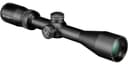 Vortex Crossfire II 3-9x40 The right answer for most deer hunters The default budget deer scope, and it earns the title. 3-9x40 is the magnification range that covers 95% of whitetail shots, and the VIP warranty means a scope that fails on a hunt gets replaced without an argument. | 3-9x40 · SFP | 9.1/ 10 | $128.99View on Amazon Price as of November 22, 2026. #ad How we’re funded |
| 2 | 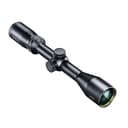 Bushnell R3 3-9x40 Same range, better low-light glass The low-light pick of the group. Bushnell's HD optical system and EXO Barrier lens coating are features that used to live two price brackets up, and IPX7 means a soaking rain is a non-event. | 3-9x40 · HD | 8.9/ 10 | |
| 3 | 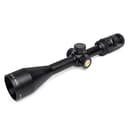 Athlon Optics Talos 6-24x50 Only if you genuinely hunt open country The one here for open country. Twenty-four power, a 50 mm objective and an illuminated MIL reticle give you a real aiming solution past 300 yards, which no 3-9x on this page can offer at any price. It is also the most magnification anyone on a budget actually needs, and then some. | 6-24x50 · lit | 8.6/ 10 |
Frequently asked questions
What power scope is best for deer hunting?
A 3-9x40 for the large majority of deer hunters. The 3x bottom end gives you a wide enough field of view to find a deer at twenty yards in timber, and 9x is enough magnification to place a shot carefully at 300 yards, which is further than most deer are shot. It is also the most common configuration in the budget market, which means the best glass per dollar lives there. Buy more magnification only if you can name the open-country hunt that needs it.
Is a 3-9x40 scope enough for 300 yards?
Yes. At 9x a deer-sized target at 300 yards appears roughly the size it would to the naked eye at about 33 yards, which is more than enough sight picture to place a shot in the vitals. What limits a 300 yard shot is not magnification — it is your rest, your knowledge of the bullet's drop and your ability to read wind. Hunters who miss at that range almost never miss because the deer looked too small.
Do I need a 50 mm objective lens for low light?
Rarely, and it costs you more than it gives. A larger objective gathers more light, but the benefit only shows up at high magnification, and it forces taller rings that raise the scope off the barrel and worsen your cheek weld. A 40 mm objective at 6x or less already delivers an exit pupil larger than a human eye can use in low light. Better glass and coatings do more for last-light performance than a bigger front lens.
What does the second number on a scope mean, like the 40 in 3-9x40?
It is the diameter of the front objective lens in millimeters. The first part, 3-9x, is the magnification range: the image appears three to nine times closer than it does to your naked eye. So a 3-9x40 is a variable scope adjustable from three to nine power with a 40 millimeter objective. A fixed-power scope shows one number instead, like 4x32 — one magnification, no zoom ring to get wrong in a hurry.
Should I leave my scope on the highest magnification?
No, and this is the most common and most costly habit in deer hunting. Leave a variable scope at its lowest setting and only turn it up when you have time. A deer that appears at fifteen yards while you are dialed to 9x fills the view with brown fur and no context — you cannot tell which end you are looking at, let alone find it in the first place. You can always turn the ring up. You can rarely turn it up and then find the animal.
Is second focal plane a problem on a hunting scope?
Not for ordinary deer hunting. In a second focal plane scope, the reticle stays the same visual size while the image zooms, which means any holdover marks or subtensions are only accurate at one specified magnification — usually the top end. For a hunter who zeros at 100 yards and holds dead on inside 250, that never comes up. It matters if you intend to use the reticle to range or hold over at varying magnification, which is a long-range discipline, not a whitetail one.
What magnification do I need for shooting a deer in thick timber?
Less than you have. In heavy cover, shots are usually inside 75 yards and the hard part is finding the animal in the scope quickly, which is a field-of-view problem. A 3x bottom end is already workable, and some timber hunters are better served by a fixed 4x or even a red dot. If most of your hunting is in thick woods, treat the low end of the magnification range as the important number and ignore the top.
Sources
- What Riflescope Magnification Should You Get? — Vortex Optics — Maker guidance by use: Midwestern deer hunting calls for scopes 'relatively low in magnification' such as 3-9x, 2.5-10x or 4-12x for a bigger field of view in thick timber and better low-light performance; 2.5-10x is 'a good minimum out west', with 4-16x or 6-24x for longer work; and 'Get the one that best matches your primary application' (accessed September 18, 2026)
- Choosing Glass to Conquer Midwest Whitetail Country — Vortex Optics — Maker guidance for whitetails: 'you don't need a massive amount of magnification', even Midwest rifle hunting 'tends to take place closer to bow range' than western shots, low-light performance matters for thick forests and first and last light, and the Crossfire II 3-9x40 is named as the performance-and-price option (accessed September 18, 2026)
- Understanding the Numbers on Your Riflescope — Leupold — Manufacturer guide decoding riflescope specs — magnification, objective, turrets and parallax (accessed July 22, 2026)
- Minute of Angle (MOA) — NSSF — Industry explainer of MOA (about 1 inch at 100 yards) with worked scope-adjustment examples (accessed July 22, 2026)
- Answering Questions About Guns, Ammo, and Man's Best Friend — South Carolina DNR — State-agency study by SCDNR deer biologist Charles Ruth on a 4,500-acre coastal-plain club where hunters still-hunted from stands over long, narrow food plots with scoped centerfire rifles: 603 shots for 493 deer, a mean distance of 132 yards for all shots, 127 yards for shots that killed a deer and 150 yards for misses, a difference the study calls significant (accessed September 18, 2026)
Keep reading
Best Budget Rifle Scope
Five hunting scopes from about $100 to $250, ranked on reticle, glass and warranty.
See the rankingsHow to Sight In a Rifle Scope
A zero you can trust in under twenty rounds, and the mistakes that waste a box of ammunition.
Read the guideHow to Mount a Rifle Scope
Most scopes that will not hold zero were mounted badly. Ring height, leveling and torque.
Read the guideBest Budget Deer Rifle
The rifles worth putting one of these scopes on, at live prices.
See the picks