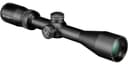
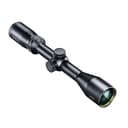
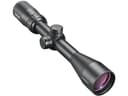
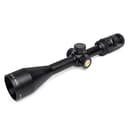
What you are actually buying when you buy the badge
Three things, and only two of them are on the spec sheet.
- American manufacture.Leupold states that it builds riflescopes in Beaverton, Oregon, and that it did more of it in its most recent published year than in any year of its history. That is a real, checkable claim and it is the one thing on this page that money cannot substitute. If buying American is the reason you are shopping Leupold, stop reading — none of these four is that.
- A lifetime guarantee.Leupold frames its products under the heading “BUILT FOR A LIFETIME, GUARANTEED.” This is matchable, and the Vortex VIP warranty is the reason: unlimited, lifetime, transferable, no receipt and no registration. A scope that fails on a hunt gets replaced without an argument, which is the entire practical content of a lifetime guarantee for a hunter.
- Resale value and shop familiarity. Nobody advertises this and everybody relies on it. A used Leupold sells; a used off-brand scope does not. Factor it in if you churn rifles.
What you are notnecessarily buying is a measurable optical advantage at the entry end of the range. The pages we read publish no testing standard, no light-transmission figure and no resolution number, and neither do the budget makers — so nobody on either side of this comparison can hand you a number. Anyone who tells you they measured it in the field is telling you about their eyes, the light and the day.
Magnification: the trap at every price point
The commonest expensive mistake in riflescopes is buying magnification instead of glass, and it is the mistake that makes a budget scope look worse than it is.
3-9x40 is the magnification range that covers the overwhelming majority of real hunting shots, which is why three of the four picks here are exactly that. Leupold’s own explainer on reading scope numbers is a useful place to start if the figures are unfamiliar: the first numbers are the magnification range, the last is the objective diameter in millimetres.
Where that matters for your money: the 6-24x50 Athlon on this page is the most scope here and it is the wrong buy for most hunters. Twenty-four power genuinely helps on prairie, clearcut and bean-field shots, and the illuminated MIL reticle stays visible against dark timber at dusk — but at full magnification the exit pupil shrinks, which makes dusk glassing harder rather than easier. Buy it because you hunt open country, not because it is the biggest number on the page. Our what power scope for deer hunting guide works the arithmetic through.
The specs the budget scopes publish that are worth reading
Two of the four picks here publish features that used to live two price brackets up, and they are the concrete reason to consider them rather than a vague value argument.
- A published waterproof rating.The Bushnell R3 states IPX7 and an EXO Barrier lens coating. IPX7 is a defined, tested standard rather than the word “waterproof,” and it means a soaking rain is a non-event. Most scopes at any price publish no IP code at all.
- A ballistic holdover reticle.Both Bushnells carry DOA-pattern reticles with holdover marks, which is a genuine capability at the Banner 2’s price. The cost is a range session to learn the subtensions before you trust them — and a second-focal-plane reticle’s marks are only true at one magnification, which is a limitation every scope on this page shares.
- A transferable lifetime warranty. Vortex VIP, on the Crossfire II. See above; it is the strongest single argument on this page.
What you give up going cheap on a scope
- Turret repeatability.This is the real one. The Banner 2 carries it as a published reservation — coarser, less repeatable clicks than the Vortex. If you dial elevation for distance rather than holding over, repeatability is the whole point of a turret and it is worth paying for. If you zero once and hold, it barely matters.
- Low-light performance at the margins.Budget glass is good for the money and not sharp enough to stretch past about 300 yards, which the Crossfire II’s own listing says. The last ten minutes of legal light is where the gap shows.
- Illumination. The Banner 2 is non-illuminated, so its reticle disappears first in dim timber. Only the Athlon here is lit.
- Track record. The R3 is a newer line with a shorter history than the Banner or the Crossfire. That is not a defect, it is an absence of evidence.
Spend the saving on rings and a range session
More cheap scopes are blamed for a mount than fail on their own. A scope that will not hold zero is usually a scope in loose rings or on a base that was never torqued to spec, and no amount of glass quality survives that.
Budget for decent rings, a torque wrench or a shop mount, and enough ammunition to actually confirm zero at the distance you intend to shoot. That is where the difference between this page and a Leupold is best spent, and it is the argument our scope mounting guide and sighting-in guide both make. The Athlon’s one-inch tube is worth noting here: it fits the cheap rings you probably already own, which a 30 mm tube does not.
If what you actually want is the cheapest scope that will hunt rather than a Leupold substitute, our full budget riflescope roundup ranks all five scopes we track, and Banner 2 versus Crossfire II is a head-to-head on the two cheapest picks here.