How to Rattle for Deer
Most rattling advice is somebody's hunch. One three-year study published actual response rates by time of day, by volume, by rut phase and by wind - and almost every number argues against how the average hunter rattles.
How this is funded: we earn a commission if you buy through our links, at no extra cost to you. It never changes which product we recommend, and we’ll tell you plainly when we’d skip one. Full disclosure.
Almost everything written about rattling is somebody’s hunch dressed as a technique. There is one real exception: a three-year project run by Texas deer biologist Dr. Mickey Hellickson, in which two-man teams rattled softly and loudly, in long and short bouts, through November and December, with radio-collared bucks monitored to see what the rattler could not. The National Deer Association published a summary with actual percentages attached.
Those percentages are the whole value of this page, because most of them argue against how the average hunter rattles. The headline figure is an overall 65% response rate, and 73% for the collared bucks — which the NDA reads as at least two of every three attempts drawing a response in a population with a balanced buck age structure. Below that headline sit four findings that change the sequence.
Rattle in the morning, not the evening
54% of all responding bucks came between 7:30 and 10:30 am. Afternoon accounted for 30%. Midday managed 16%. That is close to the inverse of how rattling actually gets used, which is as an evening last resort when a sit has gone quiet.
If you only have a handful of mornings this November, spend them on a rattling plan rather than saving the antlers for a slow afternoon. And pick the weather: responses rose as temperature and wind fell, and as cloud cover increased — particularly above 75% cloud cover. A cool, overcast, nearly windless morning is the day. A warm, breezy one is not worth the noise.
Loud wins, by nearly three to one
Loud sequences produced nearly three times more responses than quiet ones. This is the finding most hunters resist, because rattling feels like a thing you should do cautiously. The study says otherwise.
The one concession worth making is on the first sequence: open softly, in case a buck is already inside fifty yards where a full crash would turn him inside out. After that, commit. Mesh the antlers or work the bag hard, and add the rest of the fight — break branches, kick dirt, rake a sapling. A real fight is not a clean percussion solo, and the volume includes everything else two bucks do to the ground around them.
Two or three minutes is the ceiling. Long and short bouts showed no difference in response rate, so rattling for ten minutes buys nothing and costs you the quiet window a buck needs in order to arrive. Put it down, wait seven or eight minutes, and use a soft grunt or a bleatin the gap rather than more antler. The tube you use for that gap matters more in December than in October, because a reed wet with your own breath freezes to the sound board — and of the three grunt calls ranked in our best deer grunt call roundup, exactly one publishes a freeze-resistant design.
Watch the downwind side
60% of all bucks responded initially to the downwind side of the rattling sound. The collared deer showed why: they moved directly downwind to investigate before circling back upwind. A buck coming to a fight still wants to smell it first.
So the setup instruction is specific. Pick a spot where the downwind side is open, visible and shootable, rather than being the thicket at your back. Then keep watching everything, because the other 40% did something else. This is also the point where rattling and glassing discipline overlap: the stretch right after you stop rattling is the only part of a sit where you know something is probably moving toward you.
Get above it, or accept that you will not see half of them
This is the finding that should change where you rattle from. In the study a researcher rattled at ground level while an observer sat in a 30-foot tower, and the ground-level rattler failed to see 57 percent of the bucks the observer could see responding. More than half the deer that came to the antlers were, from the ground, simply invisible.
That is an argument for height, and for a mobile setup that lets you get height wherever the sign is — a saddle and a set of sticks, or a hang-on you can move. Our budget saddle kit roundup covers the cheapest way to do that, and the public-land stand rules guide covers what you are allowed to leave where. If elevation genuinely is not available, pick the longest sightlines you can find and accept that some of what you call in will come and go without you knowing.
Which window you rattle in depends on what you want
The study split cleanly by rut phase, and the two phases serve two different goals.
- Peak rut — best for numbers. Rattling during the peak drew greater than one buck per attempt (108%), across all age groups. If you want to see deer and you have limited days, this is the window.
- As the rut winds down — best for mature bucks. The response rate fell to 55%, but 69% of the bucks that responded were 3½ or older. Fewer deer, older deer. The NDA explicitly recommends this later window for a mature buck.
Timing those windows is local work, not a national calendar. The NDA places the vast majority of breeding in many northern and Midwestern states in the second and third week of November, notes that a doe is in estrus for only 24 to 48 hours, and advises checking your own state wildlife agency for local peak dates — Southern timing varies enormously. Our deer hunting on a budget guide covers planning a season around those dates when you only get a handful of days off.
How many times to try, and when to stop
Three consecutive 10-minute sequences produced gradually decreasing response rates of 44, 34 and 22 percent. Each attempt works less well than the one before it, which is the expected shape — but it does not fall to zero, and that matters.
The collar data makes the case for persistence concrete: four of eleven collared bucks did not react to the first sequence at all and approached on the second, and seven moved closer every time they were within earshot. So a buck ignoring your first sequence is not a buck that heard it and rejected it. Run three sequences, then move. A fourth from the same tree is mostly noise.
One more variable worth knowing, because it cuts against a common fear: higher-scoring bucks responded 67% of the time against 50% for smaller bucks. The deer most likely to be pushed off by aggressive rattling are the ones you were least likely to shoot.
What this costs you
Nothing, if you own antlers. Under the price of a box of slugs if you do not. A netted hardwood rattle bag does the job one-handed, packs flat against a harness, and — unlike two real sheds — travels quietly on the climb, which matters a great deal when the whole strategy depends on getting thirty feet up before first light. Add a grunt tube for the quiet gaps and you have the complete kit for less than most hunters spend on scent control.
The honest caveat on all of the above: this is one study, in Texas, on a managed population with a balanced buck age structure — a condition the NDA ties directly to the high response rates. A heavily-pressured public parcel with few mature bucks is not the same place. The direction of every finding is still the best evidence available on timing, volume, wind and elevation, and all four are free to act on. Our public-land gear list puts calls and rattling gear roughly where we would buy them: after boots, optics and a knife, and before nearly everything else.
The calls this guide earns
Ranked on price-per-performance — the specs that matter divided by what it costs. Select a row to jump to the full write-up. We have not field-tested these — here is exactly what we do instead.
| # | Product | Type / action | Score | Price |
|---|---|---|---|---|
| 1 | 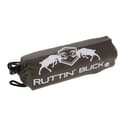 Hunters Specialties Ruttin' Buck Rattling Bag (HS-00181) Best way to rattle without carrying antlers Rattling without carrying a rack. Select hardwood rods in a netted bag reproduce antlers clashing with one hand, and the silencer strap means it does not announce you on the climb — which is the exact reason real sheds are a bad idea in a saddle. For the price of a sandwich it adds the loudest tool in the rut toolbox. | Hardwood bag · one hand | 8.9/ 10 | $15.39View on Amazon Price as of November 22, 2026. #ad How we’re funded |
| 2 | 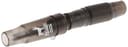 Primos Trophy Grunter 6-in-1 (707) Best call for the quiet gap between sequences The call to own if you are only going to own one. An adjustable reed assembly that covers grunts through bleats, an expandable hose that changes both tone and the direction you throw the sound, and a price low enough that losing it out of a treestand is annoying rather than expensive. Most hunters do not need more call than this; they need more restraint with it. | 6-in-1 · expandable hose | 9.3/ 10 | |
| 3 | 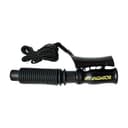 Woodhaven Intimidator Deer Grunt & Snort Wheeze (WH360) Best follow-up for a buck that hangs up The specialist, and the reason to own it is the sound every other budget call skips: a snort-wheeze, available without changing a setting. It is deliberately fixed-tone — not O-ring adjustable — so the buck voice is the same every time you pick it up, and it works on very little air across a whisper-to-very-loud range. | Grunt + wheeze · fixed tone | 8.6/ 10 | $24.99View on Amazon Price as of November 22, 2026. #ad How we’re funded |
Frequently asked questions
Does rattling for deer actually work?
The best published evidence says yes, and gives a number. Dr. Mickey Hellickson's three-year Texas study, summarized by the National Deer Association, recorded an overall 65% response rate - 73% for radio-collared bucks. The NDA's reading is that at least two of three rattling attempts should draw a response in a balanced population. Two caveats matter: this was Texas, with a managed age structure, and the same organization's rut-timing article makes no claims at all about calling, rattling or decoying. We are reporting what one study published, not promising a result.
What time of day is best to rattle for deer?
Morning, by a wide margin. In the study, 54% of all responding bucks came between 7:30 and 10:30 am. Afternoon accounted for 30% and midday just 16%. That makes the first three hours of daylight the window to plan rattling sits around, which is close to the opposite of how many hunters treat it - rattling tends to get used as an evening last resort.
How loud should you rattle?
Loud, after the first sequence. The study found loud rattling produced nearly three times more responses than quiet rattling. The sensible compromise is to open the first sequence softly in case a buck is already within earshot and would be spooked by a crash at close range, then rattle as aggressively as you can on every sequence after that. Adding broken branches and kicked dirt is part of the volume, not decoration.
How long should a rattling sequence be, and how long between them?
Two or three minutes of rattling at most, then seven or eight minutes of silence. The study found no difference in response between long and short bouts, so a longer sequence buys nothing and costs you the time a buck needs to arrive. Use soft grunts or bleats in the quiet gap rather than more antler noise. Three consecutive sequences produced declining response rates of 44, 34 and 22 percent - so a second and third attempt are worth making and a fourth mostly is not.
When in the season is rattling most effective?
Two windows, for two different goals. During the peak of the rut the study recorded greater than one buck per attempt - a 108% response rate - across all age groups, which is the best time for raw numbers. As the rut wound down the response rate fell to 55%, but 69% of the bucks that did respond were 3.5 years old or older. If you want to see deer, rattle at the peak. If you want a mature buck, the post-peak window is the better one. The NDA separately places the bulk of breeding in many northern and Midwestern states in the second and third week of November and advises checking your own state agency for local dates.
Which direction will a buck come from when you rattle?
Downwind, usually. 60% of all bucks in the study responded initially to the downwind side of the rattling sound, and collared bucks typically moved directly downwind to investigate before circling back upwind. Set up so the downwind side is visible and shootable - but keep watching every direction, because 40% did something else.
Do you need real antlers, or is a rattle bag good enough?
A bag is good enough for almost everyone, and better for a mobile hunter. Real sheds do the soft, slow tickle more convincingly, but you have to carry two antlers up a tree and they announce you the whole way. A netted hardwood rattle bag works one-handed, packs flat, and the Hunters Specialties version publishes a silencer strap so it travels quietly - which is the thing real antlers cannot do. The study did not compare antlers against bags, so this is a practicality judgment rather than a research finding.
Will rattling scare deer away?
Outside the pre-rut and rut, often yes. Rattling imitates two bucks fighting, which is a conversation does and young bucks have every reason to avoid. Inside the window it is the loudest and most effective tool you have. The study also found that higher-scoring bucks responded 67% of the time against 50% for smaller bucks, so the deer most likely to leave are the ones you are least likely to shoot anyway. Outside the window, a soft contact grunt is almost always the better choice.
Should you rattle from the ground or from a stand?
From elevation if you can, and the study makes the case quantitatively. A researcher rattling at ground level failed to see 57 percent of the bucks that an observer in a 30-foot tower saw responding. More than half the deer that came in were, from the ground, invisible. If a stand or a saddle is not an option, pick a spot where you can see a long way in several directions and accept that you will miss some of what you called in.
Sources
- 10 Tips for Rattling Bucks — National Deer Association — The deer-management nonprofit's summary of Dr. Mickey Hellickson's three-year Texas rattling study, and the source of every figure on the rattling guide. Two-man teams rattled softly and loudly, in short and long bouts, through November and December, with radio-collared bucks monitored for response. Published findings: an overall "65% response rate (and 73% for collared bucks)"; "The greatest number of bucks (54%) in this study responded between 7:30 and 10:30 am", against 16% midday and 30% in the afternoon; response rose as temperature and wind fell and as cloud cover rose, especially above 75% cloud cover; peak-rut rattling drew "greater than one buck per attempt (108%)" across age groups, while rattling as the rut wound down drew a 55% response of which "69% of responding bucks were 3½ or older"; loud sequences produced "nearly three times more responses than those done quietly"; higher-scoring bucks responded 67% of the time against 50% for smaller bucks; "60% of all bucks responded initially to the downwind side of the rattling sound"; long and short bouts showed no difference, with advice to stop after no more than "two or three minutes" and wait seven or eight; three consecutive 10-minute sequences produced "gradually decreasing response rates (44, 34 and 22%, respectively)"; and a ground rattler paired with an observer in a 30-foot tower "failed to see 57 percent of them". The article ties higher response rates to protecting yearling bucks and a balanced age structure (accessed October 25, 2026)
- Early Rut — National Deer Association — The deer-management nonprofit's guidance on rut timing, which is what decides when a call is worth carrying: "the peak of breeding occurs at approximately the same time every year" in a given area, "the vast majority of breeding takes place the second and third week of November" across many northern and Midwestern states, and hunters should aim "to be in the woods as much as possible during a two to three week period surrounding those peak breeding dates", weighted toward the week before. The article notes a doe "is only in estrus for 24 to 48 hours", that bucks make excursions of several miles at this time, and that some does coming into estrus early produce "a flurry of early chasing or rut activity". It advises checking your state wildlife agency for local peak dates and makes no claims at all about calling, rattling or decoying (accessed October 18, 2026)
Keep reading
Best Budget Deer Calls
The whole cheap calling toolkit - grunt tube, estrus can, rattle bag - ranked on what the makers publish.
See the rankingsDeer Hunting on a Budget
The whole season planned out cheaply, from tags and access to the kit that matters.
Read the guideBest Budget Saddle Hunting Kit
The mobile setup that gets you the elevation this guide says rattling needs.
See the rankingsBest Cheap Trail Camera
Finding out when the bucks are moving, so your rattling lands in the right week.
See the rankings