Blaze & Budget

Best Budget Turkey Calls

Nothing in this category publishes an acoustic spec - no frequency, no volume, no decibel figure, at any price. So we ranked on the job each call does, the material it is made from, how many hands it needs, and whether anyone will honor a warranty.

By Stephen V.Last updated How we rank

If you are buying one turkey call, buy the Primos Ol’ Betsy slate. It runs soft enough for the last forty yards, and a pot call is the only type a beginner can learn in an afternoon. If you are buying a vest, the five calls on this page cover every calling job a spring hunter has.

Turkey calling is where a budget hunter has a real structural advantage, because the expensive end of this market sells craftsmanship rather than capability. A custom crystal pot call at several times the price is a beautiful object. It does not make a sound a gobbler can distinguish from a cheap slate in the hands of the same hunter. Technique is nearly all of it, and technique is free.

What makes this category odd to rank is that no maker publishes an acoustic spec at any price. There is no frequency range, no volume figure, no decibel number anywhere in it. So we ranked on what is published - call type, material, reed count, how many hands it takes, weather tolerance and warranty term - plus the one hard constraint that comes from state agencies rather than makers. We own none of these and claim no field testing. Here is how we rank instead.

How this is funded: we earn a commission if you buy through our links, at no extra cost to you. It never changes which product we recommend, and we’ll tell you plainly when we’d skip one. Full disclosure.

The picks, and the job each one does

Ranked on price-per-performance — the specs that matter divided by what it costs. Select a row to jump to the full write-up. We have not field-tested these — here is exactly what we do instead.

#ProductType / key specScorePrice
1
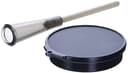
Primos Ol' Betsy Slate Pot Call (PS224)

Primos Ol' Betsy Slate Pot Call (PS224)

Best first call, best value overall

The call to learn on, and the softest-running surface on this page. Primos publishes the surface - "the finest Pennsylvania Slate" - and says plainly that "Slate is the easiest surface to use and produces the purest turkey sounds". A pot call is also the one type where a beginner can hear their own mistakes and fix them in an afternoon, which is why this is the first turkey call we would put in a vest.

Pot call · Pennsylvania slate
9.3/ 10
$11.69View on Amazon

$14.9922% off

Price as of November 22, 2026. #ad How we’re funded

2
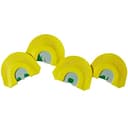
Hunters Specialties H.S. Strut Premium Flex Four Diaphragm Combo, 4-Pack (HS-STR-05930)

Hunters Specialties H.S. Strut Premium Flex Four Diaphragm Combo, 4-Pack (HS-STR-05930)

Best value in hands-free calling

Four named cuts in one pack at a per-call cost in the low single digits, which is the only sane way to buy your first mouth calls - because reed cuts are personal and you will not know which one suits your palate until you have run several. The listing names all four (Li'l Strut, Sickle Cutter, Deuce Cutter, Smokin' Gun), states 2 or 3 ultra-thin reeds each, and publishes a one-year limited warranty.

4 diaphragms · 2-3 reeds each
9.1/ 10
$13.99View on Amazon

Price as of November 22, 2026. #ad How we’re funded

3
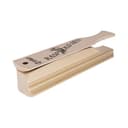
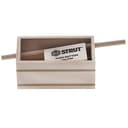
Hunters Specialties H.S. Strut Raspy Old Hen Box Call (HS-STR-100179)

Hunters Specialties H.S. Strut Raspy Old Hen Box Call (HS-STR-100179)

Best for wind and distance

The loud call, and the only one here whose listing names the actual wood on both halves: a solid cherry body CNC-machined from one billet with a maple lid. Box calls carry across a ridge and through wind in a way a slate simply cannot, which makes this the call you reach for at 300 yards and the one you put down at 40.

Box call · cherry body, maple lid
8.9/ 10
$23.83View on Amazon

Price as of November 22, 2026. #ad How we’re funded

4
Hunters Specialties H.S. Strut Push Button Yelper (HS-STR-07056)

Hunters Specialties H.S. Strut Push Button Yelper (HS-STR-07056)

Best one-handed call

The call for the last thirty yards. A push-button yelper runs with one hand and a fingertip, which the listing states plainly - "easily operated with one hand so you can keep the other hand on your gun". Poplar body, select walnut, hand tuned, and a one-year warranty. It is the single best call to hand a new or young hunter, because it makes a passable yelp on the first try.

Push-button · one-handed
8.7/ 10
$17.48View on Amazon

$19.9913% off

Price as of November 22, 2026. #ad How we’re funded

5
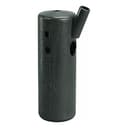
Hunters Specialties H.S. Strut The Hooter Owl Locator Call (HS-STR-06898)

Hunters Specialties H.S. Strut The Hooter Owl Locator Call (HS-STR-06898)

Best locator call

A locator is not a turkey call and it is the one most budget hunters skip, which is backwards: finding a roosted gobbler at grey light decides the morning before any hen sound matters. This one publishes dual tone ports for high and low pitch and - uniquely on this page - a weather claim: "entirely water resistant and won't crack or expand". One year limited warranty.

Barred owl locator · dual tone ports
8.6/ 10
$14.63View on Amazon

Price as of November 22, 2026. #ad How we’re funded

The picks in full

#1Best first call, best value overall9.3/ 10 value

Primos Ol' Betsy Slate Pot Call (PS224)

The call to learn on, and the softest-running surface on this page. Primos publishes the surface - "the finest Pennsylvania Slate" - and says plainly that "Slate is the easiest surface to use and produces the purest turkey sounds". A pot call is also the one type where a beginner can hear their own mistakes and fix them in an afternoon, which is why this is the first turkey call we would put in a vest.

Strengths

  • The type with the shortest learning curve here - a beginner can hear their own mistakes on a pot call and fix them in an afternoon
  • Primos publishes the actual surface material - Pennsylvania slate - rather than just saying "natural"
  • Slate runs soft; soft yelps and purrs are what kill birds inside 40 yards, and a box call cannot whisper
  • Volume is controlled by how hard you run the striker, so one call covers close work and medium range
  • A long-running catalog item (listed release 2010), which means strikers and surface conditioners are easy to find

Trade-offs

  • Slate must stay dry and be scuffed with a conditioning pad - it goes mute in rain, which is its main weakness
  • Needs both hands, so it is the wrong call for the last thirty yards with a bow or a gun already up
  • The listing does not state whether a striker is included, and a pot call without a striker is a coaster
  • No warranty term published
  • No acoustic spec of any kind is published, here or anywhere in this category
Call typeFriction pot call (listing)
SurfacePennsylvania slate (listing)
Hands neededTwo
Weather toleranceNot published
Striker includedNot published
Listed weight0.34 lb (listing)
Model numberPS224 / 224 (listing)
Warranty termNot published

Specs read from the product listing, on November 1, 2026. “Not published” means the maker doesn’t state that figure. The score is our value rating, not a lab test — how we rank.

#2Best value in hands-free calling9.1/ 10 value

Hunters Specialties H.S. Strut Premium Flex Four Diaphragm Combo, 4-Pack (HS-STR-05930)

Four named cuts in one pack at a per-call cost in the low single digits, which is the only sane way to buy your first mouth calls - because reed cuts are personal and you will not know which one suits your palate until you have run several. The listing names all four (Li'l Strut, Sickle Cutter, Deuce Cutter, Smokin' Gun), states 2 or 3 ultra-thin reeds each, and publishes a one-year limited warranty.

Strengths

  • Four different reed cuts in one pack, so you can find the one that fits your mouth instead of guessing
  • The listing names what each cut is for - long-range cutts, loud cutts, broad rasp, and fall kee-kees and tree yelps
  • Hands-free: the only call type you can run with a gun mounted or a bow at full draw
  • States 2 or 3 ultra-thin reeds per call and a "Premium Flex" frame the listing says holds its shape better
  • Describes itself as moisture resistant, and a mouth call is the one type rain cannot silence
  • One-year limited warranty published, which most of this shelf does not do

Trade-offs

  • Mouth calls have the steepest learning curve of any type - weeks, not an afternoon
  • Latex reeds are consumable; they stretch and sour, and these are not a buy-once item
  • Some hunters simply cannot run one - a palate that fights the frame is a real and common problem
  • No reed thickness, latex gauge or stretch figure is published for any of the four
  • The pack is only a bargain if you actually learn the technique; otherwise the pot call is the better $14
Call typeDiaphragm / mouth call (listing)
Calls in pack4 - Li'l Strut, Sickle Cutter, Deuce Cutter, Smokin' Gun (listing)
Reeds per call2 or 3 ultra-thin (listing)
FramePremium Flex (listing)
Hands neededNone
Weather toleranceMoisture resistant (listing)
Reed material / gaugeNot published
Warranty term1 year limited (listing)

Specs read from the product listing, on November 1, 2026. “Not published” means the maker doesn’t state that figure. The score is our value rating, not a lab test — how we rank.

#3Best for wind and distance8.9/ 10 value

Hunters Specialties H.S. Strut Raspy Old Hen Box Call (HS-STR-100179)

The loud call, and the only one here whose listing names the actual wood on both halves: a solid cherry body CNC-machined from one billet with a maple lid. Box calls carry across a ridge and through wind in a way a slate simply cannot, which makes this the call you reach for at 300 yards and the one you put down at 40.

Strengths

  • Loudest type here by design - a box call is what reaches a bird across a hollow or into a stiff wind
  • Names both woods: solid cherry body, maple lid, which is unusual honesty on a sub-$25 call
  • Machined from a single billet rather than glued panels, per the listing, so there is no seam to split
  • One-year limited warranty published
  • Needs no learning curve worth the name - a two-note yelp is achievable on the first morning

Trade-offs

  • Rain is the end of a box call until it dries; the listing publishes no weather claim at all
  • Needs two hands and a wide arm motion, which is exactly the movement a turkey inside 50 yards will catch
  • Hard to run quietly, so it is the wrong tool for the close work that finishes a bird
  • Needs chalk on the paddle rail, which the listing does not say whether it includes
  • Hinge screw tension drifts with humidity, so expect to re-tune it across a season
Call typeFriction box call (listing)
Body materialSolid cherry billet, CNC machined (listing)
Lid materialMaple (listing)
Hands neededTwo
Weather toleranceNot published
Chalk includedNot published
Listed weight0.36 lb (listing)
Warranty term1 year limited (listing)

Specs read from the product listing, on November 1, 2026. “Not published” means the maker doesn’t state that figure. The score is our value rating, not a lab test — how we rank.

#4Best one-handed call8.7/ 10 value

Hunters Specialties H.S. Strut Push Button Yelper (HS-STR-07056)

The call for the last thirty yards. A push-button yelper runs with one hand and a fingertip, which the listing states plainly - "easily operated with one hand so you can keep the other hand on your gun". Poplar body, select walnut, hand tuned, and a one-year warranty. It is the single best call to hand a new or young hunter, because it makes a passable yelp on the first try.

Strengths

  • One-handed, fingertip operation - the only friction call here you can run with a gun already mounted
  • Publishes both woods: poplar body with select walnut, hand tuned
  • Almost no learning curve, which makes it the right first call for a kid or a brand-new hunter
  • Soft clucks, purrs and tree talk are its native register, and that is the calling that finishes birds
  • One-year limited warranty published

Trade-offs

  • Limited range of sounds - it yelps, clucks and purrs, and will not cutt or gobble
  • A friction call in the rain is a quiet call; no weather claim is published
  • The listed item weight of 0.03 lb looks implausible for a hardwood call and we publish it only as listed
  • Spring tension and the rail need occasional chalk and adjustment, neither documented in the listing
  • Quieter than a box call, so it is not the tool for locating a bird across a canyon
Call typePush-button friction yelper (listing)
Body materialPoplar with select walnut (listing)
Hands neededOne
TuningHand tuned (listing)
Weather toleranceNot published
Chalk includedNot published
Listed weight0.03 lb (listing, as published)
Warranty term1 year limited (listing)

Specs read from the product listing, on November 1, 2026. “Not published” means the maker doesn’t state that figure. The score is our value rating, not a lab test — how we rank.

#5Best locator call8.6/ 10 value

Hunters Specialties H.S. Strut The Hooter Owl Locator Call (HS-STR-06898)

A locator is not a turkey call and it is the one most budget hunters skip, which is backwards: finding a roosted gobbler at grey light decides the morning before any hen sound matters. This one publishes dual tone ports for high and low pitch and - uniquely on this page - a weather claim: "entirely water resistant and won't crack or expand". One year limited warranty.

Strengths

  • Does the job no hen call can - pulls a shock gobble from a roosted bird so you know where to set up
  • Dual tone ports for high and low pitch, so one call covers a barred owl's full eight-note rasp
  • The only pick here with a published weather claim: water resistant, will not crack or expand
  • One-year limited warranty published
  • Cheap enough to live permanently in a vest pocket, and it works in the dark without being seen

Trade-offs

  • It does not call turkeys in - it only tells you where one is, so it is never your only call
  • Over-hooting educates birds fast; state guidance is to use locators sparingly and before the season only rarely
  • Takes practice to get a convincing eight-note cadence; a bad owl hoot is worse than silence
  • Useful mainly at first and last light, which is a narrow window for a dedicated purchase
  • No acoustic or volume spec published, as with every call in this category
Call typeBarred owl locator (listing)
Tone portsDual, high and low pitch (listing)
Hands neededOne
Weather toleranceWater resistant, will not crack or expand (listing)
Body materialNot published
Lanyard includedNot published
Listed weight0.35 lb (listing)
Warranty term1 year limited (listing)

Specs read from the product listing, on November 1, 2026. “Not published” means the maker doesn’t state that figure. The score is our value rating, not a lab test — how we rank.

The four jobs, and which call does each one

Turkey calls are not ranked best to worst in any useful sense, because they are not interchangeable. A spring hunt asks four separate questions and the right call is different for each. That is the whole organizing principle of this page.

  • Finding a bird (a locator). At gray light you need to know where a gobbler is roosted before any hen sound matters. An owl hooter pulls a shock gobble and tells you which way to walk. No hen call does this job, and it is the one most budget hunters skip.
  • Reaching across distance (a box call). A box call carries across a hollow and cuts through wind in a way slate cannot. It is loud by design, it is easy to learn, and it is exactly wrong once a bird is close.
  • Working a bird in (a pot call). Soft yelps, clucks and purrs inside 80 yards. Slate runs quieter than any other friction surface and volume is set by how hard you run the striker, so one call covers close work and medium range.
  • Finishing with your hands full (mouth or push-button). The last thirty yards is where friction calls get hunters caught - the arm motion is the movement a turkey sees. A diaphragm needs no hands at all; a push-button yelper needs one finger. Either keeps your gun on your knee where it belongs.

Buy in that order of personal difficulty, not that order of importance. The pot call first because you will actually learn it, then the mouth-call pack because it is the one that puts birds on the ground, then the box call for windy mornings and big timber, then the locator and the push-button yelper as the cheap completions.

The hard rule: a gobble call is for locating, not calling

This is the one piece of turkey-call guidance that is not opinion. The Wisconsin DNR puts it plainly: “Use gobble calls only to locate a tom, not to attract one,” because “Some other hunters might think you’re a turkey.” Imitating a gobbler in the spring woods means imitating the thing other hunters are legally trying to shoot. That is why no gobble call appears on this page.

The same agency guidance is worth reading before you spend anything, because it also constrains how you use the calls that arehere. Wisconsin advises keeping “hands and head camouflaged when calling,” picking a calling site with at least 40 yards of visibility in every direction, and states “Never stalk a turkey, and don’t try to approach closer than 100 yards to a gobbler.” The DNR’s blunt reason for all of it: “Most shooting accidents occur because one hunter mistakes another hunter for the game.”

The Pennsylvania Game Commission adds the legal frame. In Pennsylvania, “Hunters may pursue spring gobblers only by calling birds,” and “It is unlawful, as well as unsafe, to stalk turkeys or turkey sounds.” Calling is not a tactic you may skip in favor of walking one up - it is the method. The Commission also publishes the clothing rule that matters more in turkey season than any other: hunters “should not wear clothing that contains black, like the color found on a turkey’s body,” “or red, white or blue, like those on a turkey’s head,” and in Pennsylvania “there is no requirement to wear fluorescent orange during the spring turkey season.” Our blaze orange roundup covers the fall side of that question, where the rule reverses.

Locators: use them, and use them sparingly

The strongest argument for the one call on this page that is not a turkey call comes from an agency rather than a maker. Pennsylvania’s turkey biologist “limits any preseason calling to using shock calls like owl and crow calls, and even then sparingly,” with the instruction “Just don’t call to those birds to make them reveal themselves.”

Read that carefully, because it says two things. A locator is theright tool for scouting, where a hen call would educate the bird you are hoping to hunt. And even a locator can be overused: hoot at the same roost every evening in March and you teach a gobbler to stay quiet. The Hooter is among the cheapest items on this page, it is water resistant, it publishes dual tone ports for high and low pitch, and it should come out of your vest once or twice a morning at most.

What this category publishes, and what it refuses to

Here is the uncomfortable finding. We went looking for any acoustic data on a turkey call - frequency response, volume at a distance, a decibel figure, anything measurable - and found none, from any maker, at any price point. What the listings do publish is material, and material is a genuine proxy for behavior:

  • Surface, on a pot call.Primos publishes the actual material - “the finest Pennsylvania Slate” - and states that “Slate is the easiest surface to use and produces the purest turkey sounds.” Slate runs soft and raspy. Glass and crystal run louder and higher and need a different striker. Knowing which surface you bought tells you what the call is for.
  • Wood species, on a box call. The Raspy Old Hen names both halves: a solid cherry body CNC-machined from one billet with a maple lid. Harder lid on softer body is the traditional recipe for a two-note yelp, and a single billet has no glued seam to split.
  • Reed count and frame, on a diaphragm.The H.S. four-pack publishes 2 or 3 ultra-thin reeds per call and a “Premium Flex” frame it says holds shape better. More reeds and more stretch means more rasp and more air required.
  • Nothing, on weather.One of the five - the owl hooter - makes a weather claim (“entirely water resistant and won’t crack or expand”). The diaphragm pack says “moisture resistant.” The slate, the box call and the push-button yelper publish no weather claim at all, which matters because rain genuinely silences a friction call.

One more honest note on this page. Four of the five picks are Hunters Specialties. We did not set out to build an H.S. page - that company simply makes most of what is on the under-$25 turkey shelf, and it is also the only brand here that consistently publishes a warranty term (one year limited, on all four). The one non-H.S. pick is the call we recommend first. That is the market, not a preference.

The rain problem, and why one call is not enough

Spring turkey season is a wet season, and this is the practical reason a budget hunter should own two calls rather than one good one. A slate pot call in rain is a coaster: the surface needs to be dry and scuffed with a conditioning pad to grip the striker at all. A box call in rain swells and goes mute until it dries. A push-button yelper has the same problem.

A diaphragm does not care. It lives in your mouth, it works soaking wet, and it needs no hands. That is why the four-pack ranks second on this page despite having the steepest learning curve of any call type here - weeks of practice, not an afternoon, and some hunters simply cannot run one. If you can, it is the call that stays working on the morning everything else quits. If you cannot, carry the slate in a zip bag with its conditioning pad and accept that a hard rain ends your calling.

Setup matters more than the call does

Where you sit decides more hunts than which call you bought, and the agencies are specific about it. Pennsylvania: “Sit against a large stump, tree trunk or boulder that is wider than your shoulders and higher than your head,” which “hides your movement from turkeys and offers protection from other hunters who might approach from the rear.” Wisconsin asks for at least 40 yards of visibility in every direction from a calling site.

If you hunt from a blind instead, Pennsylvania publishes a requirement worth knowing before you buy one: blinds “must completely enclose the hunter on all four sides and from above,” and it is “unlawful to hunt turkeys from blinds made of natural materials such as logs, tree branches and piled rocks.” Our budget ground blind roundup compares the cheap pop-ups on published hub size and window count. Wisconsin adds the decoy rule that catches people out: “Never carry or move an uncovered decoy.” We rank the cheap decoys on pack weight and published specs in best budget turkey decoys, where that rule is the first thing on the page.

And if another hunter turns up on your bird, both agencies say the same thing. Pennsylvania: “If you see another hunter, never move, wave or make turkey sounds,” and “Leave an area if you suspect there’s another hunter already working the same bird.” On public land in spring, that will happen. Our turkey hunting on a budget guide covers finding ground where it happens less.

What we would actually buy

  1. Primos Ol’ Betsy slate. The first call, and for a lot of hunters the only one they ever really need. Softest here, and the shortest learning curve here.
  2. H.S. Strut Premium Flex Four diaphragm pack. Four named cuts for the price of one custom call, because reed cuts are personal and you cannot know which suits your palate until you have run several. Start practicing in the truck in January.
  3. H.S. Strut Raspy Old Hen box call if you hunt big timber, ridges or wind. It is the only call here that reaches 300 yards.
  4. The Hooter owl locator last, and use it twice a morning. It costs about what a box of turkey loads does and it decides where you sit.

The whole set lands in the neighborhood of a single custom pot call at the prices in the ledger above. The combination we would not buy is two friction calls and nothing hands-free - that leaves you making an arm movement at forty yards, which is how most close birds are lost. And no gobble call, at any price, for any reason other than locating.
Check your state’s regulations. Hunting laws vary by state and change year to year — legal calibers, minimum bow draw weights, blaze-orange rules, seasons and treestand requirements included. Confirm the rules with your state wildlife agency before you hunt. Blaze & Budget is written by an enthusiast, not a game warden, and nothing here is legal advice.

Frequently asked questions

What is the best turkey call for a beginner?

A slate pot call, like the Primos Ol' Betsy here. The surface is forgiving, and crucially you can hear your own mistakes and correct them - which is the thing that makes a call learnable in an afternoon rather than a season. The push-button yelper is the other honest answer and is even easier, because it produces a passable yelp on the first try with one finger; it just does fewer things. A diaphragm mouth call is the most capable call in the category and the worst first purchase, because the learning curve runs to weeks and some hunters never get on with one at all.

How many turkey calls do you actually need?

Two, and ideally three. One friction call for working a bird in - a slate pot call is the most forgiving answer - and one hands-free call for the last thirty yards, because that is where the arm motion of a friction call gets hunters caught. The third is a locator, usually an owl hooter, which does a job no hen call does: telling you where a gobbler is roosted before you choose where to sit. A box call is the fourth, bought specifically for wind and distance. All four together cost about what a single custom pot call does.

Are cheap turkey calls any good?

Yes, and this is the category where that is least controversial. No maker at any price publishes an acoustic spec - no frequency range, no volume figure, no decibel number - so there is no measurable performance claim you are declining to pay for. What more money buys is craftsmanship, exotic woods, crystal and glass surfaces, and a custom maker's name. A cheap Pennsylvania slate in the hands of a hunter who has practiced beats a custom crystal call in the hands of one who has not, every time. Spend the difference on practice time and on finding better ground.

Should I use a gobble call for turkeys?

Only to locate a bird, never to call one in. The Wisconsin DNR states it directly: "Use gobble calls only to locate a tom, not to attract one", because "Some other hunters might think you're a turkey." Imitating a gobbler in the spring woods means imitating the one thing every other hunter in earshot is legally trying to shoot. That is why no gobble call appears on this page. A barred owl hooter or a crow call does the locating job with none of the risk, and the Pennsylvania Game Commission's biologist specifically recommends "shock calls like owl and crow calls, and even then sparingly" for preseason work.

Do turkey calls work in the rain?

Diaphragm mouth calls do. Friction calls largely do not. A slate pot call needs a dry surface scuffed with a conditioning pad to grip the striker at all, and a wood box call swells and goes quiet until it dries out. Of the five calls here, only the owl hooter publishes a real weather claim - "entirely water resistant and won't crack or expand" - and the diaphragm four-pack describes itself as moisture resistant. The slate, box call and push-button yelper publish no weather claim at all. If you hunt a wet spring, owning a mouth call is not a luxury.

What is the difference between slate, glass and crystal pot calls?

The surface sets the sound and the volume, and it also sets which striker you need. Slate is the softest and raspiest and the easiest surface to run, which is why Primos says plainly that "Slate is the easiest surface to use and produces the purest turkey sounds" - it is the right first pot call. Glass and crystal run louder and higher-pitched, carry further, and hold up better to damp, but they need a harder striker tip and are less forgiving of a sloppy stroke. For a budget hunter buying one pot call, slate. Add a glass call later if you find yourself wanting more volume than a slate will give.

When should I buy turkey calls for spring season?

Months early, because the calls are not the thing that takes time - the practice is. Published spring structures run from mid-April into early June: Wisconsin's 2027 spring season opens with a youth hunt on April 17-18 followed by six periods running April 21 to June 1. Buying a diaphragm pack in the winter gives you three months of driving-to-work practice before a bird ever hears you, which is exactly what a mouth call needs. It also means you are not buying in the March rush, when the cheap calls are the first thing to go out of stock.

Sources

  • Turkey hunting — Wisconsin Department of Natural Resources — The state agency page that sets the one hard limit on how a turkey call may be used: "Use gobble calls only to locate a tom, not to attract one", because "Some other hunters might think you're a turkey". The DNR adds "Keep hands and head camouflaged when calling", advises a calling site with at least 40 yards of visibility in every direction and a backrest as wide as your shoulders, states "Never stalk a turkey, and don't try to approach closer than 100 yards to a gobbler", says "Never carry or move an uncovered decoy", notes that "Most shooting accidents occur because one hunter mistakes another hunter for the game", and recommends a blaze orange cap or gloves while walking. Season structure published at the time of the fetch: fall 2026 statewide Sept. 12 to Jan. 3, 2027, and spring 2027 opening with a youth hunt April 17-18 followed by six periods, A through F, running April 21 to June 1, with a spring bag limit of "one bearded or male turkey per spring turkey harvest authorization" (accessed November 1, 2026)
  • Calling all turkey hunters — Pennsylvania Game Commission — The state agency statement that calling is not merely a tactic in spring but the legal method: "Hunters may pursue spring gobblers only by calling birds", and "It is unlawful, as well as unsafe, to stalk turkeys or turkey sounds". On locators, the Commission's turkey biologist "limits any preseason calling to using shock calls like owl and crow calls, and even then sparingly", with the instruction "Just don't call to those birds to make them reveal themselves". On clothing: hunters "should not wear clothing that contains black, like the color found on a turkey's body", "or red, white or blue, like those on a turkey's head", and "there is no requirement to wear fluorescent orange during the spring turkey season". On setup: "Sit against a large stump, tree trunk or boulder that is wider than your shoulders and higher than your head", which "hides your movement from turkeys and offers protection from other hunters who might approach from the rear"; blinds "must completely enclose the hunter on all four sides and from above" and it is "unlawful to hunt turkeys from blinds made of natural materials such as logs, tree branches and piled rocks". And on other hunters: "If you see another hunter, never move, wave or make turkey sounds", and "Leave an area if you suspect there's another hunter already working the same bird" (accessed November 1, 2026)

Keep reading