Blaze & Budget

Danner Alternatives

A Danner is a leather boot you resole instead of replace. Four cheaper leather and leather-lined boots, ranked on published insulation - and an honest account of the upkeep a leather boot costs you at any price.

By Stephen V.Last updated How we rank

If you want a Danner alternative that does the same job, buy the Northside Renegade 800 Thinsulate: waterproof leather that laces down for real ankle support with 800 grams of published Thinsulate, which is the classic mid-season formula a Danner hunting boot is built around. If you need the warmest thing here for a December sit, buy the Rocky Sport Pro 1000G — a thousand grams published, from a company that has been making hunting boots for decades. And if the real requirement is miles rather than warmth, the Irish Setter VaprTrek is the light, uninsulated, waterproof leather boot you walk in.

Give Danner its due, because the argument for it is not marketing. A Danner is a boot with a service life: the company runs a repair and resole program and a warranty, which means the purchase is amortised across rebuilds rather than seasons. Nothing on this page offers that. If you hunt eighty days a year and walk every one of them, a resoleable boot is the cheaper boot, and we would not pretend otherwise.

What Danner also publishes, on its own care pages, is the part nobody mentions when they recommend leather: the upkeep. Danner’s waterproofing guidance states that its Waterproofing Spray and Gel “repel water by sitting on the surface of the material rather than being absorbed”, that the gel is for full-grain leather only while the spray suits mixed leather and textile, and that reapplication runs “Every day for heavy use, every few weeks for moderate use, as needed for light use”. Its own published prices for those products on the visit were $13.00 for the spray, $13.00 for the gel and $14.00 for the suede and nubuck conditioner. That is a running cost a rubber boot does not have. Here is how we rank.

How this is funded: we earn a commission if you buy through our links, at no extra cost to you. It never changes which product we recommend, and we’ll tell you plainly when we’d skip one. Full disclosure.

Four cheaper boots, ranked by what they publish

Ranked on price-per-performance — the specs that matter divided by what it costs. Select a row to jump to the full write-up. We have not field-tested these — here is exactly what we do instead.

#ProductType / insulationScorePrice
1
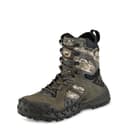
Northside Renegade 800 Thinsulate

Northside Renegade 800 Thinsulate

Best Danner alternative overall

The insulated boot you can actually cover ground in. Waterproof leather with 800 grams of Thinsulate is the classic mid-season formula, and lace-up leather supports an ankle in a way no rubber knee boot does.

Leather, 800g
8.7/ 10
$110.00View on Amazon

Price as of November 22, 2026. #ad How we’re funded

2
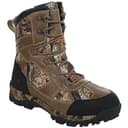
Rocky Sport Pro 1000G Insulated

Rocky Sport Pro 1000G Insulated

Warmest, from a legacy boot brand

The warmest boot we list. A thousand grams is late-season, sit-still, single-digit-windchill territory — the right answer for the December rut sit and the wrong answer for anything else.

Insulated, 1,000g
8.5/ 10
$123.74View on Amazon

$131.246% off

Price as of November 22, 2026. #ad How we’re funded

3
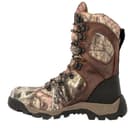
Irish Setter VaprTrek 8" Waterproof

Irish Setter VaprTrek 8" Waterproof

Best for covering ground

A genuinely light, waterproof leather boot you can walk miles in — the do-everything early-season pick. If you only own one pair of hunting boots and you cover ground, this is the smart budget buy.

8" leather, uninsulated
9.1/ 10
$189.95View on Amazon

Price as of November 22, 2026. #ad How we’re funded

4
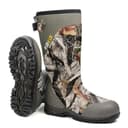
Kalkal 800g Insulated Hunting Boot

Kalkal 800g Insulated Hunting Boot

Cheapest route to 800 grams

800 grams of insulation and a 7 mm neoprene bootie for under $100 is the best warmth-per-dollar number on this page. It is the boot that makes a late-November sit survivable without a $250 receipt.

Rubber, 800g
9.0/ 10
$93.99View on Amazon

$119.9922% off

Price as of November 22, 2026. #ad How we’re funded

The picks in full

#1Best Danner alternative overall8.7/ 10 value

Northside Renegade 800 Thinsulate

The insulated boot you can actually cover ground in. Waterproof leather with 800 grams of Thinsulate is the classic mid-season formula, and lace-up leather supports an ankle in a way no rubber knee boot does.

Strengths

  • Waterproof leather laces down for real ankle support on uneven public ground
  • 800 g Thinsulate is warm without being a late-season-only boot
  • Rubber traction outsole grips wet leaves better than a smooth rubber boot

Trade-offs

  • Leather holds scent in a way rubber does not — a real cost on a pressured deer
  • Needs a break-in period before a long walk-in
Insulation800 g Thinsulate
UpperWaterproof leather
OutsoleRubber traction

Specs read from the product listing, on August 11, 2026. “Not published” means the maker doesn’t state that figure. The score is our value rating, not a lab test — how we rank.

#2Warmest, from a legacy boot brand8.5/ 10 value

Rocky Sport Pro 1000G Insulated

The warmest boot we list. A thousand grams is late-season, sit-still, single-digit-windchill territory — the right answer for the December rut sit and the wrong answer for anything else.

Strengths

  • 1,000 g of insulation is genuinely late-season warm, a published figure
  • Rocky has been building hunting boots for decades — a known quantity
  • Break-Up Country pattern works across most whitetail country

Trade-offs

  • Far too warm for early season — your feet will sweat and then freeze
  • The listing does not state a waterproof membrane, so verify before wet ground
Insulation1,000 g
Camo patternMossy Oak Break-Up Country
Waterproof membraneNot published

Specs read from the product listing, on August 11, 2026. “Not published” means the maker doesn’t state that figure. The score is our value rating, not a lab test — how we rank.

#3Best for covering ground9.1/ 10 value

Irish Setter VaprTrek 8" Waterproof

A genuinely light, waterproof leather boot you can walk miles in — the do-everything early-season pick. If you only own one pair of hunting boots and you cover ground, this is the smart budget buy.

Strengths

  • Very light for a full leather 8-inch boot — easy on all-day hikes
  • UltraDry waterproofing keeps feet dry through wet grass and creeks
  • Scent-control lining and an aggressive lugged outsole

Trade-offs

  • Uninsulated — you will want a rubber or insulated boot for late season
  • Leather needs a break-in period before long miles
Height / material8 in, waterproof leather + nylon
InsulationNone (early-season)
WaterproofYes (UltraDry)

Specs read from the product listing, on September 7, 2026. “Not published” means the maker doesn’t state that figure. The score is our value rating, not a lab test — how we rank.

#4Cheapest route to 800 grams9.0/ 10 value

Kalkal 800g Insulated Hunting Boot

800 grams of insulation and a 7 mm neoprene bootie for under $100 is the best warmth-per-dollar number on this page. It is the boot that makes a late-November sit survivable without a $250 receipt.

Strengths

  • 800 g insulation plus 7 mm neoprene — both figures published, not implied
  • Warm enough for a full cold sit that would end early in an uninsulated boot
  • Under $100 for a genuine late-season boot

Trade-offs

  • Too warm to walk far in above about 40 degrees
  • Kalkal is a newer name — long-term durability is unproven
Insulation800 g
Neoprene thickness7 mm
WaterproofYes

Specs read from the product listing, on August 11, 2026. “Not published” means the maker doesn’t state that figure. The score is our value rating, not a lab test — how we rank.

What you are actually buying when you buy leather

Three things, and only one of them is warmth.

  • Ankle support. A lace-up leather boot tightens around your instep and holds your heel down. A rubber knee boot cannot, which is why rubber boots blister on distance. On broken public ground this is the single biggest argument for leather.
  • Repairability.A stitched leather boot can be resoled. This is Danner’s real differentiator, and none of these four publishes a resole path.
  • Breathability. Leather over a membrane breathes better than solid rubber, which matters on a walk-in and matters not at all on a stand.

And the cost of leather, stated honestly: it holds scent in a way rubber does not, which is a real penalty on a pressured deer, and it needs a break-in period before long miles. The Northside’s own listing says both.

Insulation is the number to shop on

Grams of insulation is the only comparable warmth figure in footwear, and three of these four publish one.

  • Rocky Sport Pro — 1,000 g. The warmest boot we list. Late season, sit still, single-digit windchill. Its listing does not state a waterproof membrane, which is worth verifying before you walk into wet ground.
  • Northside Renegade — 800 g Thinsulate. Warm without being late-season-only, over a waterproof leather upper with a rubber traction outsole. The best-balanced pick here.
  • Kalkal — 800 g plus 7 mm neoprene. Both figures published, at the lowest price of the four. It is a rubber-and-neoprene boot rather than a leather one, which is why it is at the bottom of this page rather than the top: it is the warmth without the ankle support.
  • Irish Setter VaprTrek — none, by design. An uninsulated 8-inch waterproof leather boot with UltraDry and a scent-control lining. This is the early-season and walking boot, and the closest thing on this page to the Danner use case that actually sells the most boots.

Buy the number for the sit, not for the walk. The National Weather Service’s cold-safety guidance is blunt about the mechanism that catches people out: wet clothing strips body heat fast, and the extremities are where you feel it first. A thousand-gram boot on a mile walk-in makes your feet wet from the inside, and then you sit still in them. That is why the 800-gram pick leads this page and the warmest one does not.

The upkeep arithmetic, using Danner's own numbers

This is the part that changes the decision for a budget hunter. Danner publishes a reapplication frequency of daily under heavy use, every few weeks under moderate use, and as needed under light use, for a treatment it prices at $13.00 a bottle. Add a brush and a conditioner and a leather boot has an annual running cost before you consider a resole.

A rubber boot has none. Our boot waterproofing guide walks through the process and the honest frequency, and our rubber versus leather comparison is the page to read before you commit to either material. The decision is almost entirely about how far you walk: under a mile to a stand and rubber wins on scent, price and zero maintenance; ridges and unknown public ground and leather wins on support.

What none of these four publish

A warranty term. A resole or repair program. A published weight. And, on the Rocky, a waterproof membrane — which renders as “Not published” in its spec table below rather than being filled in from assumption.

That is the honest size of the gap. You are not giving up insulation, waterproofing or tread by going cheaper — three of these four publish an insulation number and two publish a named waterproof system. You are giving up the thing that makes a two-hundred-dollar boot a ten-year boot.

Who should still buy the Danner

The hunter who walks every day of a long season, the hunter whose feet only fit one last, and the hunter who would genuinely send a boot back to be rebuilt rather than replace it. For that buyer the resole program is not a luxury, it is the cheaper arithmetic.

For everyone else, the better use of the difference is a second pair of boots for a different job — an insulated rubber boot for cold sits and a light leather boot for walking covers more of a season than one excellent mid-weight boot does. Our budget hunting boot roundup ranks the whole field, the insulated boot roundup covers the warm end on published gram weights, and how to choose hunting boots covers the sizing mistakes that ruin a good boot at any price.
Frequently asked questions

What is a cheaper alternative to Danner hunting boots?

A waterproof leather lace-up with published insulation. The Northside Renegade 800 Thinsulate is the closest match on function - leather upper, laced ankle support, 800 grams published - and the Irish Setter VaprTrek is the lighter uninsulated version for covering ground. Neither offers a resole program, which is Danner's real differentiator.

Why are Danner boots so expensive?

Largely because they are built to be repaired rather than replaced - the company runs a repair and resole path and a warranty, so the cost spreads across rebuilds instead of seasons. For a hunter who walks eighty days a year that is genuinely the cheaper arithmetic. For a hunter who walks eight, it is not.

Do leather hunting boots need waterproofing?

Yes, and Danner's own care guidance is the clearest published statement of how often: every day under heavy use, every few weeks under moderate use, as needed under light use. Its waterproofing products were priced at $13.00 a bottle on its own site. That annual running cost is the hidden price of leather, and a rubber boot has none of it.

Are leather or rubber hunting boots better?

It depends entirely on distance. Under a mile to a stand on flat ground, rubber wins - waterproof by construction, holds almost no scent, zero maintenance. Ridges, unknown public ground or any hunt that moves you around, leather wins on ankle support, because a rubber boot cannot be laced tight and your heel lifts.

How much insulation do I need in a leather hunting boot?

800 grams is the mid-season answer and the one most hunters should buy - warm for a stand sit without being too hot to walk in. A thousand grams is a sit-still, late-season boot and too warm for anything else. Uninsulated is the right call for early season and for any boot you intend to cover miles in.

Will a cheap leather boot last a season?

Expect several seasons rather than a decade, and expect no resole path. None of the four boots here publishes a warranty term or a repair program, so treat them as wearing items. Two pairs for two jobs will serve most budget hunters better than one boot bought to last.

Sources

  • Waterproofing — Danner Care — Boot-maker care guidance: spray suits mixed leather and textile boots, gel is for full-grain leather only, and reapplication runs from daily under heavy use to as-needed under light use (accessed August 19, 2026)
  • Cold Weather Safety — National Weather Service — Federal cold-weather hazard overview — frostbite, hypothermia and wind chill (accessed July 22, 2026)
  • Hunting — US Forest Service — USFS rules for hunting on National Forest System land — state-law compliance and area restrictions (accessed July 22, 2026)

Keep reading