How Fast Should a Crossbow Be for Deer?
Roughly 300 feet per second is enough. Everything above it is a convenience, not a capability — and the arithmetic below shows exactly why the fps figure on the box is the wrong thing to shop on.
How this is funded: we earn a commission if you buy through our links, at no extra cost to you. It never changes which product we recommend, and we’ll tell you plainly when we’d skip one. Full disclosure.
About 300 feet per second is enough for deer, which means every budget crossbow on the market has more speed than the job requires. Shop on the scope, the trigger, the weight and the complete package instead — and if you want the fastest of the cheap bows anyway, the Killer Instinct Burner 415 below is the one that is also the cheapest. Speed is the specification budget crossbow marketing pushes hardest because it is cheap to advertise and impossible for a buyer to check.
That is the verdict. The rest of this page is the arithmetic behind it, because “speed does not matter” is the kind of claim you should not take on trust from a website.
The formula, and what it actually says
Kinetic energy in foot-pounds is:
KE = (arrow weight in grains × velocity²) ÷ 450,240
That is standard external-ballistics arithmetic, not an opinion. Run the three crossbows on this page through it with a 400 grain total bolt weight, which is a normal hunting setup:
| Bow | Advertised fps | 400 gr bolt | 500 gr bolt |
|---|---|---|---|
| Barnett Whitetail Hunter II | ~350 | 109 ft-lb | 136 ft-lb |
| CenterPoint Hellion 400 | 400 | 142 ft-lb | 178 ft-lb |
| Killer Instinct Burner 415 | 415 | 153 ft-lb | 191 ft-lb |
Two things jump out of that table. The first is that the slowest bow here still produces more than a hundred foot-pounds, which is an enormous amount of energy for a broadhead passing through the chest cavity of a 150 pound animal. The second is more useful: bolt weight is a lever on this number that costs almost nothing.Run the arithmetic and a 100 grain heavier bolt buys roughly what 40 extra feet per second buys — the 350 fps bow goes from 109 to 136 ft-lb on a 500 grain bolt, which is the same gain as shooting the 400 grain bolt 40 fps faster. Nobody advertises that, because you cannot print it on a box.
Why the fps on the box is not the fps you get
Advertised crossbow speed is measured with the lightest bolt the maker considers legal for the bow, because that is the number that looks best. Your setup will be slower, and three things make it slower:
- Total arrow weight. The advertised figure usually assumes a light bolt. Add a 100 grain broadhead, a heavier insert and real vanes and you are frequently 20 to 40 fps below the box number.
- String and rail condition.A dry, dirty or stretched string shoots slower than a waxed one. One of the honest weaknesses on the Hellion’s own listing is that its factory strings benefit from a wax-and-tune before the season.
- Measurement standard. Nobody is auditing these numbers. Treat an advertised fps the way you treat an advertised lumen figure: directionally useful, not a specification.
This matters for a practical reason beyond bragging rights. A crossbow scope’s stacked reticle marks are calibrated to a speed. If your real speed is 30 fps below the box, those marks are wrong past about 30 yards, and the only fix is to shoot it and learn where it actually hits — which is the whole point of our crossbow sight-in guide.
What speed actually buys you
Speed is not useless. It is just that its benefits are about forgiveness rather than lethality.
1. A flatter trajectory, which forgives a range error
The real-world benefit of a fast bow is that when you guess 30 yards and the deer is at 37, a flatter arrow still lands in the vitals. That is a genuine advantage and it is the main one. It is also available far more cheaply by removing the guess than by buying speed, because a rangefinder is one of the cheapest items in a crossbow setup. Our rangefinder rankingscover the units that get angle compensation right — the specification an elevated bowhunter actually needs — at today’s live prices.
2. A little more margin on a bad angle
Extra energy helps if you clip a shoulder or take a quartering shot steeper than you meant to. Nobody should be planning around that, but it is a real argument for not buying the slowest bow on the shelf if the price difference is small.
3. Less time for the deer to move
Flight time at crossbow distances is measured in fractions of a second, and a faster arrow spends less of it in the air. The effect is real and small, and it is routinely cancelled out by the fact that faster bows are louder.
What to buy instead of speed
If you have a fixed budget for a crossbow setup, the spending order that produces the most dead deer per dollar is not the order the marketing suggests:
- 1. A rangefinder. Eliminating the yardage guess does more for your hit rate than any speed increase available in this price class.
- 2. Broadheads you chose. A sharp, appropriately weighted, crossbow-rated head is what actually does the killing. Our broadhead rankings and the broadhead weight guide cover the choice, and the fixed versus mechanical comparison covers the design argument.
- 3. String dampeners and wax. A few dollars, and the single biggest change to how the bow behaves in quiet timber. Both Killer Instinct bows we track carry the same honest note: loud without dampeners.
- 4. A target that can stop the bow. Practice volume beats equipment, and a target that eats arrows ends practice.
- 5. More bolts. Two in the box is not a season.
Only after all five of those would we spend money moving from 400 fps to 415. If the faster bow happens to also be the cheaper bow — which, on current live prices, it is — then take the speed for free and spend the savings on the list above.
What the law regulates, and what it does not
Almost no state sets a minimum crossbow velocity for deer, and the reason is practical: a game warden cannot measure feet per second in the field. What states do regulate is measurable — minimum draw weight, maximum or minimum power stroke, broadhead cutting diameter, blade count, and in many places whether a crossbow may be used in an archery season at all. Pennsylvania’s deer-season regulation is a clear published example of the shape this takes, setting a minimum peak draw weight for bows alongside broadhead specifications.
So the equipment question that can actually make your hunt illegal is rarely speed. It is season legality, broadhead dimensions, and in some states a permit requirement. Check your own agency’s current regulations, and check them again the season after a rule change — crossbow rules have been among the most frequently amended in deer hunting over the last decade.
The short version
Anything from about 300 fps up kills deer cleanly inside sensible crossbow range, so the entire budget category qualifies. Bolt weight moves your energy figure more than bow choice does. Advertised speed is measured generously and your real speed will be lower, which is why you must shoot the bow rather than trust the reticle. Buy the complete package that fits your hunting — and if the fastest bow in the class is also the cheapest, which is currently the case, then take it and spend the difference on a rangefinder and better broadheads.
The crossbows this guide earns
Ranked on price-per-performance — the specs that matter divided by what it costs. Select a row to jump to the full write-up. We have not field-tested these — here is exactly what we do instead.
| # | Product | Speed | Score | Price |
|---|---|---|---|---|
| 1 | 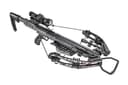 Killer Instinct Burner 415 Fastest per dollar, and our pick A hair faster than the Lethal at 415 fps, and often a hair cheaper. A compact, adjustable-stock package that shoots above its price — our pick if you want the most speed per dollar. | 415 fps | 8.9/ 10 | $319.99View on Amazon Price as of October 20, 2026. #ad How we’re funded |
| 2 | 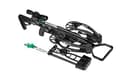 CenterPoint Hellion 400 Best complete kit at 400 fps A 400 fps hunt-ready kit that includes broadheads — a rare touch at this price. CenterPoint's budget line is a lot of crossbow for the money, and the kit gets you truly hunt-ready out of the box. | 400 fps | 8.6/ 10 | $493.99View on Amazon Price as of October 20, 2026. #ad How we’re funded |
| 3 | 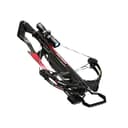 Barnett Whitetail Hunter II Proof that 350 fps is plenty The cheapest way into a legacy crossbow name. Around 350 fps with a lightweight frame and a 4x32 scope — plenty of crossbow for treestand whitetail, from a brand with a long track record. | 350 fps | 8.5/ 10 |
Check your state’s regulations. Hunting laws vary by state and change year to year — legal calibers, minimum bow draw weights, blaze-orange rules, seasons and treestand requirements included. Confirm the rules with your state wildlife agency before you hunt. Blaze & Budget is written by an enthusiast, not a game warden, and nothing here is legal advice.
Frequently asked questions
How many fps does a crossbow need for deer?
Roughly 300 feet per second with a normal hunting bolt is comfortably enough for whitetail-sized game at sensible ranges, and every budget crossbow sold today exceeds it. A 350 fps bow is not a compromise on deer. What higher speed buys you is a flatter trajectory, which forgives a misjudged yardage, and slightly more margin on a heavy-boned shot — not a different outcome on a good broadside hit.
How do you calculate crossbow kinetic energy?
Kinetic energy in foot-pounds equals the total arrow weight in grains multiplied by the velocity in feet per second squared, divided by 450,240. A 400 grain bolt at 350 fps works out to about 109 ft-lb; the same bolt at 400 fps is about 142 ft-lb, and at 415 fps about 153 ft-lb. The formula shows why bolt weight matters as much as speed, and why the advertised fps on the box — measured with the lightest legal bolt — overstates what your setup actually does.
Is 350 fps enough for a crossbow?
Yes, for deer. 350 fps with a standard hunting bolt produces far more energy than is needed to pass a broadhead through both lungs on a whitetail at normal crossbow ranges. The Barnett Whitetail Hunter II is listed at around 350 fps and its own listing describes it as plenty of crossbow for treestand whitetail. The practical limitation on a budget crossbow is almost never speed; it is the included scope, the trigger and the shooter.
Does crossbow speed matter at 40 yards?
Less than it sounds. The difference in arrow drop between a 400 fps and a 415 fps bow at 40 yards is a fraction of the size of your sight picture, and far smaller than the error introduced by guessing the range wrong by five yards. Speed matters most as insurance against misjudged distance, which is why a rangefinder is a better purchase than fifteen extra feet per second.
Do heavier crossbow bolts hit harder?
They carry more energy downrange and penetrate better, and they shoot slower. Because energy scales with the square of velocity but only linearly with mass, a lighter bolt wins the kinetic energy calculation at the muzzle while a heavier bolt holds its energy better over distance and is quieter out of the bow. For deer at crossbow ranges, either works; heavier is the more forgiving choice if you might hit heavy bone.
Do states set a minimum crossbow speed for deer hunting?
Essentially none do. Where states regulate archery equipment for deer, they typically regulate draw weight, power stroke, or broadhead dimensions rather than velocity — Pennsylvania, for example, sets a minimum peak draw weight for bows and specifies broadhead requirements. Velocity is hard to verify in the field, which is why regulations target things a warden can measure. Always check your own state's current rules, because crossbow legality by season varies enormously.
Is a faster crossbow louder?
Generally yes, and it is an underrated trade. More stored energy released faster means more vibration and more noise, which is why fast budget bows commonly ship with the honest suggestion that they need string dampeners. On a close shot in quiet timber, a deer reacting to the shot costs you more than fifteen feet per second gains you. Dampeners are the cheapest upgrade available on any of these bows.
Sources
- 58 Pa. Code § 141.43 (Deer seasons) — State regulation setting a minimum bow draw weight for deer (35 lb peak) and broadhead specs (accessed July 22, 2026)
- The Records Program — Pope and Young Club — Fair-chase records authority for bow-harvested North American big game (accessed July 22, 2026)
- External Ballistics — Hornady Manufacturing — Manufacturer ballistics primer — trajectory, ballistic coefficient and atmospheric effects (accessed July 22, 2026)
- About the Archery Trade Association — The archery and bowhunting industry trade association (established 1953) (accessed July 22, 2026)
Keep reading
Best Cheap Hunting Crossbow
The full field of budget crossbow packages, ranked on speed, kit and live price.
See the rankingsBurner 415 vs Hellion 400
The two live-priced budget packages, head to head, with the kit math.
Read the comparisonHow to Sight In a Crossbow
Why a stacked reticle is only true at the speed your bow actually shoots.
Read the guideWhat Grain Broadhead for Deer?
The weight half of the energy equation, and why 100 grain is the default.
Read the guide