Blaze & Budget

Swarovski Binocular Alternatives on a Budget

Swarovski publishes real numbers for the NL Pure 10x42, so this comparison can be an honest one. Four budget 10x42s against that sheet, and a straight account of what the step down costs.

By Stephen V.Last updated How we rank

The Swarovski alternative to buy is the Celestron Nature DX 10x42, because it is the only binocular we track that publishes a field of view at all — 5.8 degrees, 304 ft at 1,000 yd — which makes it the only one you can actually hold against Swarovski’s 7.6 degrees and 399 ft instead of guessing. If a warranty is the reason you are shopping premium, read the next paragraph twice and then buy the Vortex Diamondback HD 10x42. If you hunt wet weather, the Bushnell Prime 10x42 publishes an IPX7 rating. If you want the most HD glass per dollar, the Athlon Talos G2 HD 10x42 is the one.

Start with the finding that surprised us. Swarovski publishes an excellent spec sheet for the NL Pure 10x42 and a price of $3,199.00, and its delivery block states a “10-year warranty.” Vortex covers the Diamondback HD under the VIP warranty with no time limit at all. So on the one spec a budget buyer most often assumes is the premium brand’s territory, the cheap binocular wins outright — not on glass, not on build, but on the published term of the promise. That is worth knowing before you decide what the extra money is for.

To be clear about what Swarovski is genuinely known for: the NL Pure 10x42 publishes 7.6 degrees of real field, 399 ft of view at 1,000 yds, 91% light transmission, a 20.5 twilight factor under both ISO 14132-1 and DIN 58388, 18 mm of exit-pupil distance, 6.6 ft of close focus, submersion tightness to 13 ft / 4 m, a functional range of -13 to +131 degrees F, and 30 oz of weight. Swarovski deserves credit for stating all of it. Not one of the four budget picks publishes more than two of those figures. That silence is the real subject of this page. Here is how we rank.

How this is funded: we earn a commission if you buy through our links, at no extra cost to you. It never changes which product we recommend, and we’ll tell you plainly when we’d skip one. Full disclosure.

Four budget 10x42s

Ranked on price-per-performance — the specs that matter divided by what it costs. Select a row to jump to the full write-up. We have not field-tested these — here is exactly what we do instead.

#ProductGlass / magScorePrice
1
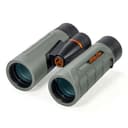
Celestron Nature DX 10x42

Celestron Nature DX 10x42

The only pick that publishes a field of view

A crossover birding/hunting glass with BaK-4 prisms and a wide 5.8-degree field, so it doubles as your scouting and off-season optic. Close focus is its party trick; low-light reach is its limit.

10x42 · 5.8° FOV
8.4/ 10
$169.99View on Amazon

$189.9511% off

Price as of November 22, 2026. #ad How we’re funded

2
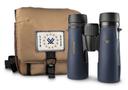
Vortex Diamondback HD 10x42

Vortex Diamondback HD 10x42

Longer published warranty than the original

The budget binocular the rest get measured against. HD glass that holds detail into last light, waterproof, and backed by Vortex's no-questions VIP warranty — the safest first pair a public-land hunter can buy.

10x42 · HD
9.2/ 10
$229.00View on Amazon

Price as of November 22, 2026. #ad How we’re funded

3
Bushnell Prime 10x42

Bushnell Prime 10x42

Best published water rating

IPX7-rated waterproofing and EXO-coated lenses that shed water and dust for around the cheapest a name-brand 10x42 gets. A dependable rain-day glass from a company that has made hunting optics forever.

10x42 · IPX7
8.6/ 10
$149.99View on Amazon

Price as of November 22, 2026. #ad How we’re funded

4
Athlon Optics Talos G2 HD 10x42

Athlon Optics Talos G2 HD 10x42

Most HD glass per dollar

The most binocular per dollar under $150 right now. HD glass and long eye relief in a waterproof body — Athlon is the brand that keeps showing up when hunters compare glass blind rather than by badge.

10x42 · HD
9.0/ 10
$139.99View on Amazon

Price as of November 22, 2026. #ad How we’re funded

The picks in full

#1The only pick that publishes a field of view8.4/ 10 value

Celestron Nature DX 10x42

A crossover birding/hunting glass with BaK-4 prisms and a wide 5.8-degree field, so it doubles as your scouting and off-season optic. Close focus is its party trick; low-light reach is its limit.

Strengths

  • Wide 5.8° field of view makes finding animals in cover easier
  • BaK-4 prisms, fully multi-coated — real optical quality for the price
  • Very close minimum focus — great for glassing and off-season use

Trade-offs

  • Gathers less light at dusk than the HD-glass picks
  • Body is a little bulkier than the Vortex pair
Magnification / objective10x / 42 mm
Field of view5.8° (304 ft at 1,000 yd)
PrismsBaK-4, fully multi-coated

Specs read from the product listing, on July 22, 2026. “Not published” means the maker doesn’t state that figure. The score is our value rating, not a lab test — how we rank.

#2Longer published warranty than the original9.2/ 10 value

Vortex Diamondback HD 10x42

The budget binocular the rest get measured against. HD glass that holds detail into last light, waterproof, and backed by Vortex's no-questions VIP warranty — the safest first pair a public-land hunter can buy.

Strengths

  • HD glass keeps edges sharp in the low light when deer actually move
  • Fully waterproof and fogproof — it will not quit in a November drizzle
  • VIP lifetime warranty: break it, they fix or replace it, no receipt

Trade-offs

  • Not the cheapest here — you pay a real premium over the bargain glass
  • 10x is harder to hold steady than 8x without a rest
Magnification / objective10x / 42 mm
Waterproof / fogproofYes
WarrantyVortex VIP (unlimited lifetime)

Specs read from the product listing, on November 15, 2026. “Not published” means the maker doesn’t state that figure. The score is our value rating, not a lab test — how we rank.

#3Best published water rating8.6/ 10 value

Bushnell Prime 10x42

IPX7-rated waterproofing and EXO-coated lenses that shed water and dust for around the cheapest a name-brand 10x42 gets. A dependable rain-day glass from a company that has made hunting optics forever.

Strengths

  • IPX7 waterproof rating — genuinely built for wet weather
  • EXO Barrier lens coating repels water, oil and fog
  • Among the lowest prices here for a real hunting-grade 10x42

Trade-offs

  • Glass is a step behind the HD and FMC picks in dim light
  • Bushnell Ironclad warranty covers defects, not accidental breakage
Magnification / objective10x / 42 mm
Waterproof ratingIPX7
WarrantyBushnell Ironclad (limited lifetime)

Specs read from the product listing, on July 22, 2026. “Not published” means the maker doesn’t state that figure. The score is our value rating, not a lab test — how we rank.

#4Most HD glass per dollar9.0/ 10 value

Athlon Optics Talos G2 HD 10x42

The most binocular per dollar under $150 right now. HD glass and long eye relief in a waterproof body — Athlon is the brand that keeps showing up when hunters compare glass blind rather than by badge.

Strengths

  • HD glass at a price where most rivals ship plain multi-coated
  • Generous eye relief — comfortable if you wear glasses in the stand
  • Waterproof body, so an all-day rain is not a crisis

Trade-offs

  • Athlon's dealer network is thinner than Vortex's or Bushnell's
  • Focus wheel is stiffer than the Vortex pair out of the box
Magnification / objective10x / 42 mm
GlassHD
WaterproofYes

Specs read from the product listing, on August 11, 2026. “Not published” means the maker doesn’t state that figure. The score is our value rating, not a lab test — how we rank.

The one number you can actually compare

Almost every binocular comparison on the internet compares adjectives. This one gets to compare a number, because exactly one of our four picks publishes a field of view and the original publishes one too.

  • Swarovski NL Pure 10x42: 7.6 degrees real field, 399 ft at 1,000 yds, 70 degrees apparent field. Swarovski also publishes 7.6 degrees for eyeglass wearers — the same figure, which is the quiet flex on that spec sheet.
  • Celestron Nature DX 10x42: 5.8 degrees, 304 ft at 1,000 yd.
  • The other three: not published.

So the gap is real and it is measurable: about a quarter less view at 1,000 yards on the one budget binocular honest enough to state a figure. That is not a rounding error. Field of view is what you are using when you pick up movement in cover and swing to it, and a wider field is genuinely easier to find a deer in. If you have ever glassed a hillside and lost the animal between passes, that is the spec you were fighting.

Here is the part that favors the budget side, and it is arithmetic rather than opinion. Both binoculars are 10x42, so both have a 4.2 mm exit pupil — 42 divided by 10. Swarovski publishes 4.2 mm and so does the maths on every pick here. Exit pupil is the width of the light column reaching your eye, and at dusk your own pupil opens wider than 4.2 mm, which is why every 10x42 ever built gets dimmer at last light. Spending more does not change the arithmetic. It changes how much of the available light survives the glass on the way through, which is what Swarovski’s 91% transmission figure describes. There is no cheap binocular with a published transmission number to compare it against, and we are not going to invent one.

What the step down actually costs you

Four things, in the order they will matter on a hunt.

  • Field of view, measurably. Covered above: about a quarter less view at distance on the one pick that states a figure, and an unknown amount on the other three. This is the clearest honest loss in the comparison.
  • The last ten minutes of light. This is where every binocular argument is really settled, because it is when deer move. Swarovski publishes 91% transmission and a 20.5 twilight factor under two separate standards. No pick here publishes either. What our picks do publish is glass type, and that is a real proxy: the Diamondback HD and the Talos G2 HD are HD glass, which holds contrast into dim light better than plain multi-coated glass; the Nature DX publishes BaK-4 prisms, fully multi-coated, and is the weakest of the four at dusk by its own description.
  • Eye relief, if you wear glasses. Swarovski publishes 18 mm of exit-pupil distance, which is comfortable with spectacles. Not one of our four publishes a figure. The Athlon listing describes its eye relief as generous and the Nikon-badged glass on our main budget binocular roundup does the same, but a description is not a measurement. If you wear glasses and need a guaranteed number, that is a legitimate reason to buy a binocular that publishes one — and it does not have to be a $3,199 one. The Nikon MONARCH M7 publishes 16.5 mm, which we cover in our MONARCH alternatives page.
  • Everything the ratings cover. Swarovski publishes submersion to 13 ft / 4 m with inert gas filling, a functional range of -13 to +131 degrees F and a storage range of -22 to +158 degrees F. The only comparable figure on our side of the page is the Bushnell Prime’s IPX7 — a real rating from a recognized standard, which is why it earns its award here even though its glass is a step behind the HD picks. Nobody cheap publishes an operating temperature range at all.

What you do not give up

Three things, and two of them are more useful than the spec sheet suggests.

The warranty, as published. Swarovski’s product page states a 10-year warranty. Vortex covers the Diamondback HD under the VIP warranty with no stated time limit; Bushnell covers the Prime under Ironclad as a limited lifetime warranty, though Ironclad covers defects rather than accidental breakage, which we say on its card. For a budget hunter the practical question is not “which company is better” but “what happens when I fall on it in year twelve,” and on the published terms that question has a better answer on the cheap side of this page.

The arithmetic. 10x magnification is 10x. A 42 mm objective gathers the light a 42 mm objective gathers. The 4.2 mm exit pupil is identical. None of that scales with price, and it is most of what a binocular does on a whitetail sit where you are glassing 150 yards of timber rather than counting points at a mile.

Close focus, nearly. Swarovski publishes 6.6 ft. The Nature DX’s own listing leads on a very close minimum focus, which is why it doubles as an off-season and scouting optic. On this one spec the budget pick is genuinely competitive with the original, and it is also the spec that makes a hunting binocular useful in August when you are not hunting.

Who should actually buy the Swarovski

We are not going to pretend nobody should. This is a budget site, not an anti-premium one, and there are three buyers for whom the NL Pure is the correct purchase.

  • The hunter who glasses for hours, not minutes. Western open-country work — sitting behind glass on a tripod picking apart a basin at first light — is where transmission and field of view convert into animals found. Swarovski positions the 10x42 as “For people looking for high magnification combined with a moderate weight,” and that is exactly that hunt. If that is your season, buy good glass and a tripod to put it on, because an unsupported 10x is wasted magnification.
  • The buyer who needs to know what they bought. You can compare two Swarovskis on paper. You cannot compare three of our four picks on field of view, because they do not publish one. Paying for documentation is a real thing to pay for.
  • The glasses wearer with a hard requirement. 18 mm of exit-pupil distance, published. If that is a fit problem rather than a preference for you, the number matters more than the price.

For everybody else — and that is most whitetail hunters on public ground, glassing field edges and timber at ranges under 300 yards — the honest answer is that you are buying the top ten percent of a binocular for several times the money, and the budget picks here cover the job. Put the difference into a rangefinder, boots that fit, or more days in the woods, which is the only input on this list that reliably produces deer.

How we chose these four

Every pick is a 10x42 so the comparison is like-for-like against the NL Pure 10x42 — no 8x42 substitutions to flatter a field-of-view number, and no spotting scopes. Each one had to be in stock with a live price on the day, and each had to publish at least one figure that can be set beside a Swarovski figure: a field of view, a water rating, a glass type or a warranty term. Binoculars we track that publish none of those did not make the page.

We also deliberately did not stack this page with the same four picks as the MONARCH alternatives page. That comparison is a step-up Nikon against sub-$150 glass, and the interesting question there is glass quality. This one is a flagship against the bottom of the market, and the interesting question is documentation — which is why the ranking here leads with the one pick that publishes a field of view rather than the one with the best glass. If you would rather skip the brand framing entirely, our best budget hunting binoculars roundup ranks the whole field on its own terms, and how to choose hunting binoculars explains the specs before you shop.

Frequently asked questions

What is a good cheap alternative to Swarovski binoculars?

The Celestron Nature DX 10x42 is our pick, for one specific reason: it is the only binocular we track that publishes a field of view (5.8 degrees, 304 ft at 1,000 yd), so it is the only one you can hold against Swarovski's published 7.6 degrees and 399 ft rather than guessing. If warranty is your reason for shopping premium, the Vortex Diamondback HD 10x42 carries the VIP warranty with no stated time limit, against the 10-year warranty stated on Swarovski's own page.

What makes Swarovski binoculars so expensive?

On its own published figures: 91% light transmission, a 20.5 twilight factor under both ISO 14132-1 and DIN 58388, 7.6 degrees of real field and 399 ft at 1,000 yds, 18 mm of exit-pupil distance, submersion to 13 ft / 4 m with inert gas filling, and a functional range of -13 to +131 degrees F - all for 30 oz. Swarovski also publishes a price of $3,199.00 for the NL Pure 10x42. The honest summary is that you are paying for the last fraction of optical performance plus the documentation to prove it.

Are binoculars comparable to Swarovski at a lower price?

Not on light transmission or field of view - nothing at a tenth of the price publishes a transmission figure, and only one budget binocular we track publishes a field of view at all. But the arithmetic is identical: a 10x42 is 10x42, and the 4.2 mm exit pupil is the same number on both, because it is 42 divided by 10. On a whitetail sit glassing 150 yards of timber, that arithmetic is most of what a binocular does.

Does Swarovski have a lifetime warranty on binoculars?

The NL Pure 10x42 product page states a "10-year warranty" in its delivery block on the visit recorded in our sources. That is a long, specific term and worth having. It is also shorter than the published terms on two of the four budget picks here: Vortex covers the Diamondback HD under its VIP warranty with no stated time limit, and Bushnell covers the Prime under Ironclad as a limited lifetime warranty - though Ironclad covers defects rather than accidental breakage.

Is 10x42 or 8x42 better for hunting?

10x42 reaches further and is harder to hold steady; 8x42 gives a wider field and a steadier image freehand. Both have the same objective, so neither gathers more light - but the 8x42 has a 5.25 mm exit pupil against the 10x42's 4.2 mm, which is why 8x is often the easier binocular at dusk. Swarovski's own positioning of the 10x42 is "For people looking for high magnification combined with a moderate weight", which is a Western glassing hunt. In timber, 8x is usually the better buy.

What should I spend the money on instead?

A rangefinder, boots that fit, and more days in the woods. If you glass for hours rather than minutes, a tripod before better binoculars - an unsupported 10x wastes most of its magnification on hand shake, and a cheap tripod with good-enough glass out-glasses premium glass held freehand. That is the single best value move in hunting optics and it costs a fraction of the gap between these picks and an NL Pure.

Sources

  • NL Pure 10x42 - SWAROVSKI OPTIK — The premium original's own product page, and the source of every Swarovski figure quoted on this site. Published technical data for the NL Pure 10x42 on the visit: magnification 10x, effective objective lens diameter 42 mm, exit pupil diameter 4.2 mm, exit pupil distance (eye relief) 18 mm, field of view 7.6 degrees (and 7.6 degrees for eyeglass wearers), apparent field of view 70 degrees, field of view 399 ft at 1,000 yds, shortest focusing distance 6.6 ft, dioptric compensation plus or minus 4 dpt, diopter correction at infinity 5 dpt, light transmission 91%, twilight factor 20.5 under BOTH ISO 14132-1 and DIN 58388, interpupillary distance 2.2 to 2.9 in, length 6.2 in, width 5.1 in, height 2.8 in, weight 30 oz (listed elsewhere on the same page as "840 g (29.6 oz)"), submersion tightness "13 ft / 4 m water depth (inert gas filling)", functional temperature -13 to +131 degrees F and storage temperature -22 to +158 degrees F. The page's own price is $3,199.00 and its delivery block states a "10-year warranty". In Swarovski's own words the series offers "an enormous field of view all the way to the edges", with a "wasp waist" so "each optical device sits ergonomically in your hand", and "For distortion-free images, SWAROVSKI OPTIK has also opted for the SWAROVISION technology for the NL Pure 10x42. The innovative field flattener lenses offset the lens curvature to provide razor-sharp images." The page positions the 10x42 as "For people looking for high magnification combined with a moderate weight" and states "133 m (145.5 yds) field of view at a distance of 1,000 m (1,093.6 yds)." The eye-relief figure is published under the row key "exit-pupil-distance-eye-relief-mm", which the page renders as its raw key rather than a translated label - the figure is there, the label is not. Swarovski publishes no prism type and no coating name beyond SWAROVISION on this page (accessed November 15, 2026)
  • Magnification — Basic Information about Binoculars, Nikon — Optics-maker guidance on the cost of power: 'The higher the magnification, the more unstable the image will be due to hand movements', and higher magnification brings a narrower field of view and lower brightness (accessed September 18, 2026)
  • VIP Warranty — Vortex Optics — The maker's own warranty terms, which extend beyond optics: 'If your Vortex product — whether a riflescope, red dot, rangefinder, apparel, or accessory — becomes damaged or defective, we'll repair or replace it at no charge to you.' Described as unlimited, unconditional and lifetime, and stated not to cover loss, theft, deliberate damage, or cosmetic damage that does not hinder performance (accessed September 15, 2026)
  • What are the differences between the optical coatings? — Celestron — Optics-maker definitions of the coating terms: Multi-Coated means 'At least one of the major optical elements in a fully-coated binocular has multiple coatings of anti-reflective compounds on at least one surface', while Fully Multi-Coated means 'All glass surfaces have multiple coatings and it is the best kind' (accessed September 20, 2026)
  • Bushnell Warranty Information — Bushnell — The maker's warranty page: 'Lifetime Warranty: Binoculars, Riflescopes, Spotting Scopes, Laser Rangefinders, Dot Sights, Telescopes, and Non-Electrical Accessories', triggered when 'your product has an issue due to materials or workmanship, we'll repair it or replace it'. The page states no transferability terms, exclusions or numeric definition of lifetime (accessed September 20, 2026)

Keep reading