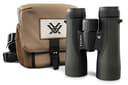
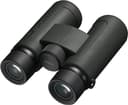
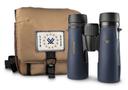
The spec sheets, side by side
Every row below is read from the tracked listing or from the maker’s own published warranty text. Where neither publishes a figure, the table says so instead of filling the gap — a blank is a finding about the product, not a hole in our research.
| Spec | Nikon PROSTAFF P3 | Vortex Crossfire HD | Vortex Diamondback HD |
|---|
| Magnification / objective | 10x / 42 mm | 10x / 42 mm | 10x / 42 mm |
| Stated optical system | Fully multi-coated | HD optical system | HD optical system |
| Waterproof / fogproof | Yes | Yes | Yes |
| Warranty | Nikon limited lifetime | Vortex VIP, unlimited lifetime | Vortex VIP, unlimited lifetime |
| Covers accidental damage | No — defects in material and workmanship | Yes | Yes |
| Receipt required to claim | Not published on the listing | No | No |
| Published field of view | Not on the tracked listing | Not on the tracked listing | Not on the tracked listing |
| Our value score | 8.9 | 9.0 | 9.2 |
Difference 1: the coating claim, and what it is worth
Nikon publishes “fully multi-coated” for the PROSTAFF P3. Vortex publishes “HD optical system” for the Crossfire HD. Those are not the same kind of statement, and the distinction is the most useful thing to understand before spending money in this bracket.
Fully multi-coated is a defined term: every air-to-glass surface in the optical path carries multiple layers of anti-reflective coating. It is the highest of the standard coating grades, and because it is defined, it is checkable against any other brand that uses it. “HD optical system” is a maker’s own label for a package of glass and coating choices. It is not a lie and it is not meaningless — Vortex uses it to separate its better glass from its cheaper glass — but it is not a specification you can compare across brands.
That is why the Nikon is the brighter instrument on paper. In a stand at noon you will not see it. In the fifteen minutes before legal light ends, when a deer is a grey shape against grey brush, a brighter image is the difference between identifying antlers and guessing. If that window is most of your hunting, weight this row heavily. If you glass mostly in daylight, do not.
Difference 2: eye relief, and the glasses problem
The PROSTAFF P3’s listing calls out long eye relief, and that is the one specification on this page that is not a matter of degree. Eye relief is the distance behind the eyepiece at which you still see the full image. Glasses push your eye further back than the binocular assumes, and a short-eye-relief pair gives you a dark ring around the edge of everything you look at. You do not adapt to it. You stop carrying the binoculars.
That makes it a disqualifying spec rather than a preference. A hunter in glasses should buy the Nikon and accept the weaker warranty, because the better-warrantied pair is worth nothing if it lives in the truck. Our guide to choosing hunting binoculars covers the rest of the fit specifications, including why 10x is harder to hold steady than most buyers expect.
Difference 3: the warranty, which is the real gap
Vortex’s VIP warranty is unconditional and transferable: if the product becomes damaged or defective they repair or replace it, with no receipt, no registration and no time limit, and it does not matter whose fault it was. Nikon’s limited lifetime warranty is the conventional kind — it covers defects in material and workmanship. Both are good warranties. Only one of them covers a binocular that fell eighteen feet onto a rock.
For a budget buyer that asymmetry is larger than it looks, because the replacement cost is a big fraction of the original spend. Breaking a $600 binocular is annoying; breaking the $150 pair you saved for ends glassing for the season. The VIP policy is effectively insurance bundled into the purchase price, and it is the main reason the Crossfire HD is our default recommendation here.
It is also why “should I just spend more?” has a specific answer inside this brand. The Diamondback HD carries the identical warranty with better glass — the full breakdown is in Diamondback vs Crossfire, and we would rather see a hunter stretch up to that than downgrade to save twenty dollars.
Who should buy which
- Most budget hunters: Crossfire HD. Same format, same waterproofing, and a warranty that survives a fall out of a saddle. The optical difference is smaller than the risk difference.
- Glasses-wearers: PROSTAFF P3. Long eye relief is not a nice-to-have for you, it is the whole purchase, and nothing else on this page overrides it.
- Hunters who live in the first and last ten minutes: PROSTAFF P3, or stretch to the Diamondback HD. Fully multi-coated glass is a real advantage in the only light that decides a lot of hunts.
- Hunters who are hard on gear: Crossfire HD.Public land, saddle hunting, long pack-ins — the VIP warranty is the most valuable line on the spec sheet and it is not close.
- Anyone buying one pair for the next decade: Diamondback HD. It is the one here we would still be happy with in five seasons, and the warranty makes that a safe bet rather than a hope.
What neither of them fixes
Both are 10x, and 10x is harder to hold steady than most buyers expect. Handheld at full magnification your pulse is visible in the image. That is not a defect in either binocular and no amount of money in this bracket solves it — a rest does. The cheapest meaningful upgrade to either pair is not a better pair; it is a cheap glassing tripod or simply bracing against a trunk, and it buys more detail than the step from one of these to the other.
Neither listing publishes a field-of-view figure, which is the spec we would most want for timber glassing, where finding the animal matters more than resolving it. We mark that unpublished rather than quoting a number off a retailer spec sheet that may describe a different variant. If a wide field is your priority, that is an argument for 8x over either of these.