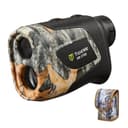
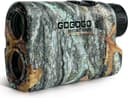
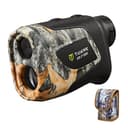
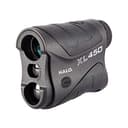
Angle compensation is the only feature you cannot skip
Here is the arithmetic, because it is the whole reason this feature exists. Sit 20 feet up a tree and range a deer at 30 yards along the line of sight. The arrow does not travel 30 yards of gravity-affected flight — it travels the horizontal distance, which is shorter. Shoot the line-of-sight number and you hit high. The steeper the angle and the closer the animal, the worse the error gets, which is exactly the shot a saddle or treestand hunter takes most often.
An angle-compensating rangefinder does that correction for you and displays the number you should actually dial or hold for. All four picks on this page publish it — TIDEWE calls it ARC, Gogogo calls it slope, Halo calls it Angle Intelligence. Any rangefinder under $100 that does not state angle compensation is not a cheaper option; it is the wrong tool for a bowhunter, and we would not put it on this page at any price.
Max range is the number you should care about least
It is the figure printed largest on every box and it is close to meaningless for hunting. The published ceilings here run from 450 yards to 1,200, and the honest spread of practical difference between them is small, for two reasons.
- Those numbers are reflective-target figures. They are measured against something flat, bright and square to the beam. A deer standing in a bean field is none of those. Expect roughly half to two-thirds of the printed number on an animal, which is why both TIDEWE entries carry the same honest con: soft targets at the far end of the range get inconsistent.
- Hunting shots are short.A 450-yard ceiling covers every bow shot ever taken and every timber rifle shot. Where reach genuinely matters is open-country glassing — ranging a bedded animal across a canyon to decide whether a stalk is worth three hours — and for that the 1,000-yard TIDEWE or the 1,200-yard Gogogo are worth the few dollars.
If you are ranging a target rather than an animal, the calculus changes and the ceiling becomes the spec. Our hunting versus golf rangefinder comparison covers why the golf-first units on this page have busier menus, and what that costs you at first light.
Battery type is the spec that will annoy you
Three different answers among four picks, and the difference shows up at 5 a.m. rather than on the spec sheet.
- USB-rechargeable (both TIDEWE units). No odd battery to source, and you top it up with the same cable as your phone. The failure mode is a flat unit with no fix in the field, so charge it the night before every hunt and accept that.
- CR2 (Gogogo GS03). A real battery you can carry a spare of, but CR2 is not a cell your local store stocks. Buy two with the unit.
- 9V(Halo XL450). Bulkier than the alternatives, and it makes the unit bigger in a bino harness pocket — but it is a battery every petrol station on the way to the woods sells, which on a week-long trip is worth something.
What the ceiling actually costs you
Three things, and one of them is worth knowing before you buy.
- Display legibility in bright light.This is the real one. The 1,000-yard TIDEWE carries it as a published reservation — the display can wash out in bright midday sun. Budget units use black LCD readouts rather than the illuminated red displays premium units use, and a black number against a sunlit field is hard to read. It is a non-issue at dawn and dusk, which is when you are hunting.
- Glass and ranging speed.6x glass at this price is adequate rather than good, and acquiring a small animal in a narrow field of view takes longer. If your rangefinder is also your glassing optic, that is a problem — buy a cheap binocular instead and keep the rangefinder for ranging.
- Interface polish. The Gogogo is a golf-first unit with golf-first menus, which take a minute to learn for hunting use. The Halo is the opposite: one-button operation, which is the right design when your hands are cold and the light is bad.
Nothing on that list is a reason to spend $300. The step-up unit in our full budget rangefinder roundup buys you better glass and a brighter display, and that is an honest upgrade — but it is a comfort upgrade, not a capability one.
Buy the rangefinder before the better scope
If you are building a kit from nothing, a sub-$100 rangefinder is one of the highest-value purchases on this entire site, and it beats upgrading a scope. The reason is simple: misjudging distance is the most common cause of a bad hit, and it is the one error a cheap device eliminates completely. No amount of glass quality fixes a 25-yard guess that was really 38.
That is especially true for bowhunters, where a ten-yard error is the difference between a lung shot and a gut shot, and it is the argument our bow hunting on a budget guide makes in full. If you are shooting a rifle, read how to choose a rangefinder for the scan-mode and target-priority settings that matter in timber.