The one real difference: first target vs distant target
A laser rangefinder does not send back one clean reading. It sends a beam that spreads as it travels, and that beam hits everything in its path. At 200 yards a typical beam is wide enough to cover a deer, the brush in front of it and the treeline behind it all at once. The unit gets multiple returns and has to decide which one to show you.
Golf rangefinders are built to ignore the near return. The whole design problem in golf is that the flagstick is a thin pole standing in front of a big, highly reflective tree line, and the player wants the flag. Golf units therefore bias hard toward the small, isolated target and lock onto the pin rather than the trees. Many advertise this as pin-seeking or flag-lock, sometimes with a vibration when they find it.
Hunting rangefinders are built the other way. A deer standing in front of timber is the near return and the timber is the far one, so hunting units default to first-target priority and take the nearest thing that gives a signal. Better ones let you switch to distant-target priority for the case where the animal is standing behind tall grass or a screen of saplings.
Put a golf unit on a deer at the edge of a field and the failure mode is specific: it can skip the animal and hand you the range to the trees forty yards behind it. It will not tell you it did that. The number will be crisp, instant and forty yards long, and at bow range forty yards long is a clean miss over the back.
Slope vs angle compensation: the same math, a different name
Both categories solve the elevation problem, and they solve it identically. Gravity acts over the horizontal distance a projectile travels, not the diagonal line from your eye to the target. Shooting downhill from a treestand or uphill on a golf course, the line-of-sight number is longer than the number you should hold for.
Golf calls this slope. Hunting calls it angle compensation, ARC, or angle range compensation. It is the same trigonometry, and a slope-enabled golf rangefinder will give a bowhunter a perfectly correct shoot-to-this number from twenty feet up a tree. This is the part where the golf unit genuinely works.
Two cautions. First, golf units frequently let you disable slope for competition play, and the toggle is not always obvious — check which mode you are in before you trust a number in a stand. Second, some golf-specific compensations blend in assumptions about ball flight rather than reporting a pure horizontal distance. Read what the maker says it is calculating. We cover why this matters at bow range in our rangefinder buying guide.
Where golf units genuinely beat hunting units
- Glass and display. Golf buyers use the device standing in bright daylight and notice a poor image immediately. That pressure produces better monoculars and brighter, more legible displays than equivalently priced hunting units.
- Speed of acquisition. Pin-seeking algorithms are fast because a golfer will not wait. That speed carries over.
- Build and price. Volume drives both. A used golf rangefinder is one of the genuinely underpriced things on the used market.
Where hunting units win, and it is not subtle
- Target priority set for animals, not flags. The whole argument, above.
- Low-light display. Hunting happens in the first and last thirty minutes of legal light. A black LCD readable against a bright fairway can vanish against dark timber. Hunting units are far more likely to offer a red or illuminated display.
- Scan mode.Sweeping continuously across an animal and watching the numbers change is how you tell the deer’s range from the brush’s range. Golf units often fire single shots at a static target instead.
- Camo, weatherproofing and grip. Minor, but a black gloss body catching morning light in a treestand is not nothing.
So can you hunt with a golf rangefinder?
Yes, with two conditions, and they are worth stating precisely because the honest answer is not a flat no.
Condition one: range the ground, not the animal. This is how experienced hunters use a rangefinder anyway. When you settle into a stand, range the landmarks — the fence post, the big oak, the edge of the shooting lane — and memorize them. When a deer steps out you already know the distance because you know where it is standing. Ranging static, isolated objects is exactly what a golf unit is optimized for, so this method sidesteps the entire target-priority problem.
Condition two: confirm your slope mode. Know whether slope is on, know what number it is giving you, and verify it against a known distance before the season rather than at full draw.
What we would not do is spot a deer in the open and expect a golf unit to pick it cleanly out of the treeline behind it. That is the one job it was designed not to do.
The budget verdict
If you already own a golf rangefinder with slope, hunt with it this season. Use it to pre-range landmarks, spend nothing, and put the money into binoculars, which you will use a hundred times more often.
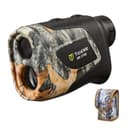
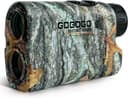
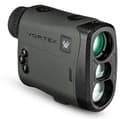
If you are buying from scratch, buy a hunting unit. The price difference at the budget end is small, angle compensation is available well under $100, and you get first-target priority and a usable low-light display without having to think about any of this again. The three units in the table above are where we would put the money, and the full field is in our budget rangefinder roundup.