Blaze & Budget

Best Replaceable Blade Hunting Knife

Snap in a fresh blade instead of sharpening a dull one. Three replaceable-blade knives ranked on rigidity and blade length - and an honest account of the joints they will not get through.

By Stephen V.Last updated How we rank

The Outdoor Edge RazorLite is the replaceable-blade knife to buy: a 3.5-inch blade in a rigid blade lock, which is the one thing that makes a disposable edge behave like a real knife rather than a scalpel handle. If you want the cheapest honest version of the idea, buy the Gerber Vital Pocket — a 2.8-inch folding blade on a pocket clip, light enough to live in a glovebox as a backup. And if the job is caping or fine skinning rather than general field dressing, the Havalon Piranta-Z and its surgical #60A blades do detail work nothing else here touches.

The pitch for this whole category is simple: a replaceable-blade knife is sharp on the day you need it, every time, because you never sharpen it — you snap the dull blade out and a fresh one in. For most budget hunters that solves a real problem. Sharpening is a skill, a dull knife makes field dressing slower and more dangerous, and a hunter who dresses two deer a year never builds the skill in the first place.

The honest counterweight is on the same page: every blade here is thinner than a fixed blade’s, every one of them flexes on a heavy joint, and the Havalon’s blades will snap if you pry with them. Prices come from the live price layer with the date they were read. We own none of these knives. Here is how we rank instead.

How this is funded: we earn a commission if you buy through our links, at no extra cost to you. It never changes which product we recommend, and we’ll tell you plainly when we’d skip one. Full disclosure.

Three replaceable-blade knives, ranked

Ranked on price-per-performance — the specs that matter divided by what it costs. Select a row to jump to the full write-up. We have not field-tested these — here is exactly what we do instead.

#ProductBladeScorePrice
1
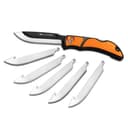
Outdoor Edge RazorLite (replaceable blade)

Outdoor Edge RazorLite (replaceable blade)

Best replaceable-blade knife overall

Never sharpen a knife again. Snap in a fresh surgical blade when the old one dulls mid-field-dressing. For hunters who hate sharpening, this is the pick — and it locks solid, unlike a bare scalpel.

3.5" replaceable
8.8/ 10
$29.99View on Amazon

$34.9914% off

Price as of November 22, 2026. #ad How we’re funded

2
Havalon Piranta-Z

Havalon Piranta-Z

Best for caping and fine skinning

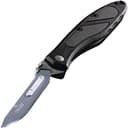
The caping and skinning specialist. A scalpel-sharp #60A blade that turns detail work — capes, small game, tight joints — into surgery. Pair it with a stouter knife for the heavy stuff.

2.75" replaceable
8.6/ 10
$53.99View on Amazon

Price as of November 22, 2026. #ad How we’re funded

3
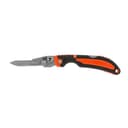
Gerber Vital Pocket Knife

Gerber Vital Pocket Knife

Cheapest that works

A folding, pocket-clip take on the replaceable-blade idea — the RazorLite's more packable cousin. Great as a lightweight backup or the primary for hunters who want a folder that stays scary-sharp.

2.8" replaceable
8.4/ 10
$37.00View on Amazon

$49.9926% off

Price as of November 22, 2026. #ad How we’re funded

The picks in full

#1Best replaceable-blade knife overall8.8/ 10 value

Outdoor Edge RazorLite (replaceable blade)

Never sharpen a knife again. Snap in a fresh surgical blade when the old one dulls mid-field-dressing. For hunters who hate sharpening, this is the pick — and it locks solid, unlike a bare scalpel.

Strengths

  • Always-sharp replaceable blades — no sharpening, ever
  • Locks rigid like a real knife, unlike bare scalpel handles
  • Comes with spare blades to start

Trade-offs

  • You keep buying replacement blades over time
  • Replaceable blades are thinner and can flex on heavy joints
Blade3.5 in replaceable
LockRigid blade lock
IncludedSpare blades + clip

Specs read from the product listing, on July 22, 2026. “Not published” means the maker doesn’t state that figure. The score is our value rating, not a lab test — how we rank.

#2Best for caping and fine skinning8.6/ 10 value

Havalon Piranta-Z

The caping and skinning specialist. A scalpel-sharp #60A blade that turns detail work — capes, small game, tight joints — into surgery. Pair it with a stouter knife for the heavy stuff.

Strengths

  • Surgical #60A blades are unmatched for fine detail work
  • Very light; disappears in a pack
  • Comes with a stack of spare blades and a holster

Trade-offs

  • Delicate blades snap if you pry or hit bone
  • Not a do-everything knife — pair it with a fixed blade
Blade#60A surgical, replaceable
Best useCaping / fine skinning
IncludedSpare blades + holster

Specs read from the product listing, on September 22, 2026. “Not published” means the maker doesn’t state that figure. The score is our value rating, not a lab test — how we rank.

#3Cheapest that works8.4/ 10 value

Gerber Vital Pocket Knife

A folding, pocket-clip take on the replaceable-blade idea — the RazorLite's more packable cousin. Great as a lightweight backup or the primary for hunters who want a folder that stays scary-sharp.

Strengths

  • Exchange-a-Blade system keeps it surgically sharp
  • Folding with a pocket clip — packs smaller than a fixed blade
  • Light and cheap enough for a glovebox backup

Trade-offs

  • Folder is less rigid than a fixed blade on tough joints
  • Thin replaceable blades are not for prying
Blade2.8 in replaceable, folding
CarryPocket clip
SystemExchange-a-Blade

Specs read from the product listing, on July 22, 2026. “Not published” means the maker doesn’t state that figure. The score is our value rating, not a lab test — how we rank.

The spec that separates these three

Blade length is published on all three and it maps directly onto what the knife is for.

  • RazorLite — 3.5 in replaceable, rigid blade lock. The longest blade here and the only one described as locking rigid rather than folding. That is why it is the general-purpose pick: length gets you through a brisket, and rigidity is what stops the blade chattering when you lean on it.
  • Gerber Vital Pocket — 2.8 in replaceable, folding. A folder with a pocket clip on Gerber’s Exchange-a-Blade system. It packs smaller than either of the others, which is the whole argument for it. A folder is less rigid than a fixed blade on a tough joint, and the listing does not pretend otherwise.
  • Havalon Piranta-Z — #60A surgical, replaceable. A 2.75-inch surgical blade on a very light handle, sold with a stack of spares and a holster. Unmatched on capes, small game and tight joints. The same thinness that makes it surgical is why the blades snap on bone.

What the refill blades actually cost you

This is the part the listings bury. A replaceable-blade knife has a running cost that a fixed blade does not: you keep buying blades, and the cheap purchase price is partly a razor-and-cartridge trade. All three ship with spares to start — the RazorLite comes with spare blades and a clip, the Havalon with a stack of blades and a holster, the Gerber on the Exchange-a-Blade system — so the first season is usually covered.

Set against that: the sharpening gear you do not buy, and the hour you do not spend learning to use it. If you would rather own the skill, our knife sharpening guide walks through it with a cheap stone, and the Morakniv Companion in our budget hunting knife roundup is the knife we would hand someone who wants to learn.

Where a replaceable blade is the wrong tool

Three places, and they are predictable:

  • Splitting a pelvis or going through bone.Thin blades flex and then break. Use a saw, or quarter the animal instead — our guide to quartering a deer in the field gets a whole animal off the mountain without touching the pelvis.
  • Prying anything at all. A fixed full-tang blade tolerates a little abuse. None of these do.
  • Working in gloves in the cold with wet hands. Changing a surgical blade with numb fingers is how people cut themselves. Carry a second handle already loaded, or carry a fixed blade as the backup.

The honest answer for most hunters is both: a replaceable-blade knife for the skinning and a cheap fixed blade in the pack for everything that would break it. Our comparison of fixed blade versus replaceable blade knives lays the two systems side by side if you only want to buy one.

Safety, because these are sharper than you expect

A fresh surgical blade is sharper than any knife you have sharpened yourself, and it cuts skin before you feel it. Two habits worth building: change blades before you start rather than mid-carcass with bloody hands, and keep your off hand behind the blade line at all times, because the usual replaceable-blade injury is a cut to the hand holding the hide, not the hand holding the knife.

Dispose of the used blades properly. They go in a sealed container, not loose in a pack pocket where they will find a finger later. The Havalon and RazorLite holsters both have a place for this; use it.

Which one, if you only buy one

Buy the RazorLite. It is the only knife on this page you could hand to someone who has never dressed a deer and expect a good outcome: the longest blade, a lock that holds it rigid, and spare blades in the box. The Havalon is the better knife for a taxidermy cape and the worse knife for everything else, and the Gerber is the one you buy second, to live in the truck. If you want the full field including the fixed blades, start with our budget hunting knife roundup.
Frequently asked questions

Are replaceable blade knives good for hunting?

For skinning and field dressing, yes - a fresh blade is sharper than most hunters can sharpen a knife, and you get that edge every time without owning a stone. They are a poor choice for bone, prying or splitting a pelvis, because the blades are thin and snap rather than bend.

What is the difference between the Havalon and the Outdoor Edge RazorLite?

Blade length and rigidity. The RazorLite runs a 3.5 in replaceable blade in a rigid blade lock, which makes it behave like a normal knife for general field dressing. The Havalon Piranta-Z runs a #60A surgical blade - shorter, thinner and unmatched on capes and tight joints, but delicate enough that it will break on bone.

How often do you change the blade?

When it stops cutting cleanly, which on a whitetail is usually once or twice per animal - more if you hit hair and dirt. The useful habit is starting every animal with a fresh blade rather than deciding mid-job with bloody hands.

Do replaceable blade knives work in cold weather?

The knife does. Your hands are the problem: swapping a surgical blade with numb fingers in gloves is where people cut themselves. Load a fresh blade before you walk in, and carry a cheap fixed blade as the backup so you are never forced to change one in the dark.

Is a replaceable blade knife cheaper than a normal hunting knife?

Cheaper to buy, not free to run. All three here ship with spare blades, so the first season is usually covered, but you keep buying refills. A fixed blade like the Morakniv Companion costs about the same up front and nothing afterwards - the trade is that you have to sharpen it.

Can you use a replaceable blade knife on an elk?

On the skinning and the quartering, yes, with spare blades in the pack - a large animal eats blades faster than a whitetail. Do not try to split the pelvis or the sternum with one. Quarter the animal instead and bone the meat off, which is how most hunters get an elk out anyway.

Sources

  • How to Sharpen a Knife — Morakniv — Maker guidance on knife sharpening: honing realigns an edge without removing steel, stones restore it, and hunting and outdoor knives are ground to roughly a 23-35 degree total edge angle (accessed August 19, 2026)
  • Field Care of Game — Texas Parks and Wildlife Department — The state agency's hunter-education guidance on meat care: "The three factors that can spoil meat through the spread of bacteria are: heat, moisture and dirt"; field dressing should happen soon after the harvest because "This first step begins the cooling down of the meat"; and while water helps clean off excess blood, "moisture is one of the factors which contribute to bacteria growth, so dry the animal off well". No temperature figures are published on the page (accessed October 11, 2026)
  • Hunting — US Forest Service — USFS rules for hunting on National Forest System land — state-law compliance and area restrictions (accessed July 22, 2026)

Keep reading