Blaze & Budget

Best Hunting Earbuds

Buds instead of muffs: nothing on your head to catch a bowstring, nothing to push off a stock. Five electronic hunting earbuds ranked on the Noise Reduction Rating each maker is willing to publish.

By Stephen V.Last updated How we rank

Buy the Caldwell E-MAX Shadows Pro. It is the only bud here whose rating the maker describes as lab certified — 25 dB NRR on custom-sized foam tips — and Caldwell's own product page lists it at $187.99, which is several times what the Amazon listing asks. If you want the cheapest pair that still publishes a real number, the Pro Ears Lightweight Earbuds 28 state 28 dB. If you want the highest published rating on the page, the Walker's Rope Hearing Enhancer states 29 dB on a corded design you cannot drop out of a tree one bud at a time.

This page exists because muffs and buds are not the same purchase. A muff is better protection and better value; a bud is the shape that works when you are drawing a bow, welding a cheek to a stock, or climbing with a pack on. We rank the full field of both — muffs included — in our budget hunting ear protection roundup. This one is buds only.

Every rating below is a figure the maker or the listing publishes, not an estimate. Where a figure is not published the ledger says “Not published,” which in this category is most weights, every warranty term and most water ratings. Prices come from the live price layer with the date they were read. We own none of these and have hunted in none of them. Here is how we rank instead.

How this is funded: we earn a commission if you buy through our links, at no extra cost to you. It never changes which product we recommend, and we’ll tell you plainly when we’d skip one. Full disclosure.

Five electronic hunting earbuds

Ranked on price-per-performance — the specs that matter divided by what it costs. Select a row to jump to the full write-up. We have not field-tested these — here is exactly what we do instead.

#ProductNRR / runtimeScorePrice
1
Caldwell E-MAX Shadows Pro

Caldwell E-MAX Shadows Pro

Best overall earbud

The only bud here whose rating Caldwell describes as lab certified, and the price gap is the story: Caldwell's own product page lists it at $187.99, and the Amazon listing sits at a fraction of that. You are buying a 25 dB NRR foam-tip bud with a charging case for roughly what a pair of electronic muffs costs.

25 dB · 6 h BT
9.2/ 10
$52.99View on Amazon

$79.9934% off

Price as of November 22, 2026. #ad How we’re funded

2
Pro Ears Lightweight Earbuds 28

Pro Ears Lightweight Earbuds 28

Best value, cheapest on the page

The budget answer to “I want buds, not muffs,” and the highest published rating on this page at 28 dB. In-ear protection is the right shape for a hunter rather than a range shooter: nothing on your head to catch a bowstring, nothing to push off a stock, and nothing to take off when you climb.

28 dB · earbuds
8.7/ 10
$52.61View on Amazon

Price as of November 22, 2026. #ad How we’re funded

3
Walker's Rope Hearing Enhancer Earbuds (29 dB)

Walker's Rope Hearing Enhancer Earbuds (29 dB)

Top rating on the page, and hardest to lose

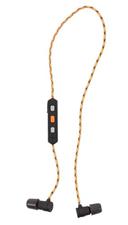
The highest published rating on this page, on a corded design that is the right answer for hunting rather than a compromise. A rope bud hangs around your neck when you pull it out to talk, which means it is still with you at the end of the walk instead of in the leaf litter where a true wireless bud goes.

29 dB · corded
8.7/ 10
$55.42View on Amazon

$74.9926% off

Price as of November 22, 2026. #ad How we’re funded

4
Walker's Suppressor Earbuds

Walker's Suppressor Earbuds

Best published battery and water rating

The most complete spec sheet in this category at anything like a budget price: 25 dB NRR, a 36 hour battery and a waterproof rating, all three published. If you hunt wet, sit long, and want buds rather than muffs, this is the one that will not quit halfway through a weekend.

25 dB · earbuds
8.6/ 10
$96.62View on Amazon

Price as of November 22, 2026. #ad How we’re funded

5
AOC Bluetooth Electronic Shooting Earbuds (26 NRR)

AOC Bluetooth Electronic Shooting Earbuds (26 NRR)

Most published specs

The most complete spec block on the page, and the only listing here that names a test standard and a response time in the same sentence: 26 NRR, ANSI-certified, 8x amplification, under 2 ms response, Bluetooth 5.4. It is also the most expensive bud here, which is the trade — you are paying for the numbers.

26 dB · 8x gain
8.6/ 10
$71.99View on Amazon

$99.9928% off

Price as of November 22, 2026. #ad How we’re funded

The picks in full

#1Best overall earbud9.2/ 10 value

Caldwell E-MAX Shadows Pro

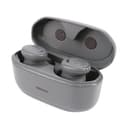
The only bud here whose rating Caldwell describes as lab certified, and the price gap is the story: Caldwell's own product page lists it at $187.99, and the Amazon listing sits at a fraction of that. You are buying a 25 dB NRR foam-tip bud with a charging case for roughly what a pair of electronic muffs costs.

Strengths

  • 25 dB NRR, described by Caldwell as LAB certified — the strongest documentation in this price band
  • Rechargeable storage case with an LED battery-level indicator for each bud, so a flat bud is a visible problem rather than a surprise
  • Multiple earplug sizes in the box, which is the whole game on a foam-tip bud
  • Adjustable ambient-noise gain, so you can wind the woods up on a still morning and back down in wind
  • Caldwell publishes a real spec page for it, with a model number and a stated runtime

Trade-offs

  • 6 hours of Bluetooth runtime is the shortest stated figure on this page — not an all-day sit without the case
  • Caldwell publishes no amplification figure, no Bluetooth version, no IP rating, no weight and no warranty term on the product page
  • Foam tips are a consumable: lose the right size and the published NRR is no longer the rating you are wearing
Noise Reduction Rating25 dB (maker published, described as LAB certified)
TypeElectronic in-ear, foam tips
Bluetooth runtimeUp to 6 hours (maker published)
CaseRechargeable, LED battery level per bud
Amplification figureNot published
IP / water ratingNot published
WeightNot published
Warranty termNot published

Specs read from the product listing, on November 8, 2026. “Not published” means the maker doesn’t state that figure. The score is our value rating, not a lab test — how we rank.

#2Best value, cheapest on the page8.7/ 10 value

Pro Ears Lightweight Earbuds 28

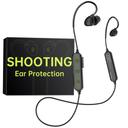
The budget answer to “I want buds, not muffs,” and the highest published rating on this page at 28 dB. In-ear protection is the right shape for a hunter rather than a range shooter: nothing on your head to catch a bowstring, nothing to push off a stock, and nothing to take off when you climb.

Strengths

  • 28 dB protection published on the listing — the highest rating of any pick here
  • In-ear form factor keeps your head clear for a bowstring, a stock and a climb
  • Electronic noise amplification, so you still hear movement in the leaves
  • A dedicated hearing-protection maker rather than a general electronics brand

Trade-offs

  • Corded buds tangle and snag on clothing in a way muffs do not
  • The listing publishes no battery type, runtime or warranty term
  • In-ear fit is far more dependent on your ear canal than a muff is — a poor seal loses most of the rating
Noise Reduction Rating28 dB (listing published)
TypeElectronic in-ear buds
AmplificationElectronic noise amplification (listing published)
Battery / runtimeNot published
Warranty termNot published

Specs read from the product listing, on October 11, 2026. “Not published” means the maker doesn’t state that figure. The score is our value rating, not a lab test — how we rank.

#3Top rating on the page, and hardest to lose8.7/ 10 value

Walker's Rope Hearing Enhancer Earbuds (29 dB)

The highest published rating on this page, on a corded design that is the right answer for hunting rather than a compromise. A rope bud hangs around your neck when you pull it out to talk, which means it is still with you at the end of the walk instead of in the leaf litter where a true wireless bud goes.

Strengths

  • 29 dB on the listing — the highest published figure of the three, and above the 25 dB top pick
  • Omni-directional microphone stated on the listing, so approach noise is not directional
  • Corded rope design cannot be dropped out of a treestand one bud at a time
  • Bluetooth stated, so range commands and a phone call both work without pulling it out

Trade-offs

  • Walker's publishes no battery runtime, no IP rating, no weight and no warranty term for this model
  • The listing states 29 dB without naming the ANSI test, so it is a listing figure rather than a documented certification
  • A cord under a jacket collar is noise — this is not the bud for a bowhunter sitting still in dead calm
Noise Reduction Rating29 dB (listing published)
TypeElectronic in-ear, corded rope
MicrophoneOmni-directional (listing published)
BluetoothStated, version not published
Battery runtimeNot published
IP / water ratingNot published
WeightNot published
Warranty termNot published

Specs read from the product listing, on November 8, 2026. “Not published” means the maker doesn’t state that figure. The score is our value rating, not a lab test — how we rank.

#4Best published battery and water rating8.6/ 10 value

Walker's Suppressor Earbuds

The most complete spec sheet in this category at anything like a budget price: 25 dB NRR, a 36 hour battery and a waterproof rating, all three published. If you hunt wet, sit long, and want buds rather than muffs, this is the one that will not quit halfway through a weekend.

Strengths

  • 25 dB NRR published, alongside a 36-hour battery figure — both stated, which is unusual
  • Waterproof design published, which matters more on a November sit than any audio spec
  • Cordless, so nothing to snag when you draw a bow or shoulder a gun

Trade-offs

  • The most expensive pick on this page by a wide margin
  • 25 dB is a lower published rating than the corded Pro Ears buds
  • Rechargeable means a dead battery is a charge, not a battery swap — plan ahead
  • No warranty term published on the listing
Noise Reduction Rating25 dB (listing published)
TypeCordless electronic in-ear buds
Battery36 hours (listing published)
Water resistanceWaterproof design (listing published)
Warranty termNot published

Specs read from the product listing, on October 11, 2026. “Not published” means the maker doesn’t state that figure. The score is our value rating, not a lab test — how we rank.

#5Most published specs8.6/ 10 value

AOC Bluetooth Electronic Shooting Earbuds (26 NRR)

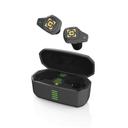
The most complete spec block on the page, and the only listing here that names a test standard and a response time in the same sentence: 26 NRR, ANSI-certified, 8x amplification, under 2 ms response, Bluetooth 5.4. It is also the most expensive bud here, which is the trade — you are paying for the numbers.

Strengths

  • 26 NRR with the listing naming ANSI certification — more documentation than most buds at twice the price
  • 8x sound amplification published as a figure, which is the spec that decides whether you hear a buck in dry leaves
  • Under 2 ms response time stated, so the compression closes before the muzzle blast arrives
  • Bluetooth 5.4 is the newest stated radio on this page

Trade-offs

  • Dearest bud on the page, by enough that two of the alternatives plus a box of foam plugs cost less
  • "Long Battery Life" is a claim, not a number — AOC publishes no runtime hours
  • No published IP rating, no weight and no warranty term, and no brand service history in this category
Noise Reduction Rating26 dB (listing published, stated ANSI-certified)
TypeElectronic in-ear, true wireless
Amplification8x (listing published)
Response timeUnder 2 ms (listing published)
Bluetooth5.4 (listing published)
Battery runtimeNot published
IP / water ratingNot published
WeightNot published
Warranty termNot published

Specs read from the product listing, on November 8, 2026. “Not published” means the maker doesn’t state that figure. The score is our value rating, not a lab test — how we rank.

How we ranked these, and why it is only one number

There is exactly one spec in this category that is comparable across brands: the Noise Reduction Rating, in decibels. Everything else — “8x amplification,” “HD sound,” “long battery life” — is either unmeasured, measured differently by each brand, or simply not a number at all. So the ranking works like this, in order:

  1. Is there a published NRR, and who published it?A figure on the maker's own spec page beats a figure in an Amazon title, and a figure described as lab certified beats a bare claim. All five picks publish one, which is why all five are here and why dozens of listings we looked at are not.
  2. Is there a published runtime?A rechargeable bud with no stated battery life is a bud that might die at 1 p.m. Two of the five publish an hours figure. One publishes the phrase “Long Battery Life” instead, which is not the same thing and we say so on its card.
  3. Is there a published water rating? One of the five states a waterproof design. On a November sit that matters more than any audio spec.
  4. Cost against those three. Our score is a value-per-dollar judgment on compiled specs, disclosed in full at how we rank. It is not a test result. We do not own these.

The ratings on this page run from 25 dB to 29 dB. That is a narrow spread, and it is worth knowing why it is narrow: in-ear protection is limited by the seal in your ear canal, not by the electronics. Which brings us to the thing nobody selling these will tell you.

The published rating is the best case, not your case

An NRR is measured on a correctly fitted tip in a lab. In the real world, a foam tip that is one size too small, pushed in at an angle, or compressed flat after a season in a pocket does not deliver the number on the box. This is the single biggest practical difference between buds and muffs: a muff either sits on your head or it obviously does not, while a bud can feel seated and be leaking.

That is why the Caldwell leads this page rather than the pair with the biggest number. Caldwell ships multiple earplug sizes in the boxand states that “the custom sized foam tips achieve a rating of 25dB NRR” — the rating is explicitly tied to the tip. If the tip is the rating, tips you can actually choose between are worth more than four decibels you probably are not getting.

The stakes are not cosmetic. The National Institute on Deafness and Other Communication Disorders states that “long or repeated exposure to sounds at or above 85 dBA can cause hearing loss,” and that an extremely loud burst of sound can rupture an eardrum or damage the bones of the middle ear — damage that “can be immediate and permanent.” A centerfire rifle is far above 85 dBA. If you shoot a rifle at a bench, double up: plugs under muffs, which is cheap and unambiguous. Buds alone are for the field, where you fire once or twice and need to hear everything in between.

What each pick is actually for

These are five different answers, and the right one depends on how you hunt rather than on which number is biggest.

  • Default buy — Caldwell E-MAX Shadows Pro. Best documentation at a budget price. A 25 dB NRR Caldwell calls lab certified, multiple tip sizes, adjustable ambient gain, and a rechargeable case with an LED battery-level indicator for each bud, so you can see a flat bud before you leave the truck. The catch is the runtime: Caldwell publishes “up to 6 hours of music or phone calls,” which is the shortest stated figure here and not an all-day sit without the case. It publishes no amplification figure, no Bluetooth version, no IP rating, no weight and no warranty term.
  • Cheapest with a real number — Pro Ears Lightweight Earbuds 28. 28 dB published on the listing from a dedicated hearing-protection maker, at the lowest price on the page. In-ear electronic amplification so you still hear movement in leaves. The listing publishes no battery type, no runtime and no warranty term, and the corded form snags on clothing in a way a cordless bud does not.
  • Highest rating, hardest to lose — Walker's Rope Hearing Enhancer.29 dB on the listing, with an omni-directional microphone stated, on a rope design that hangs around your neck when you pull the buds out to talk. For a treestand hunter that is a real feature and not a styling choice: a true wireless bud dropped from 20 feet is gone. Walker's publishes no runtime, no IP rating, no weight and no warranty term, and the listing states 29 dB without naming the test, so treat it as a listing figure rather than a certification. A cord under a jacket collar is also noise.
  • Longest day and wet weather — Walker's Suppressor Earbuds.The only pick that publishes all three of the specs that decide a hunt: 25 dB NRR, a 36-hour battery and a waterproof design. Cordless, so nothing to snag on a draw. It is the dearest of the Walker's pair, its published rating is the joint lowest here, and rechargeable means a dead bud is a charge rather than a battery swap.
  • Most numbers on the box — AOC Bluetooth Shooting Earbuds.26 NRR with the listing naming ANSI certification, 8x amplification, under 2 ms response and Bluetooth 5.4 — more published detail than most buds at twice the money, and the response figure is the one that decides whether the compression closes before the muzzle blast arrives. It is also the most expensive pick here by enough that two of the alternatives plus a box of foam plugs cost less, it publishes no runtime hours behind the phrase “Long Battery Life,” and the brand has no service history in this category.

Buds or muffs, decided honestly

We sell both and we will tell you plainly: if you are buying one piece of electronic hearing protection and money is the constraint, buy a muff. The published ratings are comparable, muffs cost less, the fit is unambiguous, and a muff takes AAA batteries you can replace in the dark.

Buds win on four specific hunts, and they are the hunts most of this site's readers are on:

  • Bowhunting. A muff cup and a bowstring occupy the same space. Nothing else needs saying.
  • Anything with a cheek weld. A fat muff pushes off the stock and lifts your eye out of the scope. Slim muffs help; buds remove the problem.
  • Climbing and walking in. Buds stay in with a pack, a safety harness, a hood and a hat on. Muffs come off and go somewhere, and somewhere is usually not with you when the shot comes.
  • Hard cold with a hood up. A hood over muffs rustles directly against the microphones. Buds under a hood do not.

Where buds lose is the one place it counts most: a range session. If you are sighting in before the opener, muffs over plugs beats any bud on this page, and that is a $20 problem rather than a $60 one. Our rifle-scope sight-in guide is where that session actually happens.

What none of them publish

Worth knowing before you spend, because the gaps are consistent across the category.

Not one of the five publishes a weight. Not one publishes a warranty term. Only one publishes a water rating, and only two publish a battery runtime in hours. Three of the five publish no Bluetooth version or none at all. Nobody publishes a replacement-tip part number, which matters because the tips are the rating and they are a consumable.

What that means in practice: buy from a listing you can return to, keep the case, and treat the tips as something you will replace. And if a listing you find elsewhere publishes no NRR at all, do not buy it. A number a maker will not state is a number you cannot plan a hunt around, and in this category it is the only thing standing between a loud morning and permanent damage. The same logic drives how we handle budget headlamps and what actually belongs in a public-land day pack.

Why there are no cheap earbuds on this page

Because there are none to list. Every electronic in-ear protector we track sits above fifty dollars, which is where the category line currently falls rather than a shortfall in our research. If fifty is the budget, the honest answer is a muff — our ear protection under $50 page ranks the three that clear it on published NRR and reaction time.
Frequently asked questions

What are the best hunting earbuds on a budget?

The Caldwell E-MAX Shadows Pro is our pick: a 25 dB NRR that Caldwell describes as lab certified, multiple foam tip sizes in the box, adjustable ambient gain and a rechargeable case with a per-bud battery indicator. Caldwell's own page lists it at $187.99, so the Amazon price is the reason it leads. The Pro Ears Lightweight Earbuds 28 are the cheapest pair here that still publishes a real rating.

What NRR do hunting earbuds have?

The five on this page publish 25 dB to 29 dB. The Walker's Rope Hearing Enhancer states the highest at 29 dB, the AOC buds state 26 NRR with the listing naming ANSI certification, and the Caldwell and the Walker's Suppressor both state 25 dB. That is a narrow spread because in-ear protection is limited by the seal in your ear canal rather than by the electronics.

Are earbuds or muffs better for hunting?

Muffs are better protection per dollar and the fit is unambiguous, so if you are buying one thing on a budget, buy a muff. Buds win when a muff gets in the way: bowhunting, anything with a cheek weld, climbing with a pack and harness on, or sitting with a hood up in hard cold. For a range session, muffs over foam plugs beats any bud.

Is 25 dB NRR enough for shooting a rifle?

Not on its own at a bench. The National Institute on Deafness and Other Communication Disorders states that long or repeated exposure at or above 85 dBA can cause hearing loss, and that an extremely loud burst can rupture an eardrum or damage the middle-ear bones permanently - a centerfire rifle is far above 85 dBA. For range work, wear foam plugs under muffs. Electronic buds are for the field, where you fire once or twice and need to hear between shots.

Do cheap hunting earbuds publish a battery life?

Mostly not. Of the five here, only the Walker's Suppressor (36 hours) and the Caldwell E-MAX Shadows Pro (up to 6 hours of Bluetooth) publish an hours figure. The AOC listing says "Long Battery Life" without a number, and the Pro Ears and Walker's Rope listings publish no battery data at all. None of the five publishes a weight or a warranty term.

Do earbud tips affect the noise reduction rating?

Yes, and it is the most important practical point on this page. Caldwell ties the rating to the tip in its own wording - the custom sized foam tips achieve a rating of 25 dB NRR. A tip that is the wrong size, seated at an angle, or compressed flat after a season in a pocket will not deliver the published number. Buy a pair that ships with multiple tip sizes and treat tips as a consumable.

Sources

  • E-MAX Shadows Pro - Caldwell — The maker's spec page for our top earbud pick, and the source of its rating, runtime and reference price. Caldwell publishes "The custom sized foam tips achieve a rating of 25dB NRR" and, in the feature list, "LAB certified 25db NRR hearing protection". On runtime: "The E-MAX Shadows Pro connect via Bluetooth to your device for up to 6 hours of music or phone calls", under a "6 HOURS OF RUNTIME" heading. In the box: "an optional magnetic lanyard and a rechargeable storage case that has an LED Battery Level Indicator for each ear bud", plus "Multiple Size Plug Options". Gain is listed only as a feature - "Adjustable Gain, Ambient Noise" and "ADJUSTABLE AMBIENT NOISE" - with no dB figure. The page's own price is $187.99. Caldwell publishes NO amplification figure, NO Bluetooth version, NO IP or water rating, NO weight and NO warranty term on this page (accessed November 8, 2026)
  • Noise-Induced Hearing Loss — National Institute on Deafness and Other Communication Disorders (NIH) — The federal institute's consumer page on noise-induced hearing loss: "long or repeated exposure to sounds at or above 85 dBA can cause hearing loss", a fireworks show is given as 140-160 dBA, and an extremely loud burst of sound "can rupture the eardrum or damage the bones in the middle ear" — "This kind of NIHL can be immediate and permanent" (accessed October 11, 2026)
  • 4 Primary Rules of Firearm Safety — NSSF — The industry-standard core firearm safety rules (accessed July 22, 2026)

Keep reading