Blaze & Budget

Best Hunting Ear Protection Under $50

Under fifty dollars you are buying a muff, not an earbud - and one of the three costs the most while publishing the least. Ranked on the ratings the makers actually state.

By Stephen V.Last updated How we rank

Under fifty dollars, the Walker’s Razor Slim Electronic Muff is the one to buy: Walker’s publishes a 23 dB NRR, a 0.02 second compression reaction time and two high-gain omnidirectional microphones, which is more than almost anything else states at any price. If you want the cheapest protection here that still publishes a rating, buy the PROHEAR — the same stated 23 dB NRR, with 4x amplification quantified instead of the clamp speed.

Now the finding that makes this ceiling worth writing about. Every in-ear electronic protector we track sits above fifty dollars. All five of them. Under this line the category is electronic over-ear muffs, full stop, and no amount of shopping changes it. That is less of a compromise than it sounds for a hunter — muffs cost less per decibel of protection, they run on batteries you can buy anywhere, and the slim-cup designs no longer fight a cheek weld. It is a real compromise if you wear a tight hood or shoot with a scope at an awkward angle.

Every protector here was under $50 on the live price layer when this page was published, and the ledger shows today’s number with the date it was read. We own none of these and have shot with none of them. Here is how we rank instead.

How this is funded: we earn a commission if you buy through our links, at no extra cost to you. It never changes which product we recommend, and we’ll tell you plainly when we’d skip one. Full disclosure.

The three that clear the ceiling

Ranked on price-per-performance — the specs that matter divided by what it costs. Select a row to jump to the full write-up. We have not field-tested these — here is exactly what we do instead.

#ProductNRR / typeScorePrice
1
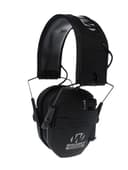
Walker's Razor Slim Electronic Muff

Walker's Razor Slim Electronic Muff

Best under $50: most published specs

The default answer in this category, and the reason is the spec sheet rather than the badge: Walker's publishes a 23 dB NRR, a 0.02 second compression reaction time and two high-gain omnidirectional microphones, which is more than most rivals will state at any price. Low-profile cups matter more than they sound — a fat muff pushes off the stock when you mount a gun.

23 dB · muff
9.1/ 10
$30.31View on Amazon

$35.0914% off

Price as of November 22, 2026. #ad How we’re funded

2
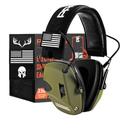
PROHEAR Electronic Ear Protection (4X amplification)

PROHEAR Electronic Ear Protection (4X amplification)

Cheapest with a stated NRR

The only muff on this page that puts a number on the amplification. Its listing publishes NRR 23 dB and 4x sound amplification — the same protection rating as our top pick, with the gain quantified instead of the clamp speed. What you give up is the published reaction time and the brand's service history, not the rating.

23 dB · muff
8.5/ 10
$28.46View on Amazon

$38.9927% off

Price as of November 22, 2026. #ad How we’re funded

3
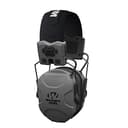
Walker's XCEL Digital Bluetooth Muff

Walker's XCEL Digital Bluetooth Muff

Best if you want Bluetooth

The step up, and the one feature worth paying for is in the name: Voice Clarity. A digital circuit that separates speech from wind and leaf noise is genuinely different from raw amplification, and Bluetooth means the muff doubles as the thing you listen to on a long sit. It is also the only pick here that does two jobs.

Not published · muff
8.3/ 10
$40.90View on Amazon

$48.1215% off

Price as of November 22, 2026. #ad How we’re funded

The picks in full

#1Best under $50: most published specs9.1/ 10 value

Walker's Razor Slim Electronic Muff

The default answer in this category, and the reason is the spec sheet rather than the badge: Walker's publishes a 23 dB NRR, a 0.02 second compression reaction time and two high-gain omnidirectional microphones, which is more than most rivals will state at any price. Low-profile cups matter more than they sound — a fat muff pushes off the stock when you mount a gun.

Strengths

  • 23 dB NRR published by the maker in writing, not implied
  • 0.02 second sound-activated compression reaction time is a stated figure, which is rare below $50
  • Two high-gain omnidirectional microphones, so you hear game and range commands between shots
  • Slim cup profile does not fight a gun stock at the cheek weld
  • Runs on two AAA batteries, included — a flat battery is a thirty-second fix in the field

Trade-offs

  • Walker's publishes no weight and no warranty term for this model
  • Electronic muffs are bulky in a pack compared with plugs or buds
  • 23 dB NRR alone is below what NIOSH recommends for firearm noise — double up with plugs at a range
Noise Reduction Rating23 dB (maker published)
TypeElectronic over-ear muff
Reaction time0.02 s sound-activated compression
MicrophonesTwo high-gain omnidirectional
Power2 x AAA (included)
WeightNot published
Warranty termNot published

Specs read from the product listing, on October 11, 2026. “Not published” means the maker doesn’t state that figure. The score is our value rating, not a lab test — how we rank.

#2Cheapest with a stated NRR8.5/ 10 value

PROHEAR Electronic Ear Protection (4X amplification)

The only muff on this page that puts a number on the amplification. Its listing publishes NRR 23 dB and 4x sound amplification — the same protection rating as our top pick, with the gain quantified instead of the clamp speed. What you give up is the published reaction time and the brand's service history, not the rating.

Strengths

  • NRR 23 dB stated on the listing — the same rating as the Walker's
  • 4x sound amplification is published, which is the figure that matters for hearing a deer approach
  • A second muff at the same published 23 dB rating, which is the fallback if the Razor Slim is out of stock or does not sit right on your head

Trade-offs

  • No published compression reaction time, which is the spec that decides how well it handles a shot
  • No published warranty term and a thinner service record than Walker's or Pro Ears
  • Cup profile is chunkier than the Razor Slim at the cheek weld
Noise Reduction Rating23 dB (listing published)
TypeElectronic over-ear muff
Amplification4x (listing published)
Reaction timeNot published
PowerNot published
Warranty termNot published

Specs read from the product listing, on October 11, 2026. “Not published” means the maker doesn’t state that figure. The score is our value rating, not a lab test — how we rank.

#3Best if you want Bluetooth8.3/ 10 value

Walker's XCEL Digital Bluetooth Muff

The step up, and the one feature worth paying for is in the name: Voice Clarity. A digital circuit that separates speech from wind and leaf noise is genuinely different from raw amplification, and Bluetooth means the muff doubles as the thing you listen to on a long sit. It is also the only pick here that does two jobs.

Strengths

  • Digital circuit with Voice Clarity rather than flat amplification
  • Bluetooth, so one item in the pack covers protection and audio
  • Walker's publishes the same slim-cup design language that keeps a stock weld clean

Trade-offs

  • Costs noticeably more than the plain Razor Slim for a protection rating the listing does not restate
  • No NRR figure is published on this listing — we will not carry one across from another model
  • Bluetooth and digital processing mean more battery drain than the AAA Razor Slim
Noise Reduction RatingNot published
TypeDigital electronic over-ear muff
AudioBluetooth, Voice Clarity (listing published)
Reaction timeNot published
PowerNot published
Warranty termNot published

Specs read from the product listing, on October 11, 2026. “Not published” means the maker doesn’t state that figure. The score is our value rating, not a lab test — how we rank.

NRR is the only number that protects you

Noise Reduction Rating is the published figure for how much a protector attenuates, and it is the one spec you should refuse to buy without. Two of these three publish it — 23 dB on the Walker’s Razor Slim, 23 dB on the PROHEAR — and both state it in writing rather than implying it.

The third does not. The Walker’s XCEL Bluetooth muff is the most expensive thing under this ceiling and the listing we track publishes no NRR at all.We will not carry a figure across from another Walker’s model to fill the gap; its spec row reads “Not published” below, which is a finding, not a hole in our research. Buy it for the digital Voice Clarity circuit and the Bluetooth, and understand you are buying an unrated level of protection.

23 dB is not enough on its own, and the agencies say so

This is the uncomfortable part of a budget hearing-protection page. NIOSH’s published guidance on noise-induced hearing loss treats impulse noise from firearms as a serious exposure, and a 23 dB rating is below what is recommended for repeated gunfire. At a range, or sighting in before the season, double up: foam plugs under the muffs. The two ratings do not simply add, but the combination is meaningfully better than either alone and it costs about a dollar.

Hunting is a different exposure. One or two shots a season from a rifle is not a range session, and the reason to wear an electronic muff in a stand is that it amplifies the approach and clamps on the shot. Hearing damage from hunting is real and cumulative, and it is also not the same risk profile as a hundred rounds off a bench.

Reaction time: the spec that separates the two 23 dB muffs

Both top picks publish the same NRR, so the tiebreaker is what happens in the instant the gun goes off. Walker’s publishes a 0.02 second sound-activated compression reaction time for the Razor Slim. That is the figure that decides whether the electronics clamp before the muzzle blast reaches your ear or just after.

PROHEAR publishes no reaction time. What it publishes instead is amplification — 4x — which is the number that decides whether you hear a deer coming through dry leaves at sixty yards. Neither maker publishes both. Pick the figure that matches why you are wearing them: protection first, or hearing better first.

Cup profile is the spec nobody lists and everybody feels

A fat muff cup pushes your head off the stock when you mount a gun, which moves your eye out of the scope and costs you the shot. The Razor Slim’s slim cup profile exists for exactly this reason and the XCEL shares the design language. The PROHEAR’s cup is chunkier at the cheek weld.

If you shoot a shotgun with a low comb or a rifle with a tall scope mount, weight that heavily — more heavily than the three dollars between these picks. If you hunt with a bow, the cup is a different problem entirely: a muff fouls the string on the draw, and amplification rather than attenuation is the reason to wear anything at all. That is an in-ear job, and our hunting earbud roundup covers it — above this page’s ceiling, which is the whole finding here.

What fifty dollars does not buy

Four things, and all four are visible in the spec tables rather than inferred.

  • An in-ear form factor. Every electronic earbud we track is above this line. If you want buds, our hunting earbud roundup starts just over it.
  • A published warranty term. None of these three states one.
  • A published weight.Walker’s publishes none for either muff here.
  • A rating on the dearest pick. The one that costs the most under this ceiling is the one that states the least, which is the single most useful thing this ceiling exposed.

For the full field with no price ceiling — muffs and buds, with the highest published rating we track — read our budget hunting ear protection roundup.
Frequently asked questions

What is the best hunting ear protection under $50?

The Walker's Razor Slim Electronic Muff, on published specs - a 23 dB NRR, a 0.02 second compression reaction time and two high-gain omnidirectional microphones, all stated by the maker. The PROHEAR matches the 23 dB rating for a little less and publishes 4x amplification instead of a reaction time.

Can you get electronic hunting earbuds under $50?

Not in anything we track. Every in-ear electronic protector in our registry sits above fifty dollars, so under this ceiling the category is electronic over-ear muffs only. That is not a shopping failure - it is where the category line currently falls.

Is 23 dB NRR enough for shooting?

For a shot or two a season while hunting, it is a reasonable protector. For a range session or sighting in, it is below what NIOSH guidance recommends for repeated firearm noise - so double up with foam plugs under the muffs. The two ratings do not simply add, but the combination is meaningfully better and costs about a dollar.

Why does the most expensive muff here publish no NRR?

We do not know, and we will not guess. The Walker's XCEL listing we track states a digital Voice Clarity circuit and Bluetooth but no Noise Reduction Rating, so its spec row reads Not published. Buy it for the audio features with your eyes open, or buy a muff that states its rating.

Do electronic muffs get in the way of a gun stock?

A thick cup does - it pushes your head off the comb and moves your eye out of the scope. Slim-profile cups like the Razor Slim's are designed around that problem. If you shoot a shotgun with a low comb or a rifle with a tall mount, weight cup profile more heavily than the few dollars between these picks.

Muffs or earplugs for deer hunting?

Electronic muffs, if you want to hear the approach. Plain foam plugs protect better per dollar but cut the quiet sounds you are sitting in a tree to hear. The electronic muff exists to do both - amplify between shots, clamp down on the shot itself - which is why it is the hunting answer rather than the range answer.

Sources

  • Noise-Induced Hearing Loss — National Institute on Deafness and Other Communication Disorders (NIH) — The federal institute's consumer page on noise-induced hearing loss: "long or repeated exposure to sounds at or above 85 dBA can cause hearing loss", a fireworks show is given as 140-160 dBA, and an extremely loud burst of sound "can rupture the eardrum or damage the bones in the middle ear" — "This kind of NIHL can be immediate and permanent" (accessed October 11, 2026)
  • Razor Slim Electronic Ear Muffs — Walker's Game Ear — The maker's spec data: "23 dB NRR helps prevent hearing loss while in loud environments like shooting ranges", a "0.02 second reaction time protects hearing against sharp retorts", "Two high gain omnidirectional microphones pick up sounds from all directions", and "Two AAA batteries - Included". No weight and no warranty term are published on the product page (accessed October 11, 2026)
  • 4 Primary Rules of Firearm Safety — NSSF — The industry-standard core firearm safety rules (accessed July 22, 2026)

Keep reading