What Vortex actually publishes
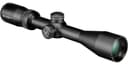
The Crossfire II in this configuration is a 3–9×40 second-focal-plane riflescope: variable magnification from three power to nine, on a 40 mm objective lens, in a one-inch tube. It carries the V-Plex reticle — a plain duplex crosshair with thick outer posts that taper to a fine center — and the full Vortex VIP warranty. Those are the four facts that decide whether it fits your hunting, and everything below is an argument about what each one means in the woods.
3–9× is the honest range
Three power gives roughly a 30-foot field of view at 100 yards, which is what you need when a deer materializes at 25 yards in timber and you have four seconds to find it in the glass. Nine power is enough to place a shot precisely at 250 to 300 yards. Between those two numbers sits essentially every shot a whitetail hunter will ever take.
The magnification most budget buyers want — 4–16×, 6–24× — is bought for a hunt that does not happen. Higher power narrows the field, dims the image, and turns your heartbeat into visible crosshair wobble. Worse, a scope parked on 12× is functionally useless at 30 yards, and that is exactly when most encounters occur. If you genuinely shoot open country past 300 yards, buy the 4–16× instead and accept the trade. If you hunt timber, farm edges or river bottoms, 3–9× is not a compromise; it is the right answer.
The 40 mm objective is a mounting decision, not a brightness one
The second number is the front lens diameter. Bigger objectives gather more light, and budget buyers routinely stretch for a 50 mm believing it will transform dusk. In practice the 50 mm forces higher rings, which lifts your cheek off the stock, and an inconsistent cheek weld costs more accuracy than the extra light buys. On a factory-stocked budget rifle, a 40 mm mounted low is almost always the better shooting setup. The Crossfire II’s 40 mm objective clears most barrels in low or medium rings, which is one less thing to get wrong.
V-Plex: no holdover marks, and that is deliberate
The V-Plex is a plain duplex. There are no ballistic hash marks below center, no illumination, no ranging ladder. On a budget scope that is a feature rather than an omission, because a ballistic reticle is only data once you have shot your specific load at each marked distance and written down what it did. Most hunters never do that range work, which turns the hash marks into decoration that clutters the sight picture in poor light. The heavy outer posts of a duplex draw your eye to the center fast — which is what actually matters at legal light in thick cover.
The second-focal-plane catch
The Crossfire II is second focal plane, meaning the reticle stays the same apparent size while the image zooms behind it. There are no holdover marks here to invalidate, so the practical consequence is narrower than on a BDC scope — but it still matters if you ever use the duplex post transitions as a rough ranging aid. Those subtensions are only correct at one magnification, normally maximum. Set the scope to 9× before trusting any of that, or better, do not use the posts for ranging at all and carry a rangefinder instead. It is a cheaper and far more accurate answer to the same question.
The warranty is the actual product
Vortex’s VIP warranty is unlimited, lifetime, transferable and does not require a receipt or an explanation of how the scope broke. Fall on it, back the truck over it, buy it used from a stranger — it gets repaired or replaced.
That is not a marketing footnote on a budget scope, it is the economics of the whole purchase. Cheap scopes do not usually arrive broken; they fail in year three as a zero that slowly walks under recoil, and at that point a limited warranty covering “manufacturing defects” is worth very little. A no-fault lifetime warranty converts a hundred-and-something-dollar scope from a consumable into a fixed one-time cost. Two of the five scopes we rank have better glass than this one. Neither has this warranty at this price.
Where it is genuinely beaten
An honest review names the losses. The Crossfire II’s glass is good for the money and no better. Against a low-light-focused rival you will see a slightly dimmer, slightly flatter image in the last ten minutes of legal shooting light, and at the very edges of the field the sharpness falls off sooner. Push past about 300 yards and the resolution simply is not there to read a vital zone with confidence.
It is also not the cheapest scope that works. If your budget is hard and you accept a limited warranty, there are scopes under $100 with a serviceable ballistic reticle; the most common of them is the Bushnell Banner 2, and our Banner 2 versus Crossfire II comparison works through exactly what the price gap buys. And if you can stretch, the Diamondback sits one tier up in the same Vortex lineup with better glass and the identical VIP warranty — the clearest “buy once” upgrade path on the page.
Three hunters who should buy something else
- The genuine open-country shooter.If 350-yard shots across a canyon or a bean field are routine and ethical for you, nine power and this glass will limit you. Buy the 4–16×.
- The hunter who wants verified holdovers. If you will actually do the range work at 200, 250 and 300 yards, a BDC-reticle scope pays you back. The V-Plex cannot.
- The last-light timber hunter. If you hunt heavy evergreen where legal light ends before the sun does, spend the extra on the brighter glass. That is the one place the price difference shows up as something you can see.
What it costs to actually shoot it
The scope is not the whole bill, and budgeting for it as though it were is the most common way this purchase goes wrong. Add rings matched to a one-inch tube, an inch-pound torque driver, and a box or two of the ammunition you intend to hunt with. Roughly $30 to $60 covers decent rings and a torque tool, and it is not optional spending — a good scope in cheap, badly torqued rings shifts zero and gets blamed on the scope. Then mount it properly and sight it in before you decide what the glass is worth.
The verdict
Buy it if you are putting glass on a first or second deer rifle, shoot inside 300 yards, and want the purchase to be finished. The magnification range is right, the reticle is fast and honest, and the warranty means the worst realistic outcome is an inconvenient shipping label rather than buying the scope twice. It is not the best glass at the price and we would not pretend otherwise — it is the one that is hardest to regret, which for a budget hunter is usually the same thing as the right call.