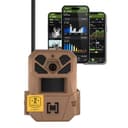
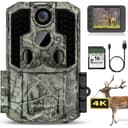
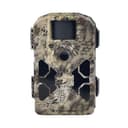
The three specs that decide a cheap camera
Megapixels are the number printed largest and the one that matters least. These three decide whether a camera earns its spot on a tree.
- Trigger speed. The delay between the sensor seeing motion and the shutter firing. At 0.5 seconds a deer walking a trail at a normal pace is a photograph of a hindquarter; at 0.2 seconds it is a photograph of a deer. Two of the three cameras here publish 0.5 s; the WOSPORTS publishes 0.2 s, which is the single biggest practical difference on this page.
- Flash type.“No-glow” (black IR, 940 nm) is invisible to deer and to people; “low-glow” (850 nm) shows a faint red when it fires. On public land the second consideration is the one that matters — a visible flash tells every other hunter where your camera is. All three picks here state no-glow or black IR.
- Detection and IR range. How far out the sensor reads motion and how far the flash reaches at night. Stealth Cam publishes 100 ft and 42 black IR emitters, which is unusually specific for this price; the other two listings are vaguer, and we have not filled their gaps in.
Resolution sits below all three. The WOSPORTS 56 MP figure is interpolated rather than a true sensor resolution, which is normal at this price and worth knowing before you compare it to the Stealth Cam’s honest 24 MP.
The cellular camera under the ceiling, and its real cost
A cellular camera that comes in under $100 is new. What it buys you is not image quality — it is not walking to the camera. Every card pull is scent, noise and an intrusion into the spot you are trying to hunt, and on public land it is also an advertisement that someone is working that trail.
Two honest caveats before you buy one. First, the data plan is an ongoing cost on top of the camera, and over a season it can exceed the camera’s price — the hundred-dollar line on this page is the hardware only. Second, a cellular camera is a paperweight without usable signal where you hang it. Check coverage for your carrier at the actual spot, not at the parking area, before you commit.
If both of those land badly, the answer is not a dearer cellular camera. It is two conventional cameras and a disciplined card-pull routine, which is what cellular versus standard trail cameras works through in full.
Why three cheap cameras beat one good one
This is the budget argument of the whole site applied to a specific category. A trail camera does not tell you about deer; it tells you about one spot. Hang a single excellent camera on the wrong trail and you have excellent photographs of nothing.
On unfamiliar public land, coverage is worth more than image quality, and at these prices coverage is affordable. Three cameras on three pinch points for the price of one mid-range camera tells you which of the three is worth hunting, and that is the question you actually have. The cost is durability — expect a shorter service life from the cheapest units, and treat them as consumables rather than heirlooms.
The counter-argument is theft, which is real on public ground. A cheap camera is a cheaper loss, which is another point for this approach, but a cable lock and an unobvious placement are worth more than either. Our trail camera setup guide covers height, angle, direction and the placement mistakes that waste a season of batteries.
Check the rules before you hang anything on public land
Trail camera regulations have tightened sharply, and they are not uniform. Delaware prohibits trail cameras on state wildlife areas outright. Several western states restrict or ban them during specific seasons, and many federal and state units require that any device left on the ground carry your name and contact details or be removed daily.
The practical rule: read the regulations for the exact unit you are hunting, every year, before you hang a camera, because the penalty is losing the camera and possibly more. Our full budget trail camera roundup covers the wider field, and the sources at the foot of this page are the agency pages themselves.
What you give up under a hundred dollars
- Trigger speed, usually. Two of the three cameras here publish 0.5 s, which is slow enough to miss a walking deer at close range on a trail set. Angle the camera down the trail rather than across it and the problem largely disappears.
- Video specification. The Stealth Cam listing publishes no video spec at all. If video matters to you, that silence is a finding, not an oversight on our part.
- Build quality and service life. The cheapest cameras are the ones that stop working in year two. Budget for replacement rather than repair.
- Published warranty terms. Thin to absent across the budget category. Stealth Cam has genuine warranty and support infrastructure behind it, which is most of its argument on this page.
None of those is a reason to spend more than a hundred dollars on your first camera. They are reasons to spend your second hundred on a second camera rather than a better one.